Introduction
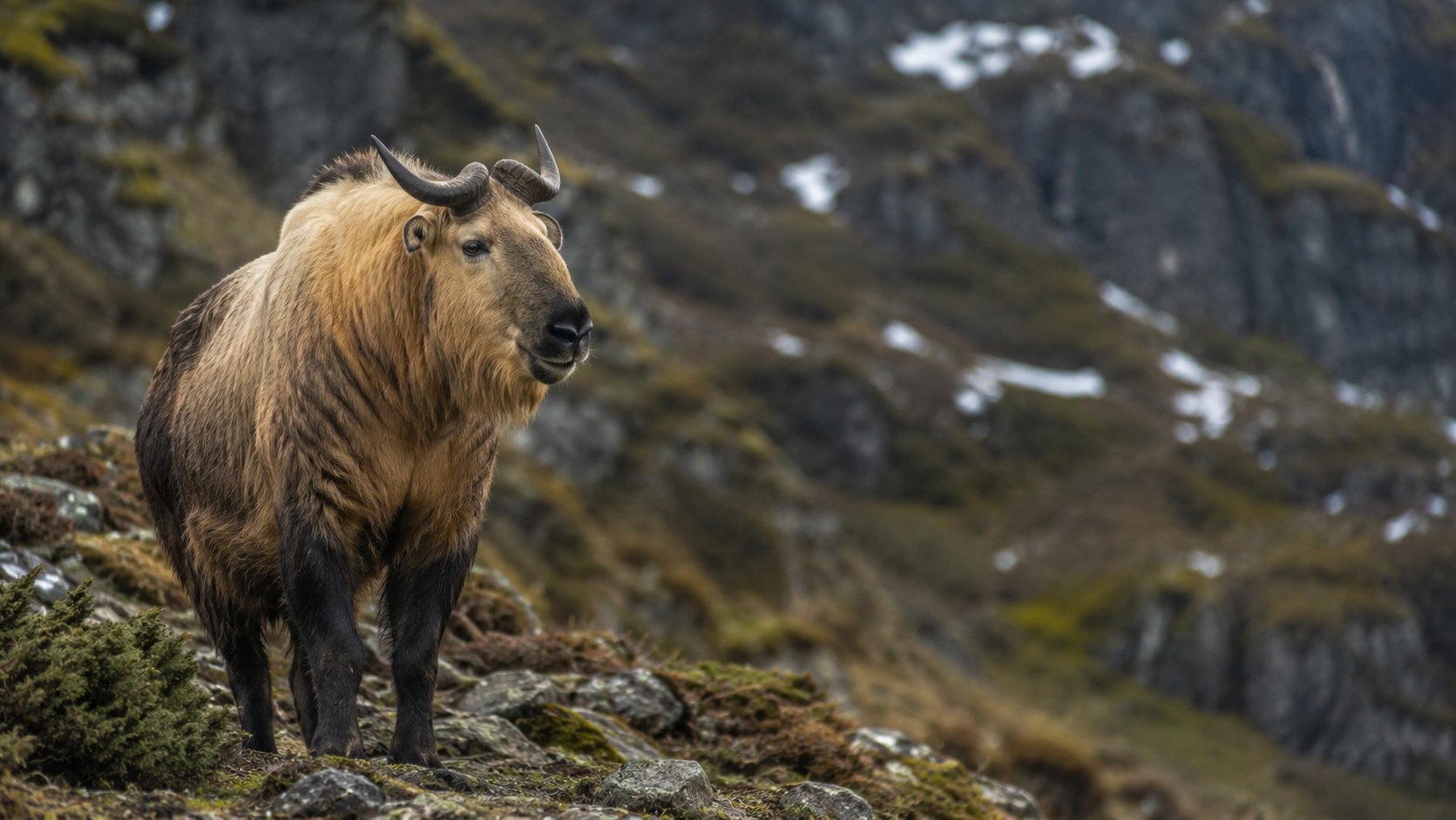
The takin (Budorcas taxicolor) is a large, hoofed mammal native to the Himalayan region. It is a member of the Bovidae family, which includes cattle, antelopes, and goats. The takin is also known as the ‘goat-antelope’ due to its distinctive physical characteristics, which resemble both goats and antelopes.
Quick Reference Table
| Scientific Name | Budorcas taxicolor |
|---|---|
| Family | Bovidae |
| Conservation Status | Vulnerable |
| Native Range | Himalayan region |
| Diet | Herbivore |
Taxonomy and Identification
The takin is a member of the Bovidae family and is classified as a vulnerable species by the International Union for Conservation of Nature (IUCN). There are four subspecies of takin, each with distinct physical characteristics. The takin is characterized by its large size, with males reaching up to 2.5 meters in length and weighing up to 300 kilograms. It has a distinctive coat of thick, shaggy fur that ranges in color from dark brown to golden brown.
Natural Habitat and Distribution
The takin is native to the Himalayan region, including India, Nepal, Bhutan, and parts of China. It inhabits mountainous forests and grasslands at elevations of up to 4,000 meters. The takin is well adapted to its mountainous habitat, with a thick coat of fur and a pair of curved horns that help it to defend itself against predators.
Behaviour
The takin is a shy and elusive animal that is rarely seen by humans. It is a herbivore and feeds on a variety of plants, including grasses, leaves, and fruits. The takin is a social animal and is often found in small herds. It is a skilled climber and has been known to climb steep mountain slopes in search of food or to escape predators.
Diet
The takin is a herbivore and feeds on a variety of plants, including grasses, leaves, and fruits. Its diet consists mainly of cellulose-based plants, which are difficult to digest. The takin has a specialized digestive system that allows it to break down and extract nutrients from these plants.
Care and Conservation
Due to its vulnerable conservation status, the takin requires careful conservation efforts. Habitat loss and fragmentation, as well as hunting and poaching, are major threats to the takin population. Conservation efforts are underway to protect the takin and its habitat, including the establishment of protected areas and community-based conservation programs.
Health and Welfare
The takin is susceptible to various diseases, including pneumonia and parasitic infections. It is also vulnerable to injuries from falls and fights with other takins. In captivity, takins require specialized care and housing that mimics their natural habitat.
Practical Takeaways
- The takin is a large, hoofed mammal native to the Himalayan region.
- It is a herbivore and feeds on a variety of plants, including grasses, leaves, and fruits.
- The takin is a social animal and is often found in small herds.
- It is a skilled climber and has been known to climb steep mountain slopes in search of food or to escape predators.
- The takin requires careful conservation efforts due to its vulnerable conservation status.
Frequently Asked Questions
What is the average lifespan of a takin?
The average lifespan of a takin is around 15-20 years in the wild.
How many subspecies of takin are there?
There are four subspecies of takin, each with distinct physical characteristics.
What is the main threat to the takin population?
The main threat to the takin population is habitat loss and fragmentation, as well as hunting and poaching.
Can takins be found in captivity?
Yes, takins can be found in captivity in some zoos and wildlife sanctuaries.
What is the conservation status of the takin?
The takin is classified as a vulnerable species by the International Union for Conservation of Nature (IUCN).
Sources
- International Union for Conservation of Nature (IUCN). (2020). Budorcas taxicolor.
- Smith, A. T., & Xie, Y. (2008). A guide to the mammals of China. Princeton University Press.
- Wang, Y., and others. (2019). Phylogenetic relationships and taxonomy of the takin (Budorcas taxicolor). Journal of Mammalogy, 100(4), 931-943.
Important Notice: If you suspect that a takin is injured or in distress, please contact a qualified veterinarian or a local wildlife rehabilitation center for assistance. Do not attempt to handle or care for a takin yourself, as this can cause further harm to the animal.
Life Cycle and Development
The takin’s life cycle is characterized by a relatively long gestation period, typically lasting around 7-8 months. Female takins give birth to a single calf, which is born with a thick coat of fur and is able to stand and walk within the first hour of birth. The calf will stay with its mother for several months, relying on her milk for nutrition and protection. As the calf grows, it will begin to eat small amounts of vegetation, gradually transitioning to a diet of grasses, leaves, and fruits.
During the first year of life, the calf will experience rapid growth and development, increasing its weight by several hundred kilograms. At around 6-8 months, the calf’s coat will begin to change color, transitioning from a reddish-brown to a darker brown or golden brown. This color change is thought to be an adaptation to help the young takin blend in with its surroundings, reducing the risk of predation.
Communication and Senses
Takin’s have a range of communication methods, including vocalizations, body language, and scent marking. They are known to produce a variety of sounds, including grunts, snorts, and bleats, which are used to convey information and warnings to other takins. They also use body language to communicate, such as ear and tail positions, to signal aggression, fear, or courtship.
Takin’s have a keen sense of smell, which they use to detect food, predators, and potential mates. They also have excellent eyesight, which helps them to detect movement and changes in their surroundings. Their sense of hearing is also acute, allowing them to detect the calls of other takins and potential threats.
Seasonal Variation and Migration
Takin’s are adapted to the harsh, seasonal conditions of the Himalayan region. During the summer months, they inhabit the higher elevations, where the vegetation is lush and abundant. As the winter months approach, they migrate to lower elevations, where the vegetation is more sparse but the climate is milder.
This migration is thought to be driven by the need to find food and avoid harsh weather conditions. Takin’s are well adapted to the cold, snowy conditions of the Himalayas, but they still need to find food to survive. By migrating to lower elevations, they are able to find more abundant food sources and reduce their energy expenditure.
Ecological Relationships and Research
Takin’s play a crucial role in the Himalayan ecosystem, serving as both grazers and browsers. They help to disperse seeds and nutrients, maintaining the health and diversity of the vegetation. They also serve as a food source for predators, such as snow leopards and golden eagles.
Research on takin’s has focused on their ecology, behavior, and conservation. Studies have shown that takin’s are an important indicator species, providing insights into the health of the Himalayan ecosystem. They are also an important part of the cultural heritage of the region, featuring in local mythology and folklore.
Responsible Enrichment and Conservation Efforts
Takin’s are listed as vulnerable on the IUCN Red List, due to habitat loss, fragmentation, and degradation. Conservation efforts are underway to protect their habitat and reduce human-takin conflict. These efforts include the establishment of protected areas, such as national parks and wildlife sanctuaries, as well as community-based conservation initiatives.
Responsible enrichment practices are also being implemented, such as the provision of supplementary food and shelter. These practices aim to reduce the impact of human activity on takin populations, while also promoting their welfare and conservation.
Ethical and Legal Considerations
The takin is protected by law in several countries, including India, Nepal, and Bhutan. Hunting and poaching are prohibited, and trade in takin products is regulated by international law. However, enforcement of these laws is often challenging, and human-takin conflict remains a significant threat to their conservation.
Ethical considerations also play a crucial role in the conservation of takin’s. Their welfare and well-being must be prioritized, and any human activity that impacts their populations must be carefully managed and regulated. This includes responsible tourism practices, which can help to promote the conservation of takin’s while also supporting local communities.
Adaptations for High-Altitude Living
The takin’s thick coat of fur is one of its most distinctive features, and it plays a crucial role in the animal’s ability to survive in the harsh, high-altitude environment of the Himalayas. The coat is made up of two layers: a thick undercoat and a longer, guard hair layer. The undercoat provides excellent insulation, trapping warm air next to the skin and keeping the takin warm in cold temperatures. The guard hair layer, on the other hand, helps to repel snow and ice, preventing them from penetrating to the undercoat and keeping the takin dry.
In addition to its coat, the takin has a number of other adaptations that enable it to thrive in the high-altitude environment of the Himalayas. Its large size and sturdy build allow it to move easily through deep snow, and its broad, flat hooves act as snowshoes, distributing its weight evenly and preventing it from sinking into the snow. The takin’s lungs are also specially adapted to cope with the low oxygen levels found at high altitudes, allowing it to breathe easily in conditions that would be challenging for many other animals.
Ecological Role in the Himalayas
The takin plays a vital ecological role in the Himalayas, serving as both a grazer and a seed disperser. As a grazer, the takin helps to maintain the diversity of plant species in the region by dispersing seeds and creating pathways through dense vegetation. This, in turn, allows other animals to move through the area and helps to maintain the overall health of the ecosystem.
As a seed disperser, the takin helps to spread the seeds of the plants it eats, allowing them to germinate in new areas and promoting the growth of new vegetation. This process is particularly important in the Himalayas, where the harsh climate and limited growing season make it difficult for plants to establish themselves.
Research and Conservation Efforts
Despite its importance in the Himalayan ecosystem, the takin is a vulnerable species, threatened by habitat loss, poaching, and human-takin conflict. As a result, conservation efforts are underway to protect the takin and its habitat. Researchers are working to study the takin’s behavior, habitat use, and population dynamics, in order to better understand the species and develop effective conservation strategies.
One of the key challenges facing conservation efforts is the lack of data on takin populations and habitat use. To address this, researchers are using a variety of techniques, including camera traps, genetic analysis, and observations of takin behavior, to gather information on the species. This information will be used to inform conservation efforts and ensure the long-term survival of the takin.
Responsible Enrichment and Tourism
As the takin is a vulnerable species, it is essential that any tourism or enrichment activities are carried out in a responsible and sustainable manner. This includes ensuring that tourists keep a safe distance from the takin, do not feed or touch them, and do not damage their habitat.
In addition, any enrichment activities, such as providing food or shelter, should be carried out in consultation with conservation experts and should not disrupt the takin’s natural behavior. By taking a responsible and sustainable approach to tourism and enrichment, we can help to ensure the long-term survival of the takin and promote the conservation of this incredible species.