Okapi: The Elusive African Animal
The okapi is a mysterious and elusive animal native to the Ituri Rainforest in the northeastern part of the Democratic Republic of Congo. Despite being discovered by Western scientists in the 20th century, the okapi remains a relatively unknown animal, often referred to as the ‘African unicorn’ due to its rarity and elusive nature.
Quick Reference Table
| Scientific Name | Okapia johnstoni |
|---|---|
| Family | Giraffidae |
| Genus | Okapia |
| Species | O. johnstoni |
| Conservation Status | Endangered |
Taxonomy and Identification
The okapi is a member of the Giraffidae family, which includes giraffes and pronghorns. It is the only living species in the Okapia genus. The okapi’s scientific name, Okapia johnstoni, was given in honor of Harry Johnston, the British explorer who discovered the animal in 1901.
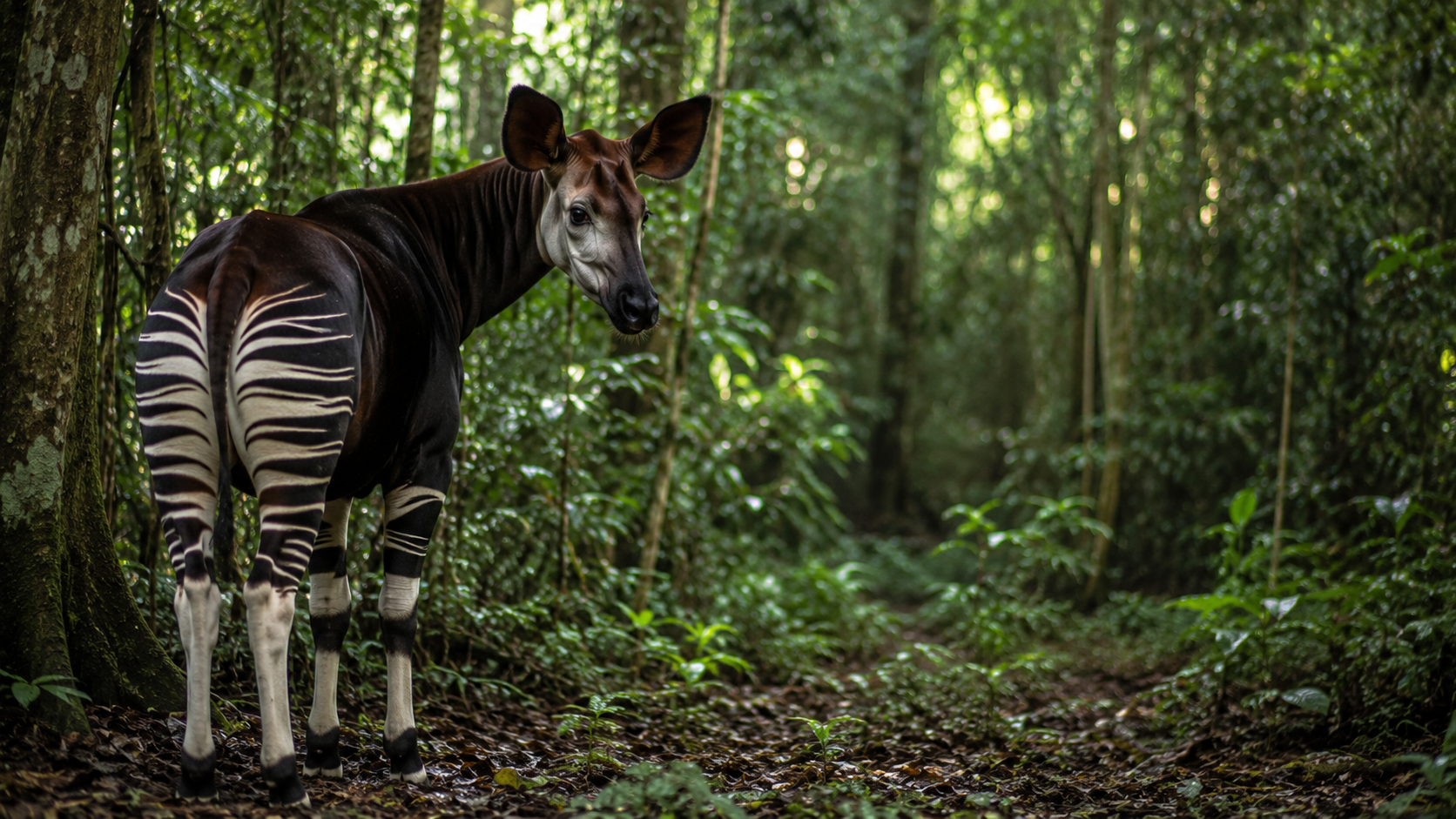
Physical characteristics of the okapi include a distinctive coat with horizontal stripes on the hindquarters, a long neck, and a blue-colored tongue. Adult okapis can reach a height of 5-6 feet (1.5-1.8 meters) at the shoulder and weigh between 200-300 pounds (90-140 kilograms).
Natural Habitat and Distribution
The okapi inhabits the Ituri Rainforest in the northeastern part of the Democratic Republic of Congo. The animal’s habitat is characterized by dense, tropical rainforests with a mix of lowland and mountainous terrain. The okapi’s range is limited to a relatively small area, approximately 10,000 square miles (26,000 square kilometers), making it one of the most geographically restricted animals in the world.
Behaviour
Okapis are shy and elusive animals, rarely seen by humans. They are herbivores and spend most of their time browsing for leaves, fruits, and other vegetation. Okapis are solitary animals and only come together for mating. Female okapis give birth to a single calf after a gestation period of approximately 15 months.
Diet
Okapis are herbivores and their diet consists mainly of leaves, fruits, and other vegetation. They use their long necks and tongues to browse for food in the dense rainforest. Okapis have also been known to eat certain types of fungi and bark.
Okapi: The Elusive African Animal
The okapi is a mysterious and elusive animal native to the Ituri Rainforest in the northeastern part of the Democratic Republic of Congo. Despite being discovered by Western scientists in the 20th century, the okapi remains a relatively unknown animal, often referred to as the ‘African unicorn’ due to its rarity and elusive nature.
Daily Needs and Care
Okapis require a large amount of space to roam and forage for food. In captivity, okapis need a spacious enclosure that mimics their natural habitat, with plenty of vegetation and hiding places. A diet of high-quality hay, grains, and fruits is essential to meet their nutritional needs.
Okapis are sensitive to stress and require a calm and peaceful environment. They are also prone to certain health issues, such as respiratory problems and parasites, which require regular veterinary care.
Warning Signs and Health Issues
Okapis can be prone to certain health issues, such as respiratory problems, parasites, and skin infections. Warning signs of illness or stress include changes in appetite, lethargy, and difficulty breathing. If you suspect that an okapi is ill or stressed, it is essential to seek veterinary care immediately.
Conservation Status and Responsible Care
The okapi is listed as Endangered on the IUCN Red List, due to habitat loss, poaching, and human conflict. Conservation efforts are underway to protect the okapi and its habitat, including the establishment of protected areas and education programs.
Responsible care for okapis involves supporting conservation efforts and respecting their natural habitat. If you are interested in learning more about okapis or supporting conservation efforts, consider visiting a reputable zoo or sanctuary that is involved in okapi conservation.
Practical Takeaways
- Okapis are shy and elusive animals that require a large amount of space to roam and forage for food.
- A diet of high-quality hay, grains, and fruits is essential to meet their nutritional needs.
- Okapis are sensitive to stress and require a calm and peaceful environment.
- Regular veterinary care is essential to prevent and treat health issues.
Frequently Asked Questions
What is the okapi’s conservation status?
The okapi is listed as Endangered on the IUCN Red List, due to habitat loss, poaching, and human conflict.
What is the okapi’s natural habitat?
The okapi inhabits the Ituri Rainforest in the northeastern part of the Democratic Republic of Congo.
What do okapis eat?
Okapis are herbivores and their diet consists mainly of leaves, fruits, and other vegetation.
How can I support okapi conservation?
Consider visiting a reputable zoo or sanctuary that is involved in okapi conservation, or supporting organizations that work to protect the okapi and its habitat.
Sources
- International Union for Conservation of Nature (IUCN). (2020). Okapia johnstoni.
- World Wildlife Fund. (n.d.). Okapi.
- Okapi Conservation Project. (n.d.). About Okapis.
Please note that the information provided is for educational purposes only and is not intended to be used as veterinary advice. If you have any concerns about the health or well-being of an okapi, please consult a qualified veterinarian.
Life Cycle and Development
Okapis have a relatively long gestation period of approximately 14-15 months, after which a single calf is born. Newborn okapis are precocial, meaning they are relatively mature and mobile from birth, with their eyes open and able to stand within the first hour of life. The calf will stay with its mother for about 6-8 months, during which time it will nurse and rely on her for protection and guidance. Female okapis typically only give birth to one calf every 2-3 years, which contributes to the slow population growth rate of the species.
Communication and Senses
Okapis are generally quiet animals, but they do communicate with each other through a variety of vocalizations, including moans, grunts, and whistles. They also use body language to convey information and express emotions, such as ear and tail positions. Okapis have a keen sense of smell, which they use to detect food and predators, and their large eyes are adapted to low light conditions, allowing them to navigate their dense forest habitat. They also have a unique, blue-colored tongue that is thought to be an adaptation for plucking leaves and fruits from thorny plants.
Seasonal Variation and Adaptation
Okapis are adapted to the tropical rainforest environment, where temperatures and humidity levels remain relatively constant throughout the year. However, they do experience some seasonal variation in terms of food availability and rainfall. During the dry season, okapis will travel longer distances to find food and water, and they may also change their activity patterns to avoid the heat of the day. In the wet season, okapis will take advantage of the abundant food sources and may be more active during the day.
Ecological Relationships
Okapis play an important role in their ecosystem as both herbivores and seed dispersers. They feed on a variety of plants, including leaves, fruits, and seeds, and help to disperse seeds through their droppings. Okapis also have a symbiotic relationship with certain species of birds, which will often perch on their backs and feed on ticks and other parasites. In return, the birds will alert the okapi to potential predators, providing an early warning system.
Research and Conservation Efforts
Due to the okapi’s elusive nature and limited range, research on the species has been challenging. However, conservation efforts are underway to protect the okapi and its habitat. The Okapi Wildlife Reserve was established in 1987 to provide a safe haven for the species, and conservation organizations are working with local communities to develop sustainable forest management practices and reduce human-okapi conflict. Researchers are also studying okapi behavior, ecology, and population dynamics to inform conservation efforts.
Responsible Enrichment and Welfare
Okapis in captivity require specialized care and enrichment to meet their physical and psychological needs. Providing a naturalistic enclosure with plenty of space to roam and forage is essential, as is offering a varied and nutritious diet that includes browse and other fiber-rich foods. Okapis also require regular veterinary care and monitoring to prevent health problems, such as respiratory infections and parasites. Responsible zoos and sanctuaries prioritize okapi welfare and provide opportunities for the animals to engage in natural behaviors, such as foraging and socializing.
Ethical and Legal Considerations
Okapis are listed as Endangered on the IUCN Red List, and their capture and trade are regulated by international law. The Convention on International Trade in Endangered Species of Wild Fauna and Flora (CITES) prohibits the commercial trade of okapis, and the species is also protected by national laws in the Democratic Republic of Congo. Responsible zoos and sanctuaries prioritize okapi welfare and conservation, and support efforts to protect the species and its habitat.