Introduction
The narwhal, also known as the Arctic unicorn, is a mysterious and elusive whale that inhabits the Arctic waters of Canada, Greenland, and Russia. Its distinctive tusk, which resembles a horn, has fascinated humans for centuries. In this guide, we will delve into the world of the narwhal, exploring its taxonomy, physical characteristics, behavior, habitat, and more.
Quick Reference Table
| Scientific Name | Monodon monoceros |
|---|---|
| Length | Up to 5 meters (16 feet) |
| Weight | Up to 1,600 kilograms (3,500 pounds) |
| Lifespan | Up to 50 years |
| Diet | Arctic cod, shrimp, and other marine animals |
Taxonomy and Identification
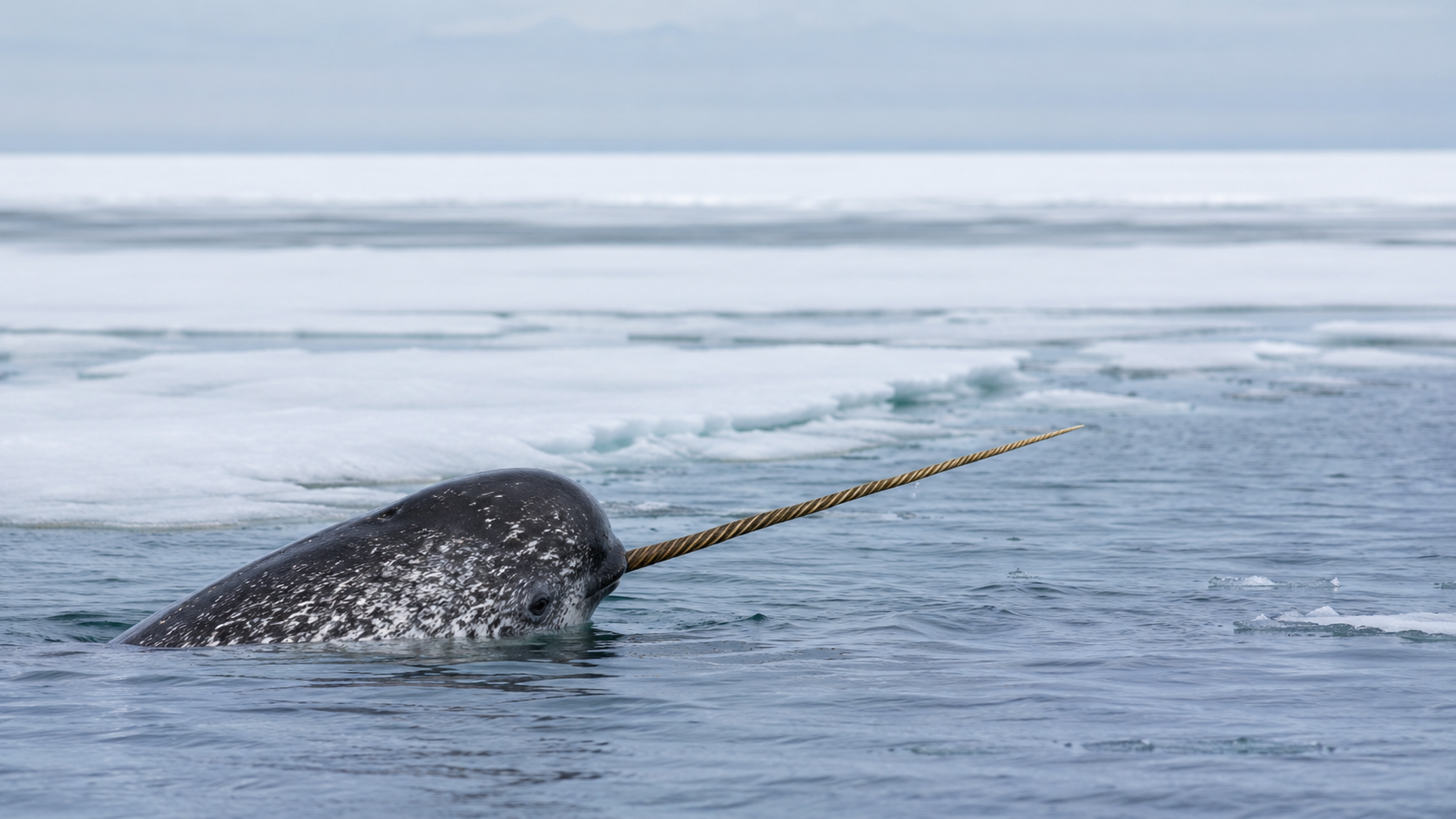
The narwhal is a member of the family Monodontidae and is closely related to the beluga whale. Its scientific name, Monodon monoceros, comes from the Greek words ‘monos’ (alone) and ‘odous’ (tooth), referring to its unique tusk. The narwhal’s tusk is actually a modified tooth that can grow up to 3 meters (10 feet) long, making it one of the longest teeth in the animal kingdom.
Physical Characteristics
The narwhal has a bluish-gray back and a white belly, with a distinctive rounded forehead and a small beak. Its flippers are small and paddle-shaped, and its dorsal fin is small and triangular. The narwhal’s most striking feature, of course, is its tusk, which spirals outward from the upper jaw of male narwhals. The tusk is thought to be used for sensing the environment, attracting mates, and breaking ice.
Behavior
Narwhals are social animals that live in small groups, called ‘pods’. They are skilled divers and can dive to depths of up to 1,500 meters (4,900 feet) in search of food. Narwhals are also known for their unique way of communicating, using a variety of clicks, whistles, and body language to convey information.
Habitat
Narwhals inhabit the Arctic waters of Canada, Greenland, and Russia, where they can be found in areas with heavy sea ice. They prefer waters with a depth of 200-500 meters (660-1,640 feet) and a temperature range of -1 to 5°C (30-41°F). Narwhals are well adapted to their Arctic environment, with a thick layer of blubber to keep them warm and a slow metabolism to conserve energy.
Diet
Narwhals are carnivores and feed on a variety of Arctic marine animals, including cod, shrimp, and other crustaceans. They have a unique way of hunting, using their sensitive tusk to detect prey in the dark Arctic waters. Narwhals have also been known to eat Greenland halibut and other fish.
Daily Needs
Narwhals need a diet rich in fat and protein to survive in the harsh Arctic environment. They require a large amount of food to maintain their energy needs, and their diet is composed mainly of high-calorie foods such as fish and crustaceans.
Warning Signs
Narwhals are vulnerable to climate change, which is affecting their habitat and food supply. They are also threatened by noise pollution from human activities such as shipping and seismic surveys, which can disrupt their communication and behavior. Additionally, narwhals are hunted by Inuit communities for their meat and ivory tusks.
Responsible Care or Conservation
Conservation efforts are underway to protect narwhal habitats and reduce human impact on their populations. The International Union for Conservation of Nature (IUCN) has listed the narwhal as ‘vulnerable’, and several organizations are working to monitor their populations and protect their habitats. Responsible whale watching and tourism can also help support conservation efforts.
What is the main threat to narwhal populations?
Climate change is the main threat to narwhal populations, as it affects their habitat and food supply.
How do narwhals communicate?
Narwhals communicate using a variety of clicks, whistles, and body language.
What is the purpose of the narwhal’s tusk?
The narwhal’s tusk is thought to be used for sensing the environment, attracting mates, and breaking ice.
Are narwhals social animals?
Yes, narwhals are social animals that live in small groups called ‘pods’.
Sources
- National Oceanic and Atmospheric Administration (NOAA). (2020). Narwhal.
- International Union for Conservation of Nature (IUCN). (2020). Monodon monoceros.
- World Wildlife Fund (WWF). (2020). Narwhal.
Important Notice: If you suspect that a narwhal is injured or in distress, please contact a qualified veterinarian or a local wildlife authority for assistance. Never attempt to touch or handle a wild narwhal, as this can cause them harm and disrupt their natural behavior.
Life Cycle and Development
Narwhals are born after a gestation period of approximately 14 months, with calves typically being born in the spring or early summer. Newborn narwhals are about 1.5 meters (4.9 feet) long and weigh around 80 kilograms (176 pounds). They nurse for about 12-14 months, during which time they rely on their mother’s rich milk for nutrition. The calf’s tusk begins to develop at around 6-8 months old, and by the time it is weaned, the tusk is already visible.
As narwhals mature, they go through a series of physical changes. Their backs darken in color, and their bellies become whiter. They also develop a series of blotches and patches on their backs, which can be used to identify individual animals. Narwhals reach physical maturity at around 10-15 years old, although they may not reach social maturity until they are much older.
Communication and Senses
Narwhals use a variety of clicks, whistles, and body language to communicate with each other. They have a highly developed sense of hearing and can detect sounds that are too faint for humans to hear. They also have excellent eyesight, both in and out of the water, and can detect polarized light, which helps them navigate through the Arctic ice.
Narwhals have a unique way of communicating through a series of clicks and whistles, known as “pulses.” These pulses are beyond the range of human hearing and are thought to be used for echolocation and navigation. They also use a variety of body language, including posturing and facial expressions, to convey information and express emotions.
Seasonal Variation and Migration
Narwhals are migratory animals, with different populations making different migrations depending on the season. In the summer, they can be found in the Arctic waters of Canada, Greenland, and Russia, where they feed on Arctic cod and other marine animals. In the winter, they migrate to the northernmost parts of their range, where they can be found in areas with dense sea ice.
During the winter months, narwhals are thought to be more sedentary, relying on stored fat reserves for energy. They have been known to congregate in large groups, sometimes numbering in the hundreds, in areas with dense sea ice. In the spring, they begin to migrate back to their summer feeding grounds, where they can be found in smaller groups.
Ecological Relationships and Research
Narwhals play a crucial role in the Arctic ecosystem, serving as both predators and prey. They feed on Arctic cod and other marine animals, which helps to regulate the populations of these species. They are also an important food source for other predators, such as polar bears and orcas.
Research on narwhals is ongoing, with scientists studying their behavior, ecology, and population dynamics. One area of research focus is on the impact of climate change on narwhal populations, as the melting of sea ice is thought to be affecting their habitat and feeding patterns. Scientists are also studying the narwhal’s unique tusk, which is thought to be sensitive to changes in the ocean environment.
Responsible Enrichment and Ethical Considerations
Narwhals are protected by international law, and hunting is regulated by the International Whaling Commission. However, they are still threatened by climate change, habitat loss, and human disturbance.
In recent years, there has been a growing interest in narwhal tourism, with some tour operators offering trips to see these animals in their natural habitat. However, this tourism can be problematic, as it can disrupt the narwhals’ behavior and habitat. Responsible tourism practices, such as keeping a safe distance and not feeding the animals, are essential to minimizing the impact on narwhal populations.
In addition, there are concerns about the capture of narwhals for display in aquariums and theme parks. Narwhals are highly specialized animals that require specific care and housing, and capturing them from the wild can be detrimental to their health and well-being.
Adaptations for Survival in the Arctic Environment
The narwhal’s unique physical characteristics and behaviors have adapted to the harsh and dynamic Arctic environment. Its bluish-gray back and white belly serve as camouflage in the Arctic waters, allowing it to blend in with the sea ice and snow. The narwhal’s small eyes and lack of external ear openings also help to reduce heat loss in the cold Arctic waters.
The narwhal’s tusk, which is actually a modified tooth, is also thought to be an adaptation for survival in the Arctic environment. Scientists believe that the tusk may be used for sensing the environment, attracting mates, and even breaking through ice. The tusk is also highly sensitive, containing millions of nerve endings that allow the narwhal to detect subtle changes in its surroundings.
In addition to its physical adaptations, the narwhal has also developed behaviors that help it to survive in the Arctic environment. For example, narwhals are skilled divers and can dive to depths of up to 1,500 meters (4,900 feet) in search of food. They are also able to slow down their heart rate and reduce their blood flow to conserve energy while diving.
Ecological Role in the Arctic Ecosystem
Narwhals play a crucial role in the Arctic ecosystem, serving as both predators and prey for other marine animals. They feed on Arctic cod, shrimp, and other marine animals, helping to regulate the populations of these species. In turn, narwhals are preyed upon by orcas, polar bears, and other predators, helping to maintain the balance of the ecosystem.
Narwhals also play a role in maintaining the health of the Arctic ecosystem through their feeding behaviors. By feeding on the seafloor, narwhals help to stir up sediment and nutrients, which can help to support the growth of phytoplankton and other marine life.
Conservation Efforts and Threats
Narwhals are listed as Near Threatened on the IUCN Red List, due to a range of threats including climate change, habitat loss, and hunting. The Arctic ice cap is melting at an alarming rate, reducing the narwhal’s habitat and making it harder for them to find food and shelter.
In addition to climate change, narwhals are also threatened by hunting and bycatch in fishing nets. In Greenland, narwhals are hunted for their meat and ivory tusks, which are highly valued on the black market. Conservation efforts are underway to protect the narwhal and its habitat, including the establishment of protected areas and regulations on hunting and fishing.
Research and Study
Scientists are working to learn more about the narwhal and its behavior, using a range of techniques including satellite tracking, acoustic monitoring, and genetic analysis. By studying the narwhal, scientists can gain a better understanding of the impacts of climate change on Arctic ecosystems and the importance of conservation efforts.
Researchers are also studying the narwhal’s unique tusk, which is thought to be one of the most sensitive and complex sensory organs in the animal kingdom. By studying the tusk, scientists can gain a better understanding of the narwhal’s behavior and ecology, and how it is adapted to the Arctic environment.
Responsible Enrichment and Education
Educating the public about the narwhal and its conservation status is an important step in protecting this unique and fascinating species. By learning more about the narwhal and its habitat, people can gain a greater appreciation for the importance of conservation efforts and the need to protect the Arctic ecosystem.
Responsible enrichment programs, such as those that promote sustainable tourism and support conservation efforts, can also help to support the protection of the narwhal and its habitat. By supporting these programs, people can help to ensure the long-term survival of the narwhal and the health of the Arctic ecosystem.