Introduction
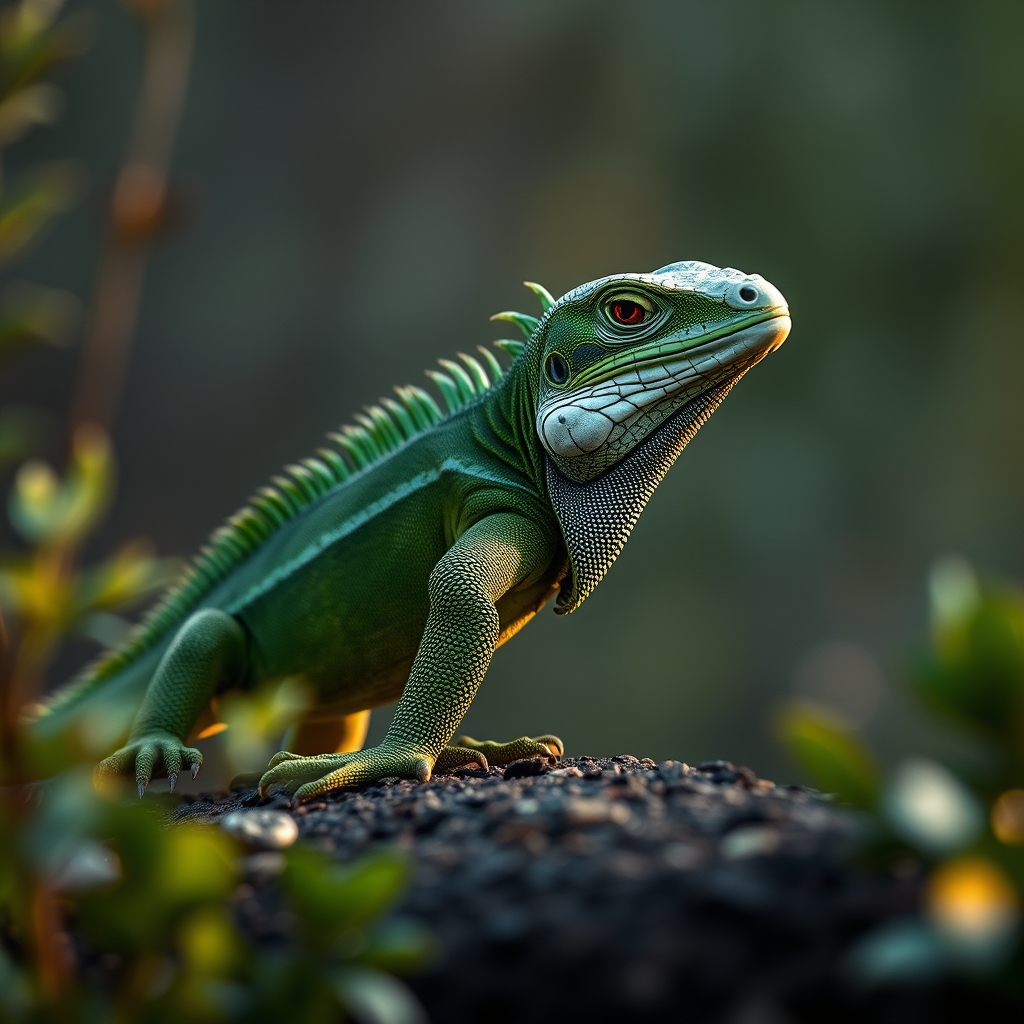
The Green Iguana (Iguana iguana) is a large, intelligent, and fascinating reptile native to the tropical regions of Central and South America. With their vibrant green color, impressive size, and prehistoric appearance, it’s no wonder why these animals have captivated humans for centuries.
Quick Reference Table
| Scientific Name | Iguana iguana |
|---|---|
| Family | Iguanidae |
| Conservation Status | Least Concern |
| Average Length | 1.5-2 meters (5-6.6 feet) |
| Average Weight | 3-6 kilograms (6.6-13.2 pounds) |
Taxonomy and Identification
The Green Iguana belongs to the family Iguanidae, which comprises over 30 species of iguanas, anoles, and chuckwallas. Iguana iguana is the largest species in the genus Iguana, and its closest relatives are the Spiny-tailed Iguana (Ctenosaura similis) and the Blue Iguana (Cyclura lewisi).
Green Iguanas can be identified by their vibrant green color, which may vary from bright yellow to dark green depending on the individual and environmental factors. They have a distinctive dewlap on their chin, a spiky back, and a long, thin tail that they use for balance and communication.
Natural Habitat and Distribution
Green Iguanas are found in the tropical regions of Central and South America, from Mexico to Brazil, and are widely distributed throughout the Caribbean islands. They inhabit a variety of habitats, including rainforests, dry forests, and coastal areas, and are often found near water sources such as rivers, lakes, and swamps.
In the wild, Green Iguanas are arboreal, spending most of their time in trees, where they feed on leaves, fruits, and flowers. They are excellent climbers and jumpers, using their powerful tails and sharp claws to navigate through the forest canopy.
Behaviour
Green Iguanas are primarily herbivores, feeding on a variety of plants, including leaves, fruits, flowers, and bark. They have a specialized digestive system that allows them to break down and extract nutrients from plant material, which is difficult for many animals to digest.
Green Iguanas are also known for their complex social behavior, which includes territorial displays, courtship rituals, and communication through a variety of vocalizations, body language, and visual displays. They are generally solitary animals but may gather in large groups during mating season or when food is abundant.
Diet
In the wild, Green Iguanas feed on a variety of plants, including leaves, fruits, flowers, and bark. They have a specialized digestive system that allows them to break down and extract nutrients from plant material, which is difficult for many animals to digest.
In captivity, Green Iguanas require a balanced diet that includes a variety of leafy greens, fruits, and vegetables. A calcium and vitamin D3 supplement is also necessary to ensure proper bone growth and development.
Daily Needs
In captivity, Green Iguanas require a large, well-ventilated enclosure with a temperature range of 25-35°C (77-95°F) and humidity levels between 60-80%. They also need a UVB light source to simulate natural sunlight and promote calcium metabolism.
A shallow water dish is necessary for drinking, and a larger water container is recommended for soaking and swimming. Green Iguanas are excellent swimmers and need regular access to water to stay hydrated and healthy.
Warning Signs
Green Iguanas can be prone to several health issues, including metabolic bone disease, respiratory infections, and parasites. Warning signs of illness include lethargy, loss of appetite, changes in stool or urine, and visible injuries or wounds.
If you suspect that your Green Iguana is ill, it’s essential to consult a qualified veterinarian experienced in reptile care. They can provide a proper diagnosis and recommend treatment options to ensure the best possible outcome.
Responsible Care or Conservation
Green Iguanas are wild animals that have complex social and spatial needs that cannot be met in captivity. They require a lot of space, specialized care, and attention, and are not recommended as pets for inexperienced owners.
If you’re considering owning a Green Iguana, make sure you’re prepared to provide the necessary care and attention for the next 10-15 years. Research local laws and regulations regarding exotic pet ownership, and consider the potential impact on the environment and local ecosystems.
In the wild, Green Iguanas play a vital role in maintaining the balance of their ecosystems. They help to disperse seeds, fertilize plants, and regulate insect populations. By supporting conservation efforts and protecting their habitats, we can help ensure the long-term survival of these incredible animals.
Practical Takeaways
- Green Iguanas are large, intelligent reptiles that require specialized care and attention.
- They need a balanced diet, a large enclosure, and regular access to water and UVB light.
- Warning signs of illness include lethargy, loss of appetite, and changes in stool or urine.
- Consult a qualified veterinarian experienced in reptile care if you suspect that your Green Iguana is ill.
- Consider the potential impact on the environment and local ecosystems before owning a Green Iguana as a pet.
What is the average lifespan of a Green Iguana?
The average lifespan of a Green Iguana is 10-15 years in captivity, although some individuals have been known to live up to 20 years.
How big do Green Iguanas get?
Green Iguanas can grow up to 1.5-2 meters (5-6.6 feet) in length and weigh between 3-6 kilograms (6.6-13.2 pounds).
Are Green Iguanas good pets?
Green Iguanas are not recommended as pets for inexperienced owners. They require a lot of space, specialized care, and attention, and can be prone to several health issues.
What do Green Iguanas eat?
Green Iguanas are primarily herbivores, feeding on a variety of plants, including leaves, fruits, flowers, and bark.
Why are Green Iguanas important in their ecosystems?
Green Iguanas play a vital role in maintaining the balance of their ecosystems. They help to disperse seeds, fertilize plants, and regulate insect populations.
- International Union for Conservation of Nature (IUCN). (2020). Iguana iguana.
- National Geographic. (2020). Green Iguana.
- Smithsonian’s National Zoo & Conservation Biology Institute. (2020). Green Iguana.
Remember to always consult a qualified veterinarian experienced in reptile care if you have any concerns about your Green Iguana’s health or well-being. Never attempt to diagnose or treat your pet without proper medical training and equipment.
Life Cycle and Development
Green Iguanas undergo a complex life cycle, with distinct stages of development. The female Green Iguana lays a clutch of 20-70 eggs in a nesting site, usually in a sandy or muddy area, after a gestation period of approximately 65 days. The eggs incubate for about 65-75 days, depending on environmental conditions, and the hatchlings emerge with a length of about 15-20 centimeters (6-8 inches).
The young iguanas, also known as neonates, are vulnerable to predators and require a warm and humid environment to grow. During the first year, they grow rapidly, increasing their length by about 10-15 centimeters (4-6 inches) per month. As they mature, they begin to develop their characteristic green coloration and spiky back.
Juvenile Green Iguanas reach sexual maturity at around 3-5 years of age, although some individuals may take longer to mature. At this stage, they begin to exhibit adult behavior, such as basking, foraging, and interacting with other iguanas.
Communication and Senses
Green Iguanas possess a range of communication methods, including visual, auditory, and chemical signals. They use body language to convey information, such as posturing, head-bobbing, and tail-whipping. They also use vocalizations, including hisses, growls, and grunts, to communicate with other iguanas.
Green Iguanas have excellent eyesight, with a wide field of vision and the ability to detect movement and changes in color. They can also detect polarized light, which helps them navigate and find food. Their sense of smell is also well-developed, and they use their Jacobson’s organ, a specialized olfactory organ, to detect chemical cues.
In addition to their visual and olfactory senses, Green Iguanas have a highly developed sense of touch. They use their sensitive scales to detect vibrations and changes in temperature, which helps them detect potential threats or prey.
Seasonal Variation and Ecological Relationships
Green Iguanas exhibit seasonal variations in behavior and physiology, adapting to changes in temperature, humidity, and food availability. During the dry season, they may estivate, a state of dormancy, to conserve energy and water. In the wet season, they become more active, foraging and breeding.
Green Iguanas play a crucial role in their ecosystems, serving as both predators and prey. They feed on leaves, fruits, and flowers, helping to disperse seeds and maintain forest diversity. They are also an important food source for predators, such as birds of prey, snakes, and other animals.
In their natural habitat, Green Iguanas interact with a range of other species, including other reptiles, amphibians, and insects. They have a complex relationship with their environment, influencing the structure and composition of their ecosystems through their feeding and nesting activities.
Research and Conservation Efforts
Green Iguanas have been the subject of extensive research, focusing on their behavior, ecology, and conservation. Studies have investigated their habitat use, diet, and social behavior, providing insights into their complex biology.
Conservation efforts are underway to protect Green Iguana populations, which are threatened by habitat destruction, hunting, and the pet trade. National parks and protected areas have been established to safeguard their habitats, and education programs aim to raise awareness about the importance of conservation.
Researchers are also working to develop effective conservation strategies, such as habitat restoration and reintroduction programs. Additionally, studies are being conducted to understand the impact of climate change on Green Iguana populations and to develop strategies to mitigate its effects.
Responsible Enrichment and Ethical Considerations
Green Iguanas require a stimulating environment that meets their physical and behavioral needs. Providing a varied and nutritious diet, a suitable enclosure, and opportunities for exercise and social interaction is essential for their well-being.
However, the pet trade has raised concerns about the welfare of captive Green Iguanas. Many animals are captured from the wild, and their removal can harm local populations. Additionally, the trade can lead to animal suffering, as iguanas are often kept in inadequate conditions.
It is essential to consider the ethical implications of keeping Green Iguanas as pets and to prioritize their welfare. This includes providing a suitable environment, avoiding capture from the wild, and supporting conservation efforts.