Introduction
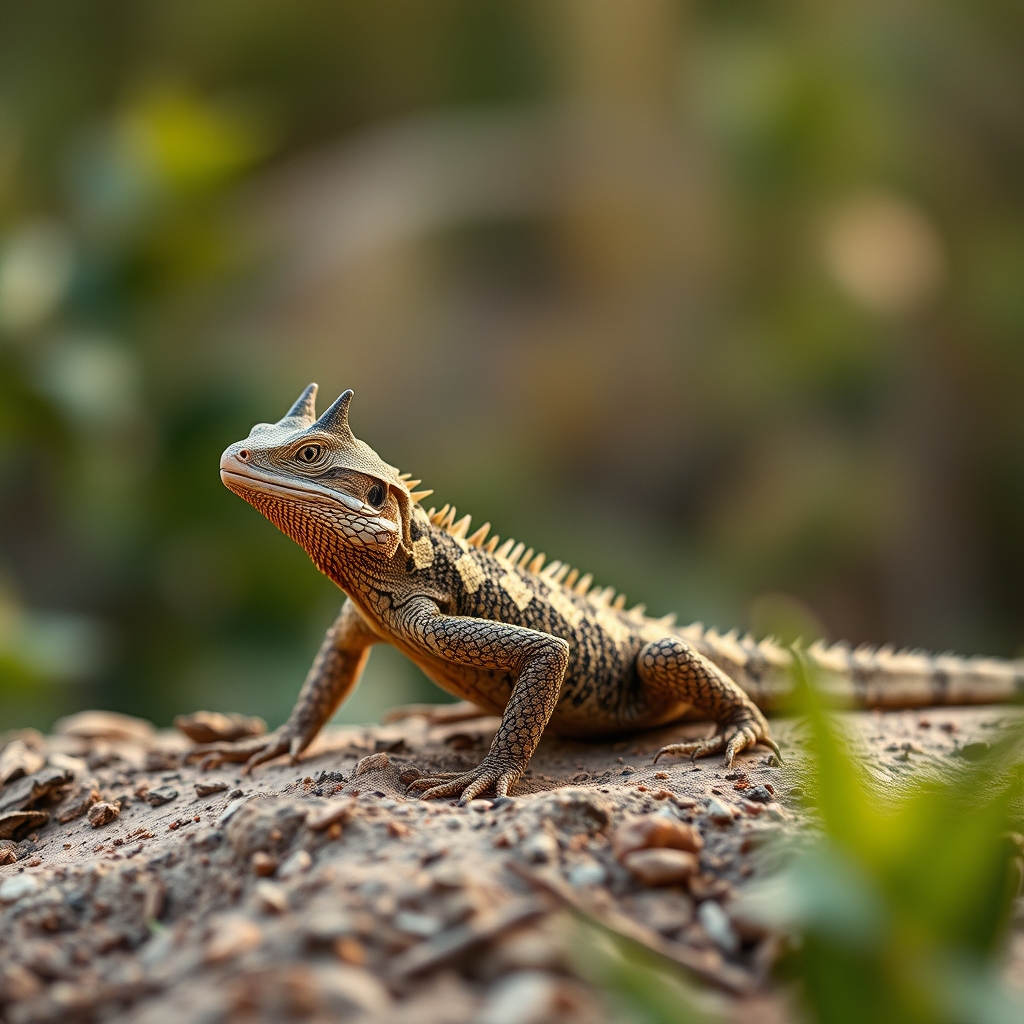
The Horned Lizard, also known as the Horned Toad, is a small to medium-sized reptile native to North America. Its distinctive horns and spiky body make it a popular and fascinating creature among animal enthusiasts. In this guide, we will delve into the world of the Horned Lizard, exploring its taxonomy, physical characteristics, behavior, habitat, diet, care, and conservation status.
Quick Reference Table
| Scientific Name | Phrynosoma spp. |
|---|---|
| Family | Phrynosomatidae |
| Order | Squamata |
| Conservation Status | Vulnerable |
| Average Lifespan | 5-8 years |
| Average Length | 3-5 inches |
Taxonomy and Identification
The Horned Lizard belongs to the family Phrynosomatidae and is part of the order Squamata, which includes all lizards and snakes. There are 14 recognized species of Horned Lizards, each with unique physical characteristics and habits. The most common species is the Texas Horned Lizard (Phrynosoma cornutum).
Physical characteristics of the Horned Lizard include its distinctive horns, which are actually modified scales, and its spiky body, which is covered in sharp, pointed scales. The lizard’s body is typically brown or gray in color, with a rounded head and a short, stout tail.
Natural Habitat and Distribution
Horned Lizards are found in the southwestern United States and northern Mexico, in areas with dry, sandy soil and low vegetation. They are typically found in deserts, grasslands, and scrublands, where they can be seen basking in the sun or scurrying through the underbrush.
Behavior
Horned Lizards are primarily solitary animals and are only social during mating season. They are diurnal, meaning they are active during the day, and spend most of their time basking in the sun or foraging for food. They are also skilled burrowers and can be seen digging complex networks of tunnels and burrows.
Horned Lizards have a unique defense mechanism, where they puff up their bodies and display their horns to deter predators. They are also able to release a foul-tasting fluid from their bodies to further deter predators.
Diet
Horned Lizards are primarily insectivores, feeding on ants, beetles, and other small insects. They also eat some plant material, including leaves and flowers. In captivity, Horned Lizards can be fed a diet of crickets, mealworms, and other commercially available insects.
Diet
Horned Lizards are primarily insectivores, feeding on ants, beetles, and other small insects. They also eat some plant material, including leaves and flowers. In captivity, Horned Lizards can be fed a diet of crickets, mealworms, and other commercially available insects.
Daily Needs
In captivity, Horned Lizards require a well-ventilated, dry enclosure with a temperature range of 75-90°F (24-32°C) and a humidity level of 30-50%. They also require a UVB light source to promote calcium metabolism and prevent metabolic bone disease.
A shallow water dish should be provided for drinking, and a hiding place or two should be included to reduce stress. A substrate of sand or calcium sand is recommended, as it allows for digging and burrowing.
Warning Signs
Some common health issues in Horned Lizards include metabolic bone disease, respiratory infections, and impaction. Signs of these conditions include lethargy, loss of appetite, and changes in stool or urine output.
If you notice any of these signs, it is essential to consult a veterinarian experienced in reptile care. A veterinarian can diagnose and treat these conditions, and provide guidance on proper care and husbandry.
Responsible Care or Conservation
If you are considering keeping a Horned Lizard as a pet, it is essential to do your research and understand the needs and requirements of these animals. Horned Lizards can make interesting and rewarding pets, but they do require specialized care and housing.
In the wild, Horned Lizards are facing threats such as habitat destruction, fragmentation, and degradation, as well as the introduction of non-native species. Conservation efforts are underway to protect these animals and their habitats.
What is the average lifespan of a Horned Lizard?
5-8 years
What is the typical diet of a Horned Lizard?
Primarily insectivores, feeding on ants, beetles, and other small insects
What are some common health issues in Horned Lizards?
Metabolic bone disease, respiratory infections, and impaction
Why is conservation important for Horned Lizards?
Habitat destruction, fragmentation, and degradation, as well as the introduction of non-native species
Sources
- International Union for Conservation of Nature (IUCN)
- Reptile Database
- National Geographic
Important Notice: If you suspect that your Horned Lizard is ill or injured, please consult a veterinarian experienced in reptile care. This guide is for informational purposes only and should not be used as a substitute for professional veterinary advice.
Life Cycle and Development
Horned Lizards undergo a complex life cycle, which includes several stages of development. The female Horned Lizard lays a clutch of 2-5 eggs in a shallow nest, usually in a protected area such as under a rock or in a burrow. The eggs incubate for approximately 60-70 days, depending on environmental conditions. After hatching, the young lizards emerge and begin their independent lives.
The juvenile Horned Lizards, also known as hatchlings, are small and vulnerable, measuring about 1-2 inches in length. They are miniature versions of the adults, with tiny horns and spiky scales. During this stage, they are susceptible to predation and rely on their camouflage and agility to survive.
As the hatchlings grow, they undergo a series of molts, shedding their skin to accommodate their increasing size. This process continues until they reach adulthood, which typically occurs within 1-2 years. At this stage, they are fully developed and capable of reproducing.
Communication and Senses
Horned Lizards communicate primarily through visual displays and body language. They use a variety of signals to convey information, such as threat displays, courtship behaviors, and territorial markings. For example, when threatened, a Horned Lizard will puff up its body, display its horns, and perform a series of push-ups to deter predators.
In addition to visual communication, Horned Lizards also possess a keen sense of smell and can detect chemical cues from potential mates, rivals, and prey. Their sense of hearing is limited, but they can detect vibrations in the ground, which helps them detect potential threats.
Their eyesight is also impressive, with a wide field of vision and the ability to detect movement quickly. This is essential for detecting predators and catching prey.
Seasonal Variation and Hibernation
Horned Lizards are ectothermic, meaning their body temperature is regulated by the environment. As a result, their activity levels and behavior vary depending on the season. During the summer months, they are active during the day, basking in the sun to regulate their body temperature.
In the winter months, Horned Lizards enter a state of dormancy, known as brumation, to conserve energy. During this period, their metabolism slows down, and they rely on stored fat reserves for sustenance. They typically burrow underground, where the temperature is more stable, and remain in this state until the weather warms up in the spring.
Ecological Relationships and Predation
Horned Lizards play a vital role in their ecosystems, serving as both predators and prey. They feed on ants, beetles, and other small insects, helping to regulate their populations. In turn, they are preyed upon by a variety of animals, including birds, snakes, and other reptiles.
Their unique appearance and behavior also make them an important part of their ecosystems. Their spiky scales and horns serve as a defense mechanism, deterring predators from attacking them. Additionally, their burrowing activities help to aerate the soil and create habitat for other animals.
Research and Conservation Efforts
Horned Lizards have been the subject of various research studies, focusing on their behavior, ecology, and conservation. Scientists have been studying their habitat requirements, population dynamics, and responses to environmental changes.
Conservation efforts are underway to protect Horned Lizard populations and their habitats. Habitat preservation and restoration are critical, as well as reducing human impact on their ecosystems. Additionally, education and outreach programs are essential in raising awareness about the importance of conserving these unique creatures.
Responsible Enrichment and Captivity
For those interested in keeping Horned Lizards in captivity, it is essential to provide a suitable environment that meets their specific needs. A well-designed enclosure should include a heat source, UVB lighting, and a varied substrate that allows for burrowing.
Providing a varied diet that includes live insects is also crucial, as well as a shallow water dish for drinking. Handling should be minimal, as Horned Lizards can be stressed by excessive handling.
It is also essential to check local laws and regulations regarding the capture and keeping of Horned Lizards in captivity. In some areas, they may be protected, and permits may be required.
Ethical and Legal Considerations
Horned Lizards are protected by laws and regulations in some areas, and their capture, sale, and trade are regulated. It is essential to be aware of these regulations and to ensure that any activities involving Horned Lizards are carried out in a responsible and sustainable manner.
Additionally, it is crucial to consider the welfare of the animals and to prioritize their well-being. This includes providing suitable housing, nutrition, and care, as well as minimizing stress and handling.
Adaptations for Survival
Horned Lizards have evolved several unique adaptations to survive in their arid and semi-arid habitats. One of the most notable adaptations is their ability to puff up their bodies when threatened, making themselves appear larger and more intimidating to potential predators. This is achieved by swallowing air, which inflates their lungs and causes their body to expand. Additionally, their spiky scales provide protection against predators, making it difficult for them to get a good grip on the lizard’s body.
Another important adaptation of Horned Lizards is their ability to estivate during periods of extreme heat or drought. Estivation is a state of dormancy similar to hibernation, but it occurs during the summer months instead of the winter. During estivation, the lizard’s metabolism slows down, and they seal themselves in a burrow or under a rock to conserve energy and water.
Reproduction and Mating Habits
Horned Lizards breed in the spring, typically from April to July, depending on the species and location. Males engage in a complex courtship ritual to attract females, which involves head-bobbing, push-ups, and other displays of dominance. Once a male has successfully mated with a female, she will lay a clutch of 2-5 eggs in a shallow burrow or under a rock. The eggs incubate for about 60-70 days, and the hatchlings emerge in the summer months.
Female Horned Lizards are able to store sperm from multiple males, allowing them to control fertilization and choose the best mate for their offspring. This unique reproductive strategy is known as “sperm storage,” and it allows females to optimize their reproductive success in environments where males may be scarce.
Ecological Role and Impact
Horned Lizards play an important ecological role in their native habitats, serving as both predators and prey. They feed on ants, beetles, and other small insects, helping to regulate their populations and maintain the balance of their ecosystems. In turn, Horned Lizards are preyed upon by a variety of animals, including snakes, birds, and mammals.
Unfortunately, Horned Lizard populations are declining in many areas due to habitat destruction, fragmentation, and degradation. The introduction of non-native species, such as fire ants and Argentine ants, has also had a significant impact on Horned Lizard populations, as these ants compete with them for food and habitat. As a result, conservation efforts are necessary to protect these unique and fascinating creatures.
Cultural Significance and Symbolism
Horned Lizards have significant cultural and symbolic meaning in many Native American communities. In some tribes, the Horned Lizard is considered a sacred animal, associated with strength, protection, and good luck. In other cultures, the lizard is seen as a symbol of fertility and abundance, due to its ability to thrive in harsh environments.
In modern times, the Horned Lizard has become a popular cultural icon, appearing in films, literature, and art. Its unique appearance and fascinating behavior have captivated people around the world, inspiring a new generation of lizard enthusiasts and conservationists.