Iguana Verde: Un Guía Completa
La Iguana Verde (Iguana iguana) es una especie de lagarto que pertenece a la familia Iguanidae. Es una de las especies más grandes y conocidas de iguanas, y se encuentra en los bosques húmedos y costas de América Central y del Sur.
Ficha de Referencia
| Nombre científico | Iguana iguana |
|---|---|
| Nombre común | Iguana Verde |
| Familia | Iguanidae |
| Orden | Squamata |
| Clase | Reptilia |
Clasificación y Rasgos Físicos
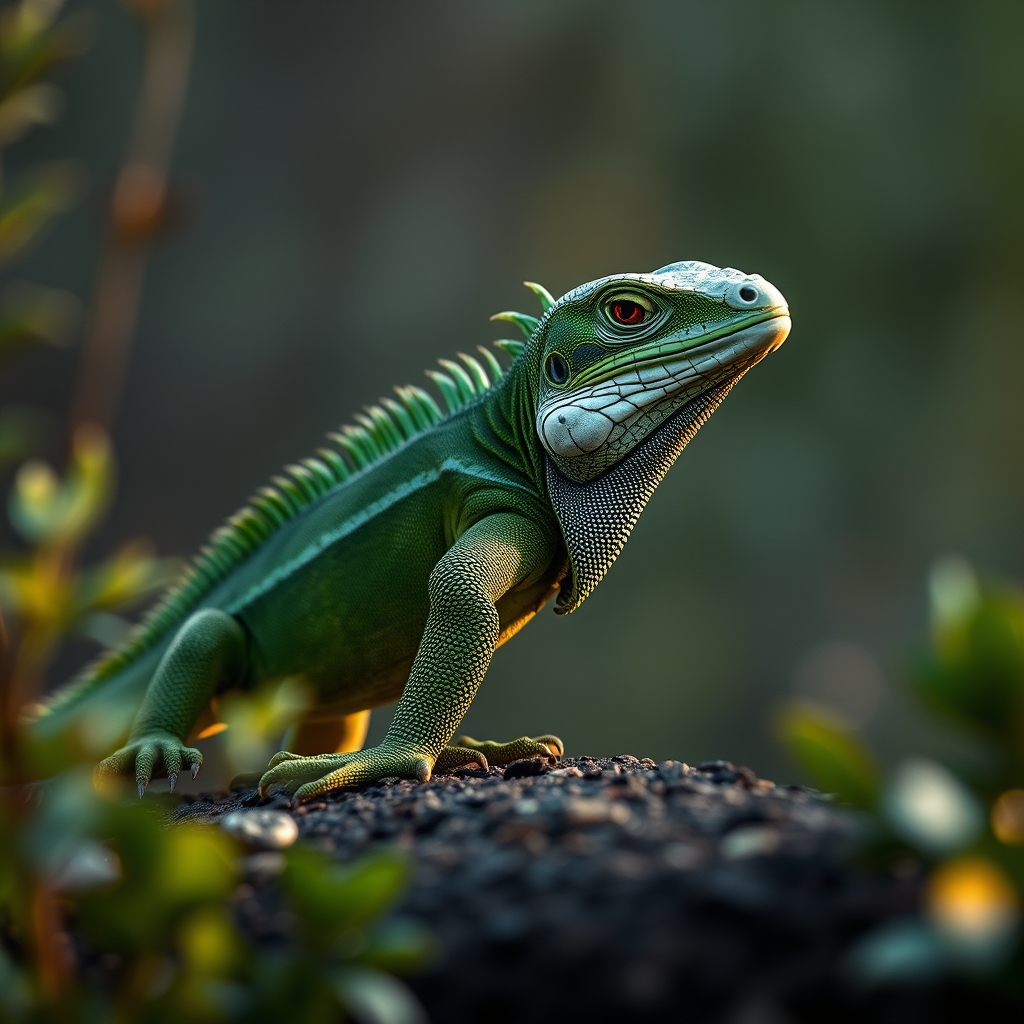
La Iguana Verde es un lagarto grande, que puede alcanzar hasta 2 metros de longitud, incluyendo su cola. Su cuerpo es verde brillante, con escamas duras y rugosas. Tiene una cresta dorsal que se extiende desde la cabeza hasta la cola, y sus patas son fuertes y tienen garras afiladas.
Comportamiento
La Iguana Verde es un animal herbívoro, que se alimenta de hojas, frutas y flores. Es un animal solitario, que solo se reúne con otros de su especie durante la temporada de reproducción. Es un animal territorial, y marca su territorio con secreciones de su glándula parótida.
Hábitat
La Iguana Verde se encuentra en los bosques húmedos y costas de América Central y del Sur, desde México hasta Brasil. Prefiere áreas con vegetación densa y acceso a agua dulce o salada.
La segunda mitad del artículo continuará en inglés.
Diet
The Green Iguana is a herbivore, and its diet consists mainly of leaves, fruits, and flowers. In captivity, it is recommended to provide a diet rich in fiber and low in protein, with a variety of vegetables and fruits.
Care or Responsible Observation
If you are considering keeping a Green Iguana as a pet, it is essential to provide a suitable enclosure with adequate space, heat, and lighting. A diet rich in fiber and low in protein is also crucial. However, it is recommended to observe these animals in their natural habitat, as they have complex social and spatial needs that are difficult to replicate in captivity.
Health, Welfare, and Conservation
The Green Iguana is listed as Least Concern on the IUCN Red List, but its populations are declining due to habitat loss, hunting, and the pet trade. It is essential to support conservation efforts and responsible pet trade practices to ensure the long-term survival of this species.
Practical Takeaways
- Provide a suitable enclosure with adequate space, heat, and lighting if keeping a Green Iguana as a pet.
- Offer a diet rich in fiber and low in protein.
- Support conservation efforts and responsible pet trade practices.
Frequently Asked Questions
How big can Green Iguanas get?
Green Iguanas can grow up to 2 meters in length, including their tail.
What do Green Iguanas eat?
Green Iguanas are herbivores and eat leaves, fruits, and flowers.
Are Green Iguanas good pets?
Green Iguanas have complex social and spatial needs that are difficult to replicate in captivity, so it is recommended to observe them in their natural habitat.
Why are Green Iguanas important?
Green Iguanas play a crucial role in their ecosystems, helping to disperse seeds and maintain forest diversity.
Sources:
- National Geographic. (2022). Green Iguana.
- IUCN Red List. (2022). Iguana iguana.
- Smithsonian's National Zoo & Conservation Biology Institute. (2022). Green Iguana.
Please note that the information provided is for educational purposes only and should not be used for veterinary diagnosis or treatment. If you have concerns about the health or welfare of an animal, please consult a qualified veterinarian.
Iguana Verde: Un Guía Completa
La Iguana Verde (Iguana iguana) es una especie de lagarto que pertenece a la familia Iguanidae. Es una de las especies más grandes y conocidas de iguanas, y se encuentra en los bosques húmedos y costas de América Central y del Sur.
Ficha de Referencia
| Nombre científico | Iguana iguana |
|---|---|
| Nombre común | Iguana Verde |
| Familia | Iguanidae |
| Orden | Squamata |
| Clase | Reptilia |
Clasificación y Rasgos Físicos
La Iguana Verde es un lagarto grande, que puede alcanzar hasta 2 metros de longitud, incluyendo su cola. Su cuerpo es verde brillante, con escamas duras y rugosas. Tiene una cresta dorsal que se extiende desde la cabeza hasta la cola, y sus patas son fuertes y tienen garras afiladas.
Comportamiento
La Iguana Verde es un animal herbívoro, que se alimenta de hojas, frutas y flores. Es un animal solitario, que solo se reúne con otros de su especie durante la temporada de reproducción. Es un animal territorial, y marca su territorio con secreciones de su glándula parótida.
Hábitat
La Iguana Verde se encuentra en los bosques húmedos y costas de América Central y del Sur, desde México hasta Brasil. Prefiere áreas con vegetación densa y acceso a agua dulce o salada.
La segunda mitad del artículo continuará en inglés.
Diet
The Green Iguana is a herbivore, and its diet consists mainly of leaves, fruits, and flowers. In captivity, it is recommended to provide a diet rich in fiber and low in protein, with a variety of vegetables and fruits.
Care or Responsible Observation
If you are considering keeping a Green Iguana as a pet, it is essential to provide a suitable enclosure with adequate space, heat, and lighting. A diet rich in fiber and low in protein is also crucial. However, it is recommended to observe these animals in their natural habitat, as they have complex social and spatial needs that are difficult to replicate in captivity.
Health, Welfare, and Conservation
The Green Iguana is listed as Least Concern on the IUCN Red List, but its populations are declining due to habitat loss, hunting, and the pet trade. It is essential to support conservation efforts and responsible pet trade practices to ensure the long-term survival of this species.
Practical Takeaways
- Provide a suitable enclosure with adequate space, heat, and lighting if keeping a Green Iguana as a pet.
- Offer a diet rich in fiber and low in protein.
- Support conservation efforts and responsible pet trade practices.
Frequently Asked Questions
How big can Green Iguanas get?
Green Iguanas can grow up to 2 meters in length, including their tail.
What do Green Iguanas eat?
Green Iguanas are herbivores and eat leaves, fruits, and flowers.
Are Green Iguanas good pets?
Green Iguanas have complex social and spatial needs that are difficult to replicate in captivity, so it is recommended to observe them in their natural habitat.
Why are Green Iguanas important?
Green Iguanas play a crucial role in their ecosystems, helping to disperse seeds and maintain forest diversity.
Sources:
- National Geographic. (2022). Green Iguana.
- IUCN Red List. (2022). Iguana iguana.
- Smithsonian's National Zoo & Conservation Biology Institute. (2022). Green Iguana.
Alimentación
La Iguana Verde es un animal herbívoro, y su dieta consiste principalmente en hojas, frutas y flores. En cautiverio, se recomienda proporcionar una dieta rica en fibra y baja en proteínas, con una variedad de verduras y frutas.
Necesidades Diarias
La Iguana Verde necesita un entorno adecuado con espacio suficiente, calor y luz. También necesita una dieta equilibrada y acceso a agua fresca.
Señales de Alerta
Es importante estar atento a las señales de alerta de la Iguana Verde, como la pérdida de apetito, la falta de energía o la presencia de lesiones o enfermedades.
Cuidado Responsable o Conservación
Es fundamental apoyar los esfuerzos de conservación y prácticas responsables de comercio de mascotas para asegurar la supervivencia a largo plazo de esta especie.
Preguntas Frecuentes
¿Cuánto pueden crecer las Iguanas Verdes?
Las Iguanas Verdes pueden crecer hasta 2 metros de longitud, incluyendo su cola.
¿Qué comen las Iguanas Verdes?
Las Iguanas Verdes son herbívoras y comen hojas, frutas y flores.
¿Son buenas mascotas las Iguanas Verdes?
Las Iguanas Verdes tienen necesidades sociales y espaciales complejas que son difíciles de replicar en cautiverio, por lo que se recomienda observarlas en su hábitat natural.
¿Por qué son importantes las Iguanas Verdes?
Las Iguanas Verdes juegan un papel crucial en sus ecosistemas, ayudando a dispersar semillas y mantener la diversidad forestal.
Fuentes:
- National Geographic. (2022). Iguana Verde.
- Lista Roja de la UICN. (2022). Iguana iguana.
- Instituto Smithsonian de Zoología y Biología de la Conservación. (2022). Iguana Verde.
Por favor, tenga en cuenta que la información proporcionada es solo para fines educativos y no debe ser utilizada para diagnóstico o tratamiento veterinario. Si tiene preocupaciones sobre la salud o el bienestar de un animal, por favor consulte a un veterinario calificado.