Introduction
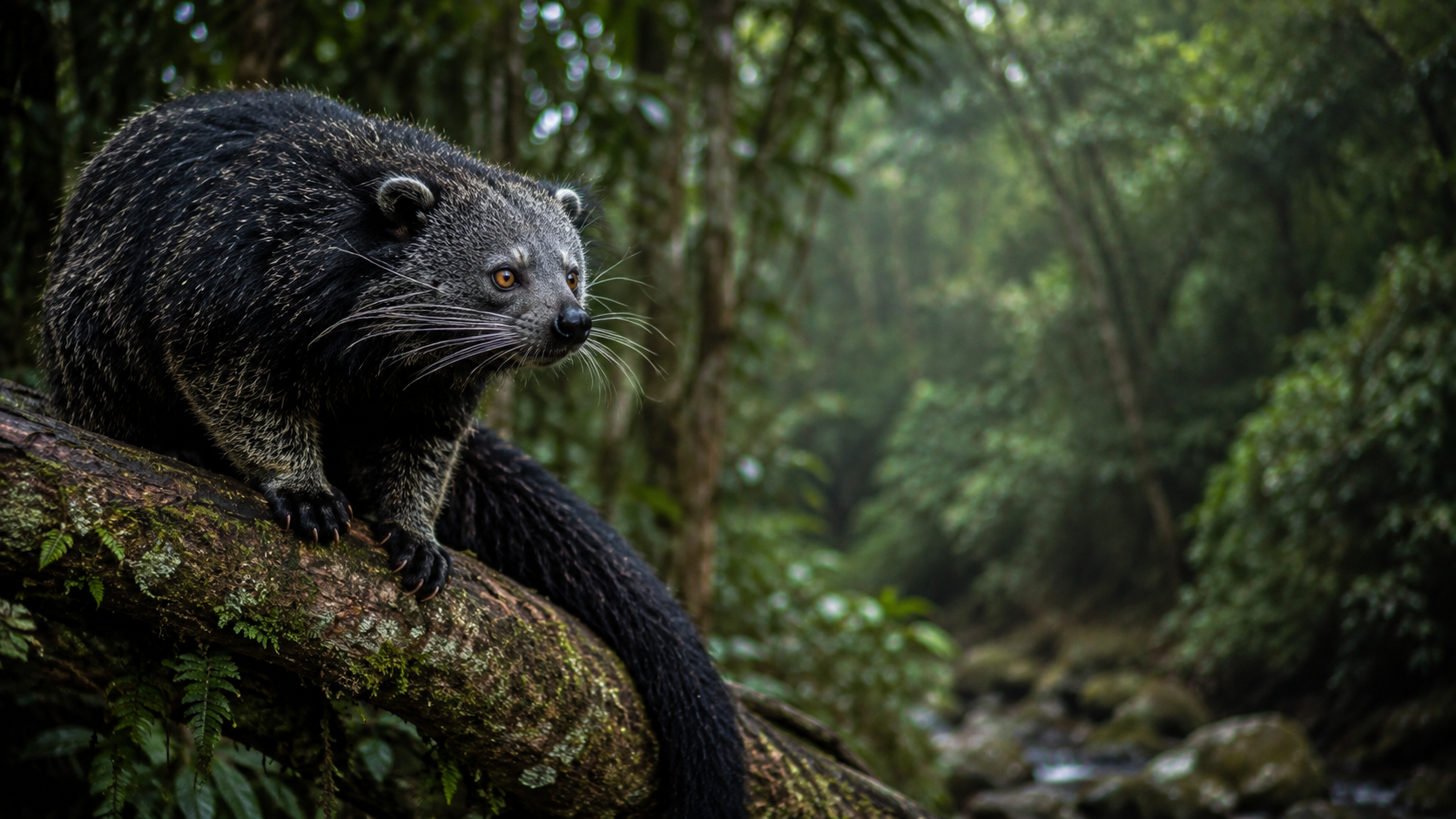
The Binturong (Arctictis binturong) is a unique and fascinating animal, also known as the bearcats, due to its physical resemblance to both bears and cats. Native to Southeast Asia, this carnivorous mammal is a member of the Viverridae family, which includes civets and genets. In this comprehensive guide, we will delve into the world of Binturongs, exploring their taxonomy, physical characteristics, behavior, habitat, diet, care, and conservation status.
Quick Reference Table
| Scientific Name | Arctictis binturong |
|---|---|
| Common Name | Binturong, Bearcat |
| Family | Viverridae |
| Order | Carnivora |
| Conservation Status | Vulnerable |
Taxonomy and Identification
The Binturong is a member of the Viverridae family, which comprises 35 species of carnivorous mammals. The genus Arctictis includes two species: the Binturong (A. binturong) and the African palm civet (A. binturong minor). Binturongs are characterized by their distinctive physical features, including their thick, coarse fur, which ranges in color from dark brown to yellowish-brown, and their long, bushy tail.
Physical Characteristics
Binturongs are medium-sized mammals, with adults typically weighing between 9-20 kg (20-44 lbs) and measuring 1.5-2.5 m (5-8.2 ft) in length, including their tail. They have a stout body, short legs, and a distinctive crest of hair running along their neck and back. Their fur is thick and coarse, with a distinctive odor, often compared to popcorn or corn chips.
Behavior
Binturongs are primarily arboreal, spending most of their time in trees, where they forage for food and shelter. They are skilled climbers, using their long, curved claws and flexible spine to navigate through the forest canopy. Binturongs are also excellent swimmers and have been known to swim long distances in search of food or shelter.
Habitat and Distribution
Binturongs are found in the tropical forests of Southeast Asia, including Bangladesh, Bhutan, Cambodia, China, India, Indonesia, Laos, Malaysia, Myanmar, Nepal, the Philippines, Thailand, and Vietnam. They inhabit a variety of habitats, including primary and secondary forests, mangrove swamps, and even urban areas. Binturongs are adaptable animals, able to thrive in a range of environments, from sea level to elevations of up to 2,500 m (8,200 ft).
Diet
Binturongs are carnivores, and their diet consists mainly of small mammals, fruits, and insects. They are opportunistic feeders, and their diet varies depending on the season and availability of food. In the wild, they have been known to feed on a variety of prey, including rodents, birds, and reptiles.
Daily Needs
In captivity, Binturongs require a diet rich in protein and fat, with a mix of fruits, vegetables, and meat. They need a large enclosure with plenty of space to climb and exercise, as well as a varied and stimulating environment to prevent boredom and stress.
Warning Signs
Binturongs are prone to certain health issues, including obesity, dental problems, and respiratory infections. They can also be susceptible to diseases such as distemper and parvovirus. It is essential to monitor their health closely and seek veterinary care if any warning signs are observed.
Responsible Care or Conservation
Binturongs are listed as Vulnerable on the IUCN Red List, due to habitat loss, hunting, and the pet trade. Conservation efforts are underway to protect their habitats and reduce human-Binturong conflict. In captivity, Binturongs require specialized care and housing, and it is essential to ensure that they are obtained from reputable breeders or rescue organizations.
What is the average lifespan of a Binturong?
The average lifespan of a Binturong is around 15-20 years in the wild, and up to 25 years in captivity.
Are Binturongs good pets?
No, Binturongs do not make good pets. They are wild animals that require specialized care and housing, and are best suited to experienced zoologists and conservationists.
What is the conservation status of Binturongs?
Binturongs are listed as Vulnerable on the IUCN Red List, due to habitat loss, hunting, and the pet trade.
What is the typical weight of a Binturong?
The typical weight of a Binturong is between 9-20 kg (20-44 lbs).
Sources
- IUCN Red List: Arctictis binturong
- National Geographic: Binturong
- Animal Diversity Web: Arctictis binturong
It is essential to consult with a qualified veterinarian before obtaining a Binturong as a pet, as they require specialized care and housing. Additionally, it is crucial to support conservation efforts to protect Binturongs and their habitats.
Life Cycle and Development
Binturongs have a relatively long lifespan for their size, with a maximum recorded age of 18 years in captivity. In the wild, their lifespan is estimated to be around 10-15 years. Female Binturongs typically give birth to 1-4 cubs after a gestation period of approximately 90-100 days. The cubs are born with their eyes closed, and they rely on their mother’s milk for several months. During this time, the mother will often leave her cubs in a sheltered location, such as a tree cavity or a rocky outcrop, while she forages for food.
As the cubs grow and develop, they begin to accompany their mother on foraging trips, learning essential skills such as hunting and climbing. The cubs will typically stay with their mother for around 2-3 years, during which time they will continue to grow and mature. After this period, the young Binturongs will venture out on their own, establishing their own territories and starting the cycle again.
Communication and Senses
Binturongs have a range of communication methods, including vocalizations, scent marking, and visual displays. They are known to produce a variety of sounds, including grunts, growls, and hisses, which are used to convey information and warnings to other Binturongs. They also have scent glands located on their chest, near their front paws, and on their underside, which they use to mark their territory and communicate with other Binturongs.
In terms of their senses, Binturongs have relatively poor eyesight, but their sense of smell is highly developed. They have a keen sense of hearing and are also sensitive to touch. Their thick, coarse fur provides them with protection from the elements and potential predators, and their long, bushy tail helps them to balance while climbing and jumping.
Seasonal Variation and Ecological Relationships
Binturongs are found in a variety of habitats, including tropical rainforests, mangrove swamps, and mountainous regions. They are adapted to living in a range of environments, and their behavior and physiology vary accordingly. In the wild, Binturongs are known to be solitary animals, only coming together during the breeding season.
In terms of their ecological relationships, Binturongs play a crucial role in their ecosystems as both predators and prey. They feed on a variety of small mammals, birds, and reptiles, helping to regulate populations and maintain the balance of their ecosystems. They are also an important food source for larger predators, such as leopards and clouded leopards.
Research and Conservation Efforts
Binturongs are listed as Vulnerable on the IUCN Red List, due to habitat loss, fragmentation, and hunting. Conservation efforts are underway to protect their habitats and reduce human-Binturong conflict. Research is also being conducted to better understand the behavior, ecology, and population dynamics of Binturongs, with the aim of informing conservation efforts and protecting this unique and fascinating species.
In addition to conservation efforts, research is also being conducted on the unique characteristics of Binturongs, such as their scent marking behavior and their ability to climb and jump. This research has important implications for our understanding of animal behavior and ecology, and can inform conservation efforts for other species.
Responsible Enrichment and Ethical Considerations
Binturongs are popular animals in zoos and wildlife parks, and are often kept in captivity for conservation and education purposes. However, keeping Binturongs in captivity requires careful consideration and planning, as they have specific needs and requirements. Providing enrichment activities and stimulating environments is essential for maintaining the physical and mental health of captive Binturongs.
In terms of ethical considerations, it is essential to prioritize the welfare and well-being of Binturongs, both in captivity and in the wild. This includes ensuring that their habitats are protected, and that they are not hunted or persecuted. By working together to protect and conserve Binturongs, we can help to ensure the long-term survival of this unique and fascinating species.
Adaptations and Specialized Features
Binturongs have several adaptations that enable them to thrive in their native habitats. One of their most distinctive features is their prehensile tail, which they use as an additional limb to grasp branches and climb through trees. This specialized tail is covered in thick fur and has a unique, muscular structure that allows it to act as a fifth limb. Binturongs also have retractable claws, which they use for climbing, hunting, and self-defense.
Their thick, coarse fur is another adaptation that helps them survive in their environment. The fur is longest on their back, where it forms a distinctive crest that runs along their neck and shoulders. This crest may serve as a visual signal to other Binturongs, helping them to recognize one another. The fur also provides excellent insulation, keeping Binturongs warm in cooler temperatures and cool in warmer temperatures.
Binturongs also have a unique, scent-producing gland located near their anus. This gland produces a strong, musky scent that Binturongs use to mark their territory and communicate with other members of their species. They also have a keen sense of smell, which they use to detect food and detect potential threats.
Ecological Role and Impact
As a carnivorous mammal, Binturongs play an important role in their ecosystems. They are skilled hunters, feeding on a variety of small mammals, birds, and reptiles. By controlling populations of these prey species, Binturongs help to maintain the balance of their ecosystems.
Binturongs also have a unique relationship with fig trees. They are one of the primary seed dispersers for these trees, helping to spread their seeds throughout the forest. In return, the fig trees provide Binturongs with a source of food and shelter. This mutualistic relationship is an example of the important ecological role that Binturongs play in their native habitats.
Unfortunately, Binturongs are also vulnerable to habitat loss and fragmentation, which can disrupt their ecological relationships and impact their populations. As their habitats are destroyed or degraded, Binturongs are forced to adapt to new environments, which can be challenging for these specialized animals.
Threats and Challenges
Binturongs face several threats to their survival, including habitat loss and fragmentation, hunting, and human-wildlife conflict. Their habitats are being destroyed or degraded at an alarming rate, primarily due to deforestation and agriculture. This habitat loss can isolate Binturong populations, making it difficult for them to find food, shelter, and mates.
Binturongs are also hunted for their fur, meat, and body parts, which are used in traditional medicine. In some cultures, Binturong meat is considered a delicacy, and their fur is highly valued for its softness and warmth.
Human-wildlife conflict is another significant threat to Binturongs. As their habitats are destroyed or degraded, Binturongs are forced to venture into agricultural areas or human settlements in search of food. This can lead to conflicts with humans, who may view Binturongs as pests or threats to their livelihoods.
Overall, Binturongs face significant challenges to their survival, and conservation efforts are necessary to protect these unique and fascinating animals.