Classification and Natural History
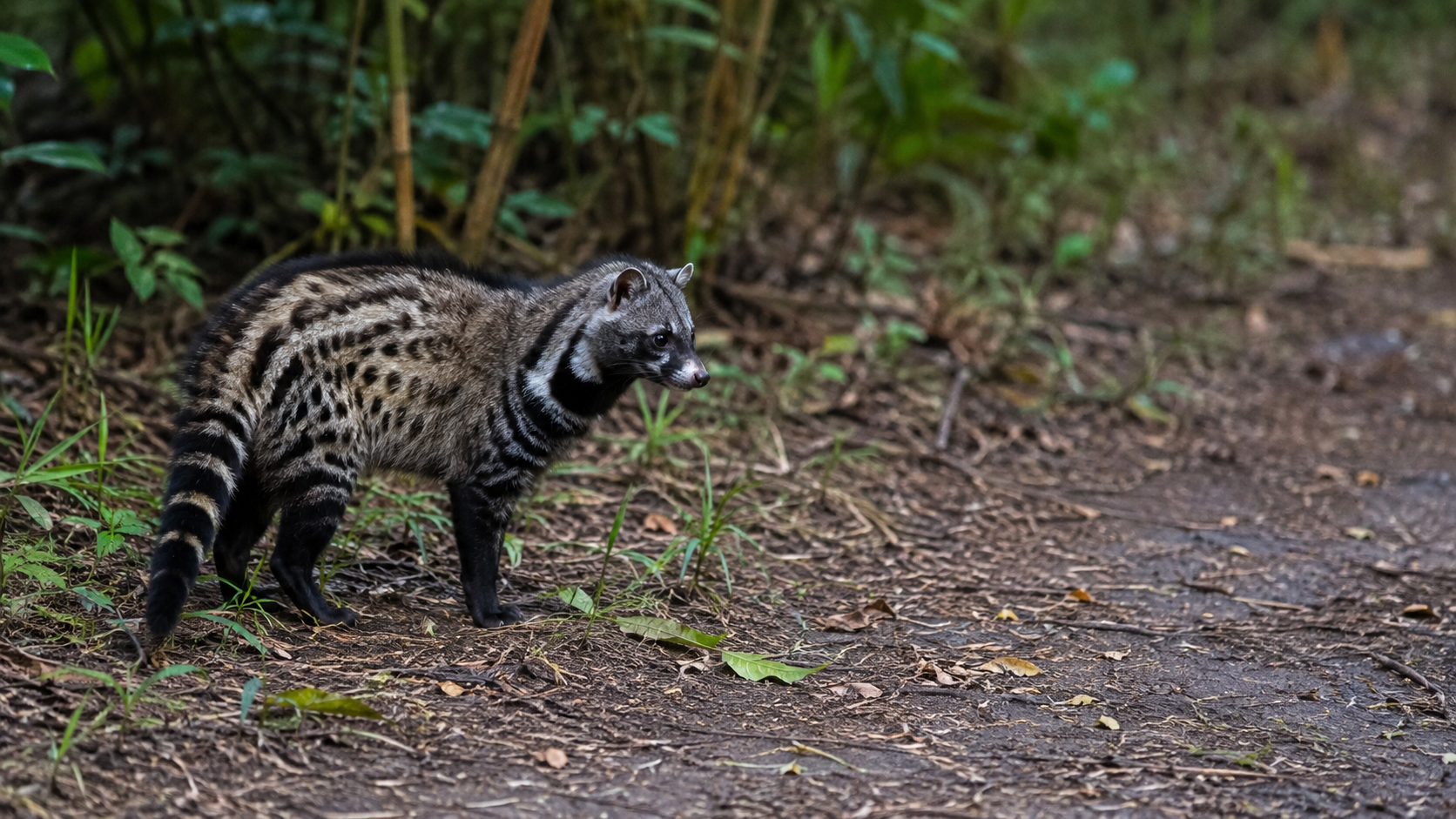
The African civet (Civettictis civetta) is a large, carnivorous mammal native to Africa. It belongs to the family Viverridae and is the only living species in the genus Civettictis.
African civets are found in a variety of habitats, including savannas, grasslands, and forests. They are widely distributed across sub-Saharan Africa, and their range extends from Senegal in the west to Ethiopia in the east, and south to South Africa.
Physical Characteristics
African civets are large animals, with adults typically weighing between 10-20 kg (22-44 lbs) and measuring 60-100 cm (24-39 in) in length, including their tail. They have a distinctive appearance, with a broad head, a long, pointed snout, and a thick, coarse coat that is usually brown or black in color.
Diet and Foraging
African civets are carnivores and feed on a variety of small animals, including rodents, birds, reptiles, and amphibians. They are also known to eat fruits, insects, and carrion. They are primarily nocturnal and have a keen sense of smell, which they use to locate their prey.
Behavior and Social Structure
African civets are generally solitary animals and only come together for mating. They are territorial and have a highly developed sense of smell, which they use to mark their territory and communicate with other civets.
Conservation Status
African civets are listed as Least Concern on the IUCN Red List, although their populations are declining in some parts of their range due to habitat loss and hunting.
| Scientific Name | Civettictis civetta |
|---|---|
| Family | Viverridae |
| Weight | 10-20 kg (22-44 lbs) |
| Length | 60-100 cm (24-39 in) |
| Diet | Carnivorous |
| Conservation Status | Least Concern |
Interesting Facts
African civets have a number of interesting adaptations that allow them to survive in their environment. They have a highly developed sense of smell, which they use to locate their prey and mark their territory. They also have a unique way of moving, using their long legs to cover great distances at high speeds.
Public Safety and African Civets
African civets are wild animals and should be treated with caution. They are capable of defending themselves if they feel threatened, and their bites can be serious. If you encounter an African civet in the wild, it is best to keep a safe distance and not approach it.
Conservation Efforts
There are a number of conservation efforts in place to protect African civets and their habitats. These include the protection of national parks and game reserves, as well as education programs to teach people about the importance of conservation.
What do African civets eat?
African civets are carnivores and feed on a variety of small animals, including rodents, birds, reptiles, and amphibians.
Are African civets endangered?
No, African civets are listed as Least Concern on the IUCN Red List.
Can I have an African civet as a pet?
No, African civets are wild animals and should not be kept as pets.
How do African civets communicate?
African civets use a variety of methods to communicate, including scent marking and vocalizations.
- IUCN Red List. (2022). Civettictis civetta.
- Kingdon, J. (2013). The Kingdon Field Guide to African Mammals. Bloomsbury Publishing.
- Nowak, R. M. (1999). Walker’s Mammals of the World. Johns Hopkins University Press.
This article is for informational purposes only and should not be used as a guide for keeping African civets as pets or for any other purpose that may harm these animals or their habitats.
Life Cycle and Reproduction
African civets have a unique life cycle, with a gestation period of approximately 60-70 days. Female civets typically give birth to 2-4 young per litter, which are born blind and helpless. The female civet takes care of her young, nursing them and protecting them from predators. The young civets develop quickly, and their eyes open after about 10-14 days. They start to venture out of their den at around 4-6 weeks old and become independent after about 6-8 months.
After reaching maturity, African civets can breed throughout the year, although the peak breeding season varies depending on the region. In some areas, breeding occurs during the wet season, while in others, it happens during the dry season. Female civets can have multiple litters in a year, but the frequency of breeding depends on various factors, such as food availability and environmental conditions.
Communication and Senses
African civets have a range of communication methods, including vocalizations, scent marking, and visual displays. They use a variety of sounds, such as clicks, whistles, and grunts, to convey information and warnings to other civets. They also use scent marking to communicate with other civets, particularly during the breeding season. They have scent glands located near their anus, which they use to deposit pheromones on rocks, trees, and other objects.
African civets have a keen sense of smell, which they use to locate prey, detect predators, and recognize other civets. Their sense of hearing is also acute, and they can detect sounds that are too faint for humans to hear. Their eyesight is relatively poor, but they have a reflective layer in the back of their eyes called the tapetum lucidum, which helps them see better in low light conditions.
Seasonal Variation and Adaptation
African civets are adapted to living in a variety of habitats, and their behavior and physiology change with the seasons. In areas with a dry season, civets may reduce their activity levels and rely on cached food to survive. During the wet season, they take advantage of the abundance of food and water to replenish their energy reserves.
In colder regions, African civets may experience a period of dormancy, known as torpor, to conserve energy. During this time, their body temperature drops, and their metabolism slows down. This adaptation helps them survive the harsh winter conditions.
Ecological Relationships
African civets play a crucial role in their ecosystems, serving as both predators and prey. They prey on small animals, such as rodents and birds, which helps to regulate their populations. In turn, civets are preyed upon by larger predators, such as leopards, lions, and hyenas.
Civets also have a mutualistic relationship with certain species, such as birds and insects. Some bird species, like oxpeckers, land on civets’ backs and feed on ticks and other parasites. Insects, like ants and beetles, are attracted to civets’ scent glands and help to clean their fur.
Research and Monitoring
African civets are not as well-studied as some other carnivore species, and more research is needed to understand their behavior, ecology, and conservation status. Camera traps and radio collars are commonly used to monitor civet populations and study their movement patterns.
Researchers are also interested in studying the unique scent glands of African civets, which have potential applications in the development of new perfumes and fragrances. Additionally, civets’ ability to survive in a variety of habitats makes them an interesting subject for studying adaptation and resilience.
Responsible Enrichment and Captivity
African civets are occasionally kept in captivity, primarily in zoos and wildlife sanctuaries. In these settings, it is essential to provide them with a suitable enclosure that mimics their natural habitat. This includes providing a large, escape-proof area with adequate shelter, food, and water.
Civets in captivity require enrichment activities to stimulate their natural behavior, such as foraging and hunting. This can be achieved by providing them with puzzle feeders, hidden food, and toys. It is also essential to ensure that civets in captivity are handled and cared for by experienced professionals who understand their specific needs and behavior.
Ethical and Legal Considerations
African civets are protected by laws and international agreements, such as the Convention on International Trade in Endangered Species of Wild Fauna and Flora (CITES). The trade of civet skins, meat, and other body parts is regulated, and hunting is prohibited in many countries.
However, African civets are still threatened by habitat loss, human-wildlife conflict, and poaching. It is essential to address these issues through conservation efforts and education programs that promote coexistence with wildlife. Additionally, supporting responsible and sustainable tourism can help to promote the value of African civets and their habitats, while also generating income for local communities.
Human-Civet Conflict and Mitigation Strategies
As African civets adapt to human-dominated landscapes, conflicts between humans and civets are becoming increasingly common. Civets may raid crops, livestock, and poultry, leading to economic losses for farmers and herders. In response, humans may retaliate against civets, viewing them as pests. This conflict can result in the persecution of civets, contributing to population declines and fragmentation.
To mitigate human-civet conflict, conservationists and researchers are exploring innovative strategies. One approach is to promote coexistence through education and outreach programs, raising awareness about the importance of civets in ecosystems and the benefits of peaceful coexistence. For example, civets play a crucial role in controlling rodent populations, which can help to reduce crop damage and disease transmission.
Another strategy is to develop and implement effective deterrents to prevent civets from raiding crops and livestock. This can include the use of fencing, guard animals, and repellents. Researchers are also exploring the use of non-lethal traps and relocation techniques to safely remove civets from areas where they are causing conflicts.
In addition, conservation efforts are focusing on protecting and restoring natural habitats, which can help to reduce human-civet conflict by providing civets with alternative food sources and shelter. By addressing the root causes of conflict and promoting coexistence, it is possible to reduce the persecution of African civets and ensure the long-term conservation of this unique and fascinating species.
Civet-Human Disease Transmission and Public Health
African civets have been implicated in the transmission of several diseases to humans, including rabies, leptospirosis, and anthrax. Civets can carry these diseases without showing symptoms, making them potential reservoirs for disease transmission. In areas where humans and civets interact closely, there is a risk of disease transmission, particularly through contact with civet saliva, urine, or feces.
To minimize the risk of disease transmission, it is essential to take precautions when handling civets or their bodily fluids. This includes wearing protective clothing, gloves, and masks, as well as ensuring proper vaccination and hygiene practices. In areas where civets are common, public health campaigns can raise awareness about the risks of disease transmission and promote safe practices for interacting with civets.
Research is also ongoing to better understand the role of civets in disease transmission and to develop effective strategies for mitigating these risks. By understanding the complex relationships between civets, humans, and disease, we can work towards reducing the risks of disease transmission and promoting public health.
Cultural Significance and Traditional Medicine
African civets have significant cultural and traditional importance in many African societies. In some cultures, civets are considered sacred animals, associated with spiritual and mystical powers. In other cultures, civets are valued for their meat, which is considered a delicacy.
Civet musk, a secretion produced by the civet’s anal glands, has been used in traditional medicine for centuries. Musk is believed to have anti-inflammatory and antiseptic properties, and is used to treat a range of ailments, from skin conditions to respiratory problems. However, the use of civet musk is also a major driver of civet persecution, as civets are often hunted for their musk.
Conservation efforts are working to promote sustainable and responsible use of civet musk, while also raising awareness about the importance of conserving civet populations. By recognizing the cultural significance of civets and promoting sustainable use practices, we can work towards reducing the threats facing this unique and fascinating species.