Introduction
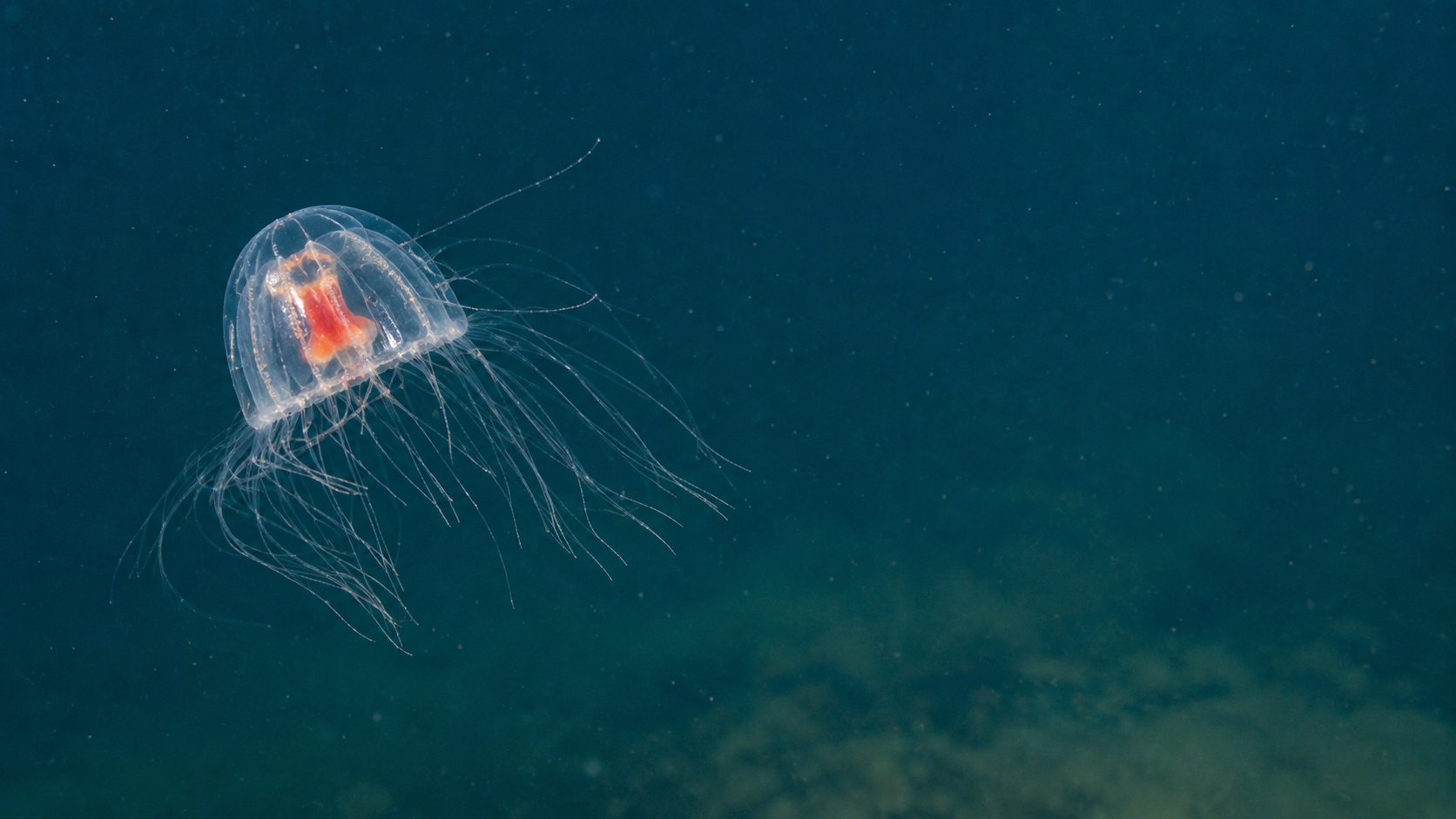
Turritopsis dohrnii, also known as the ‘immortal jellyfish,’ is a species of jellyfish that has been found in the Mediterranean Sea and in the waters of Japan and China. It is a member of the phylum Cnidaria, which also includes corals and sea anemones.
Natural History
Turritopsis dohrnii is a small jellyfish, typically growing to a bell diameter of about 5 millimeters. It has a distinctive bell-shaped body and long, thin tentacles. The species is found in tropical and temperate waters around the world, and is thought to be a pelagic species, meaning it spends most of its life in the open ocean.
Biological Immortality
Turritopsis dohrnii is biologically immortal, meaning it can transform its body into a younger state through a process called transdifferentiation. This process allows the jellyfish to bypass the normal process of aging and death, and can be repeated indefinitely. This process is still not fully understood and is currently being studied by scientists.
Life Cycle
The life cycle of Turritopsis dohrnii is complex and involves several stages. The species begins its life as a larva, which settles on a surface and develops into a polyp. The polyp then grows and eventually transforms into a medusa, which is the adult form of the jellyfish. The medusa can then reproduce and produce new larvae, which start the cycle over again.
Conservation Status
Turritopsis dohrnii is not currently considered to be a threatened species, although its populations are often affected by changes in ocean currents and temperature. The species is also often caught accidentally in fishing nets and can be harmed by pollution.
| Characteristic | Description |
|---|---|
| Scientific Name | Turritopsis dohrnii |
| Common Name | Immortal Jellyfish |
| Phylum | Cnidaria |
| Class | Hydrozoa |
| Order | Leptothecata |
| Family | Oceaniidae |
| Genus | Turritopsis |
| Species | T. dohrnii |
Observation and Study
Turritopsis dohrnii is a fascinating species that is still not fully understood. Scientists are currently studying the species to learn more about its life cycle, behavior, and biology. The species is often observed in the wild using specialized equipment such as submersibles and remotely operated vehicles (ROVs).
Public Safety
Turritopsis dohrnii is not considered to be a threat to human safety, although it can deliver a painful sting if handled carelessly. The species is generally not aggressive and will only sting in self-defense.
What is the average lifespan of Turritopsis dohrnii?
The average lifespan of Turritopsis dohrnii is unknown, as it is biologically immortal.
How does Turritopsis dohrnii reproduce?
Turritopsis dohrnii reproduces through a process called transdifferentiation, in which it transforms its body into a younger state.
Is Turritopsis dohrnii considered a threatened species?
No, Turritopsis dohrnii is not currently considered a threatened species.
Can Turritopsis dohrnii be found in aquariums?
No, Turritopsis dohrnii is not typically found in aquariums, as it is a difficult species to care for.
- National Oceanic and Atmospheric Administration (NOAA). (2020). Turritopsis dohrnii.
- World Register of Marine Species. (2020). Turritopsis dohrnii.
- Piraino, S., et al. (2014). Reversing the life cycle: Medusae transforming into polyps and cell transdifferentiation in Turritopsis dohrnii (Cnidaria, Hydrozoa). Biological Bulletin, 226(3), 171-183.
Please note that Turritopsis dohrnii is a wild species and should not be handled or kept in captivity. It is also important to respect its natural habitat and not disturb it in the wild.
Communication and Senses
Turritopsis dohrnii, like other jellyfish, has a unique way of communicating and perceiving its environment. Since it doesn’t have a brain or a centralized nervous system, it relies on a network of nerve cells, called a “nerve net,” to coordinate its movements and respond to stimuli. This nerve net allows the jellyfish to detect and respond to light, touch, and chemical cues from its surroundings.
The jellyfish’s sense organs, called statocysts, are responsible for maintaining its balance and orientation in the water. These statocysts are made up of tiny hair-like structures that are embedded in a gelatinous substance, which helps to detect the direction of gravity and movement.
In terms of communication, Turritopsis dohrnii uses a complex system of chemical signals to coordinate its behavior with other jellyfish. For example, when one jellyfish is injured or attacked by a predator, it releases a chemical signal that alerts other nearby jellyfish to the danger. This allows them to adjust their behavior and avoid potential threats.
Seasonal Variation
Turritopsis dohrnii is a tropical and temperate species that can be found in oceans around the world. As a result, it is subject to various seasonal changes in temperature, salinity, and food availability. In warmer waters, the jellyfish is more active and can be found in larger numbers, while in cooler waters, it is less active and may even enter a state of dormancy.
During the summer months, Turritopsis dohrnii can be found in large numbers in the surface waters of the ocean, where it feeds on small plankton and other tiny organisms. In the winter months, it may sink to the bottom of the ocean, where it enters a state of dormancy, called “strobilation,” and waits for the water to warm up again.
Ecological Relationships
Turritopsis dohrnii plays an important role in the ocean ecosystem, serving as both a predator and prey for other animals. As a predator, it feeds on small plankton and other tiny organisms, helping to regulate their populations and maintain the balance of the ocean ecosystem.
As a prey, Turritopsis dohrnii is an important food source for many other animals, including fish, sea turtles, and other jellyfish. It is also an important part of the ocean’s nutrient cycle, helping to transfer energy and nutrients from the surface waters to the deep sea.
Research
Turritopsis dohrnii has been the subject of much scientific research, particularly in the fields of marine biology and gerontology. Scientists are interested in studying the jellyfish’s unique life cycle and its ability to cheat death through transdifferentiation.
Researchers have been studying the jellyfish’s genetic makeup and the molecular mechanisms that allow it to transform its body into a younger state. This research has the potential to lead to new insights into the aging process and the development of new treatments for age-related diseases.
Responsible Enrichment
Turritopsis dohrnii is a popular species in public aquariums and research institutions, where it is often kept in large tanks and used for educational and research purposes. However, the capture and keeping of wild jellyfish can be a complex and challenging process, requiring specialized equipment and expertise.
In recent years, there has been a growing trend towards responsible and sustainable aquarium practices, which prioritize the welfare and conservation of the animals. This includes the use of captive breeding programs, which reduce the demand for wild-caught animals and help to promote the conservation of the species.
Ethical and Legal Considerations
The capture and keeping of Turritopsis dohrnii is subject to various laws and regulations, particularly in the context of the Convention on International Trade in Endangered Species of Wild Fauna and Flora (CITES). The species is not currently listed as endangered, but it is protected by laws and regulations in many countries.
In addition to the legal considerations, there are also ethical concerns related to the capture and keeping of wild animals, particularly in the context of public aquariums and research institutions. These concerns include the welfare of the animals, the impact of capture and keeping on wild populations, and the potential for the spread of disease and invasive species.
Evolutionary History
Turritopsis dohrnii has a long and complex evolutionary history, with its origins dating back to the early days of animal life on Earth. The species is thought to have evolved from a common ancestor with other cnidarians, such as corals and sea anemones, around 600 million years ago. Since then, it has undergone significant changes and adaptations to its environment, resulting in the unique characteristics we see today.
One of the key factors that have contributed to the evolution of Turritopsis dohrnii is its ability to transdifferentiate. This process has allowed the species to cheat death and live indefinitely, giving it a significant advantage over other animals that are limited by their lifespan. This has also allowed the species to accumulate genetic mutations and adapt to changing environments over time.
Genetic Research
Turritopsis dohrnii has become a popular subject for genetic research due to its unique ability to transdifferentiate. Scientists are interested in understanding the genetic mechanisms that allow the species to cheat death and live indefinitely. By studying the genome of Turritopsis dohrnii, researchers hope to gain insights into the aging process and develop new treatments for age-related diseases.
Recent studies have identified several genes that are involved in the transdifferentiation process, including those involved in cell cycle regulation, DNA repair, and stress response. These findings have significant implications for our understanding of the aging process and may lead to the development of new treatments for age-related diseases.
Ecological Role
Turritopsis dohrnii plays an important role in the marine ecosystem, serving as a food source for many other animals. The species is an important part of the marine food chain, and its loss could have significant impacts on the ecosystem.
In addition to its role as a food source, Turritopsis dohrnii also plays a role in the marine nutrient cycle. The species helps to cycle nutrients through the ecosystem, making them available to other animals. This process is important for maintaining the health of the ecosystem and supporting the growth of other animals.
Cultural Significance
Turritopsis dohrnii has also become a popular subject in popular culture, with its ability to cheat death and live indefinitely capturing the imagination of people around the world. The species has been the subject of numerous articles, books, and documentaries, and has become a symbol of the quest for eternal life.
In addition to its cultural significance, Turritopsis dohrnii has also become a popular subject for art and literature. The species has been the subject of numerous works of art, including paintings, sculptures, and installations. Its unique appearance and ability to cheat death have made it a popular subject for artists and writers.