
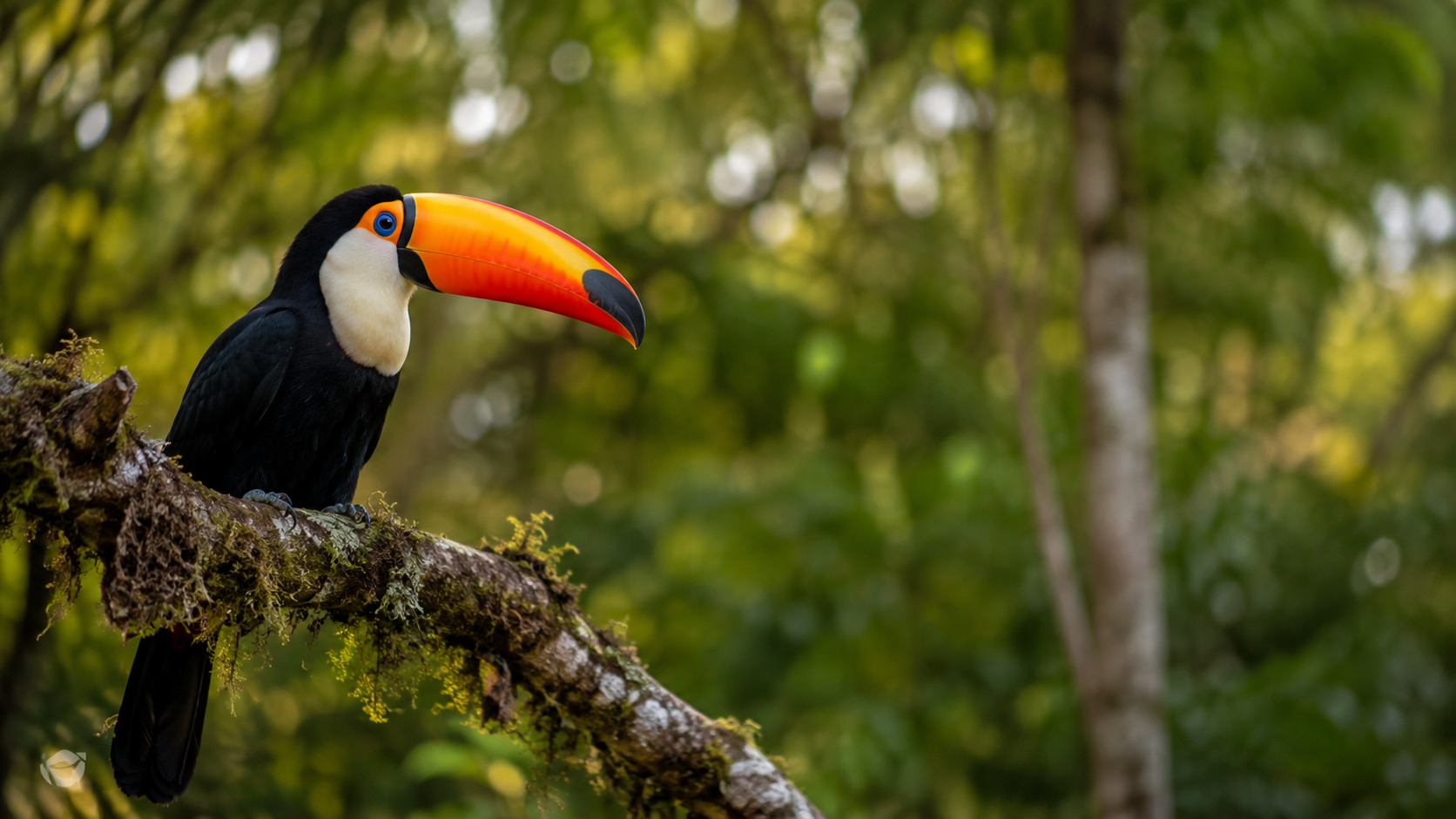
Toco Toucan
The Toco Toucan is a large, brightly coloured bird native to South America. It is the largest species of toucan and is known for its oversized, colourful beak.
Quick Reference Table
| Scientific Name | Ramphastos toco |
|---|---|
| Length | 55-65 cm (22-26 in) |
| Weight | 380-500 g (13-18 oz) |
| Lifespan | Up to 20 years in the wild |
| Diet | Fruits, insects, spiders, and small reptiles |
Taxonomy and Identification
The Toco Toucan is a member of the Ramphastidae family and is scientifically known as Ramphastos toco. It is the largest species of toucan and is easily identifiable by its oversized, colourful beak, which can grow up to 20 cm (8 in) in length.
The Toco Toucan has a distinctive black body with a white throat and chest, and its wings and tail are a deep blue colour. Its legs and feet are black, and it has a distinctive crest on top of its head.
Natural Habitat and Distribution
The Toco Toucan is found in the tropical forests of South America, including Argentina, Bolivia, Brazil, Paraguay, and Uruguay. It inhabits the forest canopy and is often found near water sources.
The Toco Toucan is a social bird and is often found in small groups. It is a cavity-nesting bird and will often use the same nesting site year after year.
Behaviour
The Toco Toucan is a loud and boisterous bird, and its call is often described as a loud, yelping sound. It is a social bird and is often found in small groups, and it is known to be a playful and curious species.
The Toco Toucan is a monogamous bird, and pairs will often form during the breeding season. The female will lay 2-4 eggs, which will be incubated for around 16 days. Both parents will care for the young, which will leave the nest after around 40 days.
Diet
The Toco Toucan is a frugivorous bird, and its diet consists mainly of fruits, including figs, bananas, and berries. It will also eat insects, spiders, and small reptiles, and has been known to eat the eggs and chicks of other birds.
The Toco Toucan has a unique way of eating fruit, using its oversized beak to pluck the fruit from the tree and then tossing it up in the air and catching it. This behaviour is often referred to as ‘bill-tossing’.
Daily Needs
In the wild, the Toco Toucan requires a large territory with plenty of fruiting trees and a reliable source of water. It is a social bird and requires the company of other Toco Toucans.
In captivity, the Toco Toucan requires a large aviary with plenty of space to fly and exercise. It requires a varied diet that includes a mix of fruits, insects, and small reptiles.
Warning Signs
The Toco Toucan is a loud and boisterous bird, and its call can be a sign of stress or anxiety. If the bird is not provided with enough space or stimulation, it can become aggressive and may bite or scratch.
If the Toco Toucan is not provided with a varied and nutritious diet, it can suffer from malnutrition and may develop health problems.
Responsible Care or Conservation
The Toco Toucan is a protected species in many countries, and it is illegal to capture or keep them as pets. In the wild, the Toco Toucan requires conservation efforts to protect its habitat and reduce the impact of human activities such as deforestation and hunting.
In captivity, the Toco Toucan requires specialized care and housing, and it is recommended that only experienced bird breeders and owners keep them.
What is the average lifespan of a Toco Toucan in the wild?
Up to 20 years
What is the main component of a Toco Toucan’s diet?
Fruits
How many eggs does a female Toco Toucan typically lay?
2-4 eggs
What is unique about the way a Toco Toucan eats fruit?
It uses its oversized beak to pluck the fruit from the tree and then tosses it up in the air and catches it, a behaviour known as ‘bill-tossing’.
Is it legal to keep a Toco Toucan as a pet?
No, the Toco Toucan is a protected species in many countries, and it is illegal to capture or keep them as pets.
Sources
- BirdLife International (2022) Ramphastos toco
- International Union for Conservation of Nature (2022) Ramphastos toco
- National Geographic (2022) Toco Toucan
Please note: The information provided in this article is for educational purposes only and is not intended to replace the advice of a qualified veterinarian. If you have any concerns about the health or welfare of a Toco Toucan, please consult a qualified veterinarian.
Life Cycle and Breeding
The Toco Toucan’s life cycle is closely tied to the availability of food in its habitat. It breeds throughout the year, with the peak breeding season typically occurring during the wet season when fruits are abundant. The female lays 2-4 eggs in a nest made of twigs and leaves, which is usually located in a tree cavity or rock crevice. Both parents take turns incubating the eggs for about 16-20 days, and the chicks fledge after about 40-50 days. The young birds remain dependent on their parents for several months, learning essential skills such as foraging and flying.
Communication and Senses
Toco Toucans are known for their loud, yelping calls, which can be heard over long distances. They also use a variety of other vocalizations, including grunts, growls, and hisses, to communicate with other birds. Their oversized beak is not only used for eating and intimidation but also plays a crucial role in their communication and courtship displays. The beak is highly sensitive to touch and is used to explore the environment and detect potential threats.
Seasonal Variation and Ecological Relationships
The Toco Toucan’s diet varies depending on the season, with fruits being the main staple throughout the year. However, during the dry season when fruits are scarce, they will eat more insects, spiders, and small reptiles. This adaptability is crucial for their survival, as they play a vital role in seed dispersal and forest regeneration. They also have a mutualistic relationship with other birds, such as the Chestnut-mandibled Toucanet, with which they forage together, sharing food sources and warning calls.
Research and Conservation Efforts
The Toco Toucan is listed as Near Threatened on the IUCN Red List, primarily due to habitat loss and fragmentation. Research efforts are focused on understanding their ecological role in the forest ecosystem and the impact of habitat destruction on their populations. Conservation efforts are underway to protect their habitats and educate local communities about the importance of preserving these iconic birds.
Responsible Enrichment and Ethical Considerations
In captivity, Toco Toucans require a varied and nutritious diet, as well as a large enclosure that mimics their natural habitat. Providing adequate space for flying and foraging is essential for their physical and mental well-being. It is also crucial to ensure that their oversized beak is kept trimmed to prevent overgrowth, which can lead to health issues. Additionally, owners must be aware of the laws and regulations regarding the capture and trade of wild birds, as the Toco Toucan is protected by international law.


