Classification and Natural History
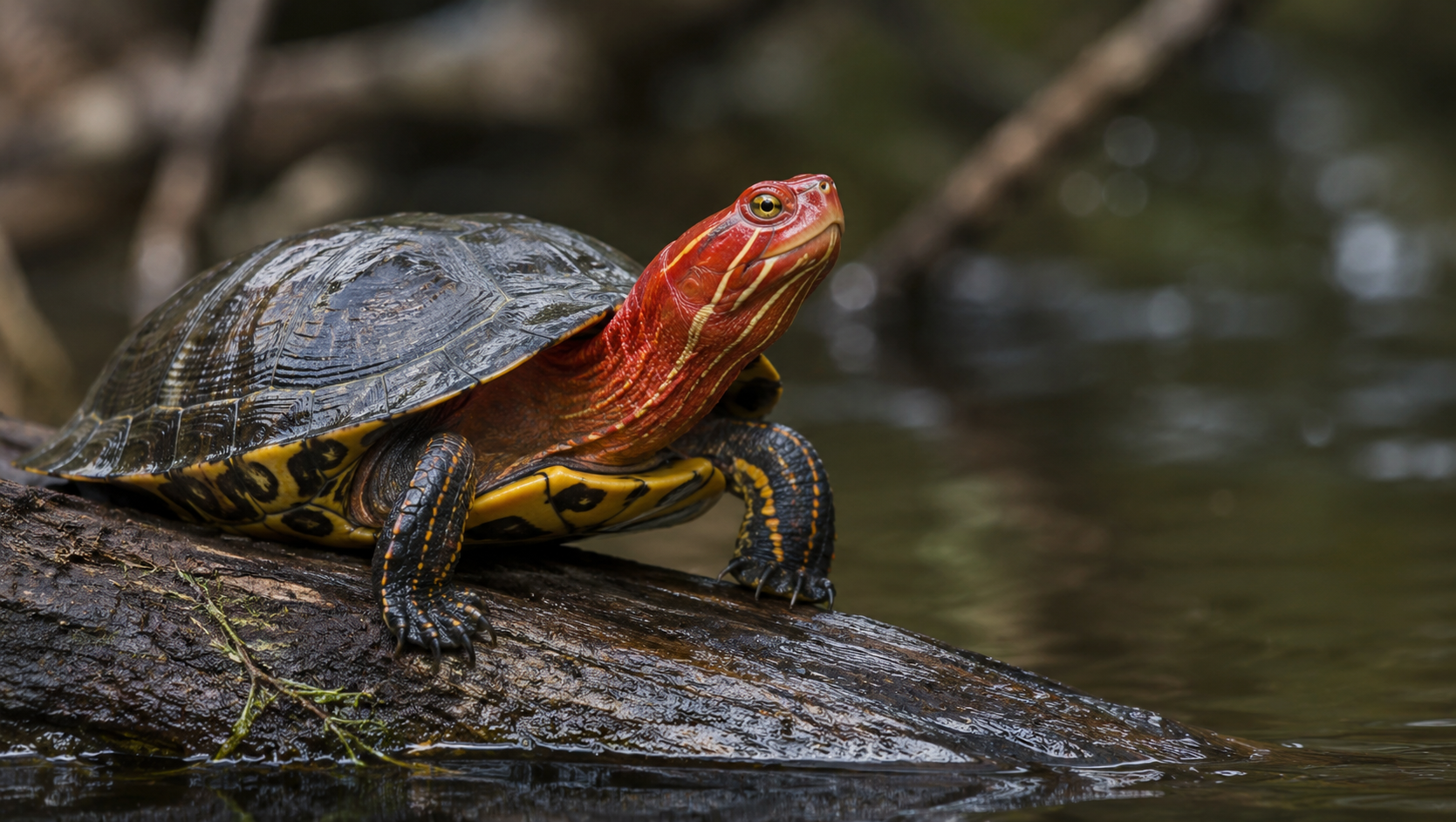
The Red-headed Amazon River Turtle (Rhinemys rufipes) is a large freshwater turtle species native to the Amazon and Orinoco river basins in South America.
They are found in slow-moving rivers, streams, and wetlands, where they inhabit areas with abundant vegetation and soft bottoms.
Physical Characteristics
Red-headed Amazon River Turtles have a distinctive red or orange head, which can be quite vibrant in younger individuals.
They have a large, broad head, a long neck, and a brown or yellowish-brown carapace (shell) that can grow up to 45 cm (18 in) in length.
Their webbed feet are well-suited for swimming and walking on soft riverbanks.
| Scientific Name | Rhinemys rufipes |
|---|---|
| Family | Podocnemididae |
| Conservation Status | Vulnerable (IUCN Red List) |
| Native Range | Amazon and Orinoco river basins, South America |
Behavior and Diet
Red-headed Amazon River Turtles are primarily herbivores, feeding on aquatic plants, fruits, and vegetation.
They are also known to eat small animals, such as crustaceans and insects, on occasion.
These turtles are generally solitary animals and only come together during mating season.
Conservation Status
The Red-headed Amazon River Turtle is listed as Vulnerable on the IUCN Red List due to habitat loss, hunting for meat and eggs, and the pet trade.
Conservation efforts are underway to protect their habitats and reduce the impact of human activities on their populations.
Public Safety and Handling
Red-headed Amazon River Turtles are wild animals and should not be handled or kept as pets.
They can carry salmonella and other diseases, and their sharp jaws can inflict serious injury.
It is essential to observe these turtles in their natural habitat, from a safe distance, and respect their space.
Responsible Observation and Conservation
To promote the conservation of Red-headed Amazon River Turtles, it is essential to support protected areas and national parks that provide a safe habitat for these animals.
Responsible ecotourism can also help support local communities and promote the conservation of these incredible creatures.
What is the average lifespan of a Red-headed Amazon River Turtle?
Up to 20-30 years in the wild, although the exact lifespan is not well-documented.
Are Red-headed Amazon River Turtles good pets?
No, they are wild animals that belong in their natural habitat, not in captivity.
What is the main threat to Red-headed Amazon River Turtle populations?
Habitat loss and hunting for meat and eggs are significant threats to their populations.
Can I see Red-headed Amazon River Turtles in zoos or aquariums?
Some zoos and aquariums may have Red-headed Amazon River Turtles in captivity, but it is essential to check with the institution before visiting.
- International Union for Conservation of Nature (IUCN) Red List
- World Wildlife Fund (WWF)
- Amazon Conservation Association (ACA)
Please note: The information provided is for educational purposes only and should not be used for medical or conservation advice. Consult a veterinarian or a qualified conservation professional for specific guidance.
Life Cycle
Red-headed Amazon River Turtles have a relatively long lifespan, with some individuals estimated to live up to 50 years in the wild. Their life cycle begins with a reproductive period that typically occurs during the wet season, when water levels are high and food is abundant. Males engage in a complex courtship behavior, which involves head-bobbing, swimming, and vocalizations to attract females. After mating, females lay their eggs on land, often in areas with soft soil and abundant vegetation. The incubation period can last up to 100 days, depending on environmental conditions.
Communication and Senses
Red-headed Amazon River Turtles have a unique way of communicating with each other through a series of clicks, chirps, and whistles. They also use body language to convey information, such as head-bobbing and neck-stretching. Their sense of vision is relatively poor, but they have a keen sense of smell and can detect vibrations in the water, which helps them locate food and detect potential predators. They also have a highly developed sense of spatial memory, which allows them to navigate their aquatic environment with ease.
Seasonal Variation
Red-headed Amazon River Turtles have adapted to the seasonal changes in their environment, which is characterized by a wet and dry season. During the wet season, they are more active and feed on the abundant aquatic vegetation. In the dry season, they estivate, burrowing into the mud and reducing their metabolic rate to conserve energy. This adaptation allows them to survive the dry season, when food is scarce and water levels are low.
Ecological Relationships
Red-headed Amazon River Turtles play a crucial role in their ecosystem, serving as both predators and prey. They feed on aquatic plants, which helps to maintain the balance of the ecosystem. They are also an important food source for other animals, such as caimans, anacondas, and birds of prey. Additionally, they help to disperse seeds and nutrients through their feeding and nesting activities.
Research
Studies on Red-headed Amazon River Turtles have focused on their ecology, behavior, and conservation status. Researchers have used various methods, such as mark-release-recapture and radio-telemetry, to study their population dynamics, habitat use, and migration patterns. These studies have provided valuable insights into the biology and ecology of this species and have informed conservation efforts.
Responsible Enrichment
In captivity, Red-headed Amazon River Turtles require a large, well-filtered enclosure that mimics their natural environment. They need a varied diet that includes aquatic plants, fruits, and vegetables. Providing a naturalistic environment, such as a large pool with plants and rocks, can help to reduce stress and promote natural behavior. Enrichment activities, such as providing new objects or changing the layout of the enclosure, can also help to stimulate their natural behavior and promote well-being.
Ethical and Legal Considerations
Red-headed Amazon River Turtles are protected by laws and regulations in their native range, and their capture and trade are regulated by international agreements, such as CITES. In captivity, they require specialized care and housing, and their welfare should be a top priority. Responsible ownership and trade practices can help to ensure the long-term conservation of this species.
Habitat and Environmental Adaptations
Red-headed Amazon River Turtles have adapted to life in the slow-moving waters of the Amazon and Orinoco river basins, where they inhabit areas with abundant vegetation and soft bottoms. The turtles’ webbed feet are well-suited for swimming and walking on soft riverbanks, allowing them to move easily through their aquatic environment. The turtles’ shells, which can grow up to 45 cm (18 in) in length, provide protection from predators and help to regulate their body temperature.
The turtles’ habitat is characterized by a mix of slow-moving rivers, streams, and wetlands, which provide a diverse range of aquatic plants and animals for them to feed on. The turtles are also found in areas with dense vegetation, such as flooded forests and grasslands, which provide shelter and protection from predators.
Threats and Human Impact
The Red-headed Amazon River Turtle is listed as Vulnerable on the IUCN Red List due to a range of threats, including habitat loss, hunting for meat and eggs, and the pet trade. The turtles’ habitat is being destroyed and degraded due to deforestation, damming, and other human activities, which is reducing the availability of food and shelter for the turtles.
Hunting for meat and eggs is also a major threat to the turtles, as they are considered a delicacy in some parts of their range. The turtles are also collected for the pet trade, which can lead to population declines and disrupt the turtles’ social structure.
Captive Care and Breeding Programs
In response to the threats facing the Red-headed Amazon River Turtle, captive care and breeding programs have been established to help conserve the species. These programs aim to breed the turtles in controlled environments, such as zoos and wildlife sanctuaries, and release the offspring back into the wild.
Captive care and breeding programs can help to increase the population size of the turtles and reduce the demand for wild-caught individuals. However, these programs also require careful management to ensure that the turtles are provided with suitable housing, diet, and care.
Community Engagement and Education
Community engagement and education are critical components of conservation efforts for the Red-headed Amazon River Turtle. Local communities can play a key role in protecting the turtles and their habitat, and education programs can help to raise awareness about the importance of conservation.
In some parts of their range, local communities are working with conservation organizations to establish protected areas and develop sustainable livelihoods that do not harm the turtles or their habitat. Education programs are also being implemented to teach local communities about the importance of conservation and the threats facing the turtles.
Research and Monitoring
Research and monitoring are essential for understanding the ecology and conservation of the Red-headed Amazon River Turtle. Scientists are studying the turtles’ behavior, habitat use, and population dynamics to inform conservation efforts.
Monitoring programs are also being implemented to track the turtles’ population size and trends, as well as the impact of conservation efforts. This information can be used to adjust conservation strategies and ensure that they are effective in protecting the turtles and their habitat.