
Introduction
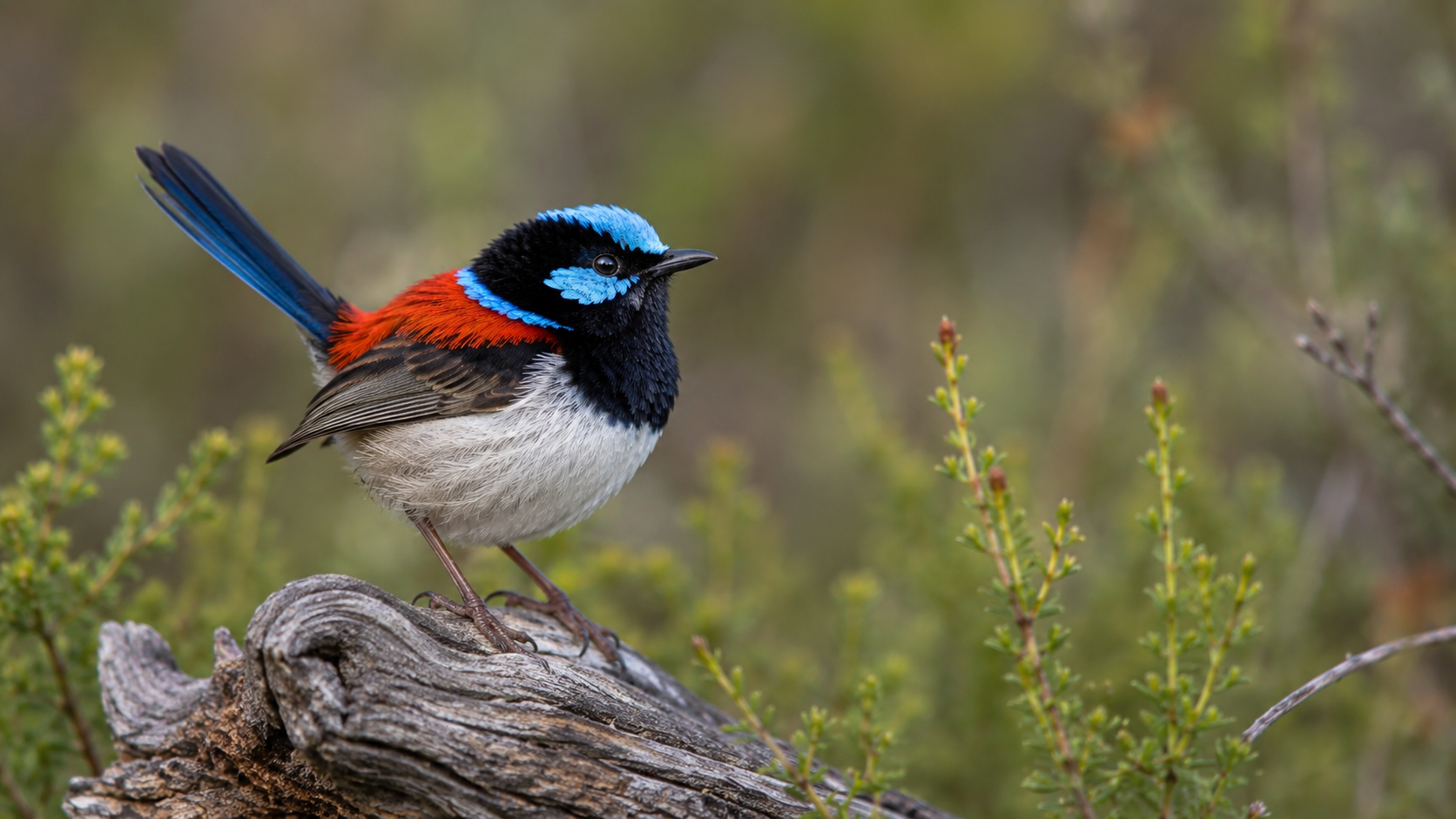
The Red-backed Fairy-wren (Malurus melanocephalus) is a small, social bird species native to Australia. It is a member of the Maluridae family and is known for its striking red back and white underside.
Physical Characteristics
The Red-backed Fairy-wren is a small bird, measuring approximately 14-16 cm (5.5-6.3 in) in length and weighing between 8-12 grams (0.28-0.43 oz). It has a distinctive red back, white underside, and a blue-grey crown. The male has a black throat patch, while the female has a white throat patch.
Habitat and Distribution
The Red-backed Fairy-wren is found in the eastern and southern regions of Australia, from Queensland to South Australia. It inhabits open forests, woodlands, and grasslands, and is often seen in urban areas, such as parks and gardens.
Behavior and Social Structure
The Red-backed Fairy-wren is a social bird that lives in small groups, typically consisting of a breeding pair and their offspring. The male is responsible for defending the territory and attracting a mate, while the female builds the nest and lays eggs. Both parents care for the young.
Diet
The Red-backed Fairy-wren is an insectivorous bird, feeding on small insects, spiders, and other invertebrates. It forages for food on the ground and in low vegetation.
Conservation Status
The Red-backed Fairy-wren is listed as Least Concern on the International Union for Conservation of Nature (IUCN) Red List. However, its population is declining due to habitat loss and fragmentation, as well as the introduction of invasive species.
| Scientific Name | Malurus melanocephalus |
|---|---|
| Common Name | Red-backed Fairy-wren |
| Family | Maluridae |
| Length | 14-16 cm (5.5-6.3 in) |
| Weight | 8-12 grams (0.28-0.43 oz) |
| Diet | Insectivorous |
| Conservation Status | Least Concern |
Interesting Facts
The Red-backed Fairy-wren is known for its complex social behavior and is considered one of the most social bird species in Australia. It is also known for its bright red back, which is thought to play a role in attracting a mate.
Responsible Observation
When observing the Red-backed Fairy-wren, it is essential to keep a safe distance and not disturb the birds or their habitat. This will help to minimize the impact of human activity on the species and its environment.
What is the average lifespan of a Red-backed Fairy-wren?
The average lifespan of a Red-backed Fairy-wren is approximately 2-3 years in the wild.
What is the main threat to the Red-backed Fairy-wren population?
The main threat to the Red-backed Fairy-wren population is habitat loss and fragmentation due to urbanization and agriculture.
What is the Red-backed Fairy-wren’s diet?
The Red-backed Fairy-wren is an insectivorous bird, feeding on small insects, spiders, and other invertebrates.
How can I help conserve the Red-backed Fairy-wren?
You can help conserve the Red-backed Fairy-wren by supporting conservation efforts, reducing your carbon footprint, and creating a bird-friendly habitat in your garden.
- Australian Museum. (2022). Red-backed Fairy-wren.
- BirdLife Australia. (2022). Red-backed Fairy-wren.
- International Union for Conservation of Nature. (2022). Malurus melanocephalus.
Please note that the Red-backed Fairy-wren is a wild animal and should not be kept as a pet. It is essential to respect its natural habitat and not attempt to handle or capture it. If you have any concerns about the welfare of a Red-backed Fairy-wren, please contact a local wildlife expert or conservation organization.
Life Cycle
The Red-backed Fairy-wren’s life cycle is characterized by a short breeding season, typically lasting from September to February. During this time, males engage in intense courtship displays to attract females, involving elaborate songs and displays of their vibrant red plumage. Once a pair has formed, the female builds a cup-shaped nest using twigs, grasses, and other plant material, often in a shrub or tree. The female lays 2-4 eggs, which are white with brown spots, and incubates them for approximately 12-14 days. Both parents care for the young, feeding and brooding them until they fledge at around 10-12 days old. The young birds remain dependent on their parents for several weeks after fledging, during which time they learn essential skills such as foraging and predator avoidance.
Communication
Red-backed Fairy-wrens communicate primarily through song and visual displays. Males use their melodious songs to establish territory and attract females, while females use a softer, more subdued song to communicate with their mates and young. Visual displays, such as the male’s courtship display, involve the presentation of the vibrant red plumage and the performance of complex dance-like movements. These displays serve to reinforce social bonds and establish dominance within the group.
Senses
Red-backed Fairy-wrens possess acute senses, which are essential for their survival. Their large, round eyes are capable of detecting even slight movements, allowing them to detect potential predators and prey. Their hearing is also highly developed, enabling them to detect the songs and calls of other birds, as well as potential threats. Their sense of smell is less developed, but still plays a role in foraging and predator detection.
Seasonal Variation
Red-backed Fairy-wrens exhibit seasonal variation in their behavior and physiology. During the breeding season, males engage in intense courtship displays and territorial defense, while females focus on nesting and incubation. Outside of the breeding season, the birds form small groups, often consisting of multiple males and females, and engage in foraging and social behavior. During times of drought or food scarcity, the birds may become more nomadic, traveling in search of suitable foraging grounds.
Ecological Relationships
Red-backed Fairy-wrens play a crucial role in their ecosystems, serving as both predators and prey. They feed on small insects, which helps to regulate their populations and maintain ecosystem balance. In turn, the birds are preyed upon by larger birds, such as kookaburras and butcherbirds, as well as snakes and other predators. The birds also form symbiotic relationships with other species, such as the Australian magpie, with which they engage in mutualistic foraging behavior.
Research
Red-backed Fairy-wrens have been the subject of extensive research, particularly in the fields of behavioral ecology and conservation biology. Studies have focused on their social behavior, mating systems, and foraging ecology, as well as their responses to environmental changes, such as habitat fragmentation and climate change. This research has contributed significantly to our understanding of the species’ ecology and conservation needs.
Responsible Enrichment
In captivity, Red-backed Fairy-wrens require specialized care and enrichment to ensure their physical and psychological well-being. This includes providing a varied and nutritious diet, as well as opportunities for foraging and social interaction. Enclosures should be designed to mimic the birds’ natural habitat, with a mix of vegetation, trees, and shrubs. Providing opportunities for flight and exercise is also essential, as is ensuring the birds receive adequate social interaction and mental stimulation.
Ethical and Legal Considerations
The capture and keeping of Red-backed Fairy-wrens in captivity is regulated by laws and regulations, which vary by country and region. In Australia, the species is protected under the Environment Protection and Biodiversity Conservation Act 1999, and the capture and keeping of the birds requires a permit. It is essential to ensure that any capture or keeping of the species is done in accordance with local laws and regulations, and with the utmost care and respect for the birds’ welfare.
Nesting and Breeding Habits
The Red-backed Fairy-wren’s breeding season typically occurs from August to January, with the female building a cup-shaped nest using grasses, twigs, and other plant material. The nest is usually placed in a shrub or tree, about 1-2 meters off the ground. The female lays 2-4 eggs, which are white with brown spots, and incubates them for about 14 days. Both parents care for the young, feeding and brooding them until they leave the nest after about 10-12 days. The young birds will then remain dependent on their parents for another 2-3 weeks before becoming independent.
Threats and Predation
The Red-backed Fairy-wren has several predators, including snakes, goannas, and birds of prey such as kookaburras and butcherbirds. The species is also vulnerable to habitat loss and fragmentation, as well as climate change, which can alter the availability of food and breeding resources. In urban areas, the Red-backed Fairy-wren may also be threatened by domestic cats and other introduced predators.
Adaptations and Specialized Features
The Red-backed Fairy-wren has several adaptations that enable it to thrive in its environment. Its small size and agility allow it to forage for insects in dense vegetation, while its bright colors and distinctive song serve as important communication tools. The species’ social structure, with its cooperative breeding and foraging behavior, also helps to increase its chances of survival and success.
Cultural Significance
The Red-backed Fairy-wren has significant cultural and symbolic meaning in Australian folklore. In some Aboriginal cultures, the species is associated with good luck and prosperity, while in others it is seen as a symbol of love and relationships. The bird’s bright colors and striking appearance have also made it a popular subject in Australian art and literature.
Conservation Efforts
Conservation efforts for the Red-backed Fairy-wren are focused on protecting and restoring its habitat, as well as reducing the impact of introduced predators and climate change. In some areas, conservation groups are working to create “fairy-wren friendly” habitats by planting native vegetation and reducing the use of pesticides. Researchers are also studying the species’ behavior and ecology to better understand its needs and develop effective conservation strategies.


