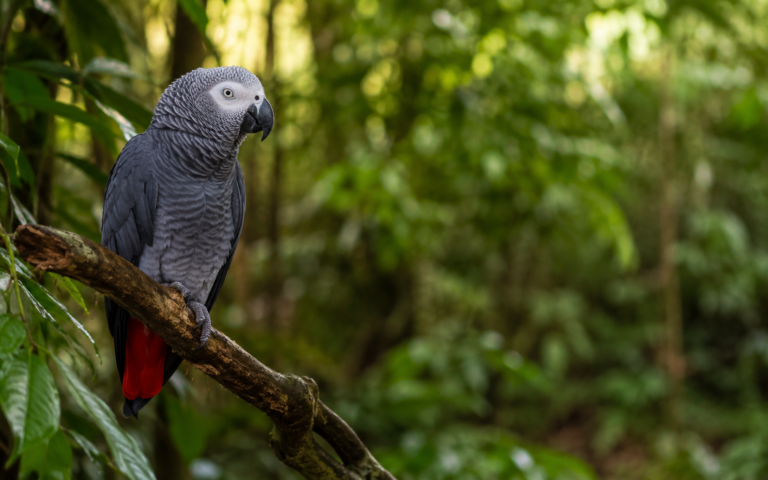
Quetzal
The Quetzal is a group of colorful birds known for their vibrant plumage and long, flowing tail feathers.
Quick Reference Table
| Characteristic | Description |
|---|---|
| Scientific Name | Pharomachrus mocinno |
| Length | 36-40 inches (91-102 cm) |
| Weight | 7-10 oz (200-280 grams) |
| Diet | Fruits, insects, and small frogs |
| Habitat | Cloud forests of Central America |
Taxonomy and Identification
The Quetzal belongs to the family Trogonidae and is part of the order Trogoniformes. There are six species of Quetzals, with the Resplendent Quetzal (Pharomachrus mocinno) being the most well-known.
Quetzals are characterized by their bright plumage, long tails, and distinctive calls. They have a rounded body, short legs, and a short, broad beak. The Resplendent Quetzal has a vibrant green back, red breast, and long, flowing tail feathers that can reach up to 6 feet (1.8 meters) in length.
Natural Habitat and Distribution
Quetzals are found in the cloud forests of Central America, specifically in Mexico, Guatemala, Costa Rica, and Panama. They inhabit areas with dense vegetation, mist, and fog, typically at elevations between 4,000 and 10,000 feet (1,200-3,000 meters) above sea level.
The cloud forests provide Quetzals with a unique environment, with a constant mist that helps to maintain humidity and support the growth of epiphytes, such as orchids and bromeliads. The forests are also home to a variety of fruits, insects, and small animals that make up the Quetzal’s diet.
Behaviour
Quetzals are primarily solitary birds and have a large home range, which they mark with their distinctive calls. They are also known for their unique courtship displays, where males will perform a ritual dance to attract females.
Quetzals are also skilled foragers, using their short, broad beaks to pluck fruits and insects from the forest canopy. They have also been observed following army ants to feed on the insects and small animals that the ants disturb.
Diet
Quetzals are omnivores, feeding on a variety of fruits, insects, and small animals. Their diet consists mainly of fruits, such as figs, bananas, and berries, as well as insects, like beetles, ants, and grasshoppers.
They also feed on small frogs and lizards, which they catch using their sharp, hooked beaks. In addition, Quetzals have been known to eat nectar and pollen, using their long, extendable tongues to reach deep into flowers.
Diet
Quetzals are omnivores, feeding on a variety of fruits, insects, and small animals. Their diet consists mainly of fruits, such as figs, bananas, and berries, as well as insects, like beetles, ants, and grasshoppers.
They also feed on small frogs and lizards, which they catch using their sharp, hooked beaks. In addition, Quetzals have been known to eat nectar and pollen, using their long, extendable tongues to reach deep into flowers.
Care and Conservation
Quetzals are protected by law in many countries, and their habitats are often preserved as national parks or wildlife reserves. However, they still face threats from habitat loss, hunting, and climate change.
Conservation efforts are underway to protect the Quetzal’s habitat and reduce the impact of human activities on their populations. These efforts include the creation of protected areas, research programs, and education campaigns to raise awareness about the importance of conserving the Quetzal and its habitat.
Practical Takeaways
If you’re interested in helping to conserve the Quetzal, there are several things you can do:
- Support organizations that work to protect the Quetzal’s habitat and reduce the impact of human activities on their populations.
- Spread awareness about the importance of conserving the Quetzal and its habitat.
- Make eco-friendly choices, such as reducing your carbon footprint and using sustainable products.
Health, Welfare, and Conservation
Quetzals are susceptible to various health problems, including respiratory infections, parasites, and injuries. In captivity, they require a large enclosure with plenty of space to fly and forage, as well as a varied diet that includes fruits, insects, and small animals.
It’s essential to work with a qualified veterinarian who has experience with birds to ensure the health and well-being of Quetzals in captivity.
What is the average lifespan of a Quetzal in the wild?
The average lifespan of a Quetzal in the wild is around 5-7 years, although some individuals have been known to live up to 10 years.
What is the main threat to Quetzal populations?
The main threat to Quetzal populations is habitat loss and fragmentation, primarily due to deforestation and agriculture.
Can Quetzals be kept as pets?
No, Quetzals do not make good pets. They have complex social and spatial needs that cannot be met in a home environment, and they are protected by laws that prohibit their capture and trade.
How can I help conserve Quetzal populations?
You can help conserve Quetzal populations by supporting organizations that work to protect their habitat, spreading awareness about the importance of conservation, and making eco-friendly choices.
Sources
- National Geographic. (n.d.). Quetzal. Retrieved from https://www.nationalgeographic.org/animals/birds/q/quetzal/
- International Union for Conservation of Nature. (n.d.). Pharomachrus mocinno. Retrieved from https://www.iucnredlist.org/species/22682733/92847547
Please note that the information provided is for educational purposes only and should not be used as a substitute for professional veterinary advice. If you have any concerns about the health or well-being of a Quetzal, please consult with a qualified veterinarian who has experience with birds.
Life Cycle and Development
Quetzals have a unique life cycle, with a breeding season that typically occurs between March and July. During this time, males will engage in elaborate courtship displays to attract females, including singing, dancing, and displaying their vibrant plumage. Once a pair has formed, they will work together to build a nest, usually in a tree cavity or rock crevice. The female will lay 2-4 eggs, which will be incubated for about 20 days. Both parents will take turns incubating the eggs and caring for the young, which will leave the nest after about 30 days.
After fledging, the young Quetzals will remain dependent on their parents for several months, learning essential skills such as foraging and flying. They will reach full maturity at around 2-3 years of age, at which point they will begin to develop their adult plumage and start breeding.
Communication and Senses
Quetzals have a range of communication methods, including vocalizations, visual displays, and even scent marking. They are known for their distinctive calls, which can be loud and melodic, and are often used for territorial defense and attracting mates. They also use visual displays, such as spreading their tails and wings, to communicate with other Quetzals.
In terms of senses, Quetzals have excellent eyesight, which is adapted to the low light conditions of the cloud forest. They also have a keen sense of hearing, which helps them to detect the calls of other Quetzals and potential predators. Their sense of smell is also well-developed, and they use scent marking to communicate with other Quetzals and define their territory.
Seasonal Variation and Migration
Quetzals are non-migratory birds, and they remain in their cloud forest habitats year-round. However, they do exhibit some seasonal variation in their behavior and ecology. During the dry season, Quetzals will often move to lower elevations in search of food and water, while during the wet season, they will move to higher elevations to take advantage of the abundant fruit and insect life.
In terms of breeding, Quetzals are seasonal breeders, and their breeding season is typically tied to the availability of food and the onset of the wet season. During this time, males will engage in intense courtship displays, and females will be more receptive to mating.
Ecological Relationships and Research
Quetzals play a crucial role in their ecosystems, serving as both predators and prey for other animals. They are important seed dispersers and pollinators, and they also help to control insect and frog populations. In turn, Quetzals are preyed upon by a range of predators, including snakes, monkeys, and birds of prey.
Research on Quetzals has focused on a range of topics, including their ecology, behavior, and conservation. Studies have shown that Quetzals are highly sensitive to habitat disturbance and fragmentation, and that they require large areas of intact cloud forest to survive. Research has also highlighted the importance of protecting Quetzal habitats, not just for the birds themselves, but also for the many other species that depend on them.
Responsible Enrichment and Conservation
Quetzals are popular birds among tourists and birdwatchers, and responsible enrichment and conservation practices are essential to ensure their well-being. This includes supporting sustainable tourism practices, such as ecotourism and birdwatching tours, which can help to generate income and promote conservation.
It is also essential to support conservation efforts, such as habitat protection and restoration, and research programs that focus on Quetzal ecology and behavior. By working together, we can help to ensure the long-term survival of these incredible birds.
Ethical and Legal Considerations
Quetzals are protected by law in many countries, and it is essential to respect these laws and regulations. This includes avoiding the capture and trade of Quetzals, as well as supporting sustainable and responsible tourism practices.
It is also essential to consider the ethical implications of our actions, and to prioritize the welfare and conservation of Quetzals and their habitats. By doing so, we can help to ensure that these incredible birds continue to thrive for generations to come.