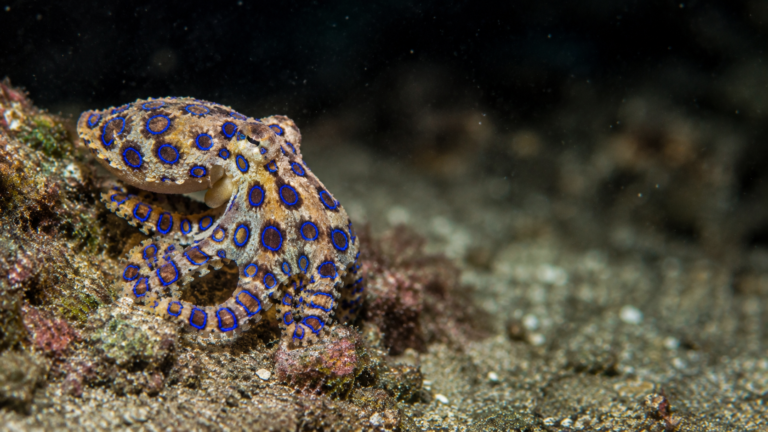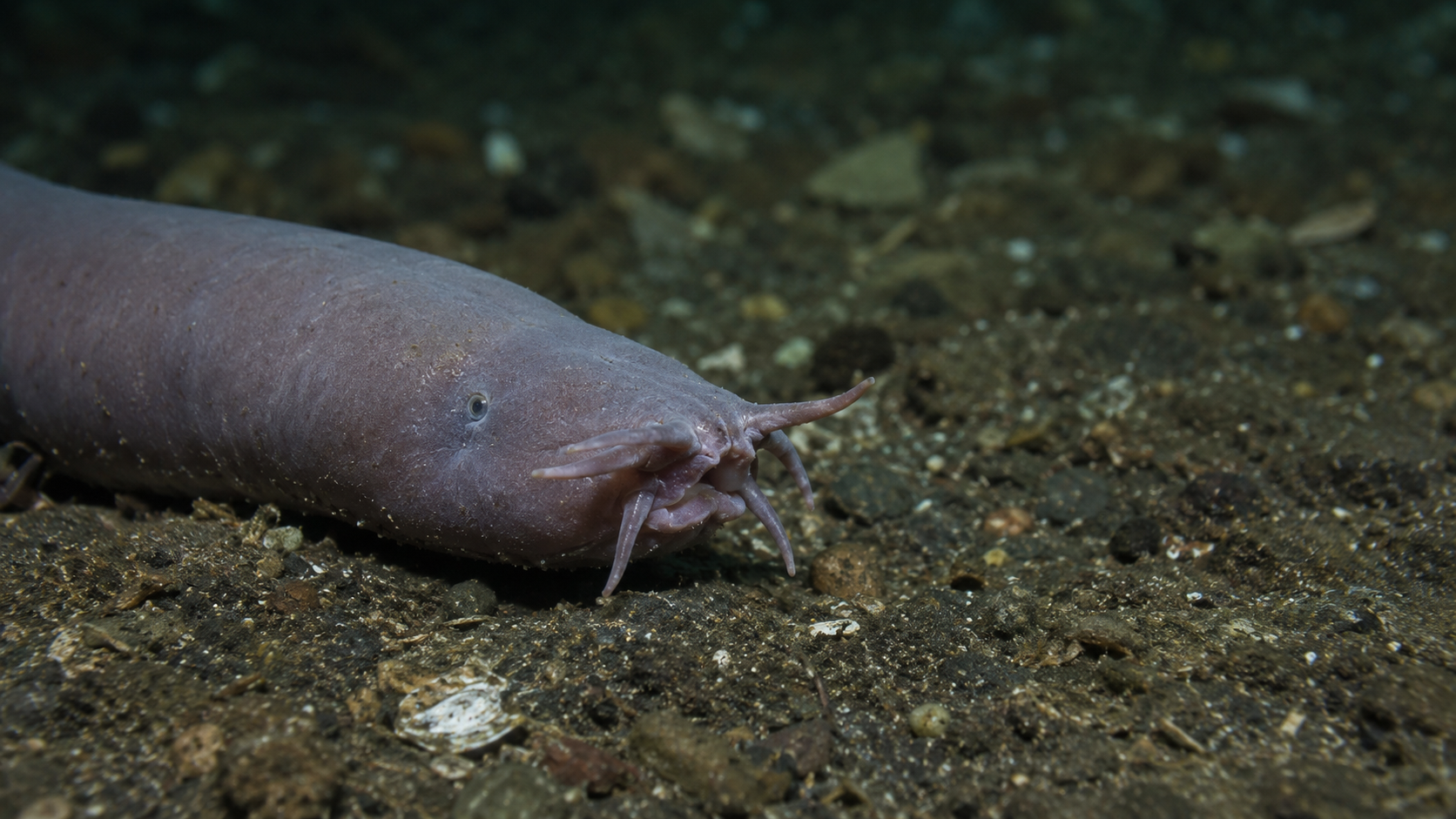
Hagfish
Hagfish are a type of deep-sea invertebrate that belongs to the family Myxiniidae. They are found in oceans around the world, typically at depths of 200-400 meters, and are known for their unique slime defense mechanism.
Physical Characteristics
Hagfish have a soft, boneless body that is usually pink or brown in color. They have a distinctive head with a pair of small eyes and a mouth with many small teeth. Adult hagfish typically grow to a length of 30-60 cm (12-24 in).
Slime Defense Mechanism
Hagfish have a unique defense mechanism that involves releasing a cloud of slime into the water when they feel threatened. This slime is made up of a combination of mucus and cells from the hagfish’s skin, and it can confuse and distract predators, allowing the hagfish to escape.
Diet and Feeding Habits
Hagfish are carnivores and feed on a variety of small invertebrates, including worms, crustaceans, and mollusks. They have a unique way of eating, using their many small teeth to scrape flesh from the bones of their prey.
Habitat and Distribution
Hagfish are found in oceans around the world, typically at depths of 200-400 meters. They prefer areas with soft sediment, such as mud or sand, and are often found near underwater ridges or mountains.
Behavior and Social Structure
Hagfish are generally solitary animals and only come together to mate. They are slow-moving and have a unique way of moving through the water, using their flexible bodies to slither and slide along the seafloor.
| Scientific Name | Myxini glutinosa |
|---|---|
| Kingdom | Animalia |
| Phylum | Chordata |
| Class | Myxini |
| Order | Myxiniformes |
| Family | Myxiniidae |
| Genus | Myxini |
| Species | M. glutinosa |
Conservation Status
Hagfish are not currently considered to be a threatened species, although their populations are often affected by deep-sea fishing and habitat destruction.
Interesting Facts
Hagfish have a number of unique characteristics that set them apart from other animals. They are able to survive in low-oxygen environments, and their slime defense mechanism is one of the most effective in the animal kingdom.
What is the average lifespan of a hagfish?
The average lifespan of a hagfish is not well-documented, but it is believed to be around 10-15 years in the wild.
How do hagfish protect themselves from predators?
Hagfish protect themselves from predators by releasing a cloud of slime into the water, which confuses and distracts the predator, allowing the hagfish to escape.
What do hagfish eat?
Hagfish are carnivores and feed on a variety of small invertebrates, including worms, crustaceans, and mollusks.
Where are hagfish found?
Hagfish are found in oceans around the world, typically at depths of 200-400 meters.
- National Oceanic and Atmospheric Administration (NOAA)
- World Register of Marine Species (WoRMS)
- Integrated Taxonomic Information System (ITIS)
Please note that hagfish are wild animals and should not be kept as pets. They have complex social and spatial needs that cannot be met in a home environment, and their care requires specialized knowledge and equipment. If you are interested in learning more about hagfish, we recommend consulting with a qualified marine biologist or aquarium professional.
Life Cycle and Development
Hagfish have a unique life cycle that is not yet fully understood. They are thought to have a relatively long lifespan, with some individuals estimated to live up to 20 years in the wild. The reproductive cycle of hagfish is also not well understood, but it is believed that they spawn in the spring and summer months. Female hagfish lay eggs that are fertilized externally, and the larvae drift in the water column before settling on the seafloor.
After settling, the larvae undergo a series of molts as they grow and develop into juveniles. This process can take several months, during which time the young hagfish are vulnerable to predators. Once they reach adulthood, hagfish continue to grow and molt periodically throughout their lives.
Communication and Senses
Hagfish have a unique way of communicating with each other through a series of clicks and whistles. They use a pair of specialized muscles in their throat to produce these sounds, which are thought to be used for mating and territorial behaviors. Hagfish also have a highly developed sense of smell, which they use to detect food and predators.
Their eyes are relatively simple and are not capable of forming images, but they are sensitive to light and dark. Hagfish also have a lateral line system, which allows them to detect vibrations in the water and navigate their surroundings. This is particularly useful in the deep-sea environment, where visibility is often limited.
Seasonal Variation
Hagfish are found in oceans around the world, and their behavior and physiology can vary depending on the season. In the spring and summer months, hagfish are more active and can be found in shallower waters, where they feed on abundant invertebrates. During this time, they also undergo a process called “slime production,” where they release large amounts of slime into the water.
In the fall and winter months, hagfish move to deeper waters, where they are less active and feed on slower-moving prey. This seasonal variation is thought to be driven by changes in water temperature and the availability of food.
Ecological Relationships
Hagfish play an important role in the deep-sea ecosystem, serving as both predators and prey for other animals. They feed on invertebrates, which helps to regulate their populations and maintain the balance of the ecosystem. Hagfish are also an important food source for larger predators, such as fish and marine mammals.
In addition, hagfish have a unique relationship with certain species of bacteria that live in their slime. These bacteria help to break down organic matter and recycle nutrients, which benefits the hagfish and other animals in the ecosystem.
Research and Study
Hagfish have been the subject of scientific study for many years, particularly in the fields of marine biology and ecology. Researchers are interested in learning more about their unique slime defense mechanism, as well as their behavior and physiology.
Studies have shown that hagfish slime has antimicrobial properties, which could have potential applications in human medicine. Additionally, researchers are studying the unique properties of hagfish skin, which is highly resistant to damage and could inspire new materials and technologies.
Responsible Enrichment and Captivity
Hagfish are occasionally kept in captivity for research and educational purposes. However, their care is highly specialized and requires a deep understanding of their unique needs and behaviors.
In captivity, hagfish require a large tank with plenty of space to move and a varied diet of invertebrates. They also require a specialized filtration system that can handle their unique slime production. It is not recommended to keep hagfish as pets, as they are highly specialized and require a level of care that is difficult to replicate in a home environment.
Ethical and Legal Considerations
Hagfish are not currently considered to be a threatened or endangered species, although their populations are often impacted by deep-sea fishing and habitat destruction. As a result, there are laws and regulations in place to protect hagfish and their habitats.
Researchers and aquariums that keep hagfish in captivity are required to follow strict guidelines and protocols to ensure the welfare of the animals. Additionally, there are efforts underway to promote sustainable and responsible fishing practices that minimize the impact on hagfish populations.
Reproduction and Developmental Biology
Hagfish reproduction is a complex and not fully understood process. They are thought to be oviparous, with females laying eggs that are fertilized externally. The eggs are then left to develop on their own, without any parental care. The larvae go through a series of developmental stages, eventually settling on the seafloor and metamorphosing into juvenile hagfish.
One of the most interesting aspects of hagfish development is the fact that they undergo a process called “neoteny.” This means that the larvae retain many of their larval characteristics into adulthood, such as their ability to produce slime and their simple body structure. This is thought to be an adaptation to their deep-sea environment, where food is scarce and energy needs to be conserved.
Evolutionary History
Hagfish have a long and complex evolutionary history that is still not fully understood. They are thought to have evolved from a common ancestor with lampreys and other vertebrates, but their exact relationships to these groups are still a topic of debate. Fossil evidence suggests that hagfish have remained largely unchanged for millions of years, with some fossil specimens dating back to the Early Cretaceous period.
One of the most interesting aspects of hagfish evolution is the fact that they have retained many primitive characteristics, such as their slime defense mechanism and simple body structure. This is thought to be an example of “evolutionary stasis,” where a species remains unchanged over time due to a lack of selective pressure.
Ecological Role
Hagfish play an important role in the deep-sea ecosystem, serving as both predators and prey for other animals. They are an important food source for many deep-sea fish and invertebrates, and their slime defense mechanism helps to regulate the populations of these predators.
Hagfish also play a role in the decomposition process, helping to break down organic matter on the seafloor. Their burrowing activities also help to mix sediment and bring oxygen to the seafloor, which can help to support the growth of other organisms.
Cultural Significance
Hagfish have a number of cultural and economic significance, particularly in East Asia where they are considered a delicacy. They are also used in traditional medicine, and their slime is used in a variety of applications, including cosmetics and pharmaceuticals.
In addition to their practical uses, hagfish have also captured the imagination of the public, with their unique appearance and behaviors making them a popular subject in documentaries and aquariums.