Introduction
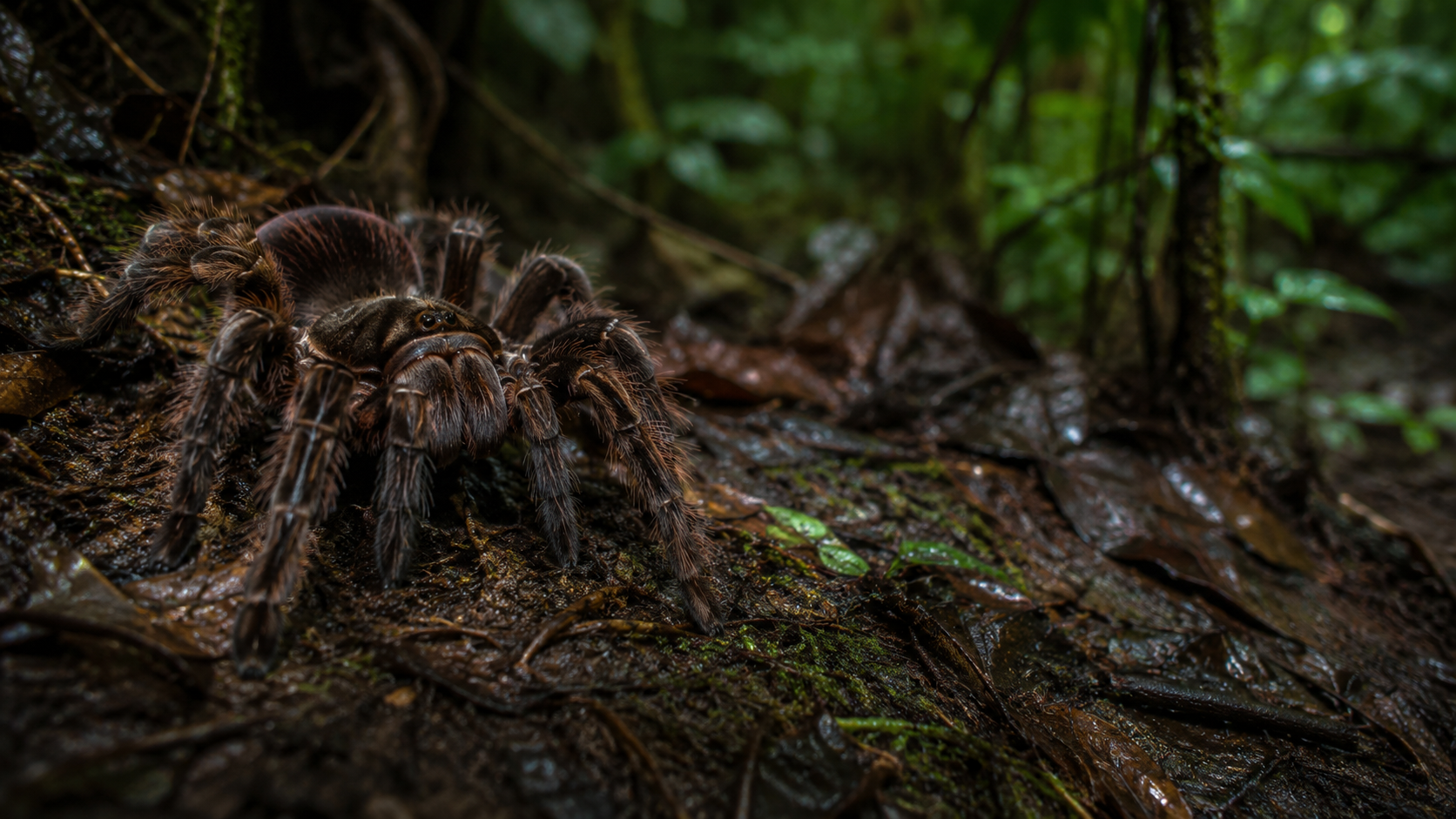
The Goliath Birdeater (Theraphosa blondi) is a species of tarantula that is native to the rainforests of South America. It is the largest spider in the world by leg span, and one of the most iconic and fascinating arachnids on the planet.
Quick Reference Table
| Scientific Name | Theraphosa blondi |
|---|---|
| Common Name | Goliath Birdeater |
| Family | Theraphosidae |
| Leg Span | Up to 28 cm (11 in) |
| Body Length | Up to 11 cm (4.3 in) |
Taxonomy and Identification
The Goliath Birdeater is a member of the family Theraphosidae, which includes some of the largest and most impressive tarantulas in the world. It is characterized by its massive leg span, which can reach up to 28 cm (11 in) in length, and its distinctive golden-brown coloration.
Physical Characteristics
The Goliath Birdeater has a distinctive golden-brown carapace and abdomen, with a distinctive pattern of darker stripes on its legs. It has eight eyes, which are arranged in two rows on the front of its head. The spider’s body is covered in hair-like structures called setae, which give it a velvety texture.
Behaviour
The Goliath Birdeater is a nocturnal animal, spending most of its time hiding in dark, humid places during the day. At night, it emerges to hunt for prey, using its powerful legs and sharp fangs to catch small animals such as insects, frogs, and even small birds.
Habitat
The Goliath Birdeater is found in the rainforests of South America, where it inhabits the forest floor and lower vegetation. It is a burrowing animal, using its powerful legs to dig complex networks of tunnels and burrows in the soil.
Diet
The Goliath Birdeater is a carnivorous animal, feeding on a wide variety of small animals such as insects, frogs, and even small birds. It uses its powerful legs and sharp fangs to catch its prey, and then injects it with digestive fluids to break down its internal organs.
Care and Daily Needs
In captivity, the Goliath Birdeater requires a large, well-ventilated enclosure with a temperature range of 24-28°C (75-82°F) and humidity levels of 60-80%. It should be fed a diet of live insects, such as crickets and mealworms, and provided with a shallow water dish for drinking.
It is essential to provide the Goliath Birdeater with a suitable substrate, such as peat moss or coconut fiber, and to avoid using gravel or sand, which can cause respiratory problems. The enclosure should also be equipped with a hiding place or two, such as a log or a rock, to provide the spider with a sense of security.
Warning Signs
There are several warning signs that may indicate that the Goliath Birdeater is not thriving in captivity. These include a lack of appetite, lethargy, and a change in coloration or texture of the skin. If any of these signs are observed, it is essential to consult with a qualified veterinarian or experienced breeder to determine the cause and provide the necessary treatment.
Responsible Care and Conservation
The Goliath Birdeater is a protected species in some countries, and its capture and trade are regulated by laws and international agreements. It is essential to ensure that any Goliath Birdeater that is kept in captivity has been obtained from a reputable breeder or dealer, and that all necessary permits and licenses have been obtained.
In addition, it is essential to provide the Goliath Birdeater with proper care and attention, and to ensure that its enclosure is well-maintained and free from hazards. This includes regular cleaning of the enclosure, provision of fresh food and water, and monitoring of the spider’s health and well-being.
What is the average lifespan of a Goliath Birdeater in captivity?
The average lifespan of a Goliath Birdeater in captivity is around 20-30 years, although some individuals have been known to live up to 40 years or more.
How often should I feed my Goliath Birdeater?
It is recommended to feed the Goliath Birdeater 2-3 times a week, although this may vary depending on the age and size of the spider.
Can I handle my Goliath Birdeater?
No, it is not recommended to handle the Goliath Birdeater, as it can be stressed by handling and may bite in self-defense.
How often should I clean the enclosure of my Goliath Birdeater?
It is recommended to clean the enclosure of the Goliath Birdeater at least once a week, although this may vary depending on the size of the enclosure and the number of spiders being kept.
Sources
- Smith, A. M. (2017). Tarantulas of the World. New York: Sterling Publishing.
- Breene, R. G. (1994). Tarantulas and Other Spiders of the World. New York: Facts on File.
- World Wildlife Fund. (2020). Goliath Birdeater. Retrieved from https://www.worldwildlife.org/species/goliath-birdeater
Important Notice: If you suspect that your Goliath Birdeater is ill or injured, please consult with a qualified veterinarian or experienced breeder for advice and treatment. Do not attempt to diagnose or treat the spider yourself, as this can cause more harm than good.
Life Cycle and Development
The Goliath Birdeater’s life cycle is a complex and fascinating process. Female Goliath Birdeaters can live for up to 20-30 years in captivity, while males typically live for 5-10 years. The female’s reproductive cycle is triggered by the onset of the rainy season, which stimulates her to produce eggs. She will then spin a protective egg sac, which can contain up to 100 eggs, and guard it fiercely until the eggs hatch.
After about 6-8 weeks, the eggs will hatch into tiny spiderlings, which will emerge from the egg sac and disperse into the surrounding environment. The spiderlings will go through a series of molts as they grow and develop, eventually reaching adulthood after about 5-7 years. During this time, they will go through a series of instars, shedding their skin as they outgrow it.
Communication and Senses
Goliath Birdeaters use a variety of methods to communicate and navigate their environment. They have poor eyesight, but are highly sensitive to vibrations and movement. They use their sensitive pedipalps to detect seismic vibrations in the ground, which helps them to locate prey and detect potential threats.
They also use chemical signals, such as pheromones, to communicate with other Goliath Birdeaters. For example, females will release pheromones to attract males during the mating season. They also use body language to communicate, such as raising their abdomen or displaying their fangs to deter predators.
Seasonal Variation
Goliath Birdeaters are adapted to the seasonal changes of their rainforest habitat. During the dry season, they will often burrow underground or hide in dark, humid places to conserve energy and water. They will also reduce their activity levels and enter a state of dormancy, known as “torpor”, to conserve energy.
During the rainy season, they will emerge from their burrows and become more active, taking advantage of the increased availability of food and water. They will also begin to breed and reproduce during this time, with females producing eggs and males engaging in complex courtship behaviors.
Ecological Relationships
Goliath Birdeaters play a crucial role in their ecosystem, serving as both predators and prey. They feed on a variety of insects, frogs, and even small birds, helping to regulate the populations of these species. They are also an important food source for other animals, such as monkeys, birds, and other spiders.
They also have a complex relationship with their environment, helping to break down organic matter and recycle nutrients through their burrowing activities. They also provide a habitat for other animals, such as insects and small vertebrates, which live in their burrows and feed on their waste.
Research and Conservation
Goliath Birdeaters are an important subject of scientific research, particularly in the fields of ecology, behavior, and conservation biology. Scientists are studying their behavior, habitat requirements, and population dynamics to better understand their role in their ecosystem and to develop effective conservation strategies.
Conservation efforts are also underway to protect the Goliath Birdeater and its habitat. The species is listed as “Vulnerable” on the IUCN Red List, due to habitat loss and fragmentation, as well as the pet trade. Conservation organizations are working to protect and restore their habitat, as well as to educate the public about the importance of responsible and sustainable pet ownership.
Responsible Enrichment and Welfare
Goliath Birdeaters require a lot of space and stimulation to thrive in captivity. They need a large, well-ventilated enclosure with plenty of hiding places and visual barriers. They also require a varied and nutritious diet, as well as regular opportunities for exercise and exploration.
Responsible owners should also prioritize the welfare of their Goliath Birdeaters, providing them with a stress-free environment and minimizing handling and disturbance. They should also be aware of the potential risks and challenges of owning a Goliath Birdeater, such as the risk of escape or the potential for the spider to live for 20-30 years or more.
Ethical and Legal Considerations
The trade in Goliath Birdeaters is regulated by laws and international agreements, such as CITES. Responsible owners should ensure that they are purchasing their spider from a reputable and licensed breeder or dealer, and that they are complying with all relevant laws and regulations.
They should also be aware of the potential ethical implications of owning a Goliath Birdeater, such as the impact on wild populations and the potential for animal welfare concerns. They should prioritize the welfare and well-being of their spider, and consider the long-term commitment and responsibilities involved in caring for a Goliath Birdeater.