Natural History
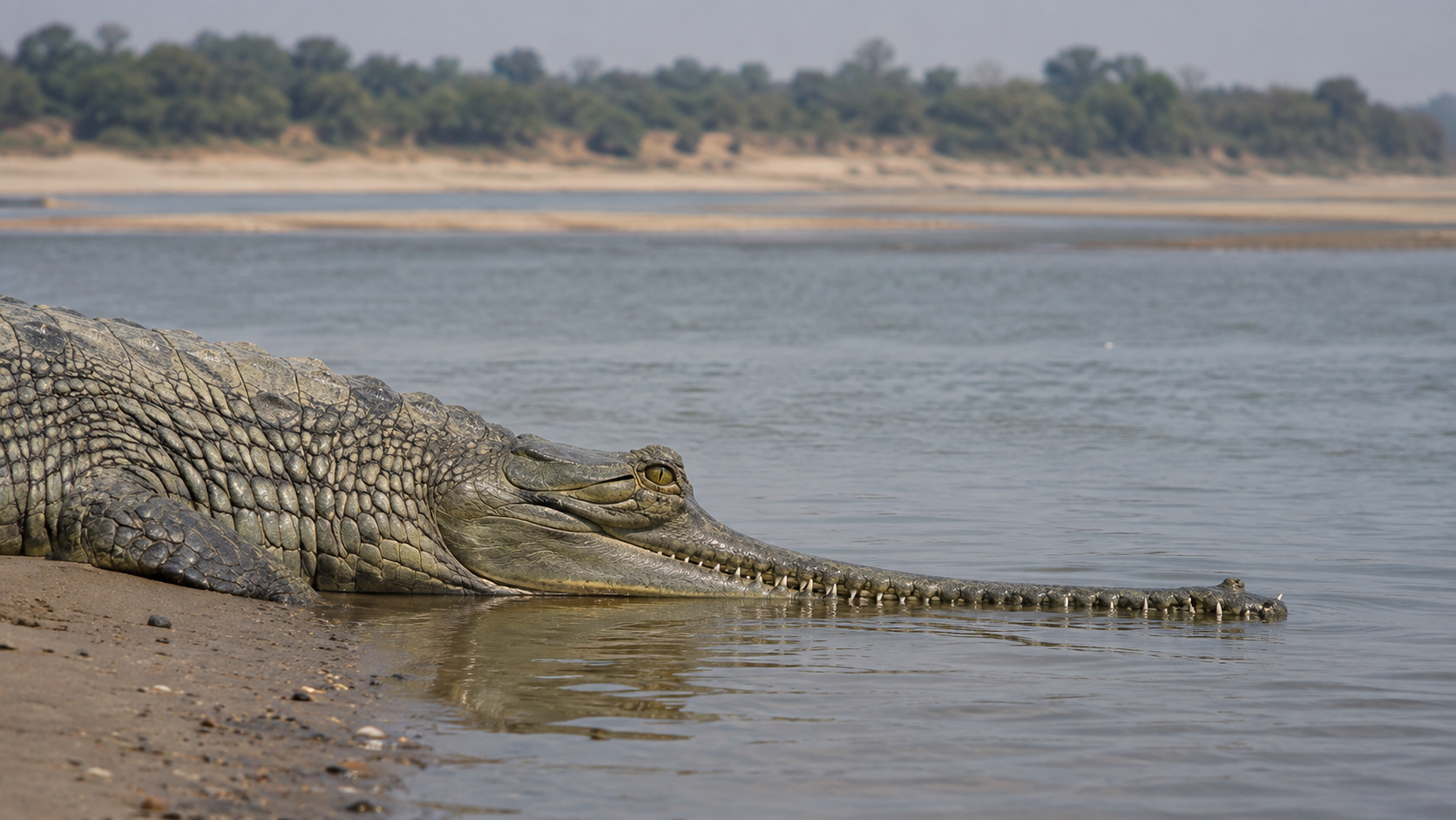
The Gharial (Gavialis gangeticus) is a large reptile that belongs to the family Gavialidae. It is one of the most distinctive and specialized crocodilians in the world, with a long, thin snout that is perfectly adapted for catching fish.
Gharials are found in freshwater habitats, including rivers, streams, and wetlands, in the Indian subcontinent and parts of Southeast Asia. They are carnivores and feed on a variety of fish, crustaceans, and other aquatic animals.
Physical Characteristics
Gharials are large reptiles that can grow up to 7 meters (23 feet) in length and weigh up to 160 kilograms (353 pounds). They have a distinctive long, thin snout that is lined with sharp teeth, perfect for catching fish. Their body is grayish-green in color, with a lighter-colored belly.
| Characteristic | Description |
|---|---|
| Length | Up to 7 meters (23 feet) |
| Weight | Up to 160 kilograms (353 pounds) |
| Snout shape | Long, thin |
| Diet | Carnivorous, fish, crustaceans, and other aquatic animals |
| Habitat | Freshwater habitats, including rivers, streams, and wetlands |
Conservation Status
Gharials are listed as Critically Endangered on the IUCN Red List, due to habitat loss, entanglement in fishing nets, and hunting for their skin and meat. Conservation efforts are underway to protect their habitats and reduce human-gharial conflict.
Public Safety
Gharials are wild animals and should be treated with caution. They are not typically aggressive towards humans, but can be if they feel threatened or if they are protecting their young. It is essential to maintain a safe distance and not approach them in the wild.
Responsible Observation
If you are interested in observing gharials in their natural habitat, it is essential to do so responsibly. Join a guided tour with a reputable operator, and follow all instructions and guidelines provided. Never approach or feed gharials in the wild, as this can disrupt their natural behavior and cause harm to both humans and animals.
What is the average lifespan of a gharial?
The average lifespan of a gharial is around 50-60 years in the wild, although some individuals have been known to live up to 70 years.
Are gharials social animals?
Gharials are generally solitary animals, but they can be found in small groups during the breeding season.
What is the main threat to gharial populations?
The main threat to gharial populations is habitat loss and degradation, due to human activities such as dam construction, sand mining, and agriculture.
Can gharials be found in captivity?
Yes, gharials can be found in some zoos and wildlife sanctuaries, where they are bred in captivity as part of conservation programs.
- International Union for Conservation of Nature (IUCN). (2020). Gavialis gangeticus.
- Wildlife Conservation Society (WCS). (2020). Gharial.
- National Geographic. (2020). Gharial.
Important Notice: Gharials are wild animals and should be treated with caution. If you are interested in learning more about gharials or observing them in their natural habitat, please do so responsibly and with the guidance of a reputable operator. Never approach or feed gharials in the wild, as this can disrupt their natural behavior and cause harm to both humans and animals.
Life Cycle and Development
Gharials have a complex life cycle that involves a long period of growth and development. They lay their eggs in nests made of vegetation and mud on the banks of rivers and streams, typically during the dry season. The female gharial guards the nest and keeps it moist by sprinkling water on it until the eggs hatch after about 60 days. The hatchlings are about 40 cm (16 inches) long and are vulnerable to predators, such as birds, mammals, and other crocodilians.
As they grow, gharials go through a series of physical changes. They start to develop their distinctive long, thin snout at around 2-3 years of age, and their teeth become more pointed and specialized for catching fish. They reach maturity at around 10-15 years of age, at which point they can start breeding.
Communication and Senses
Gharials have a range of communication methods, including vocalizations, visual displays, and chemical signals. They use a variety of sounds, such as grunts, growls, and hisses, to communicate with other gharials, particularly during the breeding season. They also use body language to convey information, such as raising their snout or tail to signal aggression or courtship.
Gharials have excellent eyesight and can spot prey from a distance. They also have highly sensitive scales on their snout that can detect the slightest vibrations in the water, allowing them to locate fish and other aquatic animals. Their sense of smell is also highly developed, and they use it to detect food and potential mates.
Seasonal Variation
Gharials are adapted to the seasonal changes in their freshwater habitats. During the dry season, they congregate in larger numbers in areas with deeper water, such as river pools and wetlands. They are more active at night during this time, when the water is cooler and there is less human activity.
During the monsoon season, gharials disperse into the flooded areas, where they feed on the abundant fish and other aquatic animals. They are more active during the day during this time, when the water is warmer and there is more food available.
Ecological Relationships
Gharials play a crucial role in maintaining the ecological balance of their freshwater habitats. They prey on fish and other aquatic animals, which helps to regulate their populations and maintain the health of the ecosystem. They also help to maintain the structure of the habitat by creating burrows and holes that provide shelter for other animals.
Gharials have a number of predators, including larger crocodilians, tigers, and birds of prey. They also compete with other predators, such as otters and fish-eating birds, for food.
Research and Conservation Efforts
Gharials are the subject of ongoing research and conservation efforts. Scientists are studying their behavior, ecology, and population dynamics to better understand the challenges they face and to develop effective conservation strategies.
Conservation efforts are focused on protecting gharial habitats, reducing human-gharial conflict, and promoting sustainable fishing practices. National parks and protected areas have been established to provide a safe habitat for gharials, and community-based conservation programs are working to engage local people in gharial conservation.
Responsible Enrichment and Animal Welfare
Gharials in captivity require specialized care and enrichment to ensure their physical and psychological well-being. Zoos and wildlife sanctuaries are providing gharials with large enclosures that mimic their natural habitats, complete with water features, vegetation, and hiding places.
Enrichment activities, such as providing fish and other aquatic animals as food, and creating artificial nesting sites, are also being used to stimulate the gharials’ natural behavior. These efforts help to promote the welfare of gharials in captivity and support conservation efforts in the wild.
Ethical and Legal Considerations
Gharials are protected by laws and international agreements, including the Convention on International Trade in Endangered Species of Wild Fauna and Flora (CITES) and the Wildlife Protection Act in India. The trade in gharial products, such as their skin and meat, is strictly regulated, and hunting and poaching are prohibited.
However, gharials continue to face threats from human activities, such as habitat destruction, entanglement in fishing nets, and pollution. Efforts to address these threats require a coordinated approach that involves governments, conservation organizations, and local communities.
Threats and Challenges
Gharials face numerous threats and challenges in the wild, which have contributed to their critically endangered status. One of the primary threats is habitat loss and degradation, which has resulted from the construction of dams, irrigation projects, and other human activities that alter the natural flow of rivers and streams. This has reduced the availability of suitable habitat for gharials, making it difficult for them to survive and thrive.
Another significant threat is entanglement in fishing nets, which can cause serious injury or drowning. Gharials are often caught accidentally in fishing nets intended for other species, and this can lead to a significant reduction in their population. In addition, gharials are hunted for their skin and meat, which are highly valued in some cultures.
Climate change is also a major concern for gharials, as it can alter the water temperature and quality, making it difficult for them to survive. Warmer water temperatures can also increase the growth of aquatic plants, which can reduce the availability of food for gharials.
Human-Gharial Conflict
As gharials are large carnivores, they can come into conflict with humans, particularly in areas where their habitats overlap. In some cases, gharials may attack humans in self-defense or when they feel threatened. However, such attacks are rare and usually occur when gharials are provoked or when they are protecting their young.
In some areas, gharials are also seen as a threat to human livelihoods, particularly in fishing communities. Fishermen may view gharials as competitors for fish, and may intentionally harm or kill them to protect their catch. This can lead to a decline in gharial populations and can also have negative impacts on the ecosystem as a whole.
Cultural Significance
Gharials have significant cultural and spiritual importance in many communities, particularly in India and Nepal. In Hindu mythology, the gharial is associated with the god Ganga, who is revered as the goddess of the Ganges River. In some cultures, gharials are also seen as a symbol of good luck and prosperity.
In addition, gharials play an important role in maintaining the ecological balance of their ecosystems. As apex predators, they help to regulate the populations of other aquatic species, which can prevent any one species from dominating the ecosystem.
Community-Based Conservation
Community-based conservation efforts are underway to protect gharials and their habitats. These efforts involve working with local communities to raise awareness about the importance of gharial conservation and to develop sustainable livelihoods that do not harm gharial populations.
In some areas, community-based conservation programs have been successful in reducing human-gharial conflict and promoting coexistence between humans and gharials. These programs often involve providing alternative livelihoods for fishermen and other communities that depend on the river, such as ecotourism and sustainable fishing practices.
Ex-Situ Conservation
Ex-situ conservation efforts, such as captive breeding programs, are also underway to protect gharials. These programs involve breeding gharials in controlled environments, such as zoos and wildlife sanctuaries, with the goal of releasing them back into the wild.
Captive breeding programs can help to increase gharial populations and can also provide an opportunity for research and education. However, ex-situ conservation efforts should be used in conjunction with in-situ conservation efforts, which focus on protecting gharials in their natural habitats.