leopard gecko: A Comprehensive Guide
The Gecko Leopardo, also known as the Leopard Gecko, is a small, nocturnal gecko native to South America. This species has gained popularity as a pet due to its gentle nature and relatively small size.
Quick Reference Table
| Scientific Name | Phyllodactylus leopardinus |
|---|---|
| Family | Phyllodactylidae |
| Genus | Phyllodactylus |
| Species | P. leopardinus |
| Conservation Status | Least Concern |
Taxonomy and Identification
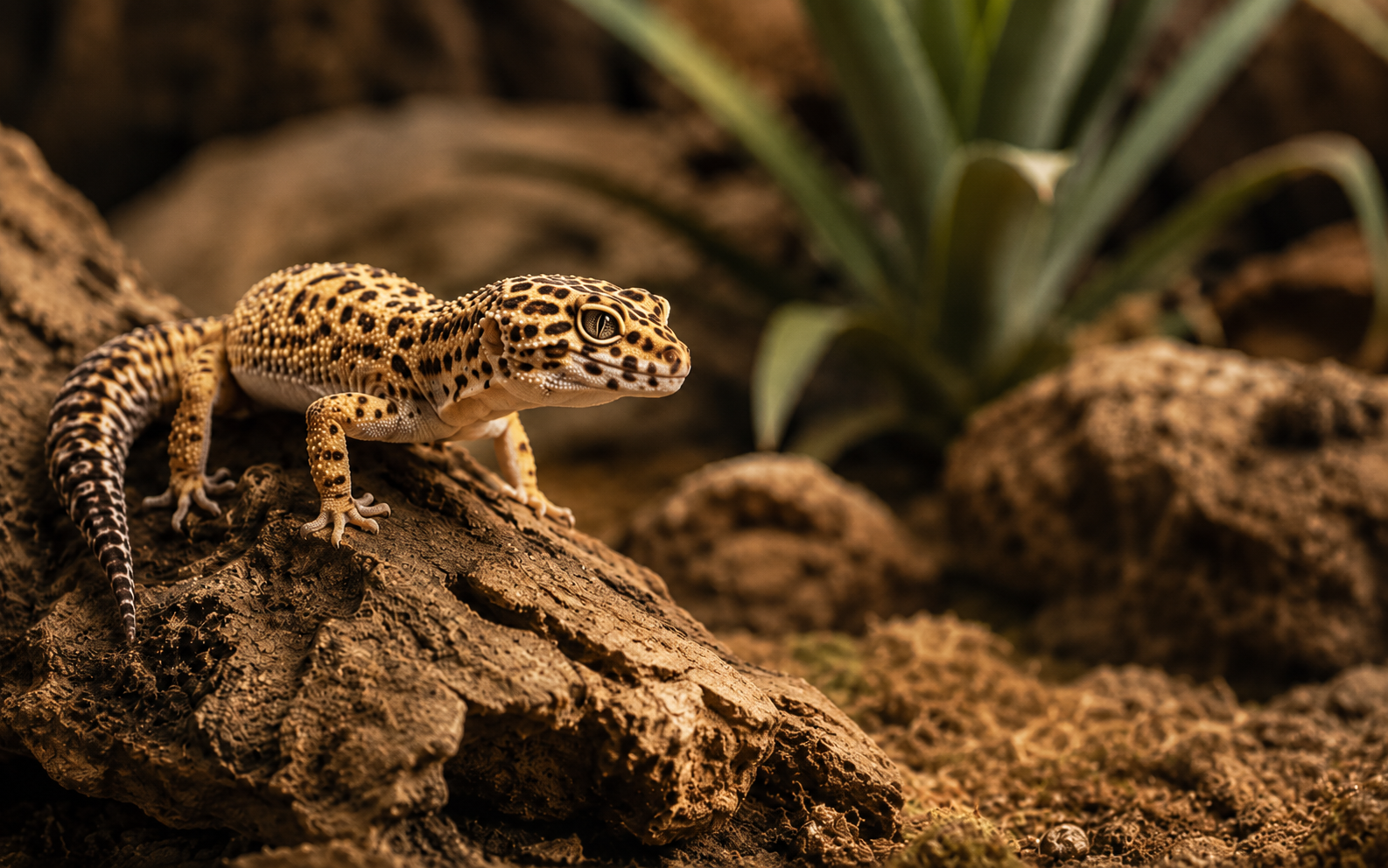
The Gecko Leopardo belongs to the family Phyllodactylidae and is classified as Phyllodactylus leopardinus. This species is characterized by its distinctive leopard-like spots, which give it its common name. Adult geckos typically reach a length of 15-20 cm (6-8 in) and weigh between 10-20 grams.
Natural Habitat and Distribution
The Gecko Leopardo is found in the wild in South America, specifically in the countries of Argentina, Bolivia, Chile, and Peru. They inhabit dry, rocky areas with sparse vegetation, often seeking shelter in crevices and under rocks.
Behaviour
Gecko Leopardo are nocturnal animals, spending most of their time hiding in dark, secluded areas during the day. At night, they emerge to hunt for small insects and other invertebrates. They are solitary animals and only come together during the breeding season.
Diet
In the wild, Gecko Leopardo feed on small insects, such as ants, beetles, and flies. They also consume other invertebrates, like spiders and ticks. In captivity, they can be fed a diet of commercial gecko food, supplemented with live insects.
Gecko Leopardo: A Comprehensive Guide
The Gecko Leopardo, also known as the Leopard Gecko, is a small, nocturnal gecko native to South America. This species has gained popularity as a pet due to its gentle nature and relatively small size.
Quick Reference Table
| Scientific Name | Phyllodactylus leopardinus |
|---|---|
| Family | Phyllodactylidae |
| Genus | Phyllodactylus |
| Species | P. leopardinus |
| Conservation Status | Least Concern |
Taxonomy and Identification
The Gecko Leopardo belongs to the family Phyllodactylidae and is classified as Phyllodactylus leopardinus. This species is characterized by its distinctive leopard-like spots, which give it its common name. Adult geckos typically reach a length of 15-20 cm (6-8 in) and weigh between 10-20 grams.
Natural Habitat and Distribution
The Gecko Leopardo is found in the wild in South America, specifically in the countries of Argentina, Bolivia, Chile, and Peru. They inhabit dry, rocky areas with sparse vegetation, often seeking shelter in crevices and under rocks.
Behaviour
Gecko Leopardo are nocturnal animals, spending most of their time hiding in dark, secluded areas during the day. At night, they emerge to hunt for small insects and other invertebrates. They are solitary animals and only come together during the breeding season.
Diet
In the wild, Gecko Leopardo feed on small insects, such as ants, beetles, and flies. They also consume other invertebrates, like spiders and ticks. In captivity, they can be fed a diet of commercial gecko food, supplemented with live insects.
Responsible Care
If you are considering keeping a Gecko Leopardo as a pet, it is essential to provide a suitable environment. A well-ventilated, dry enclosure with a temperature range of 22-28°C (72-82°F) and a humidity level of 30-50% is ideal. A diet of commercial gecko food and live insects should be provided, and a shallow water dish should be available for drinking.
Health, Welfare, and Conservation
Gecko Leopardo are generally a hardy species, but they can be prone to certain health issues, such as metabolic bone disease and respiratory infections. Regular veterinary check-ups and a balanced diet can help prevent these issues. In the wild, Gecko Leopardo are not considered to be a threatened species, but habitat destruction and the pet trade can impact local populations.
Practical Takeaways
- Provide a suitable environment with proper temperature, humidity, and ventilation.
- Feed a balanced diet of commercial gecko food and live insects.
- Ensure access to a shallow water dish for drinking.
- Regular veterinary check-ups are essential for maintaining health and preventing disease.
What is the average lifespan of a Gecko Leopardo?
The average lifespan of a Gecko Leopardo is 10-15 years in captivity.
Can Gecko Leopardo be handled?
Yes, Gecko Leopardo are generally docile and can be handled gently and carefully.
How often should I feed my Gecko Leopardo?
Feed your Gecko Leopardo 2-3 times a week, depending on its age and size.
Can I keep multiple Gecko Leopardo together?
No, Gecko Leopardo are solitary animals and should be kept separately to prevent stress and fighting.
What are the signs of a healthy Gecko Leopardo?
A healthy Gecko Leopardo should have a firm, rounded body, clear eyes, and a pinkish-colored mouth.
- National Geographic: Leopard Gecko
- Reptile Database: Phyllodactylus leopardinus
- Smithsonian’s National Zoo & Conservation Biology Institute: Leopard Gecko
Remember, if you suspect that your Gecko Leopardo is ill or injured, consult a qualified veterinarian experienced in reptile care. They can provide professional advice and treatment to ensure the health and well-being of your pet.
Life Cycle and Development
The Gecko Leopardo’s life cycle is characterized by a relatively short incubation period and a rapid growth rate. Females typically lay 2-3 eggs per clutch, which incubate for approximately 60-70 days. The eggs are usually laid in a sheltered location, such as under a rock or in a burrow. After hatching, the young geckos are independent and begin to hunt for small insects immediately.
As they grow, the young geckos undergo a series of molts, shedding their skin to accommodate their increasing size. This process can occur several times a week, especially during the first few months of life. After about 6-8 months, the young geckos reach sexual maturity and are capable of breeding.
Communication and Senses
Gecko Leopardo use a variety of methods to communicate with each other, including visual displays, vocalizations, and scent marking. They have excellent eyesight and can detect even slight movements, which helps them to detect potential prey or predators. Their hearing is also acute, and they can detect a wide range of frequencies.
In addition to their visual and auditory senses, Gecko Leopardo also have a highly developed sense of smell. They use scent glands located on their underside to mark their territory and communicate with other geckos. This sense of smell is also important for detecting food and potential mates.
Seasonal Variation and Ecological Relationships
In the wild, Gecko Leopardo are adapted to a dry, rocky environment with limited vegetation. During the dry season, they may estivate, hiding in sheltered locations to conserve energy and water. When the rains come, they emerge to hunt and breed, taking advantage of the increased availability of food and water.
Gecko Leopardo play an important role in their ecosystem, serving as both predators and prey. They feed on small insects and other invertebrates, helping to regulate their populations. In turn, they are preyed upon by larger animals, such as birds, snakes, and other predators.
Research and Conservation Efforts
Despite their relatively small size, Gecko Leopardo are an important subject of research in the fields of herpetology and ecology. Scientists are studying their behavior, physiology, and ecology to gain a better understanding of these fascinating animals.
Conservation efforts are also underway to protect the Gecko Leopardo and its habitat. Habitat destruction and fragmentation are major threats to the species, as well as the introduction of non-native predators and competitors. Efforts are being made to protect and restore habitats, as well as to educate the public about the importance of conservation.
Responsible Enrichment and Ethical Considerations
As popular pets, Gecko Leopardo require responsible care and enrichment. Owners should provide a suitable environment that mimics their natural habitat, including a dry, rocky substrate and a temperature range of 75-85°F (24-29°C). A varied diet that includes live insects and a calcium supplement is also essential.
In addition to providing proper care, owners should also be aware of the ethical considerations surrounding the capture and trade of wild animals. Many Gecko Leopardo are captured from the wild for the pet trade, which can harm local populations and ecosystems. Responsible owners should choose captive-bred animals and support conservation efforts.
Life Cycle and Development
The Gecko Leopardo’s life cycle is characterized by a relatively short incubation period and a rapid growth rate. Females typically lay 2-4 eggs per clutch, which incubate for approximately 60-70 days. After hatching, the young geckos are independent and start hunting for small insects immediately. They grow rapidly, reaching adulthood in about 6-8 months. In captivity, with proper care and nutrition, Gecko Leopardo can live up to 10-15 years.
Communication and Senses
Gecko Leopardo communicate primarily through visual and chemical cues. They use body language to convey aggression, courtship, or submission, such as arching their back, puffing out their throat skin, or performing a “push-up” display. They also use scent markings to communicate with other geckos, particularly during the breeding season. Their sense of smell is highly developed, and they use their Jacobson’s organ to detect pheromones and other chemical signals. In terms of vision, Gecko Leopardo have excellent low-light sensitivity, thanks to their large, round eyes and reflective retinas.
Seasonal Variation and Ecological Relationships
In the wild, Gecko Leopardo are adapted to the dry, rocky environments of South America. They are ectothermic, meaning they regulate their body temperature using external sources, such as the sun or rocks. During the day, they seek shade and shelter to avoid overheating, while at night, they emerge to hunt and bask in the cooler temperatures. In terms of ecological relationships, Gecko Leopardo play a crucial role in controlling insect populations, serving as both predators and prey in their ecosystem. They are also an important food source for other animals, such as birds, snakes, and larger lizards.
Research and Conservation Efforts
Despite being listed as Least Concern on the IUCN Red List, Gecko Leopardo populations are declining in some areas due to habitat destruction, fragmentation, and degradation. Research efforts are focused on understanding the ecological and behavioral adaptations of this species, as well as developing effective conservation strategies. Studies have shown that Gecko Leopardo are sensitive to environmental changes, such as temperature and humidity fluctuations, which can impact their reproduction and survival. Conservation efforts are underway to protect their habitats and reduce the impact of human activities on their populations.
Responsible Enrichment and Ethical Considerations
As a popular pet species, Gecko Leopardo require responsible care and enrichment. Providing a stimulating environment that mimics their natural habitat is essential for their physical and mental well-being. This includes offering a varied diet, creating hiding places and visual barriers, and maintaining a suitable temperature and humidity range. Additionally, it is essential to consider the ethical implications of keeping Gecko Leopardo as pets, ensuring that they are sourced from reputable breeders or rescue organizations, and not supporting the wild animal trade.