Introduction
The Dumbo Octopus, also known as Grimpoteuthis sp., is a deep-sea cephalopod that has captivated the hearts of many with its unique appearance and intriguing behavior. Found in oceans around the world, this small, adorable creature has been the subject of much fascination and research.
Quick Reference Table
| Scientific Name | Grimpoteuthis sp. |
|---|---|
| Common Name | Dumbo Octopus |
| Family | Opisthoteuthidae |
| Order | Cirrate Octopoda |
| Conservation Status | Least Concern |
| Length | Up to 20 cm (8 in) |
| Weight | Up to 1 kg (2.2 lbs) |
Taxonomy and Identification
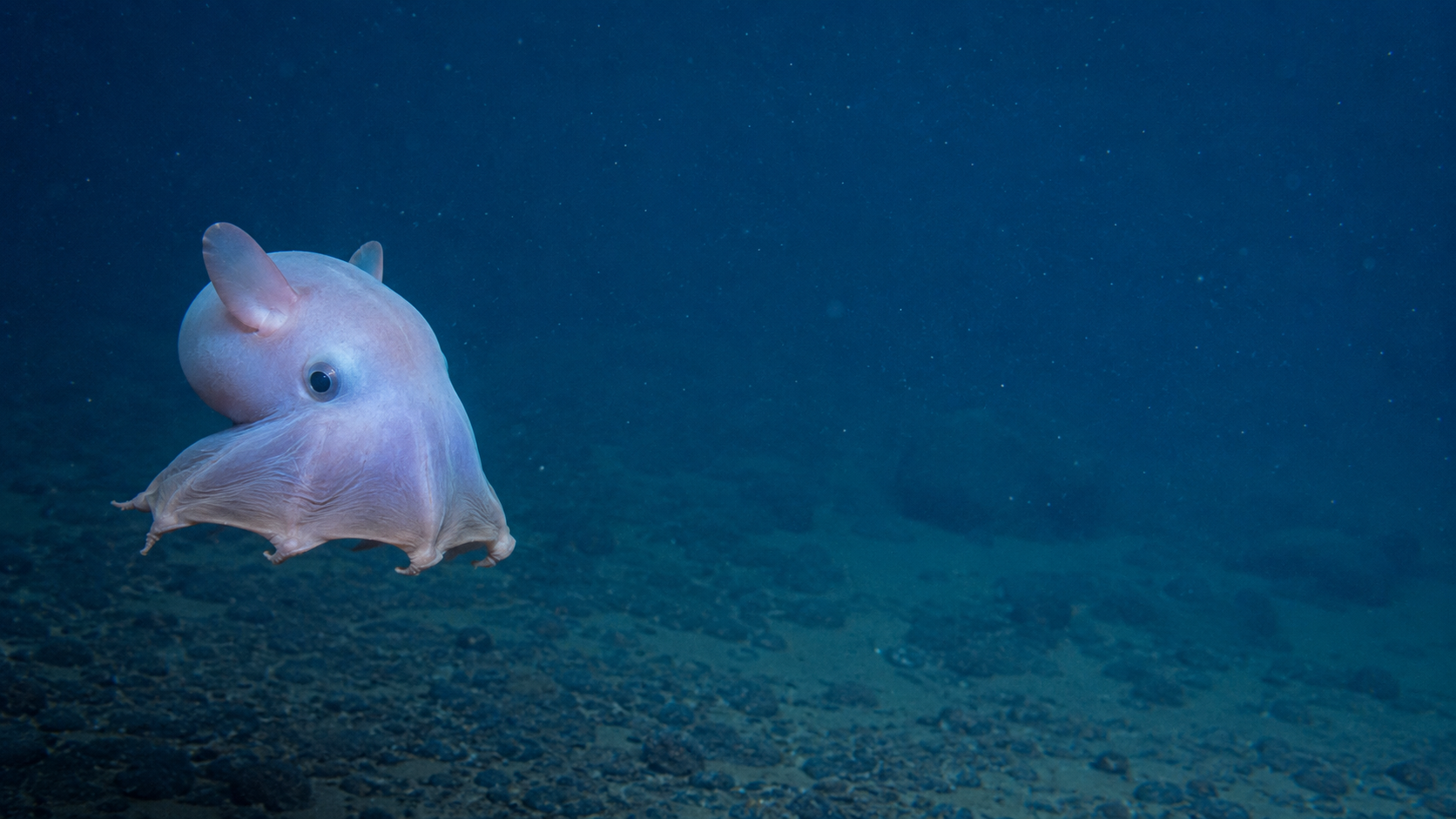
The Dumbo Octopus belongs to the family Opisthoteuthidae and is part of the order Cirrate Octopoda. There are 15 recognized species within the genus Grimpoteuthis, although new species are still being discovered. These cephalopods are characterized by their distinctive ear-like fins, which resemble the ears of Disney’s Dumbo the elephant.
The Dumbo Octopus has a soft, gelatinous body that is typically a pale yellow or orange color. They have large eyes and a short, stubby beak. Their eight arms are lined with suckers, which they use to capture prey and crawl along the seafloor.
Natural Habitat and Distribution
Dumbo Octopuses are found in deep-sea environments around the world, typically between 200-4,000 meters (660-13,124 feet) below the surface. They inhabit areas with soft sediment, such as sand or mud, and are often found near underwater mountains or ridges.
These cephalopods are thought to be a deep-sea equivalent of the shallow-water octopuses, with a similar body shape and behavior. However, they have adapted to the unique conditions of the deep sea, where the pressure is extreme and the light is scarce.
Behaviour
Dumbo Octopuses are thought to be solitary animals, only coming together to mate. They are skilled predators, using their ear-like fins to detect the vibrations of prey in the water. They are also skilled at hiding and can quickly change color to blend in with their surroundings.
One of the most fascinating aspects of Dumbo Octopus behavior is their unique way of moving through the water. They use their ear-like fins to flap and propel themselves, creating a sort of ‘jet propulsion’ system. This allows them to move slowly and efficiently through the water, conserving energy in the food-scarce deep-sea environment.
Habitat
Dumbo Octopuses are found in a variety of deep-sea habitats, including abyssal plains, seamounts, and oceanic ridges. They are thought to prefer areas with soft sediment, such as sand or mud, where they can easily burrow and hide.
These cephalopods are also found in areas with unique geological features, such as hydrothermal vents or cold seeps. These areas provide a source of food and energy for the Dumbo Octopuses, which are able to thrive in these environments.
Diet
Dumbo Octopuses are carnivores and feed on small crustaceans, such as shrimp and crabs, as well as other deep-sea animals like sea stars and sea urchins. They have a radula, a tongue-like structure with tiny teeth, which they use to scrape and grind their food.
These cephalopods are also known to scavenge for food, feeding on the carcasses of other animals that have sunk to the seafloor. This behavior is thought to be an adaptation to the food-scarce deep-sea environment, where opportunities for predation are limited.
Daily Needs
Dumbo Octopuses have a number of daily needs that are essential for their survival. These include:
- Food: Dumbo Octopuses need a constant supply of food to sustain themselves in the food-scarce deep-sea environment.
- Shelter: These cephalopods need a safe place to hide and shelter from predators, such as underwater mountains or ridges.
- Water quality: Dumbo Octopuses are sensitive to changes in water quality and need a stable environment to thrive.
Warning Signs
There are a number of warning signs that may indicate that a Dumbo Octopus is not healthy or is under stress. These include:
- Changes in color or texture: Dumbo Octopuses that are stressed or sick may change color or develop lesions on their skin.
- Changes in behavior: Dumbo Octopuses that are stressed or sick may become more aggressive or withdrawn.
- Loss of appetite: Dumbo Octopuses that are stressed or sick may lose their appetite or have difficulty eating.
Responsible Care or Conservation
Dumbo Octopuses are not typically kept in captivity, as they are deep-sea animals that require specialized care and equipment. However, there are a number of ways to promote the conservation of these cephalopods:
- Support deep-sea research: Supporting research into the biology and ecology of Dumbo Octopuses can help us better understand these animals and how to protect them.
- Reduce pollution: Reducing pollution in the deep sea can help protect Dumbo Octopuses and their habitats.
- Establish marine protected areas: Establishing marine protected areas can help protect Dumbo Octopuses and their habitats from human impact.
Frequently Asked Questions
What is the average lifespan of a Dumbo Octopus?
The average lifespan of a Dumbo Octopus is not well established, but it is thought to be several years.
How deep do Dumbo Octopuses live?
Dumbo Octopuses are found in deep-sea environments, typically between 200-4,000 meters (660-13,124 feet) below the surface.
What do Dumbo Octopuses eat?
Dumbo Octopuses are carnivores and feed on small crustaceans, such as shrimp and crabs, as well as other deep-sea animals.
Are Dumbo Octopuses endangered?
No, Dumbo Octopuses are not currently considered to be endangered, although their populations may be impacted by human activities such as deep-sea mining and pollution.
Sources
- National Oceanic and Atmospheric Administration (NOAA). (2020). Dumbo Octopus.
- World Register of Marine Species. (2020). Grimpoteuthis sp.
- Encyclopedia Britannica. (2020). Dumbo Octopus.
Important Notice: If you suspect that a Dumbo Octopus is injured or in distress, please contact a qualified veterinarian or a local animal rescue organization for assistance. Never attempt to handle or care for a wild animal without proper training and equipment.
Life Cycle and Development
The life cycle of the Dumbo Octopus is still not fully understood, but research has shed some light on their development. Dumbo Octopuses are thought to have a relatively short lifespan, typically ranging from 3 to 5 years in the wild. They begin their lives as tiny larvae, drifting in the water column before settling on the seafloor. As they grow, they undergo a series of molts, shedding their skin to accommodate their increasing size.
During this time, they develop their distinctive ear-like fins, which are thought to be used for balance and maneuverability. The fins are also lined with sensory receptors, allowing the octopus to detect vibrations and changes in the water.
As they mature, Dumbo Octopuses begin to develop their unique coloration and patterning, which is thought to play a role in communication and mating. Adults will eventually reach their full size, at which point they will begin to focus on finding a mate and reproducing.
Communication and Senses
Dumbo Octopuses have a range of senses that they use to navigate their environment and communicate with other octopuses. Their large eyes are highly sensitive, allowing them to detect even the smallest amounts of light in the dimly lit deep-sea environment. They also have a highly developed sense of touch, with suckers on their arms that can detect subtle changes in texture and pressure.
In addition to their senses, Dumbo Octopuses are also able to communicate through a range of behaviors, including color changes, posturing, and release of chemical cues. They are thought to use these signals to convey information about food, potential mates, and predators.
One of the most fascinating aspects of Dumbo Octopus communication is their ability to change the color and texture of their skin to blend in with their surroundings. This camouflage ability is thought to be used for both predator avoidance and prey capture.
Seasonal Variation and Ecological Relationships
Dumbo Octopuses are found in deep-sea environments around the world, where the seasons are less pronounced than in shallower waters. However, they are still subject to changes in food availability and water temperature, which can impact their behavior and ecology.
In areas with high productivity, such as near hydrothermal vents or coral reefs, Dumbo Octopuses can be found in high densities, feeding on the abundant food sources. In these areas, they play an important role in the ecosystem, serving as both predators and prey for other deep-sea animals.
In areas with lower productivity, Dumbo Octopuses may be more solitary, relying on their camouflage abilities to capture prey and avoid predators. They have been known to form symbiotic relationships with other deep-sea animals, such as sea cucumbers and sea stars, which provide them with shelter and protection.
Research and Conservation
Despite their fascinating behavior and unique appearance, Dumbo Octopuses are still poorly understood, and much research is needed to fully appreciate their ecology and conservation status. Scientists are working to study their behavior, habitat, and population dynamics, in order to better understand their role in the deep-sea ecosystem.
One of the main challenges in studying Dumbo Octopuses is their deep-sea habitat, which makes it difficult to observe them in their natural environment. However, advances in underwater technology, such as remotely operated vehicles (ROVs) and autonomous underwater vehicles (AUVs), are allowing scientists to explore and study the deep sea in greater detail.
In terms of conservation, Dumbo Octopuses are currently listed as Least Concern on the IUCN Red List, although their populations are thought to be declining in some areas due to deep-sea mining and fishing activities. Efforts are being made to protect their habitats and reduce the impact of human activities on their populations.
Responsible Enrichment and Ethical Considerations
While Dumbo Octopuses are not typically kept in captivity, there is a growing interest in keeping cephalopods as pets. However, keeping these animals in captivity is highly challenging and requires specialized care and equipment.
For those interested in learning more about Dumbo Octopuses, there are many responsible and ethical ways to engage with these animals, such as through educational programs, documentaries, and citizen science projects. These initiatives allow people to learn about and appreciate these fascinating creatures without causing harm to their populations or habitats.
In addition, supporting conservation efforts and organizations that work to protect deep-sea habitats and ecosystems is an important way to contribute to the long-term survival of Dumbo Octopuses and other deep-sea species.