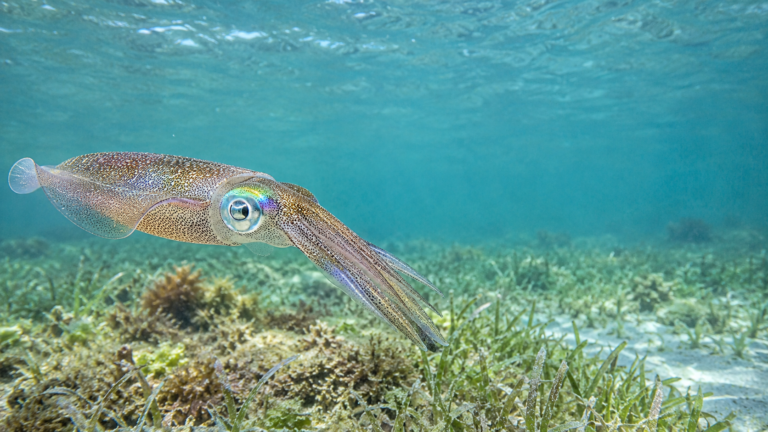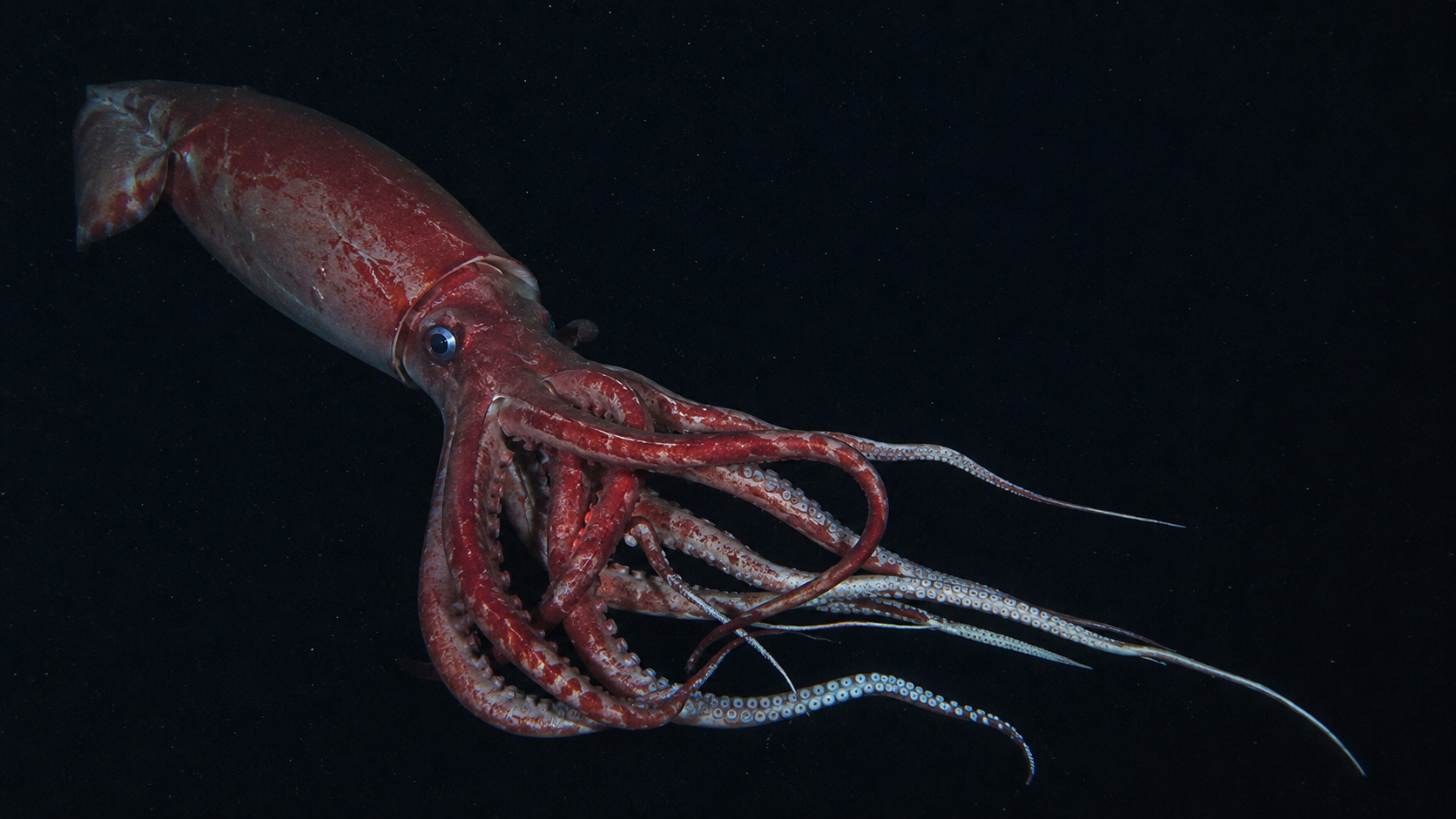
Classification and Distribution
The Colossal Squid (Mesonychoteuthis hamiltoni) is a deep-sea cephalopod, belonging to the family Cranchiidae. It is found in the Antarctic and southern oceans, typically between 1,000 and 2,000 meters below the surface.
Physical Characteristics
The Colossal Squid is the largest invertebrate animal on Earth, with some specimens reaching up to 19 meters in length and weighing up to 750 kilograms. Its massive body is long and slender, with a large head, a short mantle, and eight arms covered in suckers and hooks.
| Characteristic | Measurement |
|---|---|
| Length | Up to 19 meters |
| Weight | Up to 750 kilograms |
| Arm span | Up to 13 meters |
| Sucker diameter | Up to 20 centimeters |
Habitat and Behavior
The Colossal Squid inhabits the deep waters of the Antarctic and southern oceans, where the pressure is extreme and the temperature is near-freezing. It is thought to be a solitary animal, using its massive size and powerful arms to capture prey in the dark, food-scarce environment.
Diet and Predation
The Colossal Squid is an apex predator, feeding on large fish, other squid, and even small whales. Its massive beak and radula (tongue-like structure) are used to capture and kill its prey, while its suckers and hooks help to grasp and manipulate its food.
Conservation Status
The Colossal Squid is not currently considered to be a threatened species, although its deep-sea habitat is vulnerable to climate change and fishing activities. More research is needed to understand the impact of human activities on this species and its ecosystem.
Public Safety and Responsible Observation
Due to its massive size and powerful arms, the Colossal Squid is not an animal to be trifled with. While it is not typically aggressive towards humans, it is a wild animal that should be treated with respect and caution. Responsible observation of this species should be limited to scientific research and documentaries, and should never involve handling or disturbing the animal in its natural habitat.
What is the largest Colossal Squid ever recorded?
The largest Colossal Squid ever recorded was a female specimen that measured 19.2 meters in length and weighed 750 kilograms.
What is the average lifespan of a Colossal Squid?
The average lifespan of a Colossal Squid is estimated to be around 5-7 years, although more research is needed to confirm this.
Are Colossal Squid aggressive towards humans?
Colossal Squid are not typically aggressive towards humans, but they are wild animals that should be treated with respect and caution.
Can I see a Colossal Squid in an aquarium?
No, Colossal Squid are not typically kept in aquariums due to their massive size and specialized care requirements.
How can I help protect Colossal Squid and their habitat?
You can help protect Colossal Squid and their habitat by supporting conservation efforts, reducing your carbon footprint, and spreading awareness about the importance of marine conservation.
- National Oceanic and Atmospheric Administration (NOAA). (2022). Colossal Squid.
- Smithsonian Institution. (2022). Colossal Squid.
- World Wildlife Fund. (2022). Colossal Squid.
Responsible Use Notice: The information provided in this article is for educational purposes only and should not be used to promote or support the capture, handling, or exploitation of Colossal Squid or any other wild animal. It is essential to treat all animals with respect and caution, and to prioritize their welfare and conservation.
Life Cycle and Reproduction
The life cycle of the Colossal Squid is still not well understood, but it is believed to be similar to that of other deep-sea cephalopods. The species is thought to have a relatively slow growth rate, with individuals taking several years to reach maturity. The lifespan of the Colossal Squid is estimated to be around 5-7 years, although this is still a topic of debate among scientists.
Mating and reproduction in the Colossal Squid are also shrouded in mystery. It is believed that males use their long, slender arms to transfer sperm to the female’s mantle cavity, where fertilization takes place. The female then lays a large number of eggs, which are thought to be around 5-10 cm in length and weigh up to 1 kg each. The eggs are likely to be laid in a protected area, such as a cave or under a ledge, where they can develop safely.
After hatching, the larvae drift in the water column, feeding on small prey and growing rapidly. As they grow, they begin to develop their characteristic massive size and powerful arms, eventually settling on the seafloor to begin their adult lives.
Communication and Senses
Despite their massive size, Colossal Squid have a range of highly developed senses that allow them to navigate and hunt in the dark, food-scarce environment of the deep sea. Their eyes are said to be among the largest of any animal, with some specimens having eyes that are up to 27 cm in diameter. These enormous eyes are thought to be capable of detecting the faint glow of bioluminescent organisms in the darkness.
In addition to their impressive eyesight, Colossal Squid also have a highly developed sense of touch, with suckers on their arms that are lined with taste and touch receptors. These suckers allow the squid to taste and feel its surroundings, helping it to locate prey and navigate its environment.
Colossal Squid also have a unique way of communicating with each other through a complex system of bioluminescent flashes and color changes. This system allows them to convey information about food, predators, and potential mates, and is thought to be an important part of their social behavior.
Seasonal Variation and Ecological Relationships
Colossal Squid are found in the deep waters of the Antarctic and southern oceans, where the environment is characterized by extreme cold, high pressure, and a lack of light. Despite these harsh conditions, the squid has adapted to the environment in a number of ways, including the development of antifreeze proteins in its blood to prevent it from freezing in the near-freezing temperatures.
The Colossal Squid plays a key role in the ecosystem of the deep sea, serving as both a predator and a prey species. Its massive size and powerful arms make it an apex predator, feeding on large fish, other squid, and even small whales. However, it is also preyed upon by other deep-sea predators, such as sperm whales and deep-sea fish.
The Colossal Squid also has a number of symbiotic relationships with other deep-sea organisms, including bioluminescent bacteria that live in its suckers and provide it with a source of light in the dark environment.
Research and Study
Despite its massive size and importance in the ecosystem, the Colossal Squid is still a relatively poorly understood species. Much of what we know about the species comes from specimens that have been caught accidentally in fishing nets or found washed up on beaches.
In recent years, however, scientists have begun to study the Colossal Squid in more detail, using a range of techniques including submersibles, remote-operated vehicles (ROVs), and satellite tracking. These studies have provided new insights into the behavior, ecology, and biology of the species, and have helped to raise awareness of the importance of conservation efforts.
Responsible Enrichment and Ethical Considerations
The Colossal Squid is a protected species under the Convention on International Trade in Endangered Species of Wild Fauna and Flora (CITES), and is also protected by a number of national and international laws. Despite this, the species is still threatened by a range of human activities, including deep-sea fishing, pollution, and climate change.
In order to help protect the Colossal Squid and its habitat, a number of conservation efforts are underway. These include the establishment of marine protected areas, the development of sustainable fishing practices, and the reduction of pollution and waste in the deep sea.
In addition to these conservation efforts, it is also important to consider the ethical implications of studying and interacting with the Colossal Squid. The species is a wild animal that deserves our respect and care, and should be treated with caution and sensitivity.
Adaptations for Deep-Sea Life
The Colossal Squid has several adaptations that enable it to thrive in the harsh, deep-sea environment. Its large eyes are said to be among the largest of any animal, allowing it to detect the faint glow of bioluminescent organisms in the dark depths. The squid’s massive body is also highly efficient at conserving energy, as it uses a slow metabolism to survive in areas with limited food availability.
Bioluminescence and Camouflage
The Colossal Squid has specialized light-producing cells called photophores in its body, which it uses to produce a dim, blue-green glow. This bioluminescence is thought to be used for communication, camouflage, and attracting prey. The squid can also change the color and texture of its skin to blend in with the surrounding water, making it nearly invisible in the dimly lit deep-sea environment.
Deep-Sea Feeding Strategies
The Colossal Squid has a unique feeding strategy, using its massive arms to capture prey in the dark, food-scarce environment. It is thought to be an ambush predator, using its bioluminescence and camouflage to lure in prey before snatching it with its powerful arms. The squid’s suckers are also lined with tiny teeth, allowing it to grip and manipulate its prey.
Ecological Importance
The Colossal Squid plays a crucial role in the deep-sea ecosystem, serving as both a predator and a prey species. It is a key component of the deep-sea food web, helping to regulate the populations of other deep-sea animals. The squid’s massive body also provides a habitat for other organisms, such as parasites and commensal species.
Threats and Vulnerabilities
Despite its massive size and deep-sea habitat, the Colossal Squid is still vulnerable to several threats. Climate change is thought to be affecting the squid’s food supply, as changes in ocean temperature and productivity impact the availability of prey species. The squid is also vulnerable to deep-sea fishing and mining activities, which can damage its habitat and disrupt its behavior.