Introduction
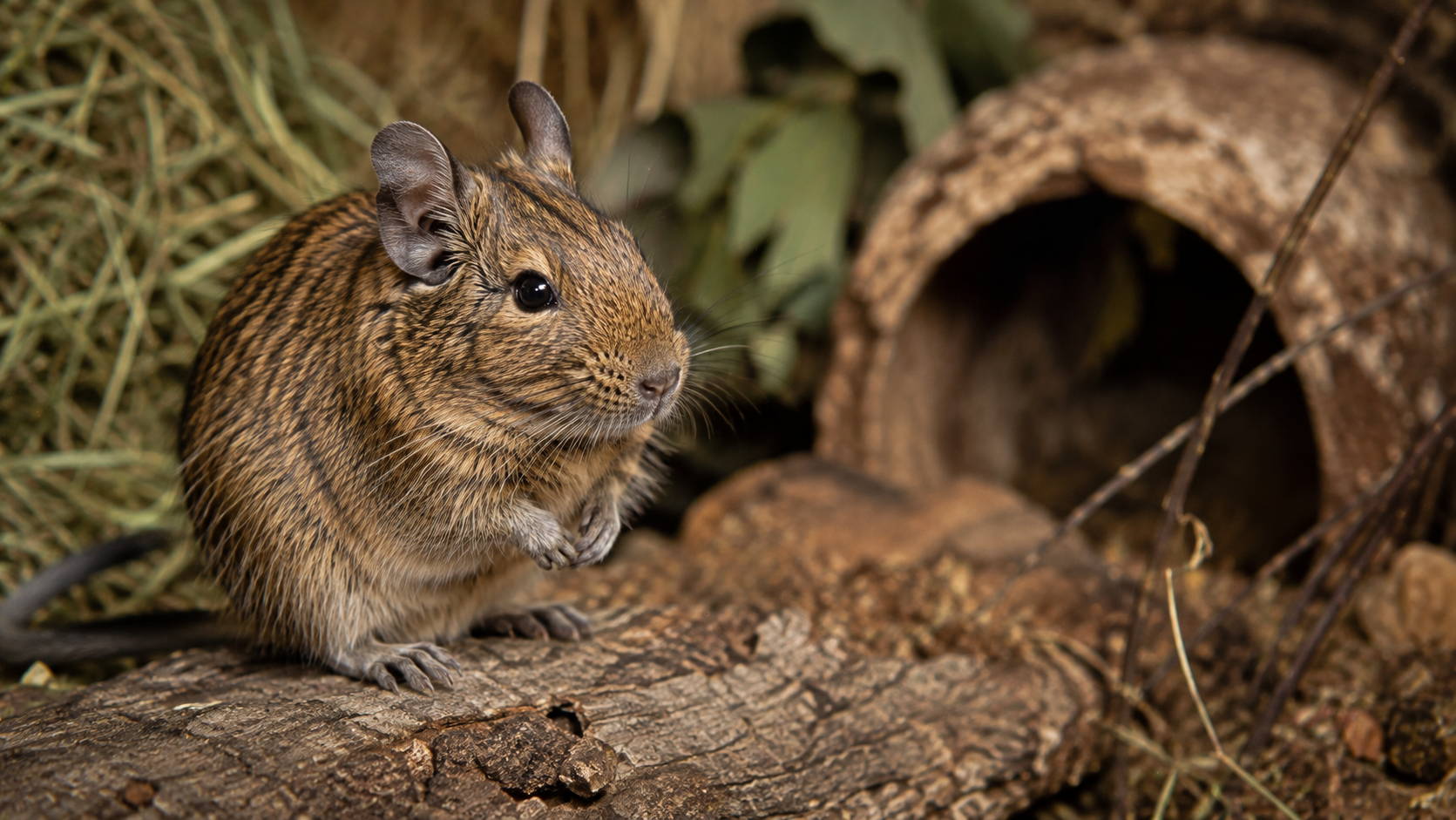
Degus (Octodon degus) are small, social rodents native to South America. They are popular pets due to their intelligence, curious nature, and social behavior.
Physical Characteristics
Degus are relatively small, typically growing to 15-20 cm in length and weighing between 100-200 grams. They have a stocky build, with a greyish-brown coat and a distinctive white patch on their forehead.
Habitat and Diet
In the wild, degus inhabit grasslands, savannas, and open woodlands in South America. They are herbivores, feeding on a variety of plants, including grasses, leaves, and seeds.
Behavior and Social Structure
Degus are highly social animals that live in large groups in the wild. They are known for their complex communication system, which includes a variety of vocalizations, scent markings, and visual displays.
Captive Care
As pets, degus require a large, escape-proof enclosure with plenty of hiding places and toys. They are social animals and should be kept in pairs or groups. A balanced diet that includes a variety of fruits, vegetables, and hay is essential for their health and well-being.
| Scientific Name | Octodon degus |
|---|---|
| Family | Octodontidae |
| Genus | Octodon |
| Species | O. degus |
Health and Veterinary Care
Degus are prone to certain health issues, including respiratory problems, skin infections, and dental problems. Regular veterinary check-ups and a balanced diet are essential for maintaining their health.
Q: Are degus good pets?
A: Yes, degus can make great pets for experienced owners. However, they require a lot of attention, social interaction, and specialized care.
Q: How long do degus live?
A: Degus can live up to 10-15 years in captivity, making them a long-term commitment as pets.
Q: Can degus be kept alone?
A: No, degus are social animals and should be kept in pairs or groups to ensure their emotional and social well-being.
Q: What do degus eat?
A: Degus are herbivores and require a balanced diet that includes a variety of fruits, vegetables, and hay.
- National Geographic: Degus
- Smithsonian’s National Zoo & Conservation Biology Institute: Degus
- Journal of Mammalogy: Social behavior of degus
Please note that degus have specific social and spatial needs that must be met to ensure their health and well-being. Consult with a veterinarian or experienced breeder before deciding to keep degus as pets.
Life Cycle
Degus have a relatively long lifespan for their size, typically living between 10-15 years in captivity. In the wild, their lifespan is shorter, ranging from 5-7 years due to predation, disease, and harsh environmental conditions. Female degus can breed year-round, but they typically have a peak breeding season during the spring and summer months. After a gestation period of approximately 90 days, they give birth to a litter of 2-6 young. The female degu will care for her young, nursing them and protecting them from predators until they are weaned at around 6-8 weeks old.
Communication
Degus have a complex communication system that includes a variety of vocalizations, scent markings, and visual displays. They use a range of sounds, from high-pitched squeaks to low grunts, to convey different messages to other degus. They also use scent markings to communicate with each other, rubbing their faces and bodies on surfaces to leave behind pheromones. Visual displays, such as standing on their hind legs or performing a ” threat display” where they arch their back and raise their fur, are also used to communicate with other degus.
Senses
Degus have a keen sense of smell and can detect subtle changes in their environment. They also have good eyesight, although their visual acuity is not as sharp as some other animals. Their hearing is also acute, and they can detect a range of sounds, from low rumbles to high-pitched squeaks. In terms of touch, degus are sensitive to texture and temperature, and they use their whiskers to detect changes in their environment.
Seasonal Variation
In the wild, degus experience a range of seasonal changes that affect their behavior and physiology. During the spring and summer months, they are more active, foraging for food and engaging in social behavior. In the fall, they begin to prepare for the winter months by storing food and fat reserves. During the winter, they are less active, relying on their stored fat reserves for energy.
Ecological Relationships
Degus play an important role in their ecosystem, serving as both predators and prey. They feed on a variety of plants, helping to disperse seeds and propagate new growth. They are also an important food source for predators such as owls, hawks, and foxes. In addition, degus have a symbiotic relationship with certain species of fungi, which help to break down cellulose in plant material, making it easier for the degus to digest.
Research
Degus have been the subject of scientific research in a range of fields, including behavior, ecology, and physiology. They are often used as a model organism in studies of social behavior, communication, and cognition. Researchers have also studied their unique digestive system, which allows them to break down and extract nutrients from plant material.
Responsible Enrichment
Providing degus with a stimulating environment is essential for their physical and mental health. This can include providing a variety of toys, such as puzzle toys and chew toys, as well as rotating them regularly to keep the environment novel and interesting. Degus also benefit from social interaction, so providing them with a companion or two can help to meet their social needs.
Ethical and Legal Considerations
The trade in degus as pets is regulated by laws and regulations in some countries. In addition, there are concerns about the welfare of degus in captivity, particularly in terms of their social and spatial needs. It is essential for owners to do their research and ensure that they can provide the necessary care and attention to meet the needs of these social and intelligent animals.
Conservation Status
Octodon degus is listed as Least Concern on the IUCN Red List, but their populations are declining due to habitat loss and fragmentation. The main threats to their survival are the destruction of their natural habitats, such as grasslands and savannas, and the introduction of non-native species that compete with them for resources.
Reproduction in Captivity
Breeding degus in captivity can be a challenging task, as it requires a deep understanding of their social behavior and reproductive biology. In the wild, degus breed during the spring and summer months, and females give birth to litters of 2-12 young after a gestation period of approximately 90 days. In captivity, breeders must provide a suitable environment that mimics the natural breeding season, including a photoperiod of 12 hours of light and 12 hours of darkness, and a temperature range of 20-25°C.
Genetic Research
Octodon degus has become a popular model organism in genetic research, particularly in the fields of behavioral genetics and neurogenetics. Their social behavior and intelligence make them an ideal species for studying the genetic basis of complex behaviors, such as social learning and communication.
Welfare in Captivity
The welfare of degus in captivity is a major concern, as they are highly social animals that require a lot of attention and stimulation. Inadequate housing and care can lead to stress, behavioral problems, and health issues. Responsible breeders and owners must provide a suitable environment that meets their physical and social needs, including a large enclosure with plenty of hiding places, toys, and opportunities for social interaction.
Education and Outreach
Education and outreach programs are essential for promoting the conservation of Octodon degus and their habitats. By raising awareness about the importance of preserving their natural habitats and the threats they face, we can inspire action to protect these amazing animals and their ecosystems.
Cultural Significance
Octodon degus has cultural significance in some parts of South America, where they are considered an important part of the local fauna. In some communities, they are hunted for food, while in others, they are considered a pest species. However, they are also revered for their intelligence and social behavior, and are often kept as pets.
Environmental Enrichment and Stimulation
Providing environmental enrichment and stimulation is crucial for the physical and mental well-being of degus in captivity. As intelligent and curious animals, they require a dynamic environment that challenges and engages them. This can be achieved by rotating toys and accessories regularly, adding new objects to explore, and creating a varied landscape within their enclosure.
One effective way to provide enrichment is through the use of puzzle toys and interactive feeders. These devices challenge degus to work for their food, mimicking their natural foraging behavior and stimulating their problem-solving skills. Owners can also offer a variety of textures, such as wood, cardboard, and paper-based products, to satisfy their natural instinct to chew and burrow.
Another important aspect of environmental enrichment is providing opportunities for exercise and physical activity. Degus are agile and love to climb, so incorporating vertical elements, such as ladders, bridges, and tunnels, into their enclosure can help to promote physical fitness and mental stimulation.
In addition to physical enrichment, degus also benefit from sensory stimulation. They have a keen sense of smell and enjoy exploring different scents and aromas. Owners can provide a variety of herbs, spices, and essential oils to create a stimulating environment. Visual stimulation can also be provided through the use of colorful toys, mirrors, and other reflective surfaces.
By providing a rich and dynamic environment, owners can help to promote the physical and mental well-being of their degus, reducing stress and boredom, and encouraging natural behavior.
Training and Handling
Degus are intelligent and social animals that can be trained and handled with care and patience. Positive reinforcement techniques, such as offering treats and rewards, can be used to teach degus to perform tricks and behaviors. Consistency and repetition are key when training degus, as they thrive on routine and predictability.
When handling degus, it is essential to be gentle and calm, as they can be easily stressed. Owners should start with short handling sessions, gradually increasing the time as the degu becomes more comfortable. Supporting the degu’s body and lifting them securely can help to reduce stress and prevent injury.
Training and handling degus can help to strengthen the bond between owner and animal, promoting a deeper understanding and appreciation of these fascinating creatures. By investing time and effort into training and handling, owners can help to create a happy and fulfilling relationship with their degus.
Community and Breeding Programs
Degus are social animals that thrive in the company of their own kind. In captivity, owners can create a sense of community by keeping degus in pairs or groups. This can help to promote social behavior, reduce stress, and encourage natural interaction.
For experienced breeders, degus can be a rewarding species to work with. Breeding programs can help to promote genetic diversity, reduce the risk of inherited health problems, and support conservation efforts. However, breeding degus requires careful planning, attention to detail, and a deep understanding of their behavior, physiology, and genetics.
By participating in responsible breeding programs, owners can help to promote the welfare and conservation of degus, while also contributing to our understanding of these fascinating animals.