
Natural History
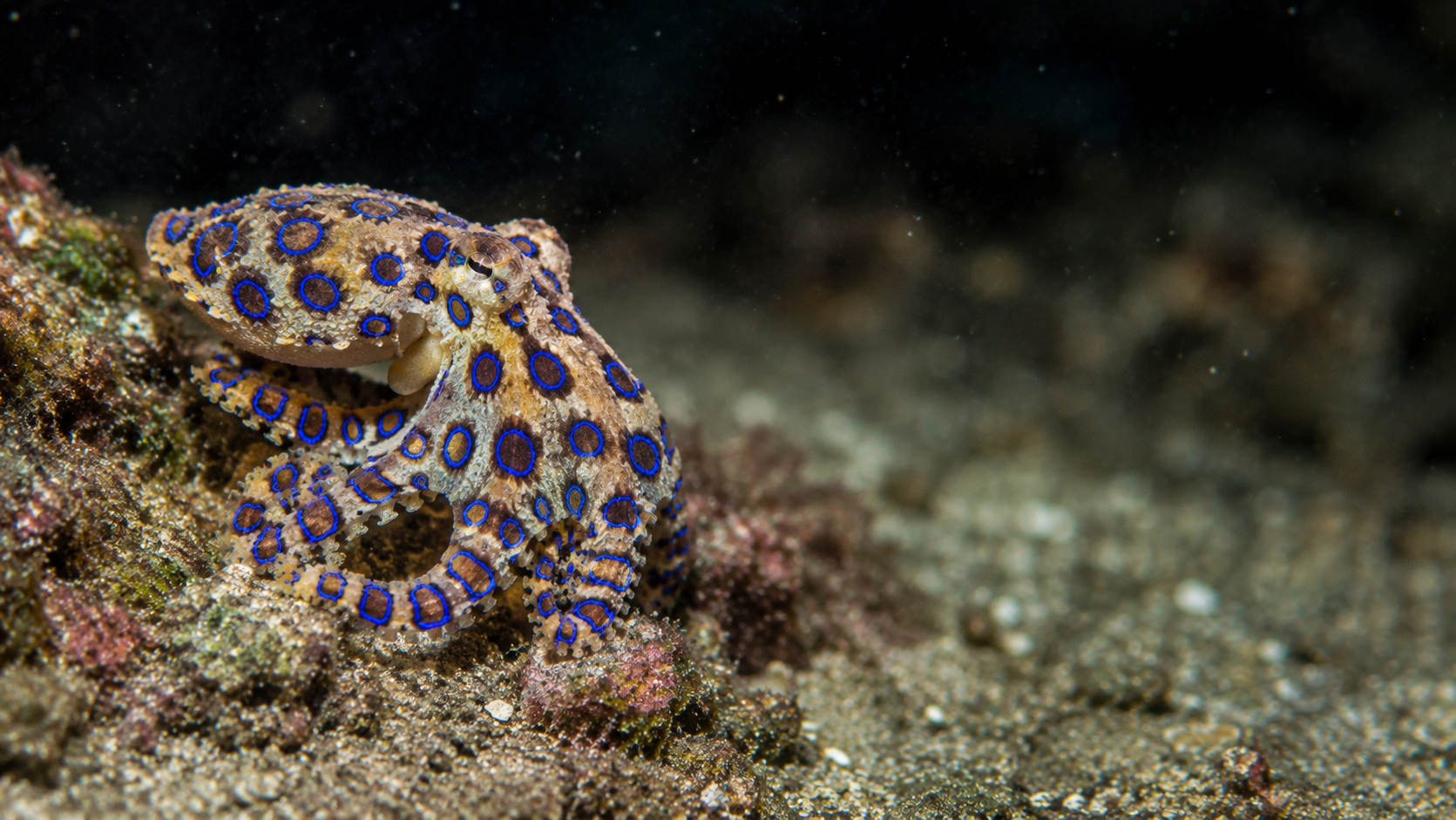
The Blue-ringed octopus (Hapalochlaena maculosa) is a small, venomous octopus species native to the coastal waters of the Pacific and Indian Oceans, from Japan to Australia.
They inhabit shallow, tropical waters, typically between 10-50 meters deep, and are often found in crevices, under rocks, or in abandoned shells.
Physical Characteristics
Blue-ringed octopuses are small, typically growing to a size of 12-20 cm (5-8 in) in length, and weighing up to 10 grams.
They have a distinctive appearance, with bright blue rings on their arms, which they display when threatened or disturbed.
| Characteristic | Description |
|---|---|
| Length | 12-20 cm (5-8 in) |
| Weight | Up to 10 grams |
| Habitat | Shallow, tropical waters |
| Distribution | Pacific and Indian Oceans, from Japan to Australia |
Behavior and Diet
Blue-ringed octopuses are nocturnal, solitary animals, and are primarily active at night, when they hunt for small crustaceans, mollusks, and other invertebrates.
They are skilled predators, using their venom to immobilize their prey before consuming it.
Venom and Safety
Blue-ringed octopuses are venomous, and their venom is powerful enough to kill an adult human in minutes.
The venom, called tetrodotoxin, is produced by bacteria in the octopus’s salivary glands, and is used for both predation and defense.
Due to their venomous nature, Blue-ringed octopuses are not considered suitable for captivity, and handling them is strongly discouraged.
Conservation Status
Blue-ringed octopuses are not currently considered to be a threatened species, although their populations are often impacted by habitat destruction, pollution, and overfishing.
Responsible Observation
If you encounter a Blue-ringed octopus in the wild, it is essential to observe it from a safe distance, without touching or handling it.
Never attempt to capture or collect a Blue-ringed octopus, as this can cause them stress and potentially harm them.
What is the Blue-ringed octopus’s venom used for?
The Blue-ringed octopus’s venom, tetrodotoxin, is used for both predation and defense.
Can I keep a Blue-ringed octopus as a pet?
No, Blue-ringed octopuses are not considered suitable for captivity due to their venomous nature.
How can I safely observe a Blue-ringed octopus in the wild?
Observe from a safe distance, without touching or handling the octopus.
What is the conservation status of the Blue-ringed octopus?
The Blue-ringed octopus is not currently considered to be a threatened species.
- National Oceanic and Atmospheric Administration (NOAA)
- Australian Museum
- World Register of Marine Species (WoRMS)
Important Notice: If you suspect you have been bitten or stung by a Blue-ringed octopus, seek medical attention immediately. If you are experiencing symptoms such as numbness, paralysis, or difficulty breathing, call emergency services or seek immediate medical help.
Life Cycle and Development
Blue-ringed octopuses have a complex life cycle, consisting of multiple stages of development. The female octopus lays a batch of eggs, typically ranging from 10 to 50, in a protected location such as a crevice or under a rock. The eggs are white, spherical, and approximately 5 mm in diameter. After laying her eggs, the female octopus guards them until they hatch, a process that can take several weeks.
During this time, the female octopus does not eat and dedicates herself to caring for her eggs, ensuring they are clean and protected from predators. After the eggs hatch, the larvae drift in the water column, feeding on small plankton and growing rapidly. This stage is critical, as the larvae are vulnerable to predation and environmental stress.
As the larvae grow, they begin to settle on the seafloor, where they undergo metamorphosis, transforming into juvenile octopuses. At this stage, they start to develop their characteristic blue rings and begin to venture out of their sheltered areas to hunt for food. The juvenile octopuses continue to grow and mature, eventually reaching adulthood and beginning the cycle again.
Communication and Senses
Blue-ringed octopuses have a range of communication methods, including visual, tactile, and chemical signals. They use their bright blue rings to signal aggression, courtship, or warning other octopuses of potential threats. They also use body postures, such as spreading their arms or changing color, to convey information.
Octopuses have highly developed senses, including excellent eyesight, sensitive tentacles, and a keen sense of smell. They use their eyes to detect movement and changes in their surroundings, while their tentacles help them to taste and feel their environment. Their sense of smell is also crucial, allowing them to detect prey and predators.
In addition to these senses, blue-ringed octopuses have been observed using a form of communication called “arm signaling.” This involves raising and waving their arms to convey information to other octopuses. Researchers believe that this form of communication may be used for mating, territorial displays, or warning other octopuses of potential threats.
Seasonal Variation and Ecological Relationships
Blue-ringed octopuses are found in shallow, tropical waters, where they play a crucial role in the ecosystem. They prey on small crustaceans, mollusks, and other invertebrates, helping to regulate their populations. In turn, blue-ringed octopuses are preyed upon by larger predators, such as fish, sharks, and other octopus species.
Seasonal changes in water temperature and food availability can impact the behavior and distribution of blue-ringed octopuses. During periods of high food availability, they may be more active and venture further from their shelters. Conversely, during times of food scarcity, they may become more sedentary and rely on stored energy reserves.
Blue-ringed octopuses also have a complex relationship with other species in their ecosystem. For example, they have been observed forming symbiotic relationships with certain species of shrimp, which provide them with food and protection in exchange for shelter and defense.
Research and Conservation Efforts
Despite their venomous nature, blue-ringed octopuses are an important subject of scientific study. Researchers are working to better understand their behavior, ecology, and venom composition, which has potential applications in medicine and biotechnology.
Conservation efforts are also underway to protect blue-ringed octopus populations and their habitats. Habitat destruction, pollution, and overfishing are major threats to these animals, and conservation organizations are working to establish protected areas and promote sustainable fishing practices.
In addition, researchers are exploring ways to promote responsible and sustainable collection of blue-ringed octopuses for the aquarium trade, which can help to reduce the impact of wild collection on wild populations.
Responsible Enrichment and Ethical Considerations
Blue-ringed octopuses are popular among aquarium enthusiasts, but their care requires specialized knowledge and equipment. Responsible enrichment and husbandry practices are essential to ensure the welfare of these animals in captivity.
Aquarists must provide blue-ringed octopuses with a suitable environment, including a secure, escape-proof enclosure, and a varied and nutritious diet. They must also ensure that the animals are handled carefully and humanely, avoiding stress and injury.
Furthermore, the collection of blue-ringed octopuses from the wild must be done in a responsible and sustainable manner, avoiding harm to the animals and their habitats. Aquarists and collectors must also be aware of local laws and regulations regarding the collection and trade of these animals.
Ecological Role and Impact
Blue-ringed octopuses play a crucial role in maintaining the balance of their ecosystems. As both predators and prey, they are an integral part of the marine food chain. They feed on small crustaceans, mollusks, and other invertebrates, helping to regulate their populations and maintain the diversity of their ecosystems.
In turn, blue-ringed octopuses are preyed upon by larger predators, such as sharks, rays, and other fish. This predation pressure helps to keep their populations in check, preventing them from becoming too dominant and disrupting the balance of their ecosystems.
Research and Conservation Challenges
Despite their importance in their ecosystems, blue-ringed octopuses are still poorly understood, and more research is needed to fully appreciate their ecological role and conservation needs. Studying these animals is challenging due to their small size, nocturnal behavior, and venomous nature.
However, scientists are working to overcome these challenges and learn more about blue-ringed octopuses. For example, researchers are using underwater cameras and other technologies to study their behavior and habitat use. They are also conducting laboratory studies to better understand their venom and its effects on predators and prey.
Responsible Captivity and Display
Blue-ringed octopuses are sometimes kept in captivity for display in public aquariums. However, this can be challenging due to their specific habitat and dietary needs. To ensure the well-being of these animals, aquariums must provide them with suitable enclosures that mimic their natural habitat and offer a varied and nutritious diet.
Aquariums must also take steps to minimize the risk of escape and ensure that visitors do not disturb or handle the animals. This includes providing secure enclosures and educating visitors about the importance of respecting these animals’ space and safety.
Legal Considerations and Protection
Blue-ringed octopuses are protected by laws and regulations in some countries, including Australia and Japan. These laws prohibit the capture and trade of these animals, as well as their display in public aquariums without proper permits and licenses.
However, more needs to be done to protect blue-ringed octopuses and their habitats. For example, governments and conservation organizations can work to establish marine protected areas and regulate fishing practices to minimize the impact of human activities on these animals’ ecosystems.


