Aye-Aye
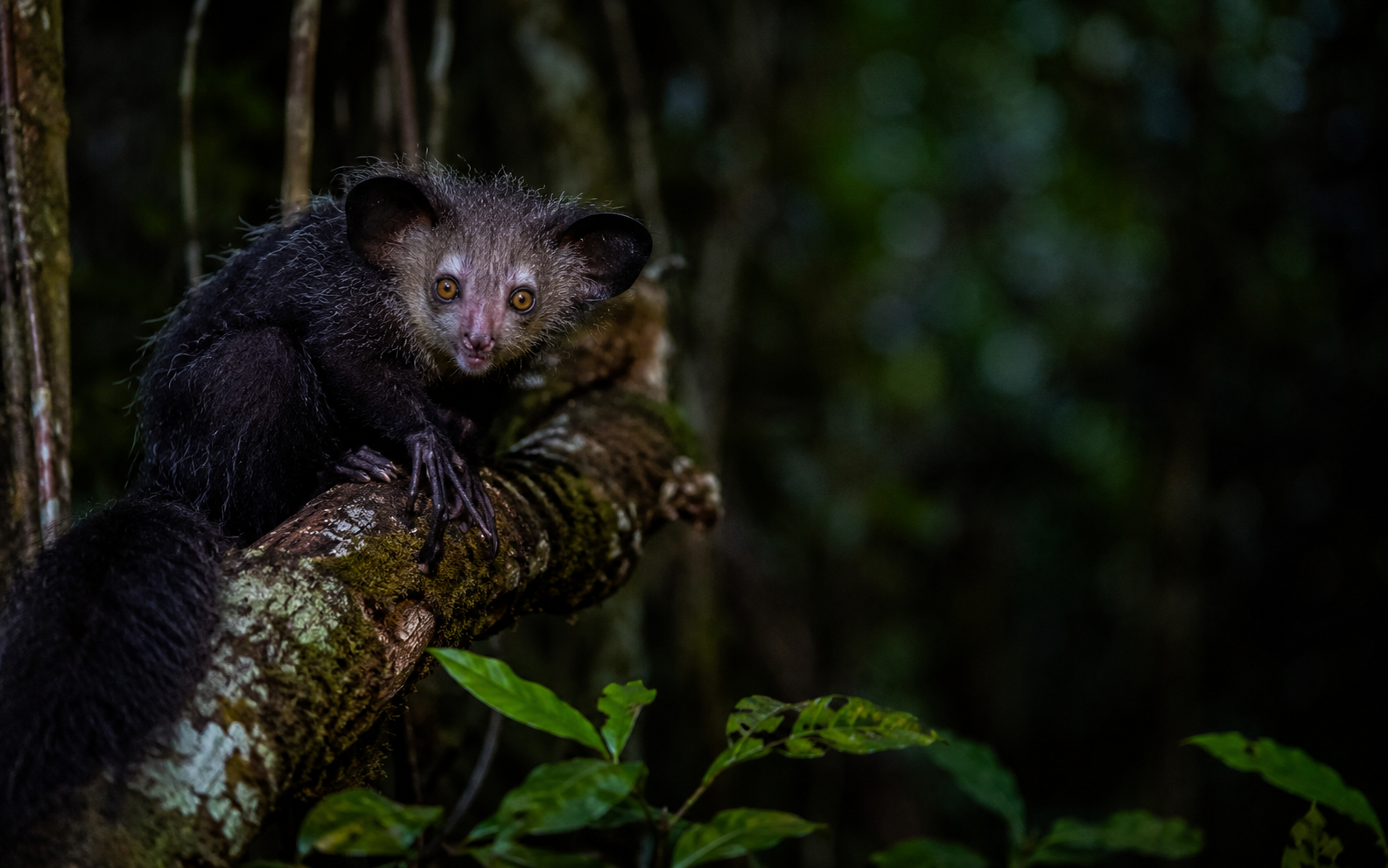
The Aye-Aye (Daubentonia madagascariensis) is a type of lemur, a group of primates native to Madagascar. It is known for its unusual method of catching insects and grubs, using its long, thin fingers to extract them from tree bark.
Quick Reference Table
| Scientific Name | Daubentonia madagascariensis |
|---|---|
| Classification | Primate, Lemuridae family |
| Conservation Status | Near Threatened |
| Native Habitat | Madagascar |
| Diet | Omnivorous |
Taxonomy and Identification
The Aye-Aye is a member of the Lemuridae family, which includes all lemurs. It is the only species in the genus Daubentonia. The Aye-Aye’s scientific name, Daubentonia madagascariensis, was given to it by French zoologist Étienne Geoffroy Saint-Hilaire in 1795.
The Aye-Aye is easily recognizable due to its unusual physical characteristics, including its long, thin fingers, toes, and tail. It has a distinctive method of movement, using its long fingers to climb through the trees and its tail as a counterbalance.
Natural Habitat and Distribution
The Aye-Aye is found only in Madagascar, where it inhabits the island’s tropical rainforests. It is a highly adaptable species and can be found in a variety of habitats, from lowland forests to mountainous regions.
The Aye-Aye is a solitary animal and has a large home range, which it marks with scent to keep other Aye-Ayes away. It is a skilled climber and spends most of its time in the trees, where it can find food and shelter.
Behaviour
The Aye-Aye is a nocturnal animal, meaning it is active at night and rests during the day. It is a highly intelligent species and has been observed using tools to catch its prey. Its long, thin fingers are perfectly adapted for extracting insects and grubs from tree bark, and it has even been known to use its teeth to gnaw holes in wood to get to its prey.
The Aye-Aye is also a skilled hunter, and its diet includes a variety of small animals, such as lizards, birds, and even small mammals. It has a highly developed sense of hearing and can locate its prey by sound.
Diet
The Aye-Aye is an omnivorous species, which means it eats both plants and animals. Its diet includes a variety of fruits, seeds, and insects, as well as small animals like lizards and birds.
The Aye-Aye’s method of catching insects is unique among primates. It uses its long, thin fingers to extract them from tree bark, and its teeth to gnaw holes in wood to get to its prey. This adaptation allows it to feed on a wide variety of insects and grubs that other primates cannot access.
Daily Needs
In the wild, Aye-Ayes require a large home range, which they mark with scent to keep other Aye-Ayes away. They are skilled climbers and spend most of their time in the trees, where they can find food and shelter.
In captivity, Aye-Ayes require a lot of space to climb and move around. Their enclosures should be large and well-ventilated, with plenty of opportunities for exercise and mental stimulation.
Warning Signs
Aye-Ayes are prone to stress and anxiety, which can lead to behavioral problems. Signs of stress include pacing, self-mutilation, and changes in appetite or sleep patterns.
They are also susceptible to certain health problems, such as respiratory infections and parasites. Regular veterinary check-ups and a balanced diet can help prevent these issues.
Responsible Care or Conservation
Aye-Ayes are protected by law in Madagascar, and their capture and trade are strictly regulated. However, habitat loss and fragmentation continue to threaten their populations.
Conservation efforts are underway to protect the Aye-Aye and its habitat. These efforts include the establishment of protected areas, such as national parks and wildlife reserves, and education programs to raise awareness about the importance of conservation.
Practical Takeaways
If you are interested in learning more about Aye-Ayes or supporting conservation efforts, here are some practical takeaways:
- Support organizations that work to protect the Aye-Aye and its habitat.
- Spread awareness about the importance of conservation and the unique characteristics of the Aye-Aye.
- Consider visiting Madagascar and supporting eco-tourism initiatives that promote responsible wildlife viewing.
Frequently Asked Questions
What is the Aye-Aye’s conservation status?
The Aye-Aye is listed as Near Threatened on the IUCN Red List.
What is unique about the Aye-Aye’s method of catching insects?
The Aye-Aye uses its long, thin fingers to extract insects from tree bark, and its teeth to gnaw holes in wood to get to its prey.
Can Aye-Ayes be kept as pets?
No, Aye-Ayes are protected by law and are not suitable as pets. They have complex social and spatial needs that cannot be met in a home environment.
How can I support Aye-Aye conservation efforts?
You can support organizations that work to protect the Aye-Aye and its habitat, spread awareness about the importance of conservation, and consider visiting Madagascar and supporting eco-tourism initiatives.
Sources
- International Union for Conservation of Nature (IUCN). (2020). Daubentonia madagascariensis.
- National Geographic. (n.d.). Aye-Aye.
- San Diego Zoo. (n.d.). Aye-Aye.
Important Notice: If you suspect that an Aye-Aye is being kept as a pet or is being harmed in any way, please contact local animal welfare authorities or a qualified veterinarian for assistance. Aye-Ayes have complex social and spatial needs that cannot be met in a home environment, and their capture and trade are strictly regulated by law.
Life Cycle and Development
The Aye-Aye’s life cycle is characterized by a relatively slow reproductive rate compared to other primates. Female Aye-Ayes typically give birth to a single infant after a gestation period of approximately 160-170 days. The infant will cling to its mother’s belly for the first few months, relying on her for warmth, nutrition, and protection. As the infant grows, it will begin to venture away from its mother, eventually becoming independent after about 6-7 months.
During this time, the mother Aye-Aye will teach her infant essential survival skills, such as foraging and climbing. The infant will also learn important social behaviors, including communication and territorial marking. Aye-Ayes are known to be relatively long-lived, with some individuals reported to live up to 20 years in the wild.
Communication and Senses
Aye-Ayes possess a unique communication system that involves a variety of vocalizations, including clicks, whistles, and grunts. They are also skilled at using scent markings to convey information about their identity, sex, and reproductive status. Aye-Ayes have scent glands located on their chest, near their front paws, and on their tail, which they use to deposit pheromones on surfaces.
In addition to their keen sense of smell, Aye-Ayes also possess exceptional hearing and vision. Their large eyes are adapted for low light conditions, allowing them to forage for insects and grubs at night. Their ears are also highly sensitive, enabling them to detect the faint sounds of insect movements.
Seasonal Variation and Ecological Relationships
Aye-Ayes are adapted to the seasonal fluctuations in Madagascar’s tropical rainforests. During the dry season, they will often focus on exploiting food sources that are more readily available, such as fruit and seeds. In the wet season, they will shift their diet to include more insects and grubs, which are more abundant during this time.
Aye-Ayes play a crucial role in their ecosystem as both predators and prey. They help to regulate insect populations, which can prevent damage to crops and forests. In turn, Aye-Ayes are preyed upon by a variety of predators, including owls, snakes, and fossa (Madagascar’s top predator).
Research and Conservation Efforts
Aye-Ayes have been the subject of various research studies, which have shed light on their behavior, ecology, and conservation status. One area of ongoing research is the impact of habitat fragmentation on Aye-Aye populations. As their habitats are increasingly fragmented due to deforestation and agriculture, Aye-Ayes are facing significant challenges in finding food, shelter, and potential mates.
Conservation efforts are underway to protect Aye-Aye populations and their habitats. The Madagascar National Parks authority has established several protected areas, which provide a safe haven for Aye-Ayes and other endangered species. Additionally, organizations such as the Durrell Wildlife Conservation Trust and the Lemur Conservation Network are working to promote sustainable forest management and community-based conservation initiatives.
Responsible Enrichment and Ethical Considerations
Aye-Ayes in captivity require specialized care and enrichment to ensure their physical and psychological well-being. Providing a stimulating environment that mimics their natural habitat is essential, including a varied diet, opportunities for climbing and foraging, and social interaction.
It is essential to consider the ethical implications of keeping Aye-Ayes in captivity, particularly in light of their endangered status. Captive breeding programs should prioritize the release of animals back into the wild, whenever possible, to augment declining populations and promote genetic diversity.
Unique Adaptations and Specialized Features
The Aye-Aye’s unique adaptations and specialized features have fascinated scientists and animal enthusiasts alike. One of the most striking features of the Aye-Aye is its long, thin fingers, which are perfectly suited for extracting insects and grubs from tree bark. The middle finger, in particular, is extremely long and thin, allowing the Aye-Aye to reach deep into crevices and holes to catch its prey. This specialized feature is made possible by the Aye-Aye’s unique skeletal system, which includes a highly flexible wrist joint that allows for a wide range of motion.
In addition to its remarkable fingers, the Aye-Aye also has a number of other specialized features that enable it to thrive in its environment. Its large, round eyes are highly sensitive to movement, allowing it to detect even the slightest movement of its prey. Its ears are also highly mobile, allowing it to pinpoint the source of sounds with great accuracy. The Aye-Aye’s tail is also highly specialized, serving as a counterbalance as it moves through the trees and allowing it to make sharp turns and quick changes in direction.
Intelligence and Problem-Solving Abilities
The Aye-Aye is considered to be one of the most intelligent primates in the world, and its problem-solving abilities are highly developed. In the wild, the Aye-Aye has been observed using a variety of tools to extract food and solve other problems. For example, it has been known to use sticks to dig up grubs and insects, and to use rocks to crack open nuts. In captivity, the Aye-Aye has been observed using a variety of tools, including sticks, rocks, and even pieces of cloth, to solve complex problems and extract food rewards.
The Aye-Aye’s intelligence is likely due to its highly developed brain, which is similar in structure and organization to that of other primates. Studies have shown that the Aye-Aye’s brain is highly adaptable, and that it is capable of reorganizing itself in response to changes in its environment. This adaptability is likely one of the key factors that has allowed the Aye-Aye to thrive in its environment, despite the many challenges and dangers that it faces.
Cultural Significance and Persecution
Unfortunately, the Aye-Aye has a long history of persecution in Madagascar, where it is often viewed as a harbinger of bad luck or even a symbol of death. In some parts of the country, the Aye-Aye is considered to be a “bad omen,” and is often killed on sight. This persecution has contributed to the Aye-Aye’s decline in the wild, and has made conservation efforts more difficult.
Despite these challenges, the Aye-Aye has also been the subject of a number of conservation efforts, which have helped to raise awareness about the importance of protecting this unique and fascinating species. In recent years, a number of organizations have worked to educate local communities about the importance of conserving the Aye-Aye and its habitat, and to develop sustainable livelihoods that do not harm the environment. These efforts have helped to reduce persecution of the Aye-Aye, and have given hope for the species’ long-term survival.