Classification and Natural History
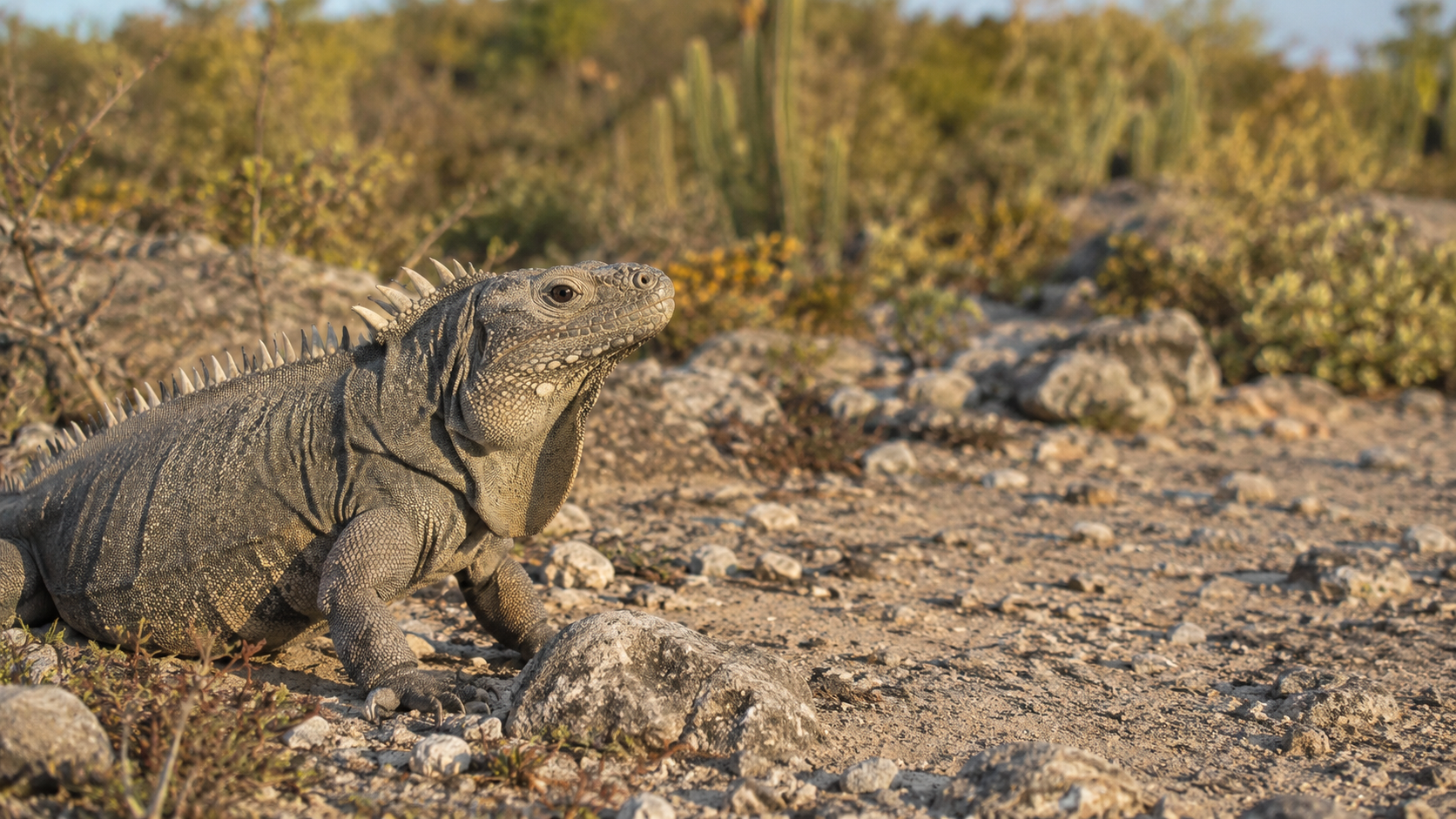
The Anegada Iguana (Cyclura pinguis) is a species of lizard that belongs to the family Iguanidae. It is a large reptile that is endemic to the island of Anegada in the British Virgin Islands.
The Anegada Iguana is a wild animal and is not considered a companion animal. It is a protected species due to its critically endangered status.
Habitat and Distribution
The Anegada Iguana is found only on the island of Anegada, which is part of the British Virgin Islands. The island is a coral atoll with a dry and rocky terrain, and the iguana is well adapted to this environment.
The Anegada Iguana is found in the wild, and its habitat is limited to the island of Anegada. It is not found in captivity, and it is not considered a pet.
Physical Characteristics
The Anegada Iguana is a large reptile that can grow up to 1.5 meters in length and weigh up to 10 kilograms. It has a greyish-brown color with a distinctive crest on its back.
The Anegada Iguana has a long, flat tail and sharp claws, which it uses for defense and climbing.
Behavior and Diet
The Anegada Iguana is a herbivore, and its diet consists mainly of leaves, fruits, and flowers. It is a solitary animal and only comes together with other iguanas during the breeding season.
The Anegada Iguana is a wild animal, and its behavior is not well understood. However, it is known to be a territorial animal and will defend its territory from other iguanas.
Conservation Status
The Anegada Iguana is listed as critically endangered on the IUCN Red List. Its population is estimated to be less than 500 individuals, and it is threatened by habitat loss, hunting, and the introduction of invasive species.
Conservation efforts are underway to protect the Anegada Iguana and its habitat. These efforts include the establishment of a protected area on the island of Anegada and the reintroduction of captive-bred iguanas into the wild.
Interesting Facts
| Scientific Name | Cyclura pinguis |
|---|---|
| Common Name | Anegada Iguana |
| Family | Iguanidae |
| Order | Squamata |
| Conservation Status | Critically Endangered |
FAQ
What is the Anegada Iguana?
The Anegada Iguana is a species of lizard that is endemic to the island of Anegada in the British Virgin Islands.
Is the Anegada Iguana a pet?
No, the Anegada Iguana is a wild animal and is not considered a pet.
Why is the Anegada Iguana endangered?
The Anegada Iguana is endangered due to habitat loss, hunting, and the introduction of invasive species.
What is being done to conserve the Anegada Iguana?
Conservation efforts are underway to protect the Anegada Iguana and its habitat, including the establishment of a protected area on the island of Anegada and the reintroduction of captive-bred iguanas into the wild.
Sources
- International Union for Conservation of Nature (IUCN). (2020). Cyclura pinguis.
- British Virgin Islands National Parks Trust. (n.d.). Anegada Iguana.
- World Wildlife Fund. (n.d.). Anegada Iguana.
Please note that the Anegada Iguana is a wild animal and should be treated with respect and caution. It is not a pet and should not be handled or kept in captivity. If you are interested in learning more about the Anegada Iguana, please consult with a qualified expert or a reputable organization.
Life Cycle and Development
The Anegada Iguana’s life cycle is a complex process that involves several stages of development. The species is oviparous, which means that females lay eggs rather than giving birth to live young. Female Anegada Iguanas typically reach reproductive maturity at around 5-7 years of age, while males reach maturity at around 7-10 years.
During the breeding season, which typically occurs from May to July, males engage in a series of courtship displays to attract females. These displays involve head-bobbing, tail-whipping, and vocalizations. Once a male has successfully mated with a female, she will lay a clutch of 2-5 eggs in a nesting site, usually a burrow or a hidden area with suitable incubation conditions.
The eggs incubate for approximately 70-80 days, during which time the female guards the nesting site and keeps the eggs moist. After hatching, the young iguanas, called hatchlings, emerge and begin their independent lives. The hatchlings are vulnerable to predators and require a period of protection and care from their mother.
As the hatchlings grow, they undergo a series of physical changes, including the development of their distinctive crest and coloration. Juvenile Anegada Iguanas typically reach maturity at around 5-7 years of age, at which point they begin to participate in the breeding cycle.
Communication and Senses
Anegada Iguanas possess a range of communication methods, including visual, auditory, and chemical signals. Visual displays, such as head-bobbing and tail-whipping, are used for courtship, territorial defense, and warning other iguanas of potential threats.
Auditory signals, including hisses and grunts, are used for close-range communication, particularly between mothers and their young. Chemical signals, including scent markings, are used to communicate information about an individual’s identity, sex, and reproductive status.
Anegada Iguanas also possess a range of sensory adaptations that enable them to navigate their environment. Their eyes are adapted for diurnal vision, with a reflective layer called the tapetum lucidum that enhances their ability to see in bright light. Their ears are sensitive to a range of frequencies, including low-frequency vibrations that allow them to detect the presence of potential predators.
Their sense of smell is also highly developed, and they use their olfactory system to detect food, predators, and potential mates. Their skin is sensitive to touch and vibrations, allowing them to detect subtle changes in their environment.
Seasonal Variation and Ecological Relationships
Anegada Iguanas are adapted to the dry, rocky terrain of their native island, and their behavior and physiology reflect this. During the dry season, which typically runs from December to May, the iguanas are more sedentary, conserving energy and water by reducing their activity levels.
In contrast, during the wet season, which typically runs from June to November, the iguanas are more active, taking advantage of the increased availability of food and water. This seasonal variation in activity levels is reflected in their diet, with the iguanas consuming more leaves and flowers during the wet season.
Anegada Iguanas play a crucial role in their ecosystem, serving as both predators and prey. They prey on a range of invertebrates, including insects and crustaceans, and are in turn preyed upon by larger predators, including birds and other reptiles.
Their burrowing activities also contribute to the island’s ecosystem, creating habitat for other animals and influencing soil structure and fertility. As a keystone species, the Anegada Iguana plays a vital role in maintaining the balance of their ecosystem.
Research and Conservation Efforts
The Anegada Iguana is the subject of ongoing research and conservation efforts, aimed at protecting this critically endangered species. Studies have focused on the iguana’s ecology, behavior, and population dynamics, as well as the impacts of habitat degradation, climate change, and human activity on their populations.
Conservation efforts have included habitat restoration, species reintroduction, and education and outreach programs aimed at reducing human-iguana conflict. The Anegada Iguana is protected by law, and efforts are underway to establish a protected area on the island to safeguard their habitat.
Responsible enrichment programs, such as the provision of artificial nesting sites and food supplements, are also being implemented to support the recovery of the species. However, more research is needed to fully understand the complex ecological relationships and conservation needs of this unique and fascinating species.
Responsible Enrichment and Ethical Considerations
As a protected species, the Anegada Iguana is subject to strict regulations and guidelines governing their care and management. Responsible enrichment programs, such as the provision of artificial nesting sites and food supplements, must be carefully designed and implemented to ensure the welfare of the animals and the integrity of the ecosystem.
Ethical considerations, including the avoidance of habitat disruption and the minimization of human-iguana conflict, must also be taken into account. The Anegada Iguana is a wild animal, and its welfare and conservation must be prioritized above human interests.
In addition, the Anegada Iguana’s critically endangered status highlights the need for responsible and sustainable tourism practices, which prioritize the conservation of the species and its habitat. Visitors to the island must be aware of and respect the iguana’s habitat and behavior, avoiding activities that may disrupt or harm the animals or their environment.
Threats and Challenges
The Anegada Iguana faces numerous threats to its survival, primarily due to human activities. One of the main challenges is the introduction of invasive species, such as rats, cats, and goats, which prey on the iguanas and compete with them for food and resources. Additionally, the destruction of their habitat due to development and tourism has reduced the available land for the iguanas to live and forage.
Another significant threat is the impact of climate change, which is altering the island’s ecosystem and affecting the iguana’s food supply. Rising sea levels and increased storm frequency also pose a risk to the iguana’s habitat and survival.
Conservation Breeding Programs
To address the critically endangered status of the Anegada Iguana, conservation breeding programs have been established to increase the population and genetic diversity of the species. These programs involve the captive breeding of iguanas in controlled environments, such as zoos and wildlife sanctuaries, with the goal of releasing offspring back into the wild.
These programs also provide an opportunity for research and education, allowing scientists to study the iguana’s behavior, physiology, and ecology, and to raise awareness about the importance of conservation efforts. However, the success of these programs depends on careful planning, management, and collaboration among conservationists, researchers, and local communities.
Community Engagement and Education
Community engagement and education are crucial for the conservation of the Anegada Iguana. Local residents, fishermen, and tourists need to be aware of the importance of protecting the iguana and its habitat. Education programs and outreach activities can help to promote a sense of ownership and responsibility among the community, encouraging them to take action to conserve the species.
By working together, conservationists, researchers, and local communities can help to ensure the long-term survival of the Anegada Iguana and protect the unique biodiversity of the island of Anegada.