
Introduction
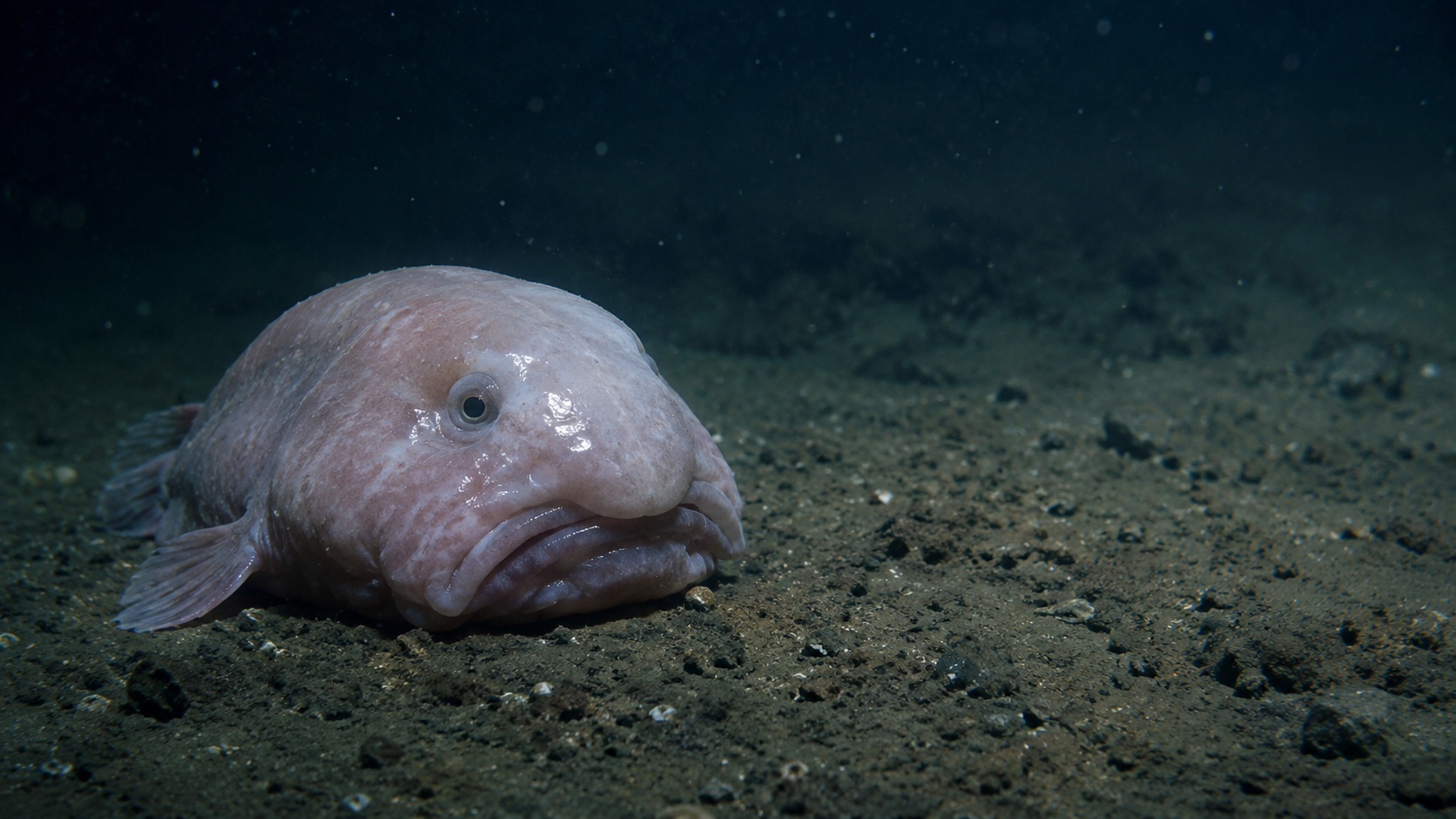
The blobfish (Psychrolutes marcidus) is a deep-sea fish that has gained significant attention in recent years due to its unique appearance. It is a member of the family Psychrolutidae and is found in the deep waters of the Atlantic, Pacific, and Indian Oceans.
Physical Characteristics
The blobfish has a soft, gelatinous body that is typically pink or brown in color. It has a distinctive head and a long, tapering body that can grow up to 30 cm (12 in) in length. The fish has a relatively small mouth and a distinctive set of teeth that are used for catching small prey.
| Scientific Name | Psychrolutes marcidus |
|---|---|
| Family | Psychrolutidae |
| Order | Scorpaeniformes |
| Class | Actinopterygii |
| Phylum | Chordata |
Habitat and Distribution
The blobfish is found in the deep waters of the Atlantic, Pacific, and Indian Oceans, typically at depths of 200-400 meters (660-1,310 ft). It is a benthic species, meaning it lives on or near the seafloor, and is often found in areas with rocky or coral reefs.
Diet and Feeding Habits
The blobfish is a carnivorous species that feeds on small crustaceans, such as crabs and shrimp, as well as other small invertebrates. It uses its small mouth and teeth to capture its prey.
Conservation Status
The blobfish is not currently considered to be a threatened species, although its populations are often affected by deep-sea fishing and habitat destruction.
Interesting Facts
The blobfish has a unique body shape that allows it to survive in the deep-sea environment. It is also able to detect the presence of food using its lateral line, a system of sensory organs that detect vibrations in the water.
Public Safety and Handling
The blobfish is not a species that is typically handled or kept in captivity, as it is a deep-sea fish that requires specialized care. It is also not considered to be a threat to human safety, as it is a relatively small and harmless species.
What is the average lifespan of a blobfish?
The average lifespan of a blobfish is not well-documented, although it is believed to be several years.
What is the typical diet of a blobfish?
The typical diet of a blobfish consists of small crustaceans and other invertebrates.
Is the blobfish a threatened species?
No, the blobfish is not currently considered to be a threatened species.
Can I keep a blobfish as a pet?
No, the blobfish is not a species that is typically kept in captivity, as it requires specialized care.
- National Oceanic and Atmospheric Administration (NOAA)
- World Register of Marine Species (WoRMS)
- International Union for Conservation of Nature (IUCN)
Please note that the blobfish is a wild animal and should not be handled or kept in captivity. It is also important to respect its natural habitat and not to disturb or harm it in any way.
Life Cycle
The blobfish has a unique life cycle that is adapted to its deep-sea environment. The species has a relatively long lifespan, with some individuals estimated to live up to 10-15 years in the wild. The blobfish begins its life cycle as a larva, which drifts in the water column before settling on the seafloor. As the larva grows, it undergoes a series of molts, eventually developing into a juvenile blobfish. The juvenile blobfish will continue to grow and mature, eventually reaching reproductive age. Adult blobfish are thought to spawn in the spring and summer months, with females releasing eggs that are fertilized by males. The eggs will then drift in the water column before hatching into larvae, starting the cycle over again.
Communication and Senses
The blobfish has a unique set of senses that are adapted to its deep-sea environment. The species has large eyes that are sensitive to low light levels, allowing it to detect the faint glow of bioluminescent organisms in the dark depths of the ocean. The blobfish also has a highly developed sense of smell, which it uses to detect the presence of food and potential mates. In terms of communication, the blobfish is thought to use a series of chemical signals to communicate with other members of its species. These chemical signals, known as pheromones, are released into the water and can be detected by other blobfish, allowing them to coordinate their behavior and find potential mates.
Seasonal Variation
The blobfish is a deep-sea species that is found in a relatively stable environment, with little seasonal variation in terms of temperature and light levels. However, the species is thought to have a seasonal variation in terms of its feeding behavior, with blobfish feeding more actively during the spring and summer months when food is more abundant. During the winter months, the blobfish will slow down its metabolism and enter a state of dormancy, conserving energy until food becomes more abundant again.
Ecological Relationships
The blobfish plays a unique role in the deep-sea ecosystem, serving as both a predator and prey species. The blobfish feeds on small crustaceans and other invertebrates, helping to regulate their populations and maintain the balance of the ecosystem. At the same time, the blobfish is also an important food source for larger predators, such as deep-sea fish and marine mammals. The blobfish also has a symbiotic relationship with certain species of bacteria, which live in its gut and help to break down the complex organic matter that it consumes.
Research
The blobfish has been the subject of several research studies in recent years, particularly in terms of its unique physiology and ecology. Scientists have been studying the blobfish to learn more about its deep-sea environment and the adaptations that allow it to thrive in this environment. The blobfish has also been used as a model organism in studies of deep-sea ecology and conservation, helping to inform our understanding of the impacts of human activities on deep-sea ecosystems.
Responsible Enrichment
The blobfish is a deep-sea species that is not typically kept in captivity, due to the challenges of replicating its deep-sea environment in an aquarium setting. However, for those who are interested in learning more about the blobfish and its unique characteristics, there are several ways to engage in responsible enrichment. For example, individuals can learn more about the blobfish through educational programs and documentaries, or by supporting conservation efforts that protect deep-sea ecosystems. Additionally, individuals can make sustainable seafood choices that help to reduce the impacts of fishing on deep-sea ecosystems.
Ethical and Legal Considerations
The blobfish is a deep-sea species that is protected by several international agreements and national laws. The species is listed as vulnerable on the IUCN Red List, and is protected by the Convention on International Trade in Endangered Species of Wild Fauna and Flora (CITES). Additionally, the blobfish is protected by national laws in several countries, including the United States and Australia. Individuals who are interested in learning more about the blobfish should do so in a responsible and sustainable way, avoiding activities that may harm the species or its habitat.
Reproduction and Development
The blobfish has a complex reproductive cycle, with males and females exhibiting different characteristics during the mating process. Males have a unique courtship behavior, where they use their pectoral fins to signal to females and establish dominance. Females, on the other hand, have a longer ovary and a more developed reproductive system, indicating a higher reproductive potential.
Once mating occurs, the female blobfish lays a batch of eggs, which are then fertilized by the male. The eggs are relatively large, measuring up to 1 mm in diameter, and are surrounded by a protective membrane. After fertilization, the eggs undergo a process called “embryonic development,” where they undergo a series of cell divisions and growth.
The larvae of the blobfish go through a series of developmental stages, during which they undergo significant changes in their physical characteristics. The larvae are initially pelagic, drifting in the water column, before eventually settling on the seafloor and metamorphosing into juveniles. This process can take several weeks to months, depending on environmental factors such as food availability and water temperature.
Adaptations to Deep-Sea Life
The blobfish has several adaptations that enable it to thrive in the deep-sea environment. One of its most notable adaptations is its gelatinous body, which allows it to withstand the crushing pressure of the deep sea. The blobfish’s body is also highly compressible, allowing it to maintain its shape and structure even at extreme depths.
Another adaptation of the blobfish is its slow metabolism, which allows it to conserve energy in the food-scarce deep-sea environment. The blobfish’s slow metabolism also means that it has a relatively long lifespan, with some individuals estimated to live up to 10 years in the wild.
The blobfish also has a unique way of moving through the water, using its pectoral fins to slowly propel itself forward. This slow movement allows the blobfish to conserve energy and navigate through the dense, food-rich environments of the deep sea.
Deep-Sea Ecosystems and the Role of the Blobfish
The blobfish plays a vital role in the deep-sea ecosystem, serving as both a predator and prey species. As a predator, the blobfish feeds on small crustaceans and other invertebrates, helping to regulate their populations and maintain the balance of the ecosystem.
As a prey species, the blobfish is an important food source for larger deep-sea predators, such as anglerfish and viperfish. The blobfish’s gelatinous body and slow movement make it an easy target for these predators, which use their bioluminescent lures and powerful jaws to capture their prey.
The blobfish also plays a role in the deep-sea ecosystem through its interactions with other species. For example, the blobfish has been observed associating with certain species of sea cucumbers and sea stars, which provide it with protection and food. These interactions highlight the complex and interconnected nature of deep-sea ecosystems, where species rely on each other for survival.


