Introduction
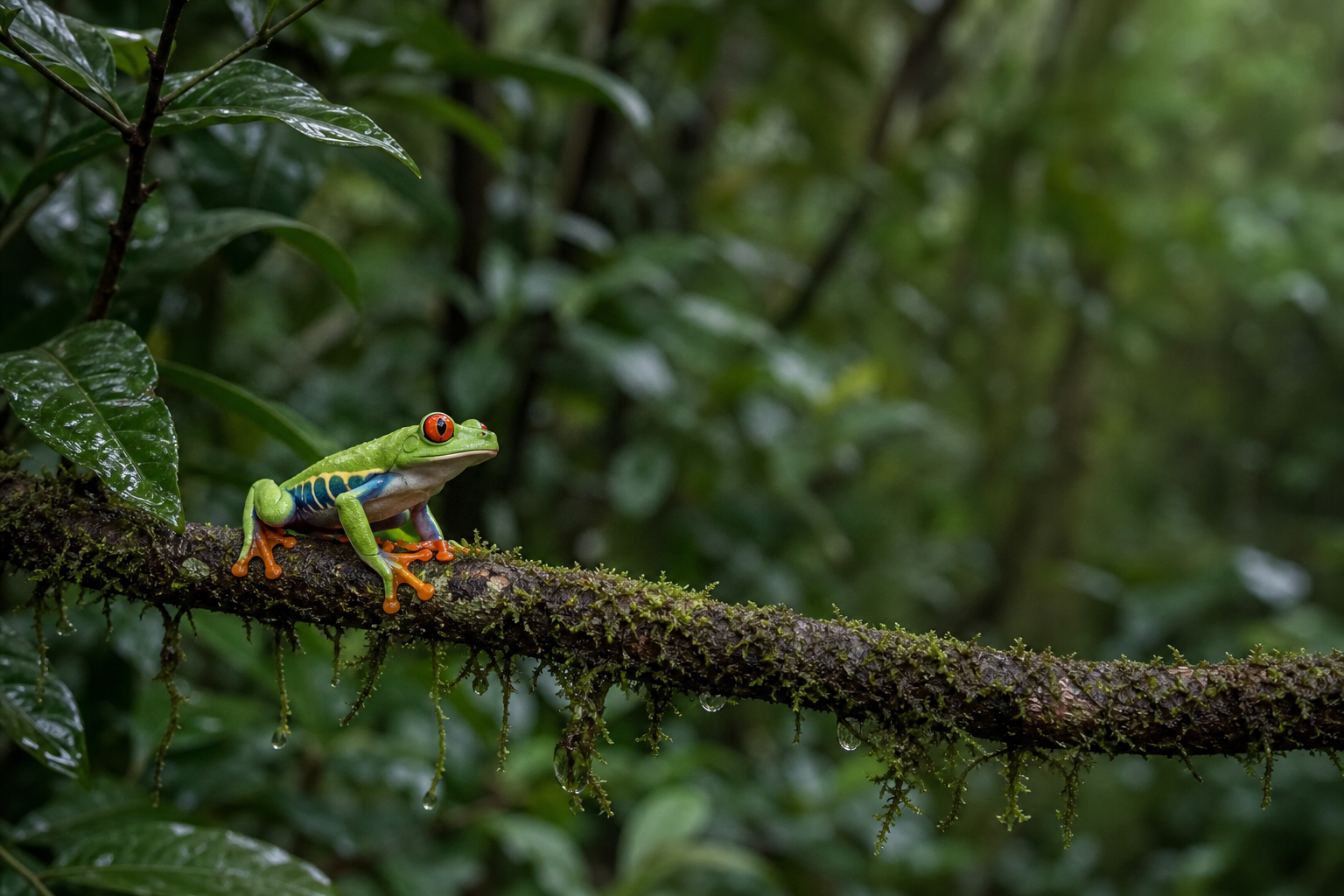
The Red‑eyed Tree Frog (Agalychnis callidryas) is one of the most recognizable amphibians of the Neotropics. Its bright green body, orange‑red eyes, and vivid orange‑yellow flanks make it a favorite of both field biologists and hobbyists. Native to the lowland rainforests of Central America, this species thrives in humid, canopy‑rich environments where it can blend among leaves by day and launch spectacular nocturnal hunts. This guide presents a concise yet thorough overview of the frog’s taxonomy, anatomy, behaviour, and natural habitat, providing a solid foundation for further study or responsible captive care.
Quick Reference Table
| Characteristic | Details |
|---|---|
| Scientific name | Agalychnis callidryas |
| Common names | Red‑eyed Tree Frog, Mexican Red‑eyed Treefrog |
| Family | Phyllomedusidae |
| Conservation status | Least Concern (IUCN 2022) |
| Geographic range | Southern Mexico to north‑western Colombia; Belize, Guatemala, Honduras, Nicaragua, Costa Rica, Panama |
| Typical size | 5–7 cm (snout‑to‑vent length) |
| Habitat | Lowland tropical rainforests, secondary growth, riparian vegetation up to 1,200 m elevation |
| Reproduction | Eggs laid on vegetation overhanging water; tadpoles drop into ponds |
Taxonomic Classification
Understanding where the Red‑eyed Tree Frog fits within the amphibian tree helps clarify its evolutionary relationships and ecological niche. The accepted classification, following Frost (2023) and the Amphibian Species of the World database, is:
- Kingdom: Animalia
- Phylum: Chordata
- Class: Amphibia
- Order: Anura (frogs and toads)
- Family: Phyllomedusidae – a family of leaf‑dwelling tree frogs distinguished by their large toe pads and often bright coloration.
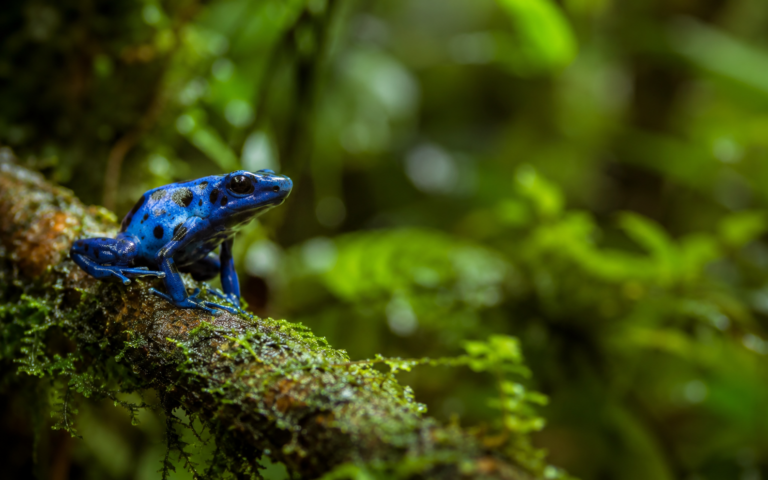
- Genus: Agalychnis – includes several visually striking species such as the Blue‑side Tree Frog (A. annae).
- Species: Agalychnis callidryas (Cope, 1862)
Phylogenetic studies using mitochondrial DNA (Faivovich et al., 2005) place Agalychnis as a sister group to the genera Phyllomedusa and Pithecopus, reflecting shared adaptations for arboreal life, such as expanded toe discs and a propensity for laying eggs on vegetation.
Physical Characteristics
Red‑eyed Tree Frogs are medium‑sized anurans, typically measuring 5–7 cm from snout to vent, with a total length (including limbs) that can approach 10 cm. Their most striking features are:
- Coloration: The dorsal surface is a vivid emerald green, providing camouflage among leaves. The ventral side is pale cream to white, while the lateral flanks display a gradient of orange to yellow that becomes more intense near the groin. The eyes are a deep scarlet, surrounded by a thin black ring – the trait that gives the species its common name.
- Skin texture: The skin is smooth and slightly moist, with a thin, transparent mucus layer that helps maintain hydration and reduces friction when the frog moves through foliage.
- Limbs and digits: All four limbs are long and slender, ending in expanded toe pads covered in hexagonal epithelial cells. These pads generate capillary adhesion, allowing the frog to cling to vertical surfaces and even hang upside‑down on smooth leaves.
- Webbing: The toes are partially webbed, especially on the hind feet, aiding in controlled gliding when the frog leaps from branch to branch.
- Sexual dimorphism: Males are generally slightly smaller and possess a vocal sac – a thin, inflatable membrane on the throat that inflates during calling. Females have a broader body to accommodate egg development.
When threatened, the Red‑eyed Tree Frog can change its dorsal hue to a dull brownish‑gray within seconds, a rapid chromatophore response mediated by the nervous system. This cryptic shift, combined with a sudden flash of the bright orange flank, startles predators and provides a momentary escape advantage.
Behaviour
Red‑eyed Tree Frogs are primarily nocturnal. Their daily routine can be summarised as follows:
- Daytime: The frogs seek refuge on the undersides of broad leaves, often 1–3 m above the forest floor. Here they remain motionless, relying on their green camouflage and occasional colour change to avoid detection.
- Dusk: As light fades, they become active, emerging to hunt insects and other small arthropods. Their diet includes flies, moths, beetles, and occasionally small spiders.
- Calling: Males begin vocalising shortly after sunset. The call is a series of short, high‑pitched “peep‑peep‑peep” notes repeated at a rate of 4–6 calls per second. Calls serve to attract females and to establish territorial boundaries. Acoustic studies (Ryan & Rand, 2003) show that call frequency can vary with temperature, becoming faster in warmer microhabitats.
- Reproduction: After a female selects a calling male, the pair engages in a brief amplexus (the male grasps the female’s back). The female then climbs to a leaf overhanging a water body and deposits a clutch of 150–300 eggs in a gelatinous string. The eggs are bright green, matching the surrounding foliage, which reduces predation.
- Tadpole development: Within 24–48 hours, the eggs hatch, and the tadpoles drop into the water below. Larvae are herbivorous, feeding on algae and detritus, and undergo metamorphosis in 6–8 weeks, depending on temperature and food availability.
Red‑eyed Tree Frogs exhibit a unique defensive behaviour known as “splitting”. When a predator approaches, the frog may leap and simultaneously spread its limbs, exposing the bright orange flank. The sudden flash can confuse predators, giving the frog a split‑second advantage to escape.
Natural Habitat
The species is tightly linked to humid, tropical rainforest ecosystems. Key habitat components include:
- Canopy structure: Dense, multi‑layered canopies provide the vertical space the frogs need for foraging and breeding. Preferred perching sites are large, broad‑leaved plants such as banana (Musa spp.) or heliconia.
- Moisture: Relative humidity above 80 % is typical in their range. The frogs rely on a constant supply of water for skin respiration and egg development.
- Water bodies: Small, temporary pools, slow‑moving streams, and rain‑filled leaf axils serve as breeding sites. The presence of clean, predator‑free water is essential for successful tadpole development.
- Elevation: While most populations are found below 800 m, they can occur up to 1,200 m in the foothills of the Central American mountain ranges.
- Climate: Mean annual temperatures range from 24–28 °C. Seasonal rainfall peaks between May and October, coinciding with the breeding season.
Deforestation and habitat fragmentation pose the greatest threats to local populations, despite the species being listed as Least Concern globally. Conservation efforts focus on preserving riparian corridors and maintaining canopy connectivity, which are critical for the frogs’ movement and breeding success.
Nutrition and Daily Care
The red‑eyed tree frog (Agalychnis callidryas) is an obligate insectivore. In the wild it feeds on a variety of arthropods that are abundant in the rainforest canopy, including crickets, moths, flies, beetles, and occasionally small spiders. In captivity, a balanced diet should mimic this diversity while providing essential nutrients such as calcium, vitamin A, and vitamin D₃.
Feeding Schedule
- Juveniles (up to 3 months old): Offer 2–3 appropriately sized prey items daily. Juveniles have a high metabolic rate and grow rapidly, so consistent feeding is crucial.
- Sub‑adults (3–9 months): Feed 1–2 prey items every other day. Adjust portion size to the frog’s snout‑vent length (SVL); prey should not exceed 1 cm in length for a 4 cm frog.
- Adults (9 months and older): Provide 1 prey item every 2–3 days. Over‑feeding can lead to obesity and liver disease, which are common health concerns in captive amphibians.
Recommended Prey Types
| Prey | Size (mm) | Frequency | Notes |
|---|---|---|---|
| Crickets (gut‑loaded) | 10–15 | Daily (juvenile) / Every 2 days (adult) | Primary protein source; dust with calcium powder (no‑phosphate) and a multivitamin supplement. |
| Fruit flies (Drosophila) | 3–5 | Daily (juvenile) / 2–3 times/week (adult) | Excellent for very small juveniles; provide a cultured, pesticide‑free supply. |
| Wax moth larvae | 8–12 | 2 times/week | High fat; use sparingly and balance with calcium‑rich prey. |
| Small moths or beetles | 10–15 | 1 time/week | Offers variety and mimics natural diet. |
All prey should be “gut‑loaded” 24 hours before offering, meaning they are fed a nutrient‑rich diet (e.g., commercial gut‑loading diet or finely chopped fruits/vegetables) to increase their nutritional value. After feeding, remove any uneaten insects within 15 minutes to prevent water contamination.
Hydration
Red‑eyed tree frogs obtain most of their water from the moist environment of their enclosure and from the prey they eat. Nevertheless, a shallow water dish (no deeper than 1 cm) should be provided at all times, with fresh dechlorinated water changed daily. Mist the enclosure 3–4 times per day using a fine‑spray bottle or automated misting system to maintain a relative humidity of 70–80 %.
Warning Signs and Health Monitoring
Because amphibians have permeable skin, subtle changes can indicate serious problems. Caregivers should perform a quick visual check at least once daily.
- Lethargy or prolonged inactivity: May signal stress, temperature imbalance, or infection.
- Loss of appetite: A red‑eyed tree frog that refuses prey for more than 48 hours should be evaluated.
- Skin discoloration: Fading of the characteristic bright green or blue‑green coloration, or the appearance of white, yellow, or black patches, can indicate fungal infection (e.g., chytridiomycosis) or nutritional deficiency.
- Abnormal shedding: Retained shed skin on the limbs or body is a sign of low humidity or vitamin A deficiency.
- Respiratory distress: Rapid, shallow breathing, or bubbles on the skin surface, may point to bacterial pneumonia.
- Swollen abdomen or bloating: Could be a sign of constipation, internal parasites, or organ disease.
If any of these signs are observed, isolate the affected frog, improve enclosure conditions (e.g., increase humidity, adjust temperature), and contact a qualified exotic‑animal veterinarian promptly. Do not attempt to treat with over‑the‑counter medications without professional guidance.
Responsible Care and Conservation
While the red‑eyed tree frog is listed as “Least Concern” by the IUCN, its populations are threatened by habitat loss, climate change, and the pet trade. Responsible ownership helps mitigate these pressures.
Ethical Sourcing
Purchase only from reputable breeders who can provide a captive‑bred certificate. Wild‑caught specimens not only stress natural populations but also carry a higher risk of parasites and disease.
Habitat Enrichment
Provide a vertically oriented enclosure (minimum 45 cm tall) with live or artificial foliage, branches, and cork bark to encourage natural climbing behavior. Rotate décor periodically to stimulate mental activity.
Environmental Impact
Use sustainable substrates such as coconut fiber or sphagnum moss, which retain moisture without contributing to deforestation. Avoid peat moss harvested from sensitive bogs.
Community Involvement
Consider supporting organizations that protect Central American rainforests, such as the Amphibian Survival Alliance or local NGOs in Costa Rica and Panama. Donations, citizen‑science projects, or volunteering can make a tangible difference.
Frequently Asked Questions
Can I keep a red‑eyed tree frog with other amphibians?
Co‑habitation is risky. Different species have varying temperature, humidity, and dietary needs, and stress can lead to disease transmission. If you wish to house multiple frogs, they should be the same species, similar size, and introduced gradually.
How long do red‑eyed tree frogs live?
In captivity, with optimal care, they can live 5–8 years; some individuals have reached 10 years. Longevity is closely tied to diet, enclosure hygiene, and regular veterinary check‑ups.
Do they need UVB lighting?
Unlike many diurnal reptiles, red‑eyed tree frogs obtain most of their vitamin D₃ from their diet and from exposure to natural sunlight through the glass. A low‑intensity UVB bulb (e.g., 2.0 % UVB) placed on a 12‑hour photoperiod can be beneficial but is not strictly required if the diet is well‑supplemented.
What temperature range is safe?
Maintain a daytime temperature of 24–27 °C (75–81 °F) with a slight nocturnal drop to 20–22 °C (68–72 °F). Use a thermostat‑controlled heat source to avoid overheating, which can cause loss of appetite and stress.
Is it legal to own this species in my country?
Regulations vary. In many regions the red‑eyed tree frog is not listed under CITES Appendix II, but local wildlife authorities may have specific permits. Always verify with your national or state wildlife agency before acquiring a frog.
References
- International Union for Conservation of Nature (IUCN). *Agalychnis callidryas* Red‑eyed Tree Frog – Red List Assessment, 2022. iucnredlist.org
- Amphibian Survival Alliance. “Guidelines for Captive Care of Neotropical Tree Frogs.” 2021. amphibiansurvival.org
- Association of Reptile and Amphibian Veterinarians (ARAV). “Nutritional Recommendations for Exotic Amphibians.” 2020. arav.org
- World Wildlife Fund (WWF). “Rainforest Habitat Loss and Amphibian Decline.” 2023. worldwildlife.org
- U.S. Fish & Wildlife Service. “CITES and Amphibian Trade.” 2022. fws.gov
Veterinary Notice
The information provided here is intended for educational purposes only. It does not replace professional veterinary advice. If your red‑eyed tree frog shows any signs of illness, abnormal behavior, or if you have questions about its specific health needs, consult a veterinarian who is licensed and experienced in exotic or amphibian medicine. Prompt professional care is essential for the well‑being of your pet and for preventing the spread of disease to other amphibians.