
Introduction
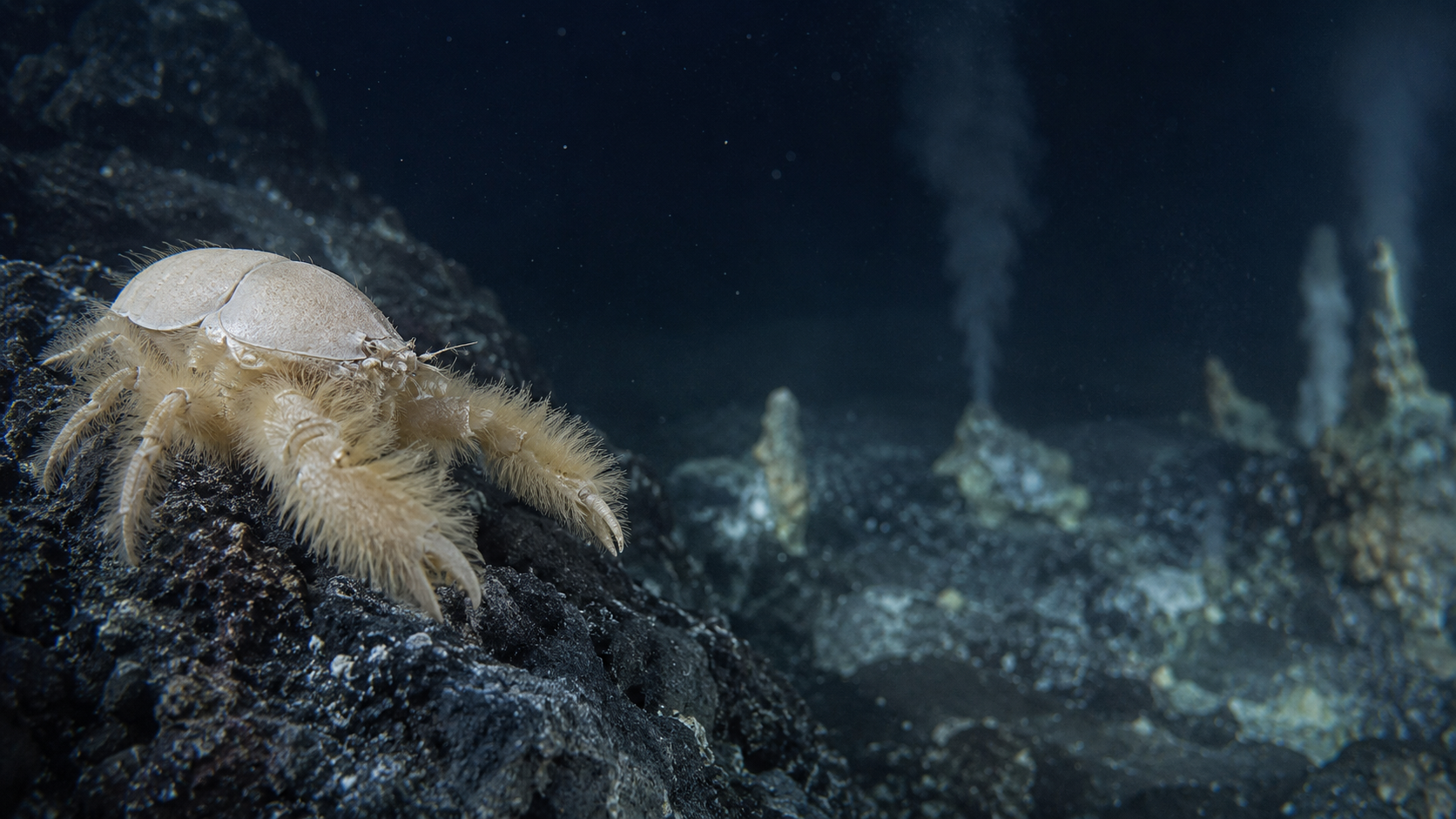
The Yeti Crab, also known as Kiwa hirsuta, is a species of crustacean that has gained significant attention in recent years due to its unique appearance and deep-sea habitat. First discovered in 2005, this crab has sparked the interest of scientists and marine enthusiasts alike. In this article, we will delve into the world of the Yeti Crab, exploring its taxonomy, physical characteristics, behavior, and habitat.
Quick Reference Table
| Scientific Name | Kiwa hirsuta |
|---|---|
| Common Name | Yeti Crab |
| Family | Kiwaidae |
| Order | Decapoda |
| Class | Malacostraca |
| Phylum | Arthropoda |
| Habitat | Deep-sea hydrothermal vents |
Taxonomy and Identification
The Yeti Crab belongs to the family Kiwaidae, which is a group of deep-sea crabs that are characterized by their unique morphology. The genus Kiwa is comprised of several species, but Kiwa hirsuta is the most well-known due to its distinctive hair-like structures. These structures, which are actually setae (bristles), cover the crab’s legs and claws, giving it a distinctive appearance.
Physical Characteristics
The Yeti Crab has a number of distinctive physical characteristics that set it apart from other crustaceans. Its body is approximately 5-6 cm in length, with a brownish-yellow coloration. The most striking feature of the Yeti Crab, however, is its hair-like structures, which are found on its legs and claws. These setae are thought to be used for sensory purposes, allowing the crab to detect its surroundings.
Behavior
Despite its deep-sea habitat, the Yeti Crab is a relatively active species. It has been observed moving slowly across the seafloor, using its setae to detect its surroundings. The crab is also thought to be a scavenger, feeding on small invertebrates and detritus. In addition, the Yeti Crab has been observed using its claws to capture prey, suggesting that it is an opportunistic feeder.
Habitat
The Yeti Crab is found in deep-sea hydrothermal vents, where hot water and minerals are released from the Earth’s crust. These vents support a unique community of organisms, including giant tube worms, vent crabs, and other deep-sea creatures. The Yeti Crab is thought to be endemic to these vents, where it can be found in areas with high temperatures and chemical-rich fluids.
Diet
The Yeti Crab is a scavenger and opportunistic feeder, which means that it will eat a wide variety of food sources. Its diet consists mainly of small invertebrates, such as bristle worms and molluscs, as well as detritus and other organic matter. The crab has also been observed using its claws to capture prey, suggesting that it is an active hunter.
Daily Needs
Due to its deep-sea habitat, the Yeti Crab has a number of unique daily needs. It requires a constant supply of hot water and minerals, which are provided by the hydrothermal vents. The crab also needs a stable temperature, ranging from 2-40°C, and a high level of humidity. In addition, the Yeti Crab requires a diet rich in nutrients, which it obtains from the small invertebrates and detritus that it feeds on.
Warning Signs
Due to its deep-sea habitat, the Yeti Crab is not typically kept in captivity. However, if you are a researcher or aquarist working with this species, there are several warning signs to look out for. These include a decrease in appetite, changes in coloration, and a decrease in activity level. If you notice any of these signs, it is essential to seek the advice of a qualified veterinarian.
Responsible Care or Conservation
Due to its deep-sea habitat, the Yeti Crab is not typically kept in captivity. However, if you are a researcher or aquarist working with this species, there are several steps that you can take to ensure responsible care. These include providing a stable temperature and humidity level, a constant supply of hot water and minerals, and a diet rich in nutrients. In addition, it is essential to handle the crab gently and humanely, and to avoid causing it any unnecessary stress.
Health, Welfare, and Conservation
The Yeti Crab is a relatively healthy species, but it is still susceptible to a number of diseases and parasites. These include bacterial and fungal infections, as well as parasitic worms. In addition, the crab is vulnerable to changes in its environment, such as a decrease in water temperature or a reduction in the availability of food. To ensure the health and welfare of the Yeti Crab, it is essential to provide it with a stable and nutritious environment, and to monitor its health regularly.
Practical Takeaways
- The Yeti Crab is a deep-sea crustacean with hair-like structures.
- It is found in hydrothermal vents, where hot water and minerals are released from the Earth’s crust.
- The crab is a scavenger and opportunistic feeder, which means that it will eat a wide variety of food sources.
- It requires a constant supply of hot water and minerals, a stable temperature, and a high level of humidity.
- The Yeti Crab is not typically kept in captivity, but if you are a researcher or aquarist working with this species, it is essential to provide it with a stable and nutritious environment, and to monitor its health regularly.
What is the Yeti Crab’s habitat?
The Yeti Crab is found in deep-sea hydrothermal vents, where hot water and minerals are released from the Earth’s crust.
What does the Yeti Crab eat?
The Yeti Crab is a scavenger and opportunistic feeder, which means that it will eat a wide variety of food sources, including small invertebrates, detritus, and other organic matter.
Is the Yeti Crab endangered?
The Yeti Crab is not currently considered to be endangered, but its population is still vulnerable to changes in its environment, such as a decrease in water temperature or a reduction in the availability of food.
Can I keep a Yeti Crab as a pet?
No, the Yeti Crab is not typically kept in captivity, due to its deep-sea habitat and specialized care requirements.
How can I help conserve the Yeti Crab?
You can help conserve the Yeti Crab by supporting organizations that work to protect its habitat and reduce the impact of human activities on the deep-sea environment.
- National Oceanic and Atmospheric Administration (NOAA). (2020). Yeti Crab.
- World Register of Marine Species. (2020). Kiwa hirsuta.
- Macpherson, E. (2005). Species of the genus Munidopsis (Crustacea, Decapoda, Galatheidae) from the deep-sea hydrothermal vents of the East Pacific Rise.
Please note that the information provided in this article is for educational purposes only, and is not intended to be used as a substitute for professional veterinary advice. If you have any concerns about the health or welfare of a Yeti Crab, please consult a qualified veterinarian.
Life Cycle and Development
The life cycle of the Yeti Crab is not well understood, but it is believed to be similar to that of other deep-sea crustaceans. The crabs are thought to undergo a complex life cycle, involving multiple larval stages before reaching adulthood. The larvae are likely to drift in the water column, feeding on small organisms and growing before eventually settling on a suitable substrate.
Once settled, the young crabs will undergo a series of molts as they grow and develop. During this time, they will be vulnerable to predators and will need to find suitable shelter and food to survive. As they mature, the crabs will begin to develop their distinctive hair-like structures, which are thought to be used for sensory purposes.
Communication and Senses
The Yeti Crab has a range of sensory organs that allow it to detect and respond to its environment. The hair-like structures on its legs and claws are thought to be highly sensitive, and are used to detect vibrations and movements in the water. The crabs also have a pair of large, compound eyes that are capable of detecting even small amounts of light in the dimly lit deep-sea environment.
In addition to its sensory organs, the Yeti Crab is also thought to use chemical signals to communicate with other members of its species. This is likely to be particularly important in the deep-sea environment, where visual cues may be limited. The crabs may use chemical signals to attract mates, warn off predators, or communicate with other crabs about food sources.
Seasonal Variation and Ecological Relationships
The Yeti Crab is found in deep-sea hydrothermal vents, where hot water and minerals are released from the Earth’s crust. This environment is characterized by a unique community of organisms that are able to survive in the harsh conditions surrounding the vents.
The Yeti Crab is thought to play a key role in this ecosystem, serving as both a predator and a prey species. The crabs feed on small organisms such as bacteria and archaea that thrive in the warm, chemical-rich waters surrounding the vents. In turn, the crabs are preyed upon by larger animals such as fish and other crustaceans.
The Yeti Crab’s ecological relationships are also influenced by the seasonal variation in the deep-sea environment. The vents are subject to changes in temperature and chemistry throughout the year, which can affect the availability of food and the crabs’ ability to survive.
Research and Conservation Efforts
The Yeti Crab is a relatively newly discovered species, and as such, there is still much to be learned about its biology and ecology. Scientists are working to study the crabs in their natural habitat, using submersibles and remotely operated vehicles (ROVs) to explore the deep-sea vents.
Conservation efforts are also underway to protect the Yeti Crab and its habitat. The deep-sea vents are a unique and fragile ecosystem, and are vulnerable to damage from human activities such as mining and fishing. Efforts are being made to establish protected areas and regulate human activities in the deep sea, in order to preserve the Yeti Crab and its habitat for future generations.
Responsible Enrichment and Ethical Considerations
The Yeti Crab is a popular species among aquarium enthusiasts, but it is not currently considered to be a suitable species for captivity. The crabs have complex social and spatial needs that cannot be met in a home aquarium, and are best left in their natural habitat.
In addition, the collection of Yeti Crabs for the aquarium trade is not considered to be sustainable, and may harm the wild population. As such, it is not recommended to purchase or keep Yeti Crabs as pets.
It is also important to consider the ethical implications of studying and conserving the Yeti Crab. The crabs are an important part of the deep-sea ecosystem, and any research or conservation efforts should be carried out in a responsible and sustainable manner.


