Viperfish
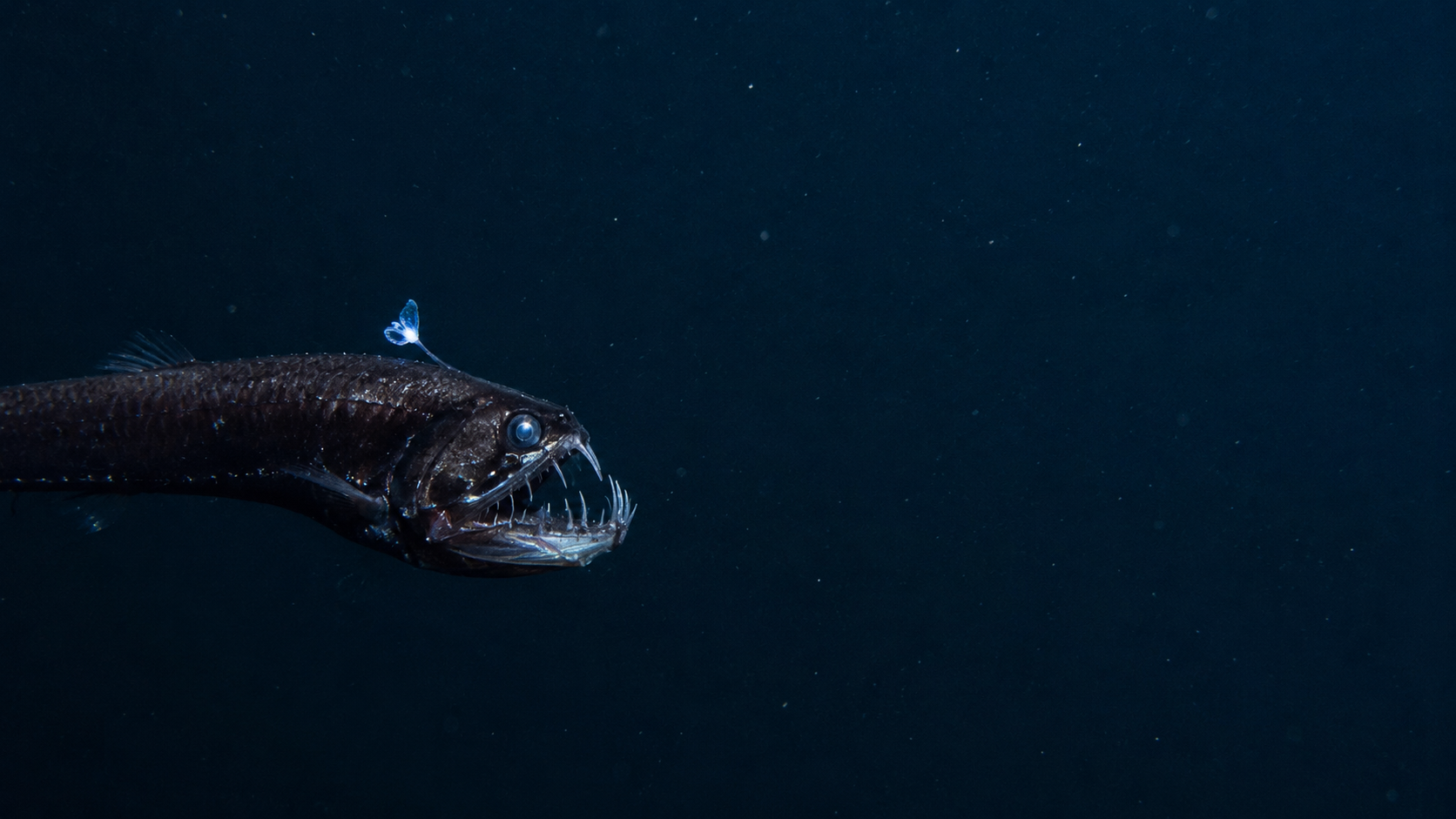
Viperfish are a group of large, deep-sea fish characterized by their large teeth and bioluminescent lures on their lower jaw.
Physical Characteristics
Viperfish are large fish, typically growing to lengths of 30-60 cm (12-24 in). They have a long, slender body with a large mouth and fang-like teeth. Their teeth are so large that they have to curve upwards to fit inside their mouth. They also have a bioluminescent lure on their lower jaw that is used to attract prey.
Habitat and Distribution
Viperfish are found in the deep waters of the Atlantic, Pacific, and Indian Oceans. They are typically found at depths of 200-1,000 meters (660-3,300 ft), but can be found as deep as 2,000 meters (6,600 ft). They are a mesopelagic species, meaning they are found in the middle depths of the ocean.
Diet and Feeding Habits
Viperfish are carnivores and feed on small fish, squid, and crustaceans. They use their bioluminescent lure to attract prey in the dark depths of the ocean.
Behavior and Social Structure
Viperfish are a solitary species and are typically only found together during mating. They are a deep-sea species and are not well understood, but it is believed that they are a relatively slow-moving species.
Conservation Status
Viperfish are not considered to be a threatened species at this time. However, their deep-sea habitat is vulnerable to damage from deep-sea fishing and other human activities.
| Scientific Name | Chauliodus sloani |
|---|---|
| Family | Stomiidae |
| Order | Stomiiformes |
| Class | Actinopterygii |
| Phylum | Chordata |
Interesting Facts
Viperfish have a number of interesting adaptations that allow them to thrive in the deep-sea environment. Their large teeth and powerful jaws allow them to capture and eat large prey, while their bioluminescent lure allows them to attract prey in the dark depths of the ocean.
What is the average lifespan of a viperfish?
The average lifespan of a viperfish is not well understood, but it is believed to be around 10-15 years.
How deep can viperfish be found?
Viperfish can be found as deep as 2,000 meters (6,600 ft), but are typically found at depths of 200-1,000 meters (660-3,300 ft).
What is the purpose of the bioluminescent lure on a viperfish’s lower jaw?
The bioluminescent lure on a viperfish’s lower jaw is used to attract prey in the dark depths of the ocean.
Are viperfish a threatened species?
No, viperfish are not considered to be a threatened species at this time.
- National Oceanic and Atmospheric Administration (NOAA). (2020). Viperfish.
- World Register of Marine Species. (2020). Chauliodus sloani.
- FishBase. (2020). Chauliodus sloani.
Please note that viperfish are wild animals and should not be kept as pets. They have complex social and spatial needs that cannot be met in a home environment. Additionally, many species of viperfish are protected by laws and international agreements, and their capture and trade are regulated. If you are interested in learning more about viperfish, we recommend consulting with a qualified marine biologist or conservation organization.
Life Cycle
Viperfish have a unique life cycle that is adapted to their deep-sea environment. They have a relatively long lifespan for a fish, with some species living up to 30 years in the wild. Viperfish begin their lives as small eggs that are spawned in the deep waters of the ocean. The eggs are pelagic, meaning they float in the water column, and are fertilized externally. After several weeks, the eggs hatch into larvae that drift in the current, feeding on small plankton and growing rapidly. As they grow, the larvae undergo a series of physical transformations, eventually developing into juvenile viperfish. At this stage, they begin to develop their characteristic bioluminescent lure and large teeth.
Communication and Senses
Viperfish have a range of adaptations that allow them to communicate and navigate in the dark depths of the ocean. Their bioluminescent lure is not only used to attract prey, but also to communicate with other viperfish. They use a range of flash patterns to signal aggression, courtship, and other social behaviors. Viperfish also have large eyes that are sensitive to low light levels, allowing them to detect the faint glow of bioluminescent organisms in the distance. They also have a highly developed sense of smell, which they use to detect the presence of prey and predators.
Seasonal Variation
Viperfish are a deep-sea species, and as such, they are not subject to the same seasonal variations as species that live in shallower waters. However, they do experience changes in the availability of food and the distribution of predators over the course of the year. In the summer months, the waters above the viperfish’s habitat are warmer and more productive, leading to an increase in the abundance of small fish and squid that the viperfish feed on. In the winter months, the waters are colder and less productive, and the viperfish must rely on their stored fat reserves to survive.
Ecological Relationships
Viperfish play an important role in the deep-sea ecosystem, serving as both predators and prey for other species. They are an important food source for larger deep-sea fish, such as anglerfish and dragonfish, as well as for marine mammals, such as sperm whales and dolphins. Viperfish also compete with other deep-sea species, such as lanternfish and dragonfish, for food and resources.
Research
Viperfish are a relatively poorly understood species, and as such, they are the subject of ongoing research efforts. Scientists are interested in learning more about the viperfish’s life cycle, behavior, and ecological relationships, as well as their adaptations to the deep-sea environment. Researchers use a range of techniques, including submersibles, remote-operated vehicles (ROVs), and autonomous underwater vehicles (AUVs), to study viperfish in their natural habitat.
Responsible Enrichment
Viperfish are a popular species in public aquariums, and as such, they require specialized care and enrichment. Aquariums must provide viperfish with a large, deep tank that mimics their natural habitat, complete with artificial reefs and deep-sea creatures. Viperfish also require a varied diet that includes live fish and squid, as well as a range of toys and activities to stimulate their natural behavior.
Ethical and Legal Considerations
Viperfish are a protected species in many countries, and as such, they are subject to a range of ethical and legal considerations. The capture of viperfish for the aquarium trade is regulated by international law, and aquariums must obtain special permits to collect and display the species. Viperfish are also protected by laws that prohibit the destruction of their habitat and the pollution of their environment.
Adaptations for Survival
Viperfish have evolved several unique adaptations to survive in the harsh, deep-sea environment. One of the most notable adaptations is their large teeth, which are proportionally larger than those of any other fish. These teeth are not only used for catching prey, but also for defense against predators. The bioluminescent lure on their lower jaw is another adaptation that helps them to attract prey in the dark depths of the ocean.
In addition to these physical adaptations, viperfish have also developed a unique way of moving through the water. They use a slow, deliberate movement to conserve energy, as food is scarce in the deep sea. This slow movement also helps them to sneak up on their prey, making them more effective hunters.
Reproduction and Development
Viperfish reproduction is not well understood, but it is believed that they spawn in the spring and summer months. The females release their eggs into the water column, where they are fertilized by the males. The eggs then drift in the current until they hatch into larvae.
The larvae go through a series of developmental stages, during which they are vulnerable to predators. As they grow, they begin to develop their bioluminescent lure and large teeth, which help them to survive in the deep sea.
Captivity and Aquaria
Viperfish are not commonly kept in captivity, due to their deep-sea nature and specialized care requirements. However, some aquariums have successfully kept viperfish in large, deep tanks with simulated deep-sea conditions.
In these tanks, the viperfish are provided with a diet of small fish and squid, which they hunt using their bioluminescent lure. The tanks are also equipped with specialized lighting that simulates the dim glow of the deep sea.
Threats and Management
Viperfish are not considered to be a threatened species, but they are vulnerable to deep-sea fishing and habitat destruction. As a result, conservation efforts are focused on protecting their deep-sea habitat and reducing the impact of fishing on their populations.
Management of viperfish populations is also focused on reducing bycatch, which is the catching of non-target species in fishing gear. This is a major threat to many deep-sea species, including viperfish.
Adaptations for Aquatic Environment
Viperfish have evolved several adaptations that enable them to thrive in the deep-sea environment. One of the most notable adaptations is their large eyes, which are sensitive to low light levels and allow them to detect the faint glow of their bioluminescent lure. Their eyes are also tubular in shape, which allows them to focus on distant objects in the dimly lit waters. Additionally, their large teeth and powerful jaws enable them to capture and eat prey in the food-scarce deep-sea environment.
Another adaptation of viperfish is their slow metabolism, which allows them to conserve energy in the food-scarce deep-sea environment. They also have a slow growth rate, which allows them to invest energy in the development of their bioluminescent lure and other specialized features. Furthermore, their large mouth and fang-like teeth enable them to eat prey whole, which reduces the energy required for feeding.
Viperfish also have a number of adaptations that enable them to withstand the crushing pressure of the deep-sea environment. Their bodies are highly compressible, which allows them to maintain their shape at great depths. They also have a swim bladder that is filled with a gas that is less compressible than water, which helps to maintain their buoyancy. Additionally, their skeleton is made of cartilage, which is more flexible than bone and allows them to withstand the pressure of the deep-sea environment.
Overall, the adaptations of viperfish enable them to thrive in the deep-sea environment, where the pressure is extreme and the food is scarce. Their specialized features, such as their bioluminescent lure and large teeth, allow them to capture and eat prey in this environment, and their slow metabolism and compressible body enable them to conserve energy and withstand the pressure.