Sea Otter
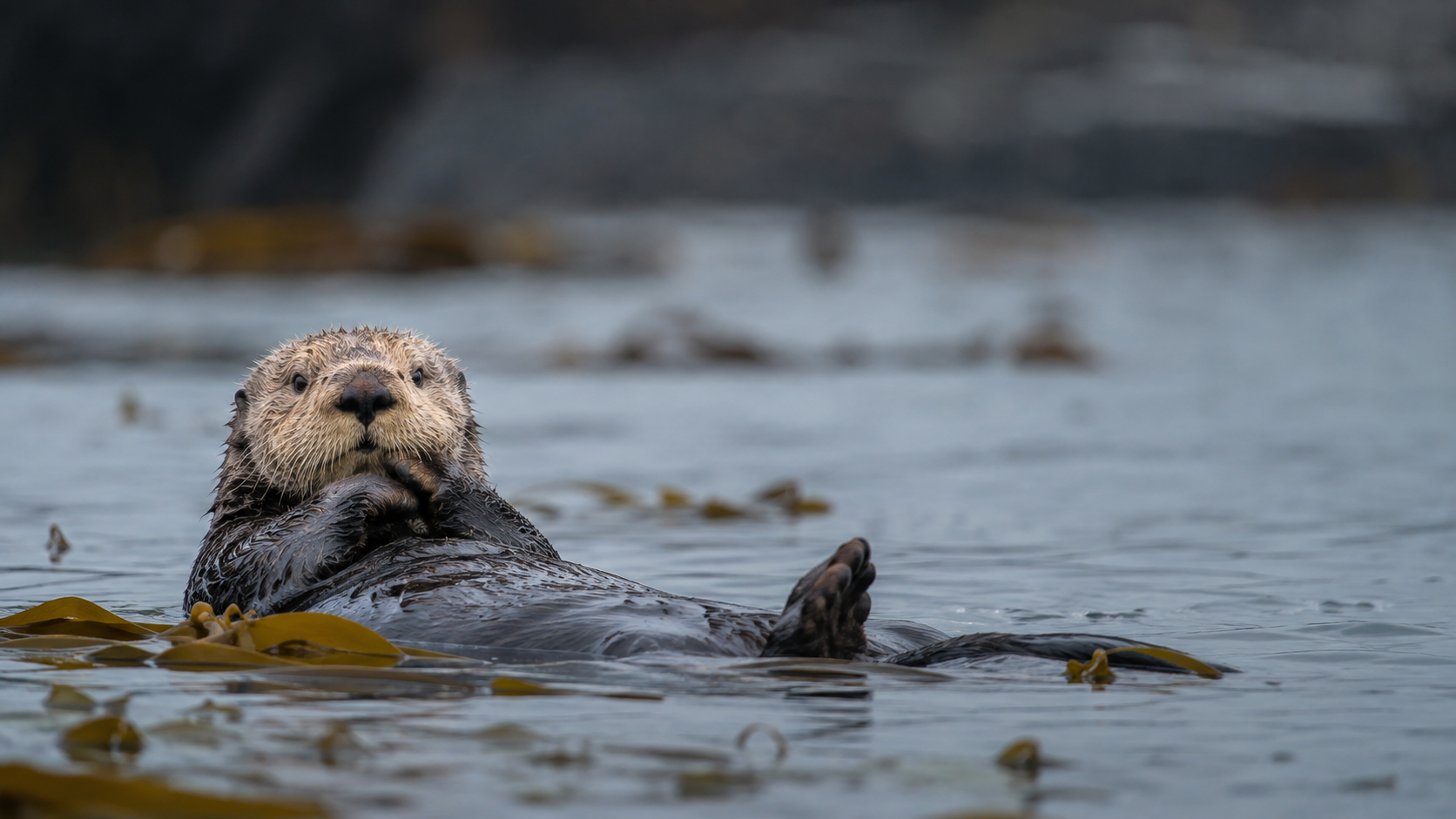
The Sea Otter (Enhydra lutris) is a marine mammal native to the coasts of the northern and eastern Pacific Ocean.
Quick Reference Table
| Scientific Name | Enhydra lutris |
|---|---|
| Kingdom | Animalia |
| Phylum | Chordata |
| Class | Mammalia |
| Order | Carnivora |
| Family | Mustelidae |
| Genus | Enhydra |
| Species | E. lutris |
| Conservation Status | Endangered |
Taxonomy and Identification
The Sea Otter is a member of the weasel family (Mustelidae) and is the largest member of the genus Enhydra. There are three subspecies of Sea Otter: the southern sea otter (Enhydra lutris nereis), the northern sea otter (Enhydra lutris kenyoni), and the Asian sea otter (Enhydra lutris lutris).
Natural Habitat and Distribution
Sea Otters are found in shallow coastal waters in the Pacific Ocean, from Japan to Russia and from Alaska to California. They prefer areas with dense kelp forests, rocky shores, and sandy beaches.
Behaviour
Sea Otters are highly social animals and are often found in large groups, called ‘rafts’. They are carnivores and feed on a variety of prey, including sea urchins, crabs, and fish. They are also known for their unique way of eating, using tools such as rocks to crack open shells.
Diet
Sea Otters are carnivores and feed on a variety of prey, including sea urchins, crabs, and fish. They have a highly developed sense of touch and use their whiskers to detect prey in the dark waters.
Diet
Sea Otters are carnivores and feed on a variety of prey, including sea urchins, crabs, and fish. They have a highly developed sense of touch and use their whiskers to detect prey in the dark waters.
Care or Responsible Observation
Sea Otters are protected by law, and it is illegal to keep them as pets. In the wild, it is essential to observe them from a safe distance and not disturb their natural habitat. If you are interested in caring for Sea Otters, consider volunteering at a reputable wildlife sanctuary or aquarium.
Health, Welfare and Conservation
Sea Otters are listed as Endangered on the IUCN Red List. The main threats to their population are habitat loss, entanglement in fishing nets, and oil spills. Climate change also affects their food supply and habitat quality.
Sea Otters are susceptible to various diseases, including toxoplasmosis and heart disease. They are also prone to injuries from entanglement in fishing nets and collisions with boats.
Practical Takeaways
- Sea Otters are carnivores and feed on a variety of prey, including sea urchins, crabs, and fish.
- They are protected by law, and it is illegal to keep them as pets.
- It is essential to observe them from a safe distance and not disturb their natural habitat.
- Sea Otters are listed as Endangered on the IUCN Red List due to habitat loss, entanglement in fishing nets, and oil spills.
What do Sea Otters eat?
Sea Otters are carnivores and feed on a variety of prey, including sea urchins, crabs, and fish.
Can I keep a Sea Otter as a pet?
No, Sea Otters are protected by law, and it is illegal to keep them as pets.
How can I help protect Sea Otters?
You can help protect Sea Otters by supporting conservation efforts, reducing your use of plastic, and spreading awareness about the importance of protecting their habitat.
What are the main threats to Sea Otter populations?
The main threats to Sea Otter populations are habitat loss, entanglement in fishing nets, and oil spills.
Are Sea Otters susceptible to diseases?
Yes, Sea Otters are susceptible to various diseases, including toxoplasmosis and heart disease.
- Sea Otter Alliance. (n.d.). Sea Otter Facts. Retrieved from https://www.seaotteralliance.org/sea-otter-facts/
- National Oceanic and Atmospheric Administration. (n.d.). Sea Otters. Retrieved from https://www.noaa.gov/species/sea-otters
- International Union for Conservation of Nature. (n.d.). Enhydra lutris. Retrieved from https://www.iucnredlist.org/species/7750/115481162
Please note that the information provided is for educational purposes only and should not be used as a substitute for professional veterinary advice. If you have concerns about the health or welfare of a Sea Otter, please consult a qualified veterinarian or a reputable wildlife organization.
Life Cycle and Development
Sea Otters have a unique life cycle, with a relatively long gestation period of approximately 6-8 months. Female Sea Otters typically give birth to a single pup, which is born with a thick layer of fur and is able to swim and dive within hours of birth. The pup will stay with its mother for about 6-8 months, during which time it will learn essential skills such as foraging, swimming, and using tools.
After weaning, the pup will become independent and start its own life, although it may still stay in the same area as its mother. Sea Otters can live up to 20-30 years in the wild, although the average lifespan is around 10-15 years.
Communication and Senses
Sea Otters are highly vocal animals, using a variety of sounds to communicate with each other. They use a range of clicks, whistles, and grunts to convey information about food, predators, and social interactions. They also use body language, such as posturing and facial expressions, to communicate.
Sea Otters have a highly developed sense of touch, which they use to detect prey in the dark waters. They also have excellent eyesight, both in and out of the water, and can see well in low light conditions. Their sense of smell is also highly developed, and they use it to detect prey and detect predators.
Seasonal Variation
Sea Otters do not truly hibernate, but they do experience a period of reduced activity during the winter months. During this time, they will often float on their backs, wrapped in a layer of kelp, to conserve energy. They will also reduce their metabolic rate, slowing down their heart rate and reducing their body temperature.
In the spring and summer months, Sea Otters are more active, spending more time foraging and socializing. They will also molt during this time, shedding their old fur and growing new fur to keep warm.
Ecological Relationships
Sea Otters play a crucial role in maintaining the balance of their ecosystem. They prey on sea urchins, which if left unchecked, can overgraze kelp forests and cause them to disappear. This has a ripple effect throughout the ecosystem, as kelp forests provide habitat for a wide range of species.
Sea Otters also have a mutualistic relationship with sea slugs, which help to clean parasites from their fur. In return, the sea slugs get a safe place to live and a constant food supply.
Research and Conservation Efforts
Sea Otters are an important species for research, particularly in the fields of ecology and conservation biology. Scientists study their behavior, population dynamics, and habitat use to better understand the impacts of human activities on their populations.
Conservation efforts are also underway to protect Sea Otter populations. These efforts include habitat protection, reduction of entanglement in fishing nets, and education campaigns to reduce human impact on their habitats.
Responsible Enrichment
In captivity, Sea Otters require a lot of enrichment to keep them stimulated and engaged. This can include providing them with a variety of toys and activities, such as puzzle feeders and hidden food items. They also require a lot of space to swim and dive, and a varied and nutritious diet.
It is also important to provide Sea Otters with opportunities for social interaction, as they are highly social animals. This can include housing them in pairs or groups, and providing them with plenty of opportunities for play and interaction.
Ethical and Legal Considerations
Sea Otters are protected by law in many countries, and it is illegal to harm or harass them in any way. It is also important to consider the ethics of keeping Sea Otters in captivity, as they have complex social and spatial needs that can be difficult to meet in a captive setting.
It is also important to consider the impact of human activities on Sea Otter populations, such as entanglement in fishing nets and habitat destruction. By taking steps to reduce our impact on their habitats and populations, we can help to ensure the long-term survival of this iconic species.
Adaptations and Specializations
Sea Otters have several adaptations that enable them to thrive in their aquatic environment. Their thick fur is the densest of any mammal, with up to 1 million hairs per square centimeter. This fur is crucial for keeping them warm in cold water, as they don’t have a layer of blubber like other marine mammals. They also have a highly efficient metabolism, which helps to generate heat.
Their front paws are extremely dexterous, with retractable claws that they use to manipulate food and other objects. Their hind paws are larger and more paddle-like, which they use to propel themselves through the water. They are also able to rotate their hind paws backwards, allowing them to walk on their hind legs on land.
Sea Otters have a number of other specializations that allow them to dive and forage for food in the water. Their eyes are adapted to see both in and out of the water, and they have a highly developed sense of touch that allows them to feel for prey in the dark. They are also able to hold their breath for up to 8 minutes, allowing them to dive to depths of up to 200 feet.
Reproduction and Parenting
Sea Otters give birth to a single pup after a gestation period of around 9 months. The pup is born with its eyes open and is able to swim and dive within hours of birth. The female Sea Otter is a devoted parent, and will often wrap her pup in a piece of kelp to keep it safe while she forages for food.
The pup will stay with its mother for around 6-8 months, during which time it will learn how to hunt and forage for food. The female Sea Otter will also teach her pup how to use tools, such as rocks, to crack open shells.
After the pup is weaned, it will stay with its mother for a further few months, learning important survival skills and social behaviors. Eventually, the pup will leave its mother’s side and start its own life, although it may still stay in the same general area.
Cultural Significance
Sea Otters have a significant cultural and symbolic importance in many societies. In some Indigenous cultures, they are considered a symbol of good luck and prosperity. In other cultures, they are seen as a symbol of playfulness and joy.
Sea Otters have also been an important part of the fur trade for centuries, with their thick fur being highly prized for its softness and warmth. However, this has also led to significant conservation concerns, as the Sea Otter population was heavily depleted by overhunting.
Today, Sea Otters are an important part of many marine ecosystems, and are considered an “umbrella species” – a species that, by protecting it, also protects many other species that share its habitat. As such, conservation efforts are focused on protecting the Sea Otter and its habitat, in order to preserve the health of the entire ecosystem.