
Introduction
The Red Swamp Crab (Procambarus clarkii) is a large freshwater crab species native to the Gulf Coast and Southeastern United States. They are also found in other parts of the world, including Europe, Asia, and Africa, due to human introduction.
Physical Characteristics
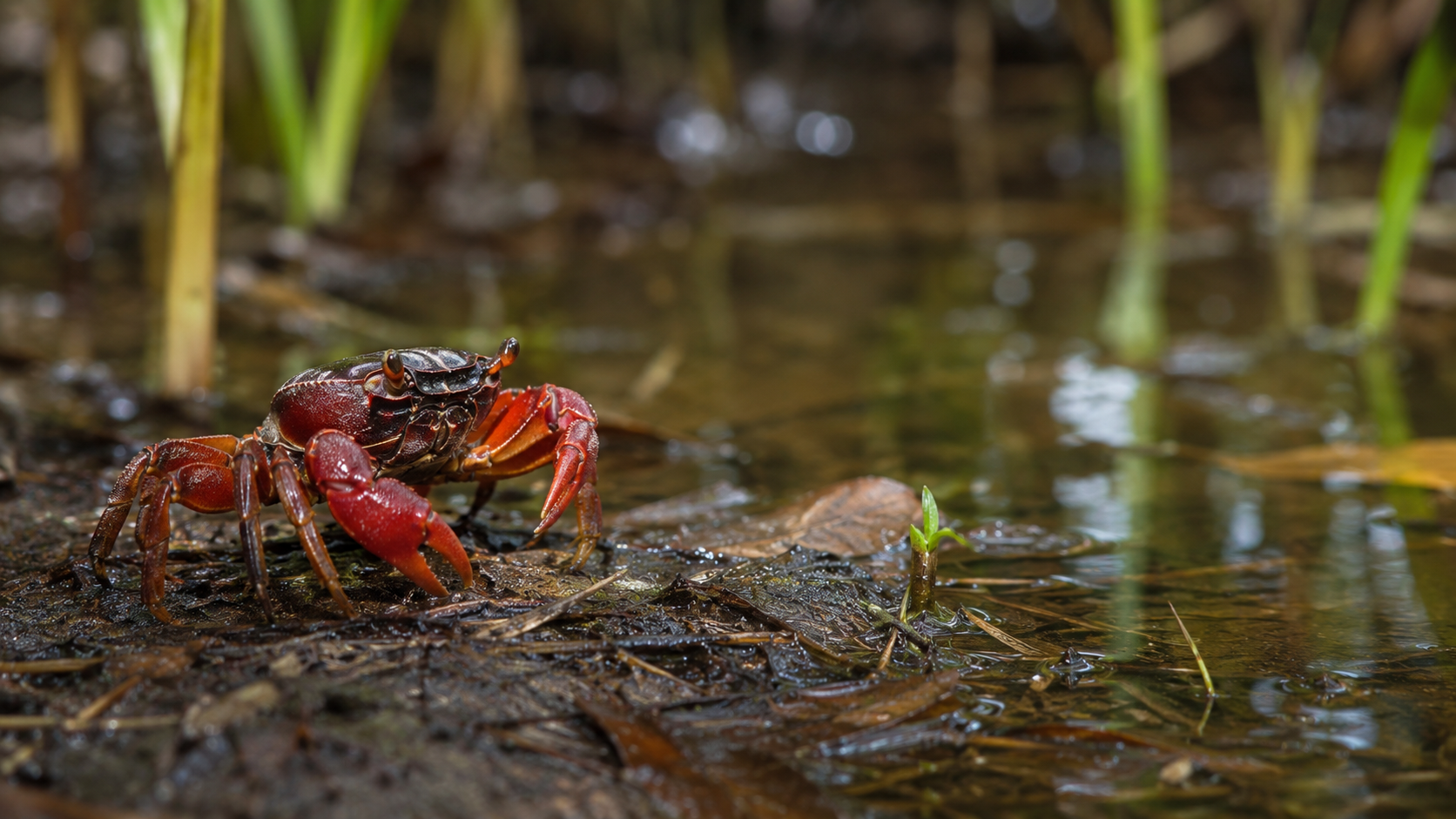
Red Swamp Crabs have a distinctive red color on their claws and legs, with a brownish-green carapace that can grow up to 4.5 inches (11.4 cm) in width. They have a long, narrow abdomen and a pair of large, powerful claws.
Habitat and Distribution
Red Swamp Crabs are found in brackish waters, including marshes, swamps, and mangrove forests. They are tolerant of a wide range of salinity levels and can survive in both freshwater and saltwater environments.
Diet
Red Swamp Crabs are opportunistic omnivores, feeding on a variety of plants and animals, including algae, small fish, and invertebrates.
Behavior
Red Swamp Crabs are primarily nocturnal, spending most of their time hiding in burrows or under vegetation. They are also skilled climbers and have been known to climb trees in search of food or shelter.
Conservation Status
Red Swamp Crabs are not currently considered to be a threatened species, although their populations are often impacted by habitat destruction and pollution.
Interesting Facts
Red Swamp Crabs are able to survive out of water for extended periods of time, as long as they are kept moist. They are also able to regrow lost claws.
| Scientific Name | Procambarus clarkii |
|---|---|
| Common Name | Red Swamp Crab |
| Family | Cambaridae |
| Order | Decapoda |
| Class | Malacostraca |
| Phylum | Arthropoda |
| Kingdom | Animalia |
FAQ
What is the average lifespan of a Red Swamp Crab?
Red Swamp Crabs can live up to 5-7 years in the wild.
Are Red Swamp Crabs good pets?
No, Red Swamp Crabs are not recommended as pets. They are wild animals that have complex social and spatial needs that cannot be met in a home environment.
What is the largest Red Swamp Crab ever recorded?
The largest Red Swamp Crab ever recorded was 4.7 inches (12 cm) in width.
Are Red Swamp Crabs edible?
Yes, Red Swamp Crabs are considered a delicacy in some parts of the world and are edible.
- National Oceanic and Atmospheric Administration (NOAA)
- Smithsonian National Museum of Natural History
- Food and Agriculture Organization of the United Nations (FAO)
Please note: Red Swamp Crabs are wild animals and should be treated with respect and caution. They are not recommended as pets and should not be handled or kept in captivity.
Life Cycle and Development
Red Swamp Crabs undergo a complex life cycle that involves multiple stages of development. The female crab can store sperm from multiple males and control fertilization, allowing her to choose the best genetic match for her offspring. After mating, the female crab will lay between 20,000 to 50,000 eggs, which she will carry on her abdomen for several weeks. The eggs will hatch into larvae, which will drift in the water column before settling on the bottom and undergoing metamorphosis into juvenile crabs.
The juvenile crabs, also known as megalopae, will go through several molts as they grow and develop. During this stage, they are vulnerable to predators and will often hide in vegetation or burrows for protection. As they mature, they will begin to develop their characteristic red coloration and will start to venture out of their hiding places to forage for food.
Communication and Senses
Red Swamp Crabs use a variety of signals to communicate with each other, including visual, auditory, and chemical cues. They have compound eyes that are sensitive to movement and can detect polarized light, which helps them navigate and find food. They also have a pair of antennae that are highly sensitive to touch and smell, which they use to detect prey and predators.
In addition to their senses, Red Swamp Crabs also use body language to communicate. They will often wave their claws or raise their abdomen to signal aggression or courtship. They will also use chemical signals, such as pheromones, to communicate with other crabs and mark their territory.
Seasonal Variation and Ecological Relationships
Red Swamp Crabs are adapted to the changing seasons and will adjust their behavior accordingly. During the summer months, they will be more active and will venture out of their burrows to forage for food. In the winter months, they will burrow deeper into the sediment and enter a state of dormancy, known as “brumation,” to conserve energy.
Red Swamp Crabs play an important role in their ecosystem, serving as both predators and prey. They feed on algae and small invertebrates, helping to regulate the populations of these species. They are also an important food source for larger predators, such as fish, birds, and mammals.
Research and Monitoring
Red Swamp Crabs have been the subject of several research studies, particularly in the context of their invasive species status. Scientists have studied their behavior, ecology, and population dynamics to better understand their impact on native ecosystems. They have also developed methods for monitoring their populations and controlling their spread.
In addition to research, Red Swamp Crabs have also been used as a model organism in scientific studies. Their relatively simple nervous system and behavior make them an ideal subject for studying animal behavior and ecology.
Responsible Enrichment and Captivity
Red Swamp Crabs are popular pets and are often kept in aquariums. However, their care requires specialized equipment and attention. They require a large tank with a secure lid, as they are skilled climbers and can escape if given the opportunity. They also require a varied diet that includes a mix of plant and animal matter.
In addition to their care, it is also important to consider the ethics of keeping Red Swamp Crabs in captivity. They are wild animals that have complex social and spatial needs that may not be met in a home aquarium. As a result, it is recommended that only experienced aquarists attempt to keep them as pets.
Ethical and Legal Considerations
Red Swamp Crabs are considered an invasive species in many parts of the world and are subject to regulations and laws governing their capture, sale, and transport. In some areas, they are considered a pest species and are subject to control measures, such as trapping and removal.
In addition to their invasive status, Red Swamp Crabs are also subject to concerns about animal welfare. They are often caught using inhumane methods, such as trapping and netting, which can cause them harm and stress. As a result, it is recommended that only sustainable and humane methods be used to capture and keep them.
Ecological Role and Impact
Red Swamp Crabs play a significant role in their ecosystems as both predators and prey. They feed on algae and small invertebrates, helping to regulate their populations and maintain the balance of their ecosystems. In turn, they are an important food source for larger animals, such as fish, birds, and mammals. As a result, they are a crucial link in the food chain, and their loss could have significant cascading effects on the ecosystem.
In addition to their role in the food chain, Red Swamp Crabs also contribute to the ecosystem through their burrowing activities. Their burrows can be complex and extensive, providing habitat for other animals, such as fish, shrimp, and insects. These burrows can also help to aerate the soil and improve water quality by allowing oxygen to penetrate deeper into the sediment.
However, Red Swamp Crabs can also have negative impacts on their ecosystems. As opportunistic omnivores, they can outcompete native species for food and resources, leading to a decline in native populations. They can also contribute to the degradation of habitats through their burrowing activities, which can cause erosion and alter the physical structure of the environment.
Human Interaction and Impact
Red Swamp Crabs have been introduced to many parts of the world through human activity, including the pet trade and aquaculture. In some areas, they have established wild populations and are considered an invasive species. As an invasive species, they can outcompete native species for resources and habitat, leading to a decline in biodiversity.
In addition to their ecological impacts, Red Swamp Crabs can also have significant economic impacts. They are often considered a pest species in aquaculture, as they can damage crops and equipment. They can also be a nuisance in urban areas, where they can invade homes and gardens.
Despite these negative impacts, Red Swamp Crabs are also an important food source for many people. They are considered a delicacy in some cultures and are often harvested for human consumption. However, overfishing and habitat destruction can threaten their populations and the ecosystems they inhabit.
Cultural Significance
Red Swamp Crabs have significant cultural and symbolic meaning in many societies. In some cultures, they are considered a symbol of good luck and prosperity, while in others they are seen as a pest species. In Louisiana, for example, the Red Swamp Crab is considered a cultural icon and is often featured in local cuisine and folklore.
In addition to their cultural significance, Red Swamp Crabs are also an important part of many ecosystems. They are a key species in many wetland ecosystems, and their loss could have significant impacts on the ecosystem as a whole. As a result, conservation efforts are necessary to protect Red Swamp Crab populations and the ecosystems they inhabit.
Conservation Efforts
Conservation efforts are necessary to protect Red Swamp Crab populations and the ecosystems they inhabit. These efforts can include habitat protection and restoration, as well as education and outreach programs to raise awareness about the importance of conservation. In addition, regulations can be put in place to prevent the introduction of non-native species and to protect native populations from overfishing and habitat destruction.
In some areas, conservation efforts are already underway. For example, the Louisiana Department of Wildlife and Fisheries has established regulations to protect Red Swamp Crab populations and habitats. In addition, organizations such as the Audubon Society are working to protect and restore wetland habitats, which are critical for Red Swamp Crab populations.
Overall, Red Swamp Crabs play a significant role in their ecosystems, and conservation efforts are necessary to protect their populations and the ecosystems they inhabit.


