
Introduction
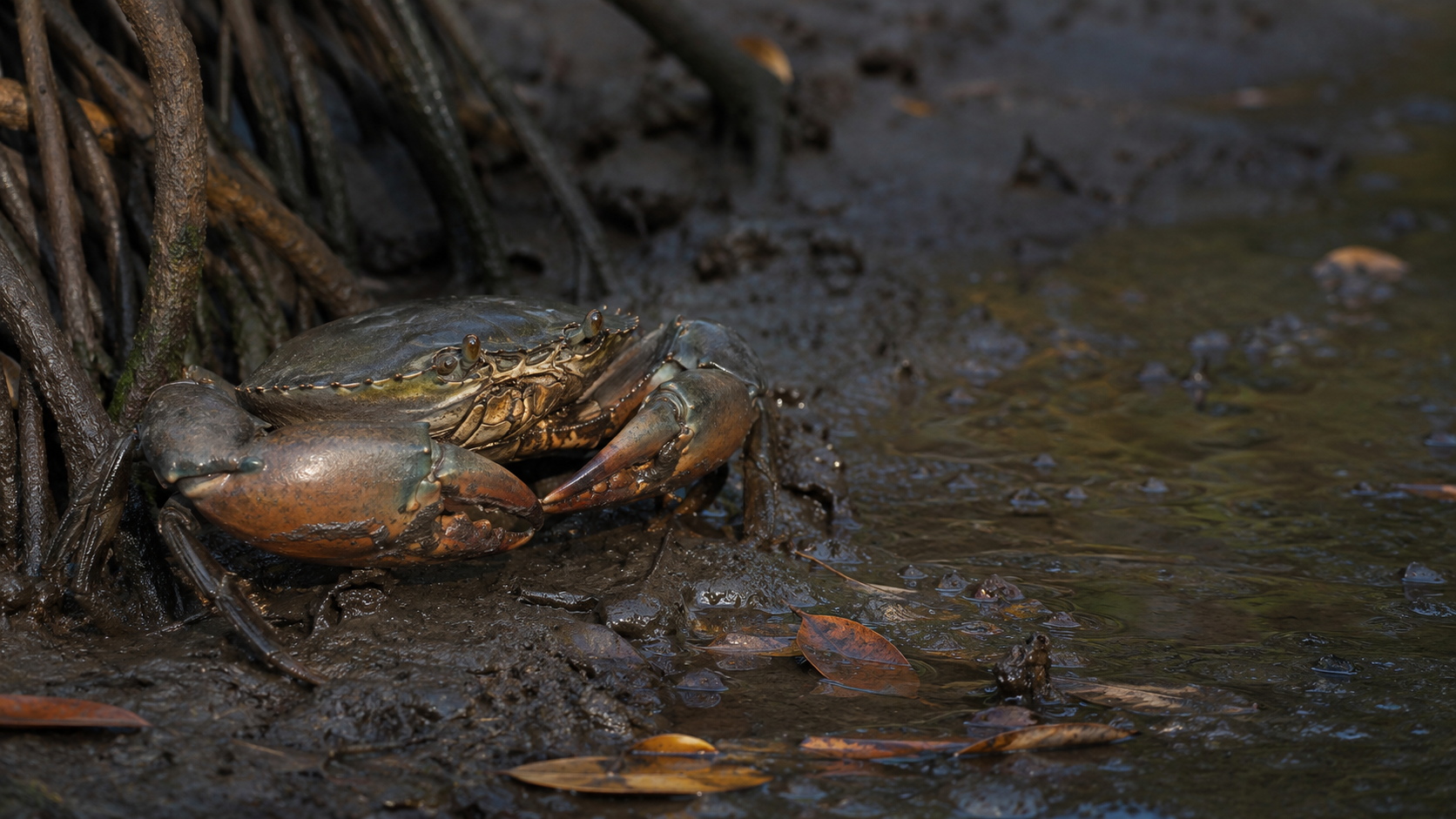
The Mud Crab, also known as Scylla serrata, is a species of crab that belongs to the family Portunidae. They are found in tropical and subtropical regions around the world, including the Indo-Pacific and the eastern coast of Africa.
Habitat and Distribution
Mud Crabs inhabit shallow, coastal waters with soft substrates such as mud, sand, and mangrove swamps. They are also found in brackish waters, including estuaries and river mouths.
Physical Characteristics
Mud Crabs have a broad, oval-shaped carapace that can grow up to 15 cm in width. They have four pairs of walking legs and a pair of claw-bearing legs. Their shell is usually brown or grayish-brown in color, with a distinctive pattern of darker spots.
| Scientific Name | Scylla serrata |
|---|---|
| Family | Portunidae |
| Order | Decapoda |
| Class | Malacostraca |
| Phylum | Arthropoda |
Diet and Foraging
Mud Crabs are opportunistic feeders, preying on small invertebrates, fish, and detritus. They use their powerful claws to capture and manipulate their prey.
Behavior and Social Structure
Mud Crabs are generally solitary animals, only coming together for mating. They are nocturnal, spending most of their time hiding in burrows or under rocks during the day.
Conservation Status
The Mud Crab is not considered a threatened species, but their populations are often affected by habitat destruction and overfishing.
Interesting Facts
Mud Crabs can live up to 5 years in the wild. They are an important food source for many marine animals, including fish, birds, and other crustaceans.
What is the average size of a Mud Crab?
The average size of a Mud Crab is around 10-12 cm in width.
What do Mud Crabs eat?
Mud Crabs are opportunistic feeders, preying on small invertebrates, fish, and detritus.
Are Mud Crabs endangered?
No, the Mud Crab is not considered a threatened species.
How long do Mud Crabs live?
Mud Crabs can live up to 5 years in the wild.
- National Oceanic and Atmospheric Administration (NOAA)
- Food and Agriculture Organization (FAO) of the United Nations
- Australian Museum
Please note that Mud Crabs are wild animals and should not be handled or kept as pets. If you are interested in learning more about crustaceans, consider consulting with a qualified expert or visiting a reputable aquarium or marine park.
Life Cycle and Development
Mud Crabs undergo a complex life cycle, consisting of several stages of development. The female Mud Crab can produce up to 3.5 million eggs per spawn, which are fertilized externally by the male. The eggs are then carried by the female in her brood pouch, where they are protected and nourished until they hatch. The larvae, also known as zoeae, emerge from the eggs after about 2-3 weeks and drift in the water column, feeding on plankton and small invertebrates. As they grow, they molt several times, eventually settling on the seafloor and metamorphosing into juvenile crabs.
The juvenile Mud Crabs, also known as megalopae, go through several more molts as they grow and develop. During this stage, they are vulnerable to predators and must find shelter and food to survive. After about 6-8 months, the megalopae reach the crab stage, at which point they begin to resemble adult Mud Crabs. They will continue to molt and grow, eventually reaching maturity after about 2-3 years.
Communication and Senses
Mud Crabs use a variety of methods to communicate with each other, including visual, auditory, and chemical signals. They have compound eyes that are sensitive to movement and changes in light, allowing them to detect potential predators or prey. They also have a pair of antennae that they use to detect vibrations and chemicals in the water.
Mud Crabs are also able to produce sound waves using their claws, which they use to communicate with other crabs. They have been observed using these sounds to signal aggression, courtship, and territorial behavior. In addition, they use chemical signals, such as pheromones, to communicate with other crabs and to locate potential mates.
Seasonal Variation
Mud Crabs are adapted to living in a variety of environments, and their behavior and physiology change in response to seasonal changes. In warmer months, Mud Crabs are more active and are more likely to be found in shallow, coastal waters. During this time, they are more focused on feeding and breeding.
In cooler months, Mud Crabs are less active and tend to move to deeper waters, where the temperature is more stable. During this time, they are more focused on conserving energy and surviving the winter months. In areas with high levels of rainfall, Mud Crabs may also be more active during the wet season, when the water is fresher and there is more food available.
Ecological Relationships
Mud Crabs play an important role in their ecosystems, serving as both predators and prey for other animals. They are an important food source for many species of fish, birds, and mammals, and are also known to prey on a variety of invertebrates, including mollusks and crustaceans.
Mud Crabs also have a symbiotic relationship with certain species of bacteria, which live in their gills and help to break down organic matter. This relationship is mutually beneficial, as the bacteria provide the crab with nutrients, and the crab provides the bacteria with a safe, stable environment.
Research and Conservation Efforts
Mud Crabs are an important species for commercial and recreational fisheries, and as such, there is ongoing research into their biology, ecology, and management. Scientists are working to better understand the population dynamics of Mud Crabs, as well as the impacts of fishing and habitat degradation on their populations.
Conservation efforts are also underway to protect Mud Crab habitats and prevent overfishing. In some areas, marine protected areas have been established to provide a safe haven for Mud Crabs and other species. Additionally, fisheries managers are working to implement sustainable fishing practices, such as catch limits and closed seasons, to help maintain healthy Mud Crab populations.
Responsible Enrichment and Ethical Considerations
Mud Crabs are often kept in aquariums and are also used as a food source in many cultures. However, there are ethical considerations to be taken into account when keeping or consuming Mud Crabs. For example, Mud Crabs are often caught using unsustainable fishing practices, which can harm the environment and deplete wild populations.
When keeping Mud Crabs in aquariums, it is essential to provide them with a suitable environment, including a large tank with plenty of hiding places and a varied diet. It is also important to handle them gently and humanely, as they can be injured easily. Additionally, it is essential to check local laws and regulations before collecting or keeping Mud Crabs, as they may be protected in some areas.
Reproduction and Mating
Mud Crabs have a complex reproductive cycle, with males and females having different roles in the mating process. Males will often engage in intense competition for mates, with larger males having an advantage in securing a female. Once a male has successfully mated with a female, he will guard her for several days to ensure that no other males can mate with her.
Female Reproductive Biology
Female Mud Crabs have a unique reproductive system, with a pair of ovaries that produce eggs that are then stored in the female’s seminal receptacles. The female will then release the eggs into the water column, where they will be fertilized by the male’s sperm. The female will then care for the eggs until they hatch, at which point the larvae will drift in the water column before settling on a suitable substrate.
Human Impact on Mud Crab Populations
Mud Crabs are an important food source for many communities around the world, and as such, they are subject to intense fishing pressure. Overfishing can have significant impacts on Mud Crab populations, leading to declines in population sizes and even local extinctions. Additionally, habitat destruction and degradation can also have significant impacts on Mud Crab populations, as they rely on specific habitats such as mangrove swamps and seagrass beds.
Ecological Role of Mud Crabs
Mud Crabs play a crucial role in maintaining the health of their ecosystems. They are important predators, preying on small invertebrates and detritus, and helping to maintain the balance of their ecosystems. They also play a key role in nutrient cycling, helping to break down organic matter and recycle nutrients.
Cultural Significance of Mud Crabs
Mud Crabs have significant cultural and economic importance in many communities around the world. They are an important food source, and are also used in traditional medicine and as a source of income for many people. In some cultures, Mud Crabs are also considered a delicacy, and are highly prized for their flavor and texture.
Challenges in Mud Crab Research
Studying Mud Crabs can be challenging due to their complex life cycle and habits. They are nocturnal, and spend much of their time hiding in burrows or under rocks, making them difficult to observe. Additionally, their habitats are often difficult to access, and can be subject to significant environmental variability, making it challenging to conduct research in these areas.


