
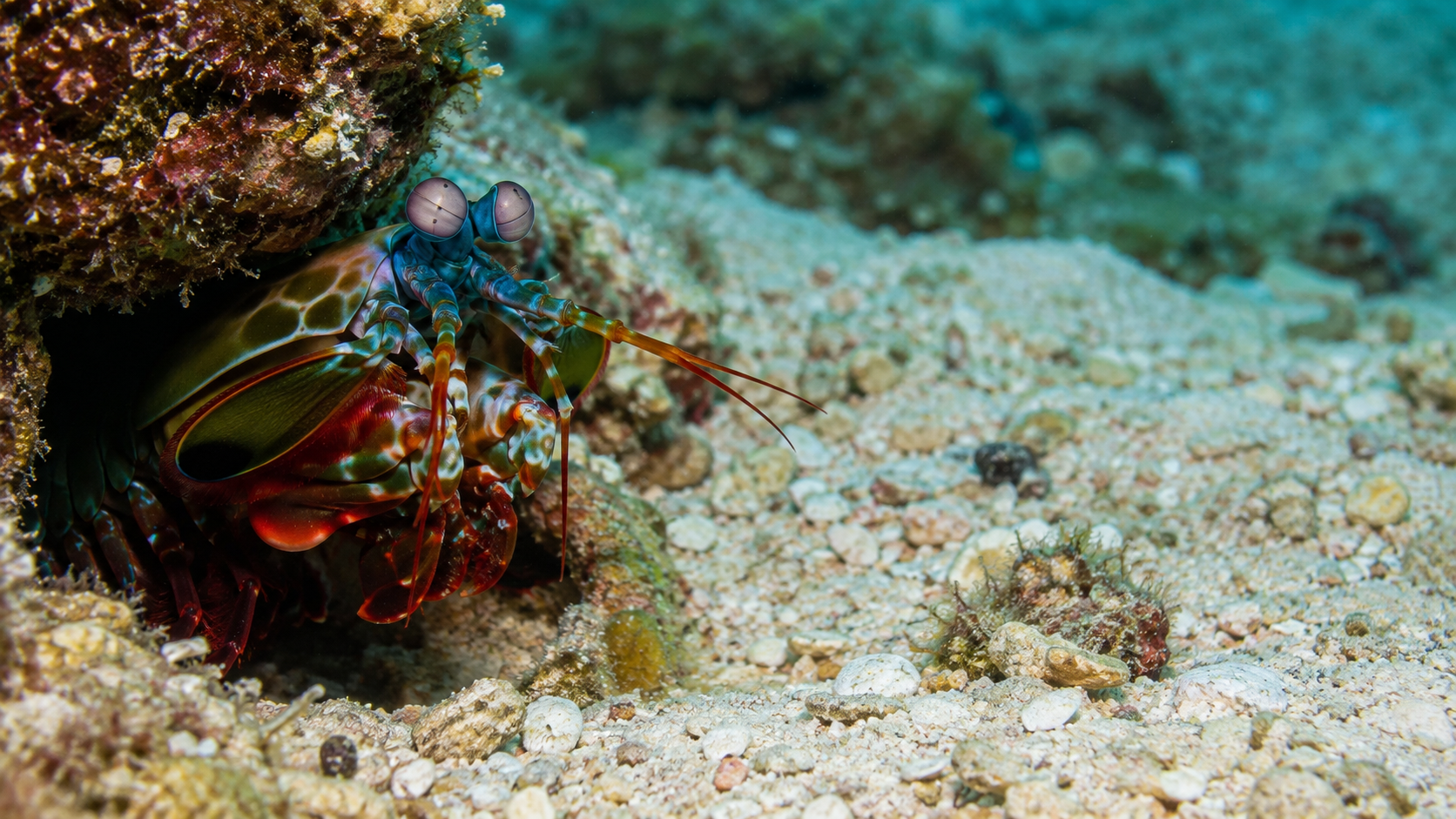
Mantis Shrimp: The Formidable Marine Predators
Mantis Shrimp, also known as Stomatopods, are one of the most fascinating and formidable marine predators found in tropical and subtropical waters around the world. With over 400 species, they are a diverse group of crustaceans that have captivated the attention of marine biologists, aquarium hobbyists, and the general public alike.
Quick Reference Table
| Characteristic | Description |
|---|---|
| Scientific Name | Order Stomatopoda |
| Common Name | Mantis Shrimp |
| Class | Malacostraca |
| Order | Stomatopoda |
| Family | Various (e.g., Squillidae, Gonodactylidae) |
| Size | 1-30 cm (0.4-12 in) |
| Lifespan | Up to 20 years in captivity |
Taxonomy and Identification
Mantis Shrimp belong to the order Stomatopoda, which is a part of the class Malacostraca. They are closely related to crabs, lobsters, and crayfish, but are distinct in their morphology and behavior. There are over 400 species of Mantis Shrimp, which are divided into several families, including Squillidae and Gonodactylidae.
Mantis Shrimp are characterized by their elongated bodies, which are typically green, brown, or gray in color. They have a distinctive pair of claws, known as raptorial appendages, which they use to capture prey and defend themselves. These claws are capable of accelerating at the speed of a .22 caliber bullet, making them one of the fastest and most powerful appendages in the animal kingdom.
Natural Habitat and Distribution
Mantis Shrimp are found in tropical and subtropical waters around the world, including the Atlantic, Pacific, and Indian Oceans. They inhabit a variety of habitats, including coral reefs, rocky crevices, and muddy or sandy substrates. Some species are specialized to live in specific environments, such as sea grass beds or estuaries.
Mantis Shrimp are generally found in shallow waters, typically between 1-100 meters (3-330 feet) in depth. However, some species have been known to venture into deeper waters, up to 400 meters (1,312 feet) or more.
Behaviour
Mantis Shrimp are formidable predators that feed on a wide variety of prey, including small fish, crustaceans, mollusks, and other invertebrates. They are ambush predators, using their speed and powerful claws to capture unsuspecting prey. Some species are also known to be active hunters, chasing down prey over short distances.
Mantis Shrimp are also known for their complex social behavior. Some species are solitary, while others are found in pairs or small groups. They are capable of communicating with each other using a variety of signals, including visual displays, sound production, and chemical cues.
Diet
Mantis Shrimp are carnivores, feeding on a wide variety of prey. Their diet typically consists of small fish, crustaceans, mollusks, and other invertebrates. Some species are specialized to feed on specific prey, such as sea stars or sea urchins.
In captivity, Mantis Shrimp are typically fed a diet of frozen or live meaty foods, such as brine shrimp, mysis shrimp, or small pieces of fish. They may also be fed commercial pellets or sticks specifically formulated for marine predators.
Care or Responsible Observation
Mantis Shrimp are popular among aquarium hobbyists due to their unique appearance and fascinating behavior. However, they are challenging to care for and require a specialized aquarium setup. A secure, escape-proof aquarium with a deep sand bed and plenty of hiding places is essential. Water quality must be excellent, with stable parameters and regular water changes.
Observing Mantis Shrimp in their natural habitat can be a thrilling experience. However, it is essential to do so responsibly and without disturbing their environment. Snorkeling or scuba diving in areas known to be inhabited by Mantis Shrimp can provide a unique opportunity to observe these fascinating creatures up close.
Health, Welfare, and Conservation
Mantis Shrimp are generally hardy animals, but they can be susceptible to certain health issues, such as parasites or bacterial infections. Regular water changes, a balanced diet, and a stress-free environment can help prevent these issues.
Some species of Mantis Shrimp are threatened or endangered due to habitat destruction, overfishing, or the aquarium trade. It is essential to support conservation efforts and choose captive-bred individuals for aquariums to reduce the demand on wild populations.
Practical Takeaways
- Mantis Shrimp are formidable marine predators found in tropical and subtropical waters.
- They are carnivores, feeding on a wide variety of prey.
- Mantis Shrimp are challenging to care for and require a specialized aquarium setup.
- Observing Mantis Shrimp in their natural habitat can be a thrilling experience, but it is essential to do so responsibly.
What is the average lifespan of a Mantis Shrimp in captivity?
Up to 20 years.
How often should I feed my Mantis Shrimp?
2-3 times a week, depending on the species and size of the shrimp.
Can I keep multiple Mantis Shrimp together in the same aquarium?
No, Mantis Shrimp are generally solitary and may fight with each other.
How can I provide a suitable environment for my Mantis Shrimp?
A secure, escape-proof aquarium with a deep sand bed and plenty of hiding places is essential.
- National Oceanic and Atmospheric Administration. (2022). Mantis Shrimp.
- Smithsonian Institution. (2022). Stomatopoda.
- World Register of Marine Species. (2022). Stomatopoda.
Please note that the information provided is for educational purposes only and is not intended to be used for veterinary diagnosis or treatment. If you have concerns about the health or well-being of your Mantis Shrimp, please consult a qualified aquarium professional or veterinarian.
Life Cycle and Development
Mantis Shrimp undergo a complex life cycle, consisting of several stages of development. The female Mantis Shrimp lays eggs, which are typically yellow or orange in color, and can range in number from a few dozen to several hundred, depending on the species. The eggs are usually attached to a substrate, such as a rock or a piece of coral, using a sticky substance.
After several weeks, the eggs hatch into larvae, which drift in the water column, feeding on small plankton and other tiny organisms. During this stage, the larvae undergo a series of molts, shedding their skin as they grow and develop. As they mature, the larvae begin to settle on a substrate, where they undergo metamorphosis, transforming into juvenile Mantis Shrimp.
The juvenile Mantis Shrimp, also known as “nymphs,” resemble small versions of the adults, but lack the distinctive claws and coloration. They continue to molt and grow, eventually developing into sub-adults, which are nearly indistinguishable from adults. The entire process, from egg to adult, can take several months to several years, depending on the species and environmental factors.
Communication and Senses
Mantis Shrimp possess a range of senses, including vision, olfaction, and mechanoreception, which they use to communicate and navigate their environment. They have highly developed eyes, capable of seeing up to 12 different colors and perceiving polarized light, which helps them detect the presence of other animals.
Mantis Shrimp also use chemical cues to communicate, releasing pheromones to signal aggression, courtship, or territorial behavior. They have a highly developed sense of smell, which they use to detect prey and predators. In addition, they possess mechanoreceptors, which allow them to detect vibrations in the water, helping them locate prey or detect potential threats.
Seasonal Variation and Ecological Relationships
Mantis Shrimp are found in tropical and subtropical waters around the world, where they play a crucial role in maintaining the balance of their ecosystems. They are both predators and prey, feeding on small fish, crustaceans, and mollusks, while being preyed upon by larger fish, octopuses, and other marine animals.
In some regions, Mantis Shrimp are known to form symbiotic relationships with other animals, such as sea anemones and corals. They will often live among the tentacles of these animals, using them for shelter and protection, while also providing them with nutrients through their waste.
Mantis Shrimp are also important indicators of the health of their ecosystems. Changes in their populations or behavior can signal broader environmental issues, such as pollution, overfishing, or climate change.
Research and Conservation
Mantis Shrimp have been the subject of extensive research, particularly in the fields of marine biology and ecology. Scientists have studied their behavior, physiology, and ecology, gaining insights into their role in maintaining the balance of their ecosystems.
However, many species of Mantis Shrimp are threatened by habitat destruction, overfishing, and climate change. As a result, conservation efforts are underway to protect these animals and their habitats. Marine protected areas have been established in some regions, providing a safe haven for Mantis Shrimp and other marine animals.
In addition, researchers are working to develop sustainable aquaculture practices for Mantis Shrimp, reducing the impact of the aquarium trade on wild populations.
Responsible Enrichment and Ethical Considerations
For those interested in keeping Mantis Shrimp in captivity, it is essential to provide them with a suitable environment, including a varied and nutritious diet, plenty of hiding places, and a large enough tank to accommodate their territorial behavior.
However, it is also important to consider the ethical implications of keeping these animals in captivity. Mantis Shrimp are wild animals, with complex social and spatial needs, and may not thrive in a home aquarium.
In addition, the aquarium trade can have a significant impact on wild populations, particularly if animals are collected unsustainably or without proper permits. As a result, it is essential to do thorough research and ensure that any Mantis Shrimp kept in captivity are sourced responsibly and with minimal impact on the environment.


