Natural History
The Huntsman spider, also known as the Wood Spider or Giant Crab Spider, is a large, fast-moving arachnid belonging to the family Sparassidae. They are found in tropical and subtropical regions around the world, including Australia, Asia, Africa, and the Americas.
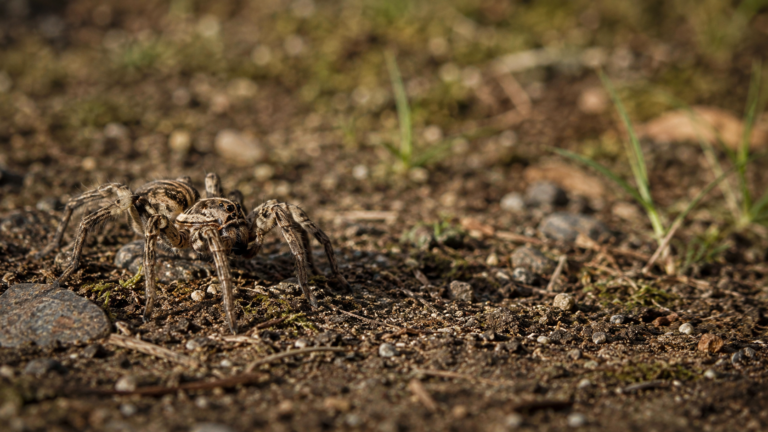
These spiders are characterized by their elongated bodies, long, thin legs, and impressive speed. They are generally brown or gray in color, with some species displaying distinctive markings or patterns. Huntsman spiders are nocturnal, spending most of their time hiding in dark, sheltered areas during the day and emerging at night to hunt for prey.
Habitat and Distribution
Huntsman spiders are found in a variety of habitats, including forests, grasslands, and deserts. They are often associated with trees, rocks, and other vertical surfaces, where they can be found hiding in crevices or under loose bark.
These spiders are widely distributed across the globe, with different species found in different regions. Some species, such as the Giant Huntsman Spider (Sparassidae: Heteropoda maxima), are found in Southeast Asia, while others, such as the Huntsman Spider (Sparassidae: Delena spp.), are found in Australia and New Zealand.
Diet and Foraging
Huntsman spiders are predators that feed on a variety of small insects, including flies, beetles, and moths. They are active hunters, using their speed and agility to chase down prey.
These spiders do not use webs to catch prey, instead relying on their powerful legs and sharp fangs to capture and subdue their victims. They are also known to scavenge for food, feeding on dead insects and other small animals.
Behavior and Social Structure
Huntsman spiders are generally solitary animals, only coming together to mate. Female Huntsman spiders are known to be aggressive and territorial, defending their territory from other females and potential predators.
Male Huntsman spiders, on the other hand, are often more docile and will often wander into female territories in search of a mate. After mating, the male will often leave the female’s territory and may even be eaten by the female.
Reproduction and Life Cycle
Huntsman spiders reproduce through a process called oviparity, in which the female lays eggs in a protected location. The female will often guard the eggs until they hatch, at which point the young spiders will disperse and begin their own lives.
The life cycle of a Huntsman spider typically consists of several stages, including egg, spiderling, and adult. The spiderling stage can last several weeks to several months, during which time the young spider will molt several times as it grows and develops.
| Scientific Name | Common Name | Body Length | Leg Span |
|---|---|---|---|
| Sparassidae: Heteropoda maxima | Giant Huntsman Spider | Up to 2.5 cm | Up to 25 cm |
| Sparassidae: Delena spp. | Huntsman Spider | Up to 1.5 cm | Up to 15 cm |
Public Safety and Responsible Observation
Despite their fearsome appearance, Huntsman spiders are generally harmless to humans. They are not venomous and will only bite in self-defense.
However, it is still important to exercise caution when interacting with Huntsman spiders. They are wild animals and should be treated with respect and care. If you encounter a Huntsman spider in the wild, it is best to observe it from a safe distance and not attempt to touch or handle it.
Conservation Status
Huntsman spiders are not considered to be a threatened group, although some species may be affected by habitat loss and fragmentation.
It is still important to take steps to conserve and protect Huntsman spider populations, including preserving natural habitats and reducing pesticide use.
What do Huntsman spiders eat?
Huntsman spiders are predators that feed on a variety of small insects, including flies, beetles, and moths.
Are Huntsman spiders venomous?
No, Huntsman spiders are not venomous and will only bite in self-defense.
How big can Huntsman spiders get?
Huntsman spiders can grow up to 2.5 cm in body length and up to 25 cm in leg span.
Are Huntsman spiders social animals?
No, Huntsman spiders are generally solitary animals, only coming together to mate.
- Australian Museum. (n.d.). Huntsman Spiders. Retrieved from https://australian.museum/learn/animals/spiders/huntsman-spiders
- Smith, A. (2019). Sparassidae. In Encyclopedia of Insects (pp. 934-936). Academic Press.
- World Spider Catalog. (n.d.). Sparassidae. Retrieved from http://www.wsc.nmbe.ch/family/342
Please note that Huntsman spiders are wild animals and should be treated with respect and care. If you have any concerns about a Huntsman spider or any other animal, please consult a qualified veterinarian or animal care professional.
Communication and Senses
Huntsman spiders rely on a combination of senses to navigate their environment, find prey, and communicate with other spiders. They have excellent eyesight, with some species having up to eight eyes that are capable of detecting movement and changes in light. However, their eyes are not capable of forming images, and they are thought to be more sensitive to movement and vibrations.
In addition to their eyesight, Huntsman spiders also use their sensitive pedipalps to detect vibrations and smells. Their pedipalps are appendages that resemble small claws, and are used to taste and feel their surroundings. They are also thought to play a role in the spider’s ability to detect pheromones, or chemical signals, that are used for communication.
Huntsman spiders use a variety of methods to communicate with other spiders, including vibrations, pheromones, and visual cues. For example, males will often perform complex courtship displays to attract females, involving vibrations, posturing, and visual displays. Female Huntsman spiders will also use pheromones to signal their receptiveness to mating.
Seasonal Variation
Huntsman spiders are adapted to survive in a variety of environments, and their behavior and physiology can vary depending on the season. In temperate regions, Huntsman spiders will often enter a state of dormancy during the winter months, hiding in protected areas such as under rocks or in hollow logs. During this time, their metabolism slows down, and they may not eat or drink for several months.
In tropical regions, Huntsman spiders may not experience a period of dormancy, and will continue to be active year-round. However, they may still exhibit changes in behavior and physiology in response to changes in temperature and humidity. For example, some species of Huntsman spiders may be more active during the wet season, when insects are more abundant.
Ecological Relationships
Huntsman spiders play an important role in their ecosystems, serving as both predators and prey. They are an important food source for many animals, including birds, lizards, and other spiders. They are also important predators, feeding on a wide range of insects and other small arthropods.
Huntsman spiders have also been known to form symbiotic relationships with other animals. For example, some species of Huntsman spiders have been found to live in association with ants, which provide them with protection and food in exchange for the spider’s help in controlling insect pests.
Research
Huntsman spiders have been the subject of scientific research in a variety of fields, including ecology, behavior, and physiology. Scientists have studied their unique characteristics, such as their speed and agility, in order to develop new technologies and materials.
For example, researchers have studied the properties of Huntsman spider silk, which is known for its exceptional strength and elasticity. This research has led to the development of new materials and technologies, such as biodegradable plastics and medical implants.
Responsible Enrichment
Huntsman spiders are popular pets, and many people keep them in captivity. However, it is essential to provide these spiders with a suitable environment and proper care. This includes providing a large enough enclosure with adequate ventilation, a heat source, and a varied diet.
It is also important to handle Huntsman spiders gently and carefully, as they can be injured easily. It is also essential to research the specific needs of the species you are keeping, as some may have unique requirements.
Ethical and Legal Considerations
Huntsman spiders are not typically considered to be a threatened or endangered group, and many species are not protected by laws or regulations. However, it is still essential to consider the ethical implications of keeping these spiders in captivity.
For example, many Huntsman spiders are wild-caught, and their capture can have negative impacts on local ecosystems. It is essential to ensure that any spiders you keep are captive-bred, and that you are not contributing to the decline of wild populations.
It is also essential to consider the welfare of the spider, and to ensure that you are providing it with a suitable environment and proper care. This includes providing adequate space, a varied diet, and proper handling and care.
Adaptations and Defensive Mechanisms
Huntsman spiders have evolved several adaptations to aid in their survival and success. One of their most notable features is their impressive leg span, which allows them to move quickly and cover great distances in pursuit of prey or to evade predators. Their long, thin legs also enable them to fit into narrow crevices and under loose bark, providing them with shelter and protection.
In addition to their physical adaptations, Huntsman spiders have also developed a range of defensive mechanisms to deter predators. One such mechanism is their ability to release a foul-tasting fluid from their abdomen when threatened. This fluid, often referred to as a “defensive secretion,” is designed to deter predators and can be quite effective in protecting the spider from harm.
Another defensive strategy employed by Huntsman spiders is their ability to vibrate their webs or surrounding surfaces when threatened. This vibration, often referred to as “web buzzing,” can be used to deter predators or even attract prey. By vibrating their webs, Huntsman spiders can create a complex series of vibrations that can be felt by other animals, potentially warning them of the spider’s presence.
Interesting Behaviors and Abilities
Huntsman spiders are also known for their interesting behaviors and abilities. One such behavior is their tendency to “ballooning,” where they release a long thread of silk into the air and use it to carry themselves away from danger. This behavior is often seen in young or injured spiders, and can be an effective means of escape.
Another interesting ability of Huntsman spiders is their capacity for learning and problem-solving. Studies have shown that these spiders are able to learn and remember the location of food sources, as well as navigate complex webs and environments. This level of cognitive ability is rare in the arachnid world, and highlights the impressive adaptability and intelligence of Huntsman spiders.
Overall, the unique combination of physical adaptations, defensive mechanisms, and interesting behaviors make Huntsman spiders a fascinating and formidable arachnid species.