Natural History
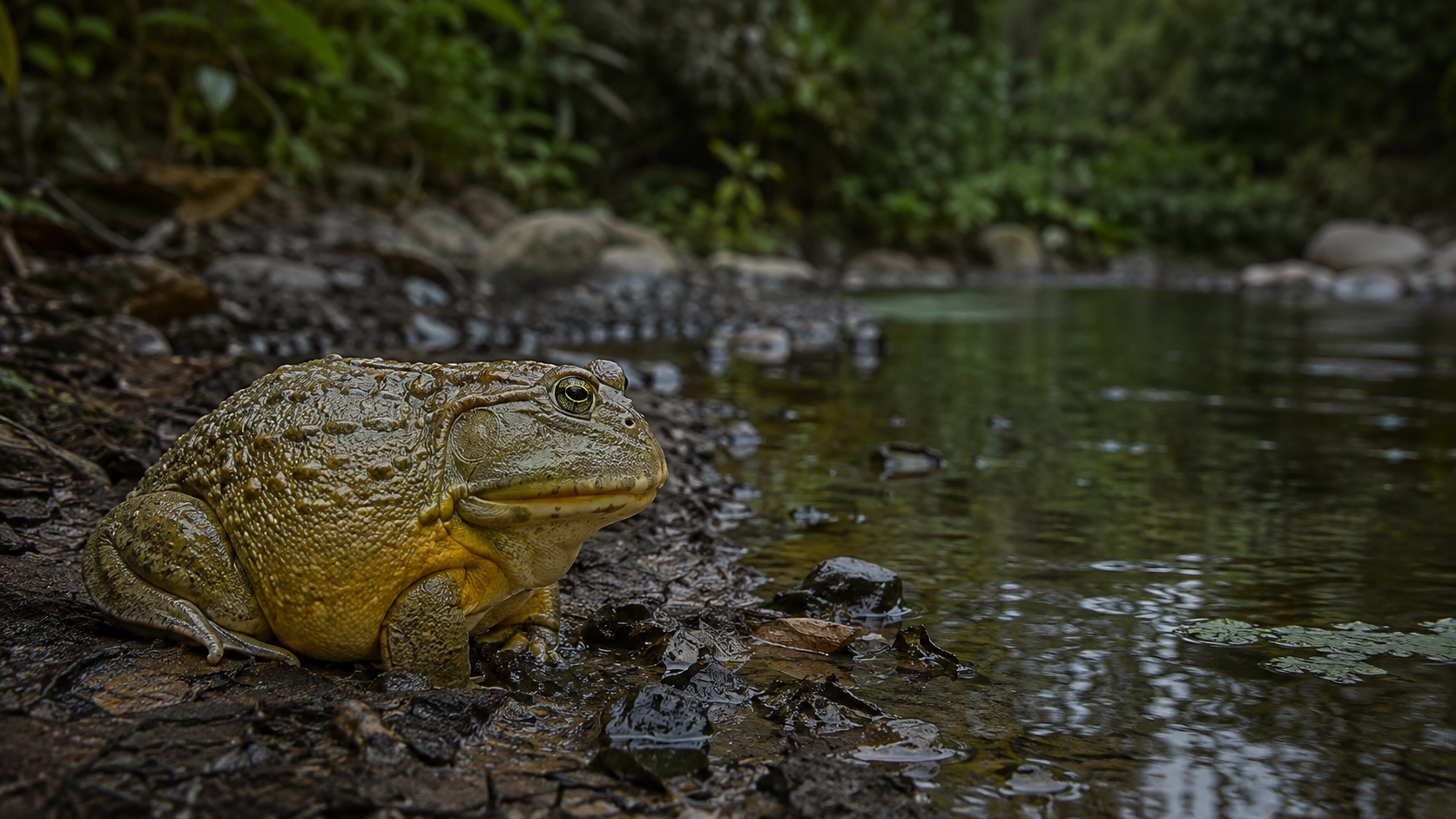
The Goliath Bullfrog (Conraua goliath) is the largest frog species native to Africa, found in the rainforests and wetlands of West and Central Africa. They inhabit areas with slow-moving water, such as swamps, marshes, and ponds.
These massive frogs can grow up to 12 inches (30 cm) in length and weigh up to 7.9 pounds (3.6 kg), making them one of the largest frogs in the world. Their distinctive greenish-brown coloration helps them blend in with their surroundings.
Habitat and Distribution
Goliath Bullfrogs are found in the wild in countries such as Cameroon, Equatorial Guinea, and Gabon. They inhabit areas with high humidity and temperatures ranging from 75°F to 90°F (24°C to 32°C).
Their habitats are often threatened by deforestation, mining, and other human activities, which can lead to the destruction of their habitats and the decline of their populations.
Diet and Foraging
Goliath Bullfrogs are carnivorous, feeding on a variety of prey including insects, fish, and even small mammals. They are opportunistic feeders, using their powerful jaws and sharp teeth to capture their prey.
In the wild, they play an important role in controlling insect populations, helping to maintain the balance of their ecosystems.
Conservation Status
The Goliath Bullfrog is listed as Endangered on the IUCN Red List, due to the decline of their populations and the degradation of their habitats.
Conservation efforts are underway to protect their habitats and reduce the impact of human activities on their populations.
Public Safety
Goliath Bullfrogs are wild animals and should be treated with caution. They are not typically aggressive, but can defend themselves if threatened or handled improperly.
It is essential to exercise caution when approaching or handling these frogs, as they can carry diseases and parasites that can be transmitted to humans.
| Scientific Name | Conraua goliath |
|---|---|
| Length | Up to 12 inches (30 cm) |
| Weight | Up to 7.9 pounds (3.6 kg) |
| Habitat | Rainforests and wetlands |
| Diet | Carnivorous |
| Conservation Status | Endangered |
Responsible Observation
If you are interested in observing Goliath Bullfrogs in their natural habitat, it is essential to do so responsibly and with caution.
Join a guided tour or work with a reputable conservation organization to ensure that you are not disrupting their habitats or causing harm to the frogs.
What is the average lifespan of a Goliath Bullfrog?
The average lifespan of a Goliath Bullfrog is around 10-15 years in the wild.
Are Goliath Bullfrogs good pets?
No, Goliath Bullfrogs are not suitable as pets. They are wild animals that require specialized care and housing that is difficult to replicate in a home environment.
What is the main threat to Goliath Bullfrog populations?
The main threat to Goliath Bullfrog populations is the destruction of their habitats due to deforestation and other human activities.
Can Goliath Bullfrogs be found in captivity?
Yes, some zoos and conservation organizations have Goliath Bullfrogs in captivity, where they are used for education and conservation efforts.
- International Union for Conservation of Nature (IUCN). (2022). Conraua goliath.
- National Geographic. (2022). Goliath Frog.
- World Wildlife Fund. (2022). Goliath Bullfrog.
Important Notice: If you are concerned about the health or well-being of a Goliath Bullfrog, please consult a veterinarian or a qualified wildlife expert. Never attempt to handle or care for a wild animal without proper training and equipment.
Life Cycle and Development
The life cycle of the Goliath Bullfrog is complex and fascinating. These frogs undergo a process called metamorphosis, where they transform from aquatic eggs to terrestrial adults. The female Goliath Bullfrog lays her eggs in a protected area, such as a burrow or under a rock, and the eggs hatch into tadpoles after several days. The tadpoles are aquatic and feed on algae and small invertebrates. As they grow, they undergo a series of molts, eventually developing limbs and losing their gills.
After several weeks, the tadpoles undergo metamorphosis, transforming into juvenile frogs. During this stage, they are vulnerable to predators and environmental stressors. The juveniles will continue to grow and develop, eventually reaching adulthood after several months. The lifespan of a Goliath Bullfrog in the wild is estimated to be around 10-15 years, although some individuals have been known to live up to 20 years in captivity.
Communication and Senses
Goliath Bullfrogs are skilled communicators, using a variety of vocalizations, visual displays, and chemical signals to convey information. Males will often produce deep, resonant calls to establish their territory and attract females. These calls can be heard for long distances and are an important way for males to advertise their presence.
In addition to vocalizations, Goliath Bullfrogs also use visual displays to communicate. Males will often perform complex courtship displays, involving intricate postures and movements, to attract females. Females will also use visual cues to select a mate, choosing males with the most impressive displays.
Goliath Bullfrogs also possess a keen sense of smell, which they use to detect prey and predators. Their sense of hearing is also highly developed, allowing them to detect the calls of other frogs and potential threats. Their eyes are relatively small, but they are sensitive to movement and can detect even slight changes in their surroundings.
Seasonal Variation and Ecological Relationships
Goliath Bullfrogs are adapted to the seasonal changes in their rainforest habitat. During the wet season, the frogs are more active, taking advantage of the abundant food and water. They will often move into areas with standing water, where they can feed on aquatic prey.
During the dry season, the frogs will often burrow into the soil or hide in protected areas, such as under rocks or logs. This behavior helps them conserve energy and avoid desiccation. They will also undergo a period of dormancy, known as estivation, during which their metabolism slows down and they enter a state of torpor.
Goliath Bullfrogs play an important role in their ecosystem, serving as both predators and prey. They feed on a variety of invertebrates, helping to regulate their populations. In turn, they are preyed upon by larger animals, such as snakes, birds, and mammals.
Research and Conservation Efforts
Goliath Bullfrogs are an important subject of research, with scientists studying their behavior, ecology, and conservation. One area of focus is the impact of habitat destruction and fragmentation on Goliath Bullfrog populations. Researchers are working to understand how these changes affect the frogs’ ability to survive and thrive.
Conservation efforts are also underway to protect Goliath Bullfrog habitats and populations. National parks and protected areas have been established in countries such as Cameroon and Gabon, providing a safe haven for the frogs. Additionally, organizations are working with local communities to promote sustainable land-use practices and reduce the impact of human activities on Goliath Bullfrog habitats.
Responsible Enrichment and Captivity
Goliath Bullfrogs are popular among frog enthusiasts and are often kept in captivity. However, it is essential to provide these animals with proper care and enrichment. A large, well-ventilated enclosure with a heat source and UVB lighting is essential for maintaining the frogs’ health.
A varied diet that includes a mix of live insects and other invertebrates is also crucial. Providing hiding places, such as rocks and plants, can help reduce stress and promote natural behavior. It is also essential to handle the frogs gently and infrequently, as excessive handling can cause stress and injury.
Ethical and Legal Considerations
The capture and trade of Goliath Bullfrogs are regulated by international law, and it is essential to ensure that any frogs kept in captivity are obtained from reputable sources. The Convention on International Trade in Endangered Species of Wild Fauna and Flora (CITES) regulates the trade of Goliath Bullfrogs, and it is essential to comply with local and national laws regarding their capture and possession.
It is also essential to consider the welfare of the frogs and the impact of captivity on their behavior and well-being. Providing proper care and enrichment is crucial, and it is essential to prioritize the frogs’ needs above any personal interests.
Adaptations and Specializations
Goliath Bullfrogs have several adaptations that enable them to thrive in their environment. Their large size and powerful legs allow them to jump long distances and catch prey quickly. Their webbed feet also make them excellent swimmers, enabling them to catch fish and other aquatic prey. Their skin is smooth and slimy, which helps to reduce friction and allow them to move quickly through the water.
Their eyes and nostrils are located on top of their head, allowing them to remain mostly submerged in the water while still being able to see and breathe. This is an adaptation to their aquatic environment, where they spend most of their time. Their large, round eyes are also sensitive to movement, helping them to detect prey in the water.
Threats and Conflicts
Goliath Bullfrogs are threatened by several human activities, including deforestation, mining, and the introduction of non-native species. The destruction of their habitats due to deforestation and mining can lead to the decline of their populations and even local extinctions. The introduction of non-native species, such as the American Bullfrog, can also lead to competition for resources and habitat, further threatening the Goliath Bullfrog.
In addition, Goliath Bullfrogs are also hunted for food and the pet trade, which can lead to population declines. In some areas, they are considered a delicacy and are hunted for their meat. In other areas, they are collected for the pet trade, which can lead to population declines and even local extinctions.
Ecological Role
Goliath Bullfrogs play an important ecological role in their environment. They are both predators and prey, and their presence helps to regulate the populations of other animals in their ecosystem. They feed on insects, fish, and small mammals, helping to keep their populations under control. They are also an important food source for other animals, such as birds, snakes, and other predators.
Their presence also helps to maintain the balance of their ecosystem. They help to regulate the populations of algae and aquatic plants, which can help to maintain the quality of the water. They also help to maintain the structure of their ecosystem, by creating burrows and holes that provide habitat for other animals.
Cultural Significance
Goliath Bullfrogs have cultural significance in some African countries. In some areas, they are considered a delicacy and are hunted for food. In other areas, they are considered a symbol of good luck and prosperity. In some cultures, they are also considered a source of traditional medicine, and are used to treat various ailments.
In some areas, Goliath Bullfrogs are also considered an important part of the ecosystem, and are protected by local laws and regulations. In other areas, they are considered a source of income, and are collected for the pet trade. Overall, Goliath Bullfrogs have significant cultural and economic importance in some African countries.