Introduction
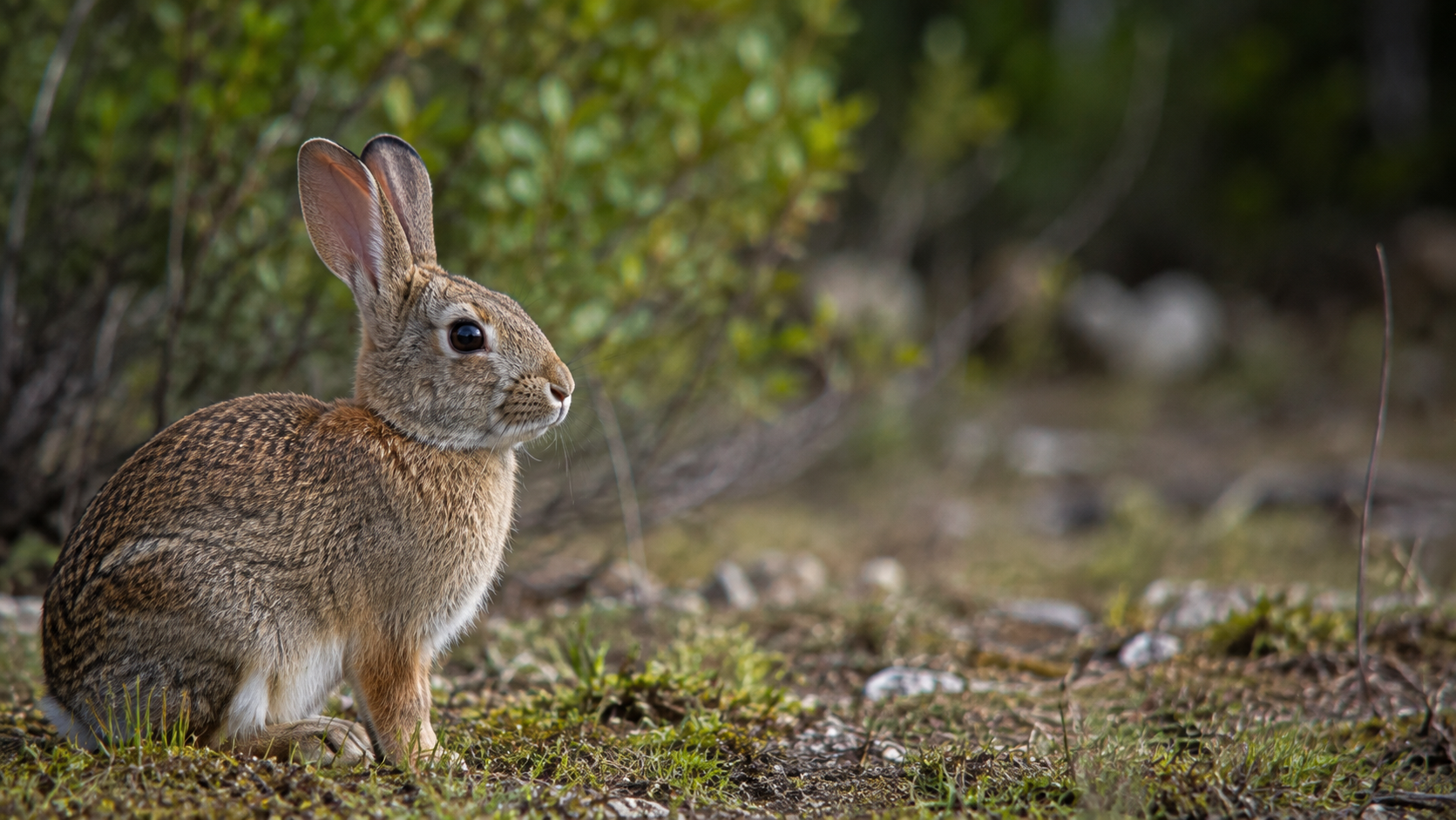
The Cottontail rabbit (Sylvilagus floridanus) is a wild rabbit species native to North America. It is a member of the family Leporidae and is also known as the Eastern Cottontail or Florida Cottontail.
Physical Characteristics
The Cottontail rabbit is a medium-sized rabbit with a stocky body, long ears, and a short tail. It has a brownish-gray coat with a white underside and a distinctive white stripe on its forehead. Adults typically weigh between 2-4 pounds (0.9-1.8 kg) and measure 15-19 inches (38-48 cm) in length.
Habitat and Distribution
Cottontail rabbits are found in a variety of habitats, including forests, grasslands, and wetlands. They are widely distributed throughout North America, from Canada to Central America, and are common in many parts of the United States.
Diet and Foraging
Cottontail rabbits are herbivores and feed on a variety of plants, including grasses, leaves, and fruits. They are also known to eat bark, twigs, and other woody vegetation.
Behavior and Social Structure
Cottontail rabbits are solitary animals and have a large home range, which they mark with scent and feces. They are also known to be crepuscular, meaning they are most active at dawn and dusk.
Reproduction and Development
Cottontail rabbits breed throughout the year, with a gestation period of approximately 28 days. Females typically give birth to 2-4 young per litter, which are born blind and helpless. The young rabbits develop quickly, and are weaned after about 4-5 weeks.
Conservation Status
The Cottontail rabbit is not considered to be a threatened species, although its populations are declining in some parts of its range due to habitat loss and fragmentation.
Interesting Facts
Cottontail rabbits are known for their ability to freeze in place when threatened, making them difficult to spot. They are also able to run quickly, reaching speeds of up to 18 miles per hour (29 km/h).
| Scientific Name | Common Name | Family | Order |
|---|---|---|---|
| Sylvilagus floridanus | Cottontail rabbit | Leporidae | Lagomorpha |
FAQ
What do Cottontail rabbits eat?
Cottontail rabbits are herbivores and feed on a variety of plants, including grasses, leaves, and fruits.
How long do Cottontail rabbits live?
Cottontail rabbits typically live for 2-5 years in the wild, although some individuals may live up to 10 years in captivity.
Are Cottontail rabbits good pets?
No, Cottontail rabbits are wild animals and are not well-suited as pets. They have complex social and spatial needs that cannot be met in a home environment.
How can I help protect Cottontail rabbits?
You can help protect Cottontail rabbits by supporting conservation efforts, such as habitat preservation and restoration, and by reducing your impact on the environment.
Sources
- National Geographic. (2022). Cottontail Rabbit.
- Smithsonian National Museum of Natural History. (2022). Sylvilagus floridanus.
- International Union for Conservation of Nature. (2022). Sylvilagus floridanus.
Please note that Cottontail rabbits are wild animals and should not be handled or kept as pets. If you have any concerns about the health or well-being of a Cottontail rabbit, please contact a local wildlife expert or veterinarian for advice.
Life Cycle and Development
Cottontail rabbits have a relatively short life cycle, with a gestation period of approximately 28-30 days. Female Cottontail rabbits can breed year-round, but the peak breeding season typically occurs in the spring and early summer. A female Cottontail rabbit can have up to 7 litters per year, with an average of 2-4 young per litter. The young rabbits, called kits, are born blind and helpless, but develop quickly. They are weaned after about 4-5 weeks and become independent after about 6-8 weeks.
Communication and Senses
Cottontail rabbits have a keen sense of smell and hearing, which they use to detect predators and find food. They also have excellent eyesight, which helps them to detect movement and changes in their environment. Cottontail rabbits communicate with each other through a variety of vocalizations, including grunts, squeaks, and whistles. They also use body language, such as ear position and posture, to convey information and express emotions.
Seasonal Variation
Cottontail rabbits adapt to changing seasons by adjusting their behavior and physiology. In the winter, they may experience a decrease in body weight and a reduction in reproductive activity. They also change their diet to include more woody vegetation and bark, which is more abundant during the winter months. In the spring and summer, Cottontail rabbits are more active and breed more frequently, taking advantage of the abundant food and favorable weather conditions.
Ecological Relationships
Cottontail rabbits play an important role in their ecosystems as both prey and seed dispersers. They are an important food source for many predators, including hawks, owls, and foxes. They also help to disperse seeds through their droppings, which can contribute to the spread of plant species. Cottontail rabbits also compete with other herbivores, such as deer and squirrels, for food and resources.
Research and Conservation Efforts
Cottontail rabbits are an important species for research, particularly in the fields of ecology, behavior, and conservation. Studies have focused on their behavior, population dynamics, and habitat use, which have contributed to our understanding of their ecological role and conservation needs. Conservation efforts have focused on protecting and restoring habitats, as well as controlling populations of invasive species that prey on Cottontail rabbits.
Responsible Enrichment and Ethical Considerations
Cottontail rabbits are often kept as pets, but it is essential to consider the welfare and needs of these animals. Providing a suitable enclosure with adequate space, hiding places, and opportunities for exercise and socialization is crucial. It is also important to consider the ethics of keeping wild animals in captivity and to ensure that their needs are met. In the wild, Cottontail rabbits are an important part of their ecosystems, and it is essential to respect and protect their habitats and populations.
Adaptations and Survival Strategies
Cottontail rabbits have developed several adaptations and survival strategies to thrive in their environments. One of their most notable adaptations is their ability to freeze in place when threatened, relying on their camouflage to avoid detection. This behavior is often accompanied by a twitching of their nose and ears, which helps them to remain alert and aware of their surroundings.
In addition to their camouflage, Cottontail rabbits are also skilled at hiding and seeking shelter. They use dense vegetation, such as thickets and shrubs, to conceal themselves from predators, and will often dig complex burrows to escape danger. These burrows can be extensive, with multiple entrances and exits, and provide a safe haven for the rabbits to rest, hide, and raise their young.
Cottontail rabbits are also highly adaptable when it comes to their diet. While they prefer to feed on grasses, leaves, and fruits, they will eat a wide variety of plants, including bark, twigs, and other woody vegetation. This adaptability allows them to survive in a range of environments, from forests to grasslands, and makes them a highly resilient species.
Ecological Role and Impact
As herbivores, Cottontail rabbits play a crucial role in shaping their ecosystems. By feeding on plants, they help to disperse seeds, prune vegetation, and create pathways through dense undergrowth. This, in turn, can have a positive impact on other species, such as birds and small mammals, which rely on the rabbits’ activities to create habitat and find food.
However, Cottontail rabbits can also have a negative impact on their ecosystems. In areas where their populations are high, they can overgraze, leading to a decline in vegetation and a loss of biodiversity. This can have a ripple effect throughout the ecosystem, impacting other species that rely on the same plants for food and shelter.
Human Interaction and Impact
Cottontail rabbits have a long history of interaction with humans, dating back to the early days of European settlement in North America. They were highly valued for their meat, fur, and hides, and were often hunted for food and sport. Today, Cottontail rabbits are still hunted, although regulations are in place to ensure sustainable populations.
In addition to hunting, Cottontail rabbits are also impacted by human activities such as agriculture, urbanization, and habitat destruction. As natural habitats are converted into agricultural land or urban areas, Cottontail rabbit populations are often fragmented, leading to a decline in genetic diversity and an increased risk of extinction.
Research and Monitoring
Researchers and conservationists are working to better understand the ecology and behavior of Cottontail rabbits, with a focus on developing effective conservation strategies. Studies have been conducted on the rabbits’ diet, habitat use, and population dynamics, providing valuable insights into their ecological role and the impacts of human activities.
Monitoring programs are also in place to track Cottontail rabbit populations and identify areas where conservation efforts are needed. This information is used to inform management decisions, such as habitat restoration and hunting regulations, and to ensure the long-term sustainability of Cottontail rabbit populations.
Responsible Coexistence
As Cottontail rabbits continue to thrive in many parts of North America, it is essential to promote responsible coexistence between humans and these animals. This can be achieved through education and outreach programs, which raise awareness about the importance of conservation and the impacts of human activities on Cottontail rabbit populations.
Additionally, landowners and managers can take steps to create Cottontail rabbit-friendly habitats, such as planting native vegetation and creating corridors to connect fragmented populations. By working together, we can ensure the long-term survival of this iconic species and promote a healthy and balanced ecosystem.