
Natural History
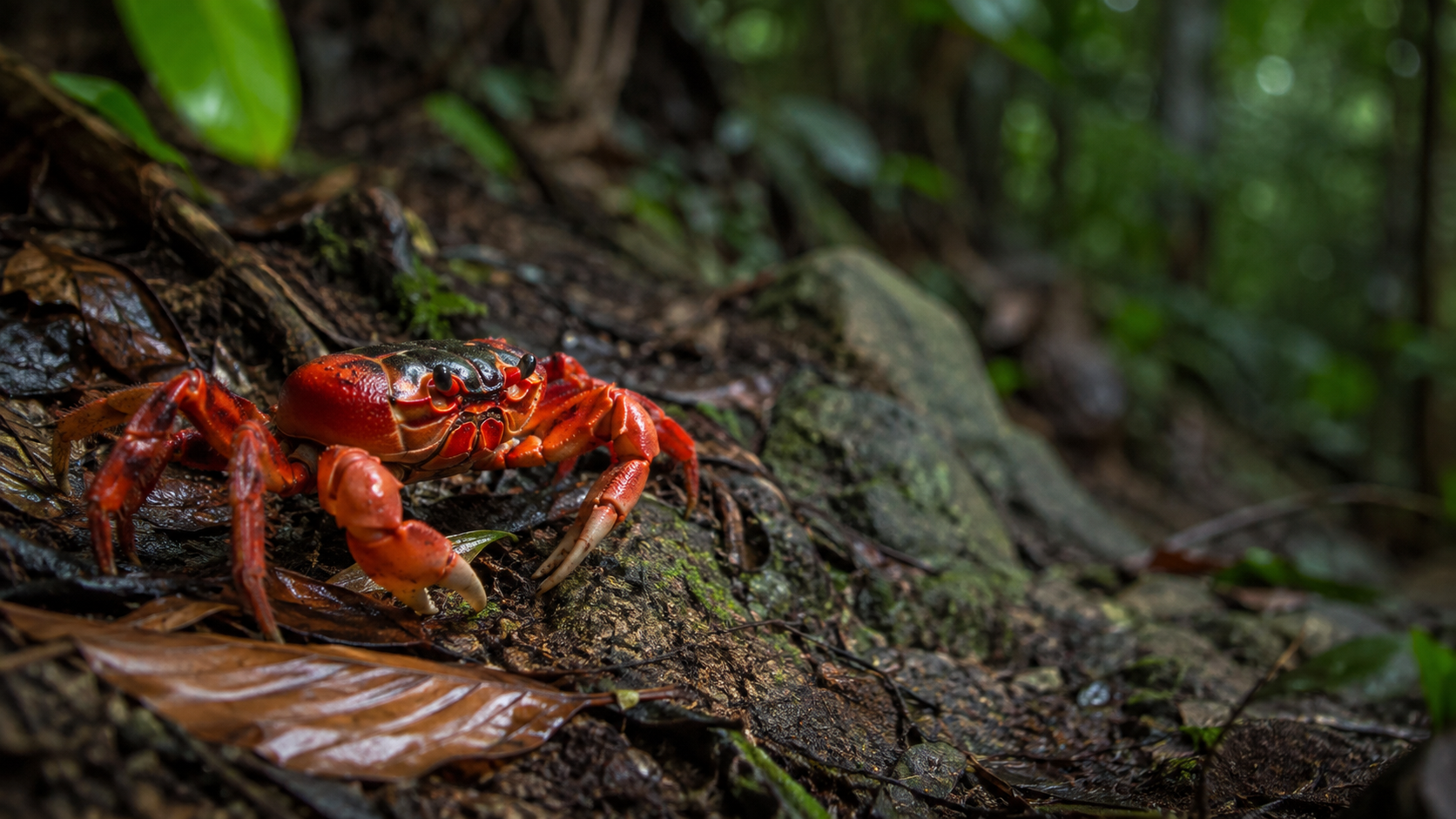
The Christmas Island Red Crab (Gecarcoidea natalis) is a large terrestrial crab native to Christmas Island, an Australian territory in the Indian Ocean. They are also known as the Christmas Island Crab or simply Red Crab.
These crabs are found in the island’s forests, grasslands, and coastal areas, and are known for their bright red color. They are herbivores, feeding on leaves, fruits, and flowers.
Physical Characteristics
The Christmas Island Red Crab is a large species of crab, with a carapace width of up to 11 cm (4.3 in) and a body length of up to 18 cm (7 in). They have a distinctive bright red color, with a more pale underside.
They have four pairs of walking legs, with the first pair modified as claws. The claws are used for defense, feeding, and other functions.
| Characteristic | Description |
|---|---|
| Carapace width | Up to 11 cm (4.3 in) |
| Body length | Up to 18 cm (7 in) |
| Color | Bright red, with pale underside |
| Diet | Herbivorous |
Conservation Status
The Christmas Island Red Crab is listed as Vulnerable on the IUCN Red List. The main threats to their population are habitat destruction, introduced species such as rats and cats, and climate change.
Conservation efforts are underway to protect the crabs and their habitat. These include the creation of protected areas, control of introduced species, and research into the impacts of climate change.
Public Safety
While the Christmas Island Red Crab is not typically aggressive, they can pinch if threatened or handled carelessly. It is recommended to exercise caution when approaching or handling these crabs.
It is also important to note that the crabs are protected by law, and any handling or removal of them from the wild is strictly prohibited.
Responsible Observation
Visitors to Christmas Island can observe the crabs in their natural habitat, but it is essential to do so responsibly. This includes keeping a safe distance, not touching or handling the crabs, and not removing them from the wild.
Guided tours are available, which provide an opportunity to learn about the crabs and their habitat while minimizing the risk of disturbance or harm.
What is the Christmas Island Red Crab’s conservation status?
The Christmas Island Red Crab is listed as Vulnerable on the IUCN Red List.
What are the main threats to the Christmas Island Red Crab population?
The main threats to the population are habitat destruction, introduced species such as rats and cats, and climate change.
Can I handle or remove Christmas Island Red Crabs from the wild?
No, it is strictly prohibited to handle or remove the crabs from the wild, as they are protected by law.
How can I observe Christmas Island Red Crabs responsibly?
Visitors can observe the crabs in their natural habitat on guided tours, keeping a safe distance and not touching or handling the crabs.
- Australian Government Department of the Environment and Energy. (2020). Christmas Island Red Crab.
- International Union for Conservation of Nature. (2020). Gecarcoidea natalis.
- Christmas Island National Park. (n.d.). Christmas Island Red Crab.
Please note that the information provided is for educational purposes only and should not be used as a substitute for veterinary advice. If you have any concerns about the health or well-being of Christmas Island Red Crabs, please consult a qualified veterinarian or conservation expert.
Life Cycle and Development
The Christmas Island Red Crab has a complex life cycle that involves several stages of development. The female crab lays her eggs in burrows on land, typically during the wet season, and the eggs hatch into tiny larvae after about two weeks. The larvae then go through a series of molts as they grow and develop, eventually reaching the megalopa stage. At this stage, they are still aquatic and drift in the ocean currents, feeding on small plankton and algae.
After several weeks, the megalopae metamorphose into small crabs, which then migrate to the shore and begin their terrestrial life. The young crabs, called juveniles, go through a series of molts as they grow and develop, eventually reaching adulthood after about 5-7 years. The adult crabs can live for up to 20-30 years in the wild, although the average lifespan is likely much shorter due to various threats such as habitat destruction and predation.
Communication and Senses
Christmas Island Red Crabs have a range of communication methods, including visual, auditory, and chemical signals. They use their brightly colored bodies to signal aggression, courtship, or warning calls to other crabs. They also use sound to communicate, particularly during the mating season, when males will vibrate their bodies to produce a low-frequency humming noise to attract females.
In addition to visual and auditory cues, Christmas Island Red Crabs also use chemical signals to communicate. They have scent glands on their legs and claws, which they use to mark their territory and communicate with other crabs. They can also detect chemical cues from other crabs, such as pheromones, which help them to locate potential mates or detect predators.
Seasonal Variation and Migration
Christmas Island Red Crabs are known for their spectacular annual migration, which takes place during the wet season. Every year, millions of crabs migrate from the island’s forests and grasslands to the coast, where they breed and lay eggs. The migration is triggered by the onset of the wet season, which typically occurs in October or November.
During the migration, the crabs travel long distances, often up to 9 km (5.6 miles), to reach the coast. They move in large groups, often following established migration routes, and can reach densities of up to 100 crabs per square meter. The migration is a critical component of the crabs’ life cycle, as it allows them to breed and ensure the survival of their species.
Ecological Relationships
Christmas Island Red Crabs play a vital role in the island’s ecosystem, serving as both predators and prey for other animals. They feed on a range of plants, including leaves, fruits, and flowers, which helps to disperse seeds and maintain the island’s vegetation.
In turn, the crabs are preyed upon by a range of animals, including seabirds, monitor lizards, and introduced predators such as rats and cats. The crabs also compete with other herbivores, such as the island’s native flying foxes, for food and resources.
Research and Conservation Efforts
Christmas Island Red Crabs have been the subject of extensive research, particularly in recent years. Scientists have studied their behavior, ecology, and population dynamics, in order to better understand the impacts of habitat destruction, climate change, and other threats on their populations.
Conservation efforts are underway to protect the crabs and their habitats. The Australian government has established a range of protected areas, including national parks and wildlife sanctuaries, to safeguard the crabs’ habitats and reduce the impacts of human activities such as mining and development.
In addition, researchers are working to develop more effective conservation strategies, such as habitat restoration and species reintroduction programs. These efforts aim to reduce the impacts of invasive species, such as rats and cats, and to promote the recovery of the crab population.
Responsible Enrichment and Ethical Considerations
Christmas Island Red Crabs are an important part of the island’s ecosystem and culture, and it is essential to treat them with respect and care. Visitors to the island can help to support conservation efforts by following responsible and sustainable tourism practices, such as staying on designated trails and not touching or handling the crabs.
It is also essential to recognize the cultural significance of the crabs to the island’s indigenous people, who have traditionally relied on them as a food source and have developed a deep respect for these animals. By supporting local conservation efforts and respecting the crabs’ cultural significance, visitors can help to promote the long-term survival of this unique and fascinating species.
Habitat and Burrowing Behavior
Christmas Island Red Crabs are well adapted to their terrestrial environment, and their burrowing behavior plays a crucial role in their survival. They dig complex burrows in the island’s forests, grasslands, and coastal areas, which provide them with protection from predators, extreme temperatures, and dry conditions. The burrows can be up to 2 meters (6.6 feet) deep and have multiple entrances and exits. The crabs use their powerful claws and legs to dig and maintain their burrows, which are often shared with other crabs.
Feeding Behavior and Diet
As herbivores, Christmas Island Red Crabs feed on a variety of plants, including leaves, fruits, and flowers. They have a specialized digestive system that allows them to break down and extract nutrients from plant material. In the wild, they play a vital role in seed dispersal and nutrient cycling. In captivity, they require a diet rich in fiber and low in protein, which can be challenging to replicate.
Human Impact and Management
The introduction of non-native species, such as rats and cats, has had a devastating impact on the Christmas Island Red Crab population. These predators prey on the crabs and their eggs, leading to a significant decline in their numbers. The Australian government has implemented measures to control the population of introduced species and protect the crabs’ habitat. However, more needs to be done to address the scale of the problem.
Cultural Significance and Tourism
The Christmas Island Red Crab is an iconic species that attracts tourists to the island. The annual red crab migration, where millions of crabs migrate to the coast to breed, is a spectacular sight that draws visitors from around the world. However, tourism can also have negative impacts on the crabs and their habitat. It is essential to develop sustainable tourism practices that minimize the disturbance to the crabs and their environment.
Education and Community Engagement
Educating the local community and visitors about the importance of conservation and the impact of human activities on the Christmas Island Red Crab population is crucial. Community engagement and outreach programs can help raise awareness about the species’ plight and promote responsible behavior. By working together, we can ensure the long-term survival of this incredible species.


