Chinese Giant Salamander
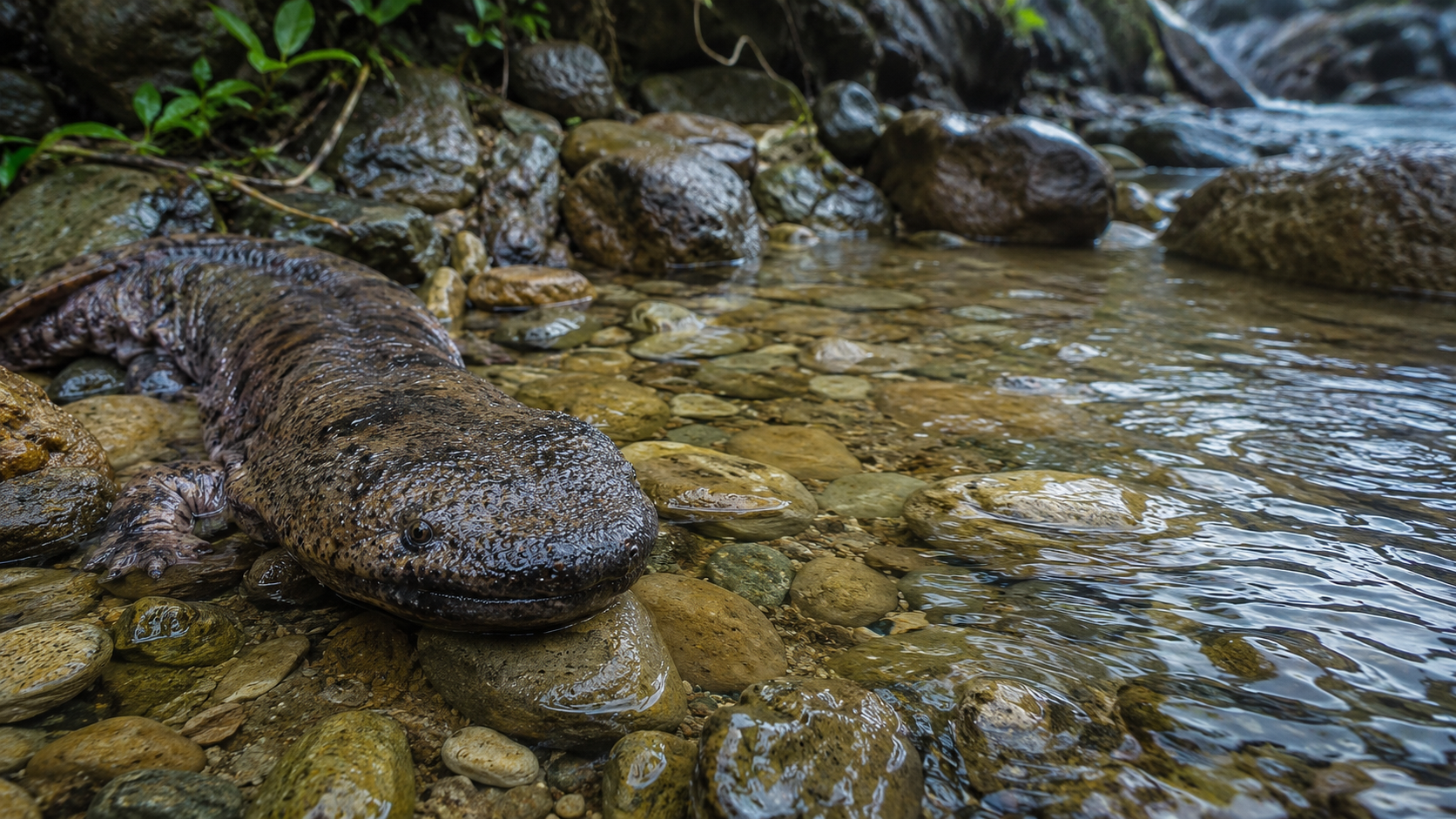
The Chinese Giant Salamander (Andrias davidi) is the largest salamander species in the world, reaching lengths of up to 1.8 meters (5.9 feet) and weighing up to 35 kilograms (77 pounds). Native to China, this species is found in mountainous regions, where it inhabits freshwater lakes, rivers, and streams.
Natural History
Chinese Giant Salamanders are nocturnal animals, spending most of their time hiding in underwater burrows or beneath rocks. They are carnivorous, feeding on a variety of aquatic animals, including fish, crustaceans, and insects.
These salamanders have a unique life cycle, with a larval stage that can last up to three years. During this stage, they undergo metamorphosis, developing lungs and losing their gills. Adults can live up to 20 years in the wild.
Conservation Status
The Chinese Giant Salamander is listed as Critically Endangered on the IUCN Red List. The main threats to their survival are habitat destruction, pollution, and overcollection for food and the pet trade.
Conservation efforts are underway to protect this species, including the establishment of protected areas and breeding programs. However, more needs to be done to address the ongoing threats and ensure the long-term survival of the Chinese Giant Salamander.
Safety Precautions
Chinese Giant Salamanders are wild animals and should be treated with caution. They have sharp teeth and powerful jaws, and can inflict serious injury if handled improperly.
It is also important to note that these salamanders can carry diseases and parasites, such as salmonella and tapeworms, which can be transmitted to humans.
| Scientific Name | Andrias davidi |
|---|---|
| Family | Cryptobranchidae |
| Order | Caudata |
| Class | Amphibia |
| Length | Up to 1.8 meters (5.9 feet) |
| Weight | Up to 35 kilograms (77 pounds) |
| Lifespan | Up to 20 years in the wild |
Observation and Photography
If you are interested in observing or photographing Chinese Giant Salamanders in their natural habitat, it is essential to do so responsibly and with caution.
Keep a safe distance from the animals, and avoid disturbing their habitat or behavior. Never touch or handle these salamanders, as this can cause them stress and harm.
Conservation Efforts
There are several organizations and initiatives working to conserve the Chinese Giant Salamander and its habitat. These efforts include:
- Protected areas: Establishing national parks and protected areas to safeguard the salamander’s habitat.
- Breeding programs: Captive breeding programs to increase the population and release animals back into the wild.
- Research: Studying the salamander’s behavior, ecology, and conservation biology to inform conservation efforts.
- Community engagement: Educating local communities about the importance of conservation and the threats facing the salamander.
What is the largest salamander species in the world?
The Chinese Giant Salamander (Andrias davidi) is the largest salamander species in the world.
Where is the Chinese Giant Salamander found?
The Chinese Giant Salamander is found in mountainous regions of China, where it inhabits freshwater lakes, rivers, and streams.
What is the main threat to the Chinese Giant Salamander’s survival?
The main threats to the Chinese Giant Salamander’s survival are habitat destruction, pollution, and overcollection for food and the pet trade.
Can I keep a Chinese Giant Salamander as a pet?
No, Chinese Giant Salamanders are wild animals and should not be kept as pets. They have complex care requirements and can carry diseases and parasites that can be transmitted to humans.
- IUCN Red List. (2022). Andrias davidi.
- Chinese Academy of Sciences. (2020). Conservation Status of the Chinese Giant Salamander.
- AmphibiaWeb. (2022). Andrias davidi: Chinese Giant Salamander.
Important Notice: If you suspect that you or someone else has been injured by a Chinese Giant Salamander, or if you have concerns about the welfare of these animals, please seek advice from a qualified veterinarian or a reputable animal welfare organization.
Life Cycle and Development
The Chinese Giant Salamander’s life cycle is complex and fascinating. The larval stage, which can last up to three years, is a critical period of development. During this time, the larvae undergo metamorphosis, transforming from aquatic, gill-breathing creatures to air-breathing adults. This process is triggered by a combination of genetic and environmental factors, including changes in water temperature and food availability.
As the larvae grow, they begin to develop lungs and lose their gills. This transition allows them to move from aquatic environments to terrestrial habitats, where they can feed on a wider variety of prey. The metamorphic process is energetically costly, and many larvae do not survive to adulthood.
Adult Chinese Giant Salamanders can live up to 20 years in the wild, although their average lifespan is likely much shorter due to various threats such as habitat destruction and overcollection. In captivity, with proper care and management, they can live for 30 years or more.
Communication and Senses
Chinese Giant Salamanders have a range of sensory organs that allow them to navigate their environment and communicate with other salamanders. They have poor eyesight, but their sense of smell is highly developed, and they use olfactory cues to detect prey and predators.
They also have a lateral line system, which allows them to detect vibrations in the water, helping them to locate prey and avoid predators. This system is made up of sensory organs called neuromasts, which are embedded in the skin along the sides of the body.
In terms of communication, Chinese Giant Salamanders use a range of vocalizations, including clicks, chirps, and whistles. These sounds are used for mating, territorial defense, and warning other salamanders of potential threats.
Seasonal Variation
Chinese Giant Salamanders are adapted to the seasonal changes in their mountainous habitats. During the winter months, they burrow into the sediment at the bottom of lakes and streams, where they enter a state of dormancy. This allows them to conserve energy and survive the cold temperatures.
In the spring, as temperatures rise, they emerge from their burrows and begin to feed on the abundant aquatic life. During this time, they are more active and can be found in shallower waters, where they can bask in the sun and regulate their body temperature.
In the summer months, they move to deeper waters, where they can escape the heat and find food. In the autumn, they begin to prepare for the winter months, feeding heavily and storing energy reserves.
Ecological Relationships
Chinese Giant Salamanders play a crucial role in their ecosystems, serving as both predators and prey. They feed on a variety of aquatic animals, including fish, crustaceans, and insects, helping to regulate the populations of these species.
In turn, they are preyed upon by larger animals, such as otters, birds, and snakes. They also compete with other aquatic animals, such as fish and turtles, for food and resources.
Chinese Giant Salamanders also have a symbiotic relationship with certain species of algae, which grow on their skin. These algae provide the salamanders with camouflage and may also produce compounds that help to protect them from disease.
Research and Monitoring
Research on Chinese Giant Salamanders is ongoing, with scientists studying their ecology, behavior, and conservation biology. Camera traps and acoustic monitoring systems are being used to study their behavior and population dynamics.
Genetic studies are also being conducted to understand the population structure and genetic diversity of the species. This information is essential for developing effective conservation strategies and managing breeding programs.
Responsible Enrichment and Captive Care
Chinese Giant Salamanders are popular among aquarium hobbyists, but their care is challenging and requires specialized expertise. In captivity, they require large, well-filtered tanks with a temperature range of 15-20°C (59-68°F).
A varied diet that includes live foods, such as fish and crustaceans, is essential for their health and well-being. They also require hiding places and visual barriers to reduce stress.
It is essential to ensure that any captive Chinese Giant Salamanders are obtained from reputable breeders or rescue organizations, and that their capture and trade are regulated to prevent overcollection and habitat destruction.
Ethical and Legal Considerations
The capture and trade of Chinese Giant Salamanders are regulated by international law, including the Convention on International Trade in Endangered Species of Wild Fauna and Flora (CITES). However, enforcement of these regulations is often inadequate, and the species remains threatened by overcollection and habitat destruction.
In China, the species is protected by national law, and conservation efforts are underway to protect its habitats and reduce the impact of human activities. However, more needs to be done to address the scale and complexity of the threats facing this species.
Habitat and Environmental Considerations
Chinese Giant Salamanders are found in mountainous regions of China, where they inhabit freshwater lakes, rivers, and streams. Their habitats are typically characterized by rocky substrates, slow-moving water, and abundant vegetation. The salamanders play a crucial role in maintaining the ecological balance of their ecosystems, serving as both predators and prey for other aquatic animals.
However, their habitats are under threat from human activities such as deforestation, mining, and construction, which can lead to habitat destruction, pollution, and changes in water quality. The introduction of non-native species, such as fish and other aquatic animals, can also disrupt the delicate balance of their ecosystems.
Behavioral Adaptations
Chinese Giant Salamanders have evolved several behavioral adaptations to cope with their environment. For example, they are able to estivate during periods of drought or extreme temperatures, sealing themselves in burrows or beneath rocks to conserve energy and water. They are also able to absorb oxygen from both water and air, allowing them to survive in low-oxygen environments.
In addition, Chinese Giant Salamanders have been observed using tools to obtain food. They have been known to use rocks to crack open shells and eat the contents, demonstrating a level of problem-solving ability and adaptability.
Captive Breeding Programs
Captive breeding programs are an essential component of conservation efforts for the Chinese Giant Salamander. These programs aim to breed the salamanders in controlled environments, such as zoos and aquariums, to reduce the demand for wild-caught individuals and to increase the population size.
However, captive breeding programs also present several challenges. For example, the salamanders require specialized care and housing, including large enclosures with suitable water quality and temperature. They also require a varied and nutritious diet, which can be difficult to replicate in captivity.
Community Engagement and Education
Community engagement and education are critical components of conservation efforts for the Chinese Giant Salamander. Local communities must be educated about the importance of conserving the salamanders and their habitats, as well as the threats they face.
In addition, community-based conservation initiatives can help to promote the sustainable use of natural resources and reduce the impact of human activities on the salamanders’ habitats. For example, ecotourism initiatives can provide economic benefits to local communities while promoting the conservation of the salamanders and their habitats.
Policy and Legislation
Policy and legislation play a crucial role in the conservation of the Chinese Giant Salamander. Laws and regulations must be put in place to protect the salamanders and their habitats, including the prohibition of hunting and trade.
In addition, international cooperation is essential to address the global demand for the salamanders and to prevent the introduction of non-native species. International agreements, such as CITES, can help to regulate the trade of the salamanders and prevent their exploitation.