Cane Toad
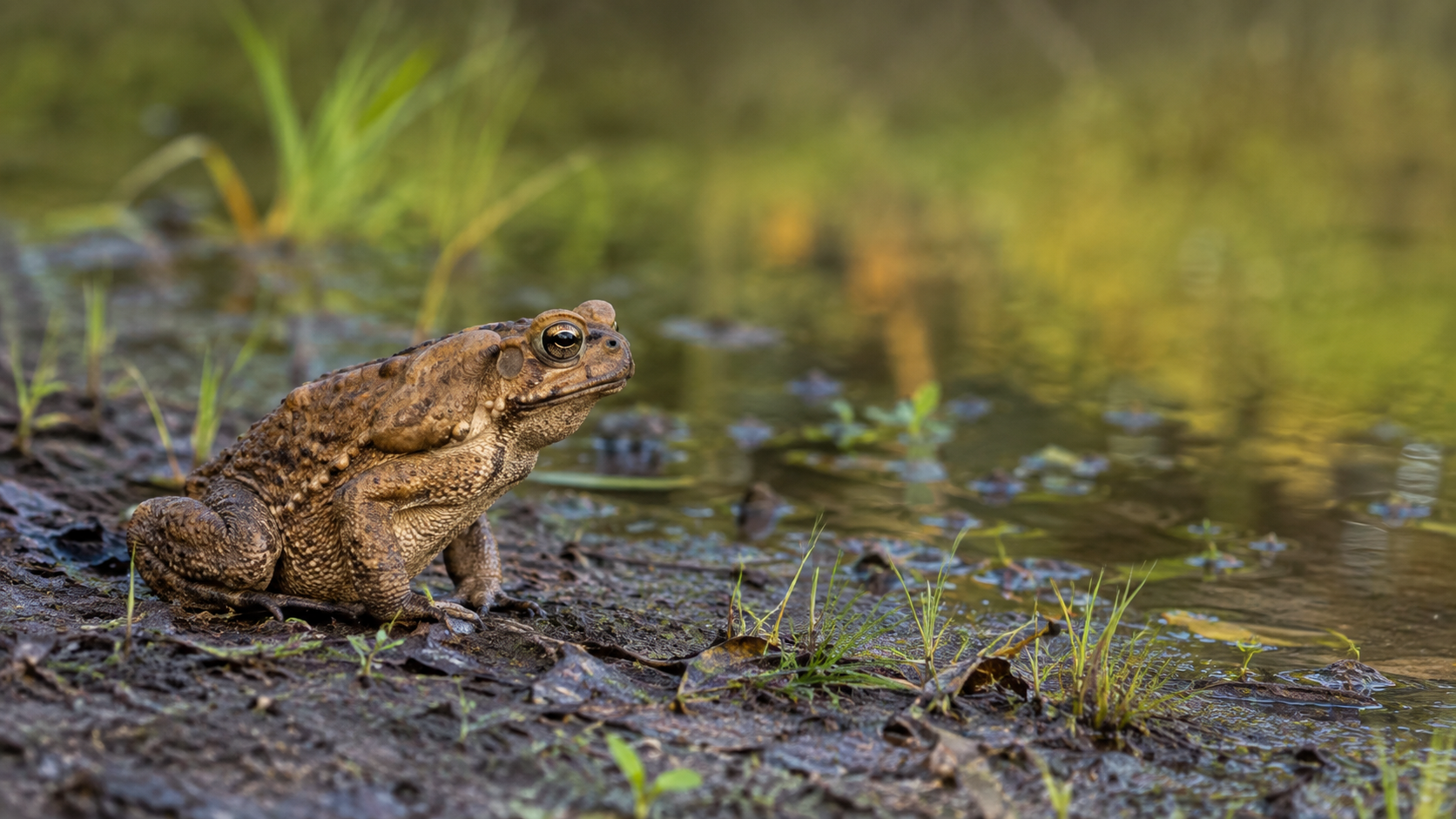
The Cane Toad (Rhinella marina) is a large, toxic amphibian native to Central and South America. It has been introduced to various parts of the world, including Australia, the Caribbean, and the southern United States, where it is considered an invasive species.
Natural History
Cane Toads are found in a variety of habitats, including forests, grasslands, and wetlands. They are nocturnal animals and spend most of their time on or near the ground. They are carnivorous, feeding on a wide range of invertebrates, including insects, worms, and snails.
Physical Characteristics
Cane Toads are large, with some individuals reaching up to 24 cm (9.4 in) in length and weighing up to 2.65 kg (5.8 lbs). They have a distinctive appearance, with a brown or grayish-brown color and a series of wart-like bumps on their skin. They also have a distinctive parotoid gland on their shoulders, which produces a toxic secretion.
| Characteristic | Description |
|---|---|
| Length | Up to 24 cm (9.4 in) |
| Weight | Up to 2.65 kg (5.8 lbs) |
| Color | Brown or grayish-brown |
| Parotoid gland | Produces toxic secretion |
Reproduction and Life Cycle
Cane Toads breed in the wet season, with males engaging in a complex courtship ritual to attract females. Females lay their eggs in long chains, which hatch into tadpoles after several days. The tadpoles go through metamorphosis, eventually developing into adult toads.
Conservation Status
Cane Toads are not considered to be a threatened species, but their introduction to new areas has had significant impacts on native ecosystems. They are considered an invasive species in many parts of the world, and efforts are being made to control their populations and mitigate their impacts.
Public Safety
Cane Toads are toxic, and their secretions can be harmful to humans and animals. They should be handled with care, and it is recommended that people avoid touching or handling them. If you are bitten or come into contact with a Cane Toad’s secretions, it is recommended that you seek medical attention immediately.
Responsible Observation
If you are interested in observing Cane Toads in the wild, it is recommended that you do so from a safe distance. Avoid touching or handling them, and be aware of your surroundings to avoid accidentally disturbing them.
What should I do if I find a Cane Toad in my yard?
If you find a Cane Toad in your yard, it is recommended that you leave it alone and allow it to move on its own. Avoid touching or handling it, as its secretions can be harmful.
Can Cane Toads be kept as pets?
No, Cane Toads are not recommended as pets. They are wild animals that have complex social and spatial needs that cannot be met in a home environment. Additionally, their toxic secretions can be harmful to humans and animals.
How can I help control Cane Toad populations?
If you live in an area where Cane Toads are considered an invasive species, you can help control their populations by reporting sightings to local authorities and participating in control efforts.
What should I do if I am bitten by a Cane Toad?
If you are bitten by a Cane Toad, it is recommended that you seek medical attention immediately. Wash the affected area with soap and water, and avoid touching your eyes or other sensitive areas.
- Australian Government Department of the Environment and Energy. (2020). Cane Toad.
- International Union for Conservation of Nature. (2020). Rhinella marina.
- National Geographic. (2020). Cane Toad.
Important Notice: If you suspect that your pet has been exposed to a Cane Toad’s toxic secretions, please seek veterinary attention immediately. It is also recommended that you consult with a veterinarian before handling or caring for any animal that may have come into contact with a Cane Toad.
Communication and Senses
Cane Toads have a unique way of communicating with each other, primarily through vocalizations and visual cues. During the breeding season, males will often engage in a loud, high-pitched call to attract females. This call can be heard for long distances and is often described as a loud, nasal “whoop” or “whistle”. In addition to vocalizations, Cane Toads also use body language to communicate. They will often display a threat posture, puffing out their bodies and displaying their toxic secretions, to deter predators.
Cane Toads have a keen sense of smell and can detect the presence of food and potential mates through their highly developed olfactory system. They also have relatively poor eyesight, but are highly sensitive to movement and vibrations, which helps them to detect prey and predators.
Seasonal Variation
Cane Toads are adapted to living in a variety of environments, and their behavior and physiology change in response to seasonal variations. During the dry season, Cane Toads will often burrow underground to escape the heat and dryness, emerging at night to forage for food. In the wet season, they will move to areas with standing water, where they will breed and lay eggs.
In areas where they have been introduced, Cane Toads can cause significant ecological disruption, particularly during the wet season. They will often congregate in large numbers around water sources, competing with native species for food and habitat. This can lead to a decline in native species populations, as well as changes to the ecosystem as a whole.
Ecological Relationships
Cane Toads have a number of ecological relationships with other species, both in their native range and in areas where they have been introduced. In their native range, they play an important role as both predators and prey, helping to regulate the populations of invertebrates and other small animals.
However, in areas where they have been introduced, Cane Toads can have a devastating impact on native ecosystems. They have no natural predators in these areas, and their toxic secretions make them unpalatable to many potential predators. This allows them to outcompete native species for food and habitat, leading to a decline in native species populations.
Research and Monitoring
Cane Toads are the subject of ongoing research and monitoring, particularly in areas where they have been introduced. Scientists are working to understand the ecological impacts of Cane Toads, as well as to develop effective methods for controlling their populations.
One area of research focus is on the development of biological control methods, such as introducing natural predators or competitors to control Cane Toad populations. Another area of research is on the development of humane and effective methods for removing Cane Toads from the wild, such as trapping and relocation.
Responsible Enrichment and Captivity
While Cane Toads can make interesting and rewarding pets, they require specialized care and housing. In captivity, Cane Toads require a large, well-ventilated enclosure with a heat source and a shallow water dish. They also require a varied diet that includes a mix of live insects and other invertebrates.
It is also important to note that Cane Toads are protected by laws and regulations in many areas, and it is often illegal to capture or keep them as pets. In addition, Cane Toads can carry diseases such as chytridiomycosis, which can be transmitted to other amphibians.
Ethical and Legal Considerations
The introduction of Cane Toads to new areas has raised a number of ethical and legal considerations. In many areas, Cane Toads are considered an invasive species, and their introduction is regulated by laws and international agreements.
In addition, the capture and trade of Cane Toads has raised concerns about animal welfare and conservation. Many Cane Toads are captured from the wild and sold as pets, which can lead to population declines and even local extinctions.
Overall, it is essential to consider the ethical and legal implications of interacting with Cane Toads, whether in the wild or in captivity.
Adaptation to New Environments
Cane Toads have shown a remarkable ability to adapt to new environments, which has contributed to their success as an invasive species. In their native range, they are found in a variety of habitats, including forests, grasslands, and wetlands. However, in areas where they have been introduced, they have been able to thrive in a wide range of environments, from urban areas to agricultural lands.
One of the key factors that has allowed Cane Toads to adapt to new environments is their ability to tolerate a wide range of temperatures and humidity levels. They are able to survive in temperatures ranging from 10°C to 35°C (50°F to 95°F) and can tolerate humidity levels as low as 30%. This allows them to thrive in a variety of environments, from the hot and humid tropics to the cooler and drier temperate regions.
In addition to their ability to tolerate a wide range of temperatures and humidity levels, Cane Toads have also been able to adapt to new environments through their ability to feed on a wide range of invertebrates. They are opportunistic feeders, and will eat almost any invertebrate that they can catch, including insects, worms, and snails. This allows them to thrive in a variety of environments, where different types of invertebrates are available.
Impact on Native Ecosystems
The introduction of Cane Toads to new environments has had a significant impact on native ecosystems. In Australia, for example, the introduction of Cane Toads has led to a decline in the population of many native species, including snakes, lizards, and quolls. These animals are poisoned when they eat Cane Toads, which has led to a significant decline in their populations.
In addition to the impact on native species, the introduction of Cane Toads has also had an impact on the ecosystem as a whole. Cane Toads are a food source for many animals, including birds, snakes, and other predators. However, they are also a competitor for food and resources, which can lead to a decline in the population of native species.
Control and Management
The control and management of Cane Toad populations is a complex issue, and requires a multi-faceted approach. In Australia, for example, the government has implemented a number of control measures, including the use of traps and poison baits. However, these measures have been met with limited success, and the population of Cane Toads continues to grow.
In addition to control measures, there is also a need for education and awareness about the impact of Cane Toads on native ecosystems. Many people are unaware of the impact that Cane Toads have on native species, and education and awareness campaigns can help to raise awareness about the issue.
Research and Development
Research and development is ongoing to find new and effective ways to control Cane Toad populations. One area of research is the development of a biological control agent, such as a virus or bacteria, that can be used to control Cane Toad populations. Another area of research is the development of a trap that can be used to capture and remove Cane Toads from the environment.
In addition to research and development, there is also a need for collaboration and cooperation between different stakeholders, including government agencies, conservation organizations, and local communities. This can help to ensure that control measures are effective and sustainable, and that the impact of Cane Toads on native ecosystems is minimized.