Introduction
The Bombardier Beetle, also known as Brachinus sp., is a fascinating insect that has gained significant attention due to its unique defense mechanism. Found in various parts of the world, this beetle has evolved an extraordinary way to protect itself from predators, which has captivated scientists and animal enthusiasts alike.
Quick Reference Table
| Characteristic | Description |
|---|---|
| Scientific Name | Brachinus sp. |
| Family | Carabidae |
| Order | Coleoptera |
| Size | 1/2 to 1 inch (1.3 to 2.5 cm) |
| Diet | Omnivorous |
| Habitat | Forests, grasslands, and wetlands |
Taxonomy and Identification
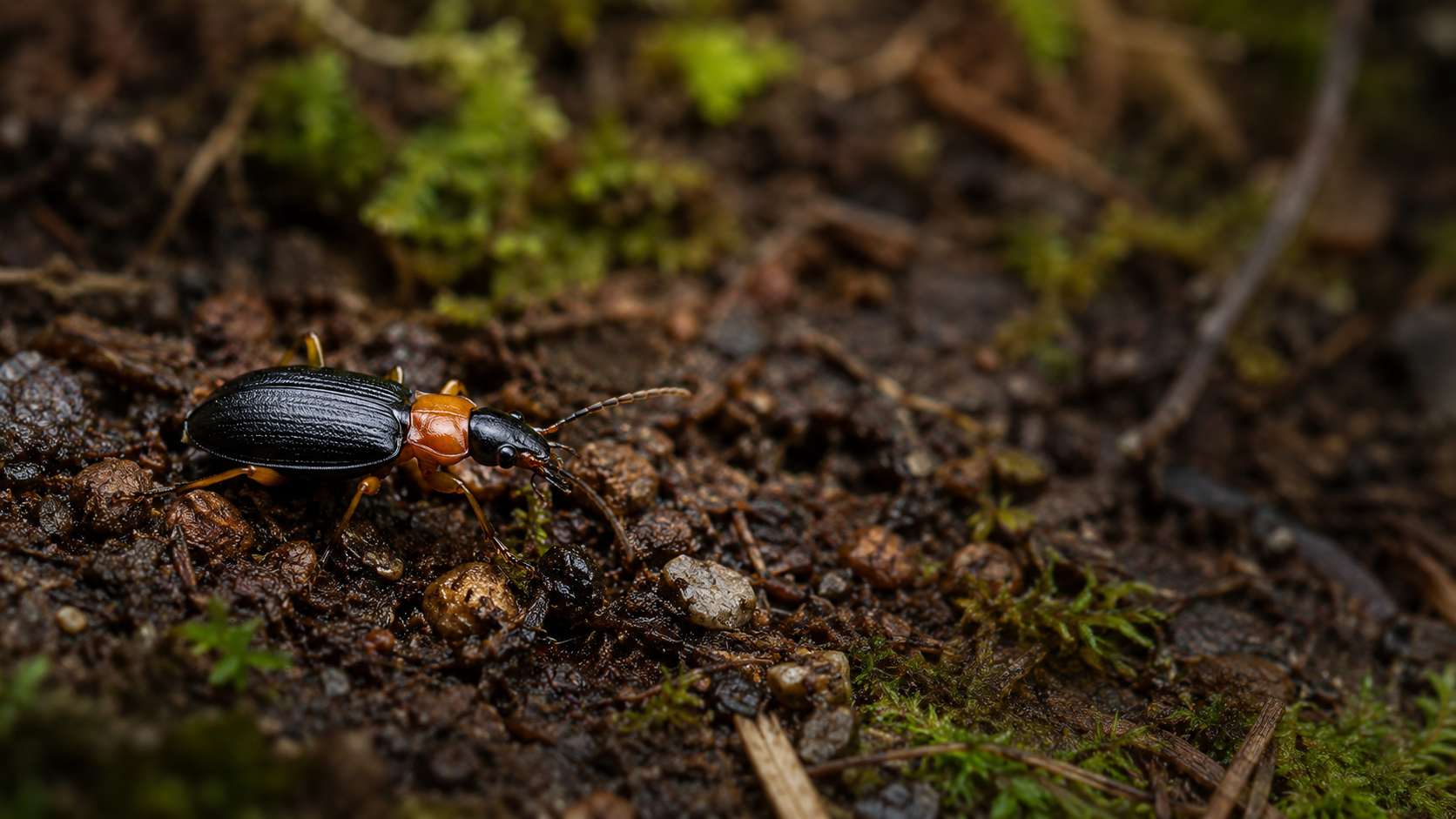
The Bombardier Beetle belongs to the family Carabidae, which comprises over 40,000 species of ground beetles. The genus Brachinus includes approximately 300 species, with the Bombardier Beetle being one of the most well-known. These beetles are relatively small, ranging in size from 1/2 to 1 inch (1.3 to 2.5 cm), and have a rounded, oval-shaped body. They are typically black or dark brown in color, with a distinctive metallic sheen.
Natural Habitat and Distribution
Bombardier Beetles can be found in various habitats, including forests, grasslands, and wetlands, in many parts of the world. They are native to North and South America, Europe, Asia, and Africa, and have been introduced to other regions through human activity. These beetles are often found in areas with moist soil and abundant vegetation, where they can feed on a variety of plants and animals.
Behaviour
Bombardier Beetles are nocturnal insects, spending most of their time hiding in underground burrows or under vegetation during the day. At night, they emerge to forage for food, using their sensitive antennae to detect potential prey. These beetles are also known for their unique defense mechanism, which involves the release of a hot, caustic spray from their abdomen to deter predators. This spray can reach temperatures of up to 212°F (100°C) and is powerful enough to kill small animals.
Diet
Bombardier Beetles are omnivorous, feeding on a variety of plants and animals. They are known to consume insects, spiders, and other small invertebrates, as well as plant material such as leaves, stems, and roots. In captivity, these beetles can be fed a diet of commercial insect food, fruits, and vegetables.
Care or Responsible Observation
While Bombardier Beetles can be kept in captivity, it is essential to provide them with a suitable environment that meets their specific needs. A well-ventilated, secure enclosure with a heat source and a shallow water dish is recommended. The enclosure should also include a substrate, such as sand or soil, and some hiding places, like rocks or plants. It is crucial to handle these beetles gently and carefully, as they can release their caustic spray when threatened.
For responsible observation in the wild, it is best to observe Bombardier Beetles from a safe distance, without disturbing their natural habitat. Avoid touching or handling them, as this can cause them to release their defense spray.
Health, Welfare, and Conservation
Bombardier Beetles are generally hardy insects, but they can be susceptible to certain health issues, such as fungal infections or parasites. In captivity, it is essential to maintain good hygiene and provide a balanced diet to prevent these issues.
As for conservation, Bombardier Beetles are not considered a threatened species, but their habitats are often under threat due to human activities, such as deforestation and urbanization. It is essential to protect and preserve their natural habitats to ensure the long-term survival of these fascinating insects.
Practical Takeaways
- Bombardier Beetles are unique insects with a fascinating defense mechanism.
- They are omnivorous, feeding on a variety of plants and animals.
- In captivity, they require a suitable environment with a heat source, shallow water, and a substrate.
- Handle them gently and carefully, as they can release their caustic spray when threatened.
- Observe them from a safe distance in the wild, without disturbing their natural habitat.
What is the Bombardier Beetle’s defense mechanism?
The Bombardier Beetle’s defense mechanism involves the release of a hot, caustic spray from its abdomen to deter predators.
What do Bombardier Beetles eat?
Bombardier Beetles are omnivorous, feeding on a variety of plants and animals, including insects, spiders, and plant material.
Can Bombardier Beetles be kept in captivity?
Yes, Bombardier Beetles can be kept in captivity, but it is essential to provide them with a suitable environment that meets their specific needs.
How should I handle Bombardier Beetles?
Handle Bombardier Beetles gently and carefully, as they can release their caustic spray when threatened.
Are Bombardier Beetles a threatened species?
No, Bombardier Beetles are not considered a threatened species, but their habitats are often under threat due to human activities.
- National Geographic: Bombardier Beetle
- Smithsonian Institution: Bombardier Beetle
- University of California, Berkeley: Bombardier Beetle
Remember to consult with a qualified veterinarian or entomologist if you have any concerns about the health or welfare of Bombardier Beetles.
Life Cycle and Development
The life cycle of the Bombardier Beetle consists of four stages: egg, larva, pupa, and adult. The female beetle lays her eggs in a protected location, such as under a rock or in a burrow, and the eggs hatch into larvae after several weeks. The larvae are legless, grub-like creatures that feed on small insects and plant material. As they grow, they molt several times, eventually entering a pupal stage, during which they undergo a dramatic transformation, emerging as fully formed adult beetles.
Communication and Senses
Bombardier Beetles use a variety of methods to communicate with each other, including chemical signals, visual cues, and even sound. They have large compound eyes that detect movement and changes in light, and are sensitive to vibrations in the air. They also possess a highly developed sense of smell, which they use to locate food and detect potential threats. In addition, they are able to produce a loud hissing sound by forcing air through their abdomens, which serves as a warning to potential predators.
Seasonal Variation and Migration
Bombardier Beetles are active throughout the year, but their behavior and activity patterns vary depending on the season. In temperate regions, they are most active during the spring and summer months, when food is plentiful and temperatures are warm. During the winter, they enter a state of dormancy, hiding in protected locations such as under leaf litter or in burrows. In some regions, Bombardier Beetles may migrate short distances in search of food or more favorable habitats.
Ecological Relationships
Bombardier Beetles play an important role in their ecosystems, serving as both predators and prey. They feed on small insects, spiders, and other invertebrates, helping to regulate their populations. In turn, they are preyed upon by birds, small mammals, and other insects. They also have a symbiotic relationship with certain species of fungi, which they use to help break down complex organic matter in their digestive systems.
Research and Scientific Study
Scientists have long been fascinated by the unique defense mechanism of the Bombardier Beetle, and have conducted extensive research on its behavior, ecology, and physiology. Studies have shed light on the beetle’s ability to produce a hot, caustic spray from its abdomen, which is used to deter predators. Researchers have also explored the potential applications of this defense mechanism in fields such as medicine and materials science.
Responsible Enrichment and Conservation
While Bombardier Beetles are not typically considered an endangered species, their populations are often threatened by habitat destruction, pesticide use, and climate change. Responsible enrichment and conservation efforts can help protect these fascinating insects and their habitats. This can include creating beetle-friendly habitats in gardens and parks, reducing pesticide use, and supporting conservation efforts in areas where Bombardier Beetles are found.
Ethical and Legal Considerations
Bombardier Beetles are not typically considered a pest species, and are often protected by laws and regulations that prohibit their collection or harm. In some regions, they may be considered an invasive species, and efforts may be made to control their populations. It is essential to be aware of local laws and regulations regarding the collection and handling of Bombardier Beetles, and to treat these insects with respect and care.
Defensive Mechanism and Evolutionary Adaptations
The Bombardier Beetle’s defense mechanism is one of the most fascinating and complex in the insect world. When threatened, the beetle releases a hot, caustic spray from its abdomen, which can reach temperatures of up to 212°F (100°C). This spray is powerful enough to kill small animals and deter larger predators. The beetle’s ability to produce this spray is made possible by a unique combination of specialized organs and chemicals.
The bombardier beetle’s defense mechanism involves a complex system of glands, reservoirs, and muscles. The beetle has two glands in its abdomen that produce a mixture of hydroquinone and hydrogen peroxide, which are stored in a reservoir. When the beetle feels threatened, it contracts muscles that force the mixture out of the reservoir and into a reaction chamber, where it is mixed with an enzyme called catalase. The catalase breaks down the hydrogen peroxide into oxygen and water, releasing a large amount of energy in the process. This energy heats up the mixture to a high temperature, creating a hot, caustic spray.
The bombardier beetle’s defense mechanism is an example of a evolutionary adaptation that has developed over time to protect the beetle from predators. The beetle’s ability to produce this spray has allowed it to thrive in a wide range of environments, from forests to grasslands to wetlands. The spray is also effective against a wide range of predators, from small spiders and ants to larger animals like birds and mammals.
Ecological Role and Interactions
Bombardier beetles play an important ecological role in their environments. As both predators and prey, they are an integral part of the food chain. They feed on small insects, seeds, and plant material, helping to regulate the populations of these organisms. In turn, they are preyed upon by a variety of animals, including birds, spiders, and other insects.
Bombardier beetles also have a unique relationship with certain species of ants. Some species of ants, such as the little black ant (Monomorium minimum), have been observed “farming” bombardier beetles for their defensive secretions. The ants will capture the beetles and keep them in their colonies, using the beetles’ spray to defend against predators. In return, the ants will feed the beetles and provide them with protection.
Cultural Significance and Human Impact
Bombardier beetles have a significant cultural impact, particularly in the scientific community. Their unique defense mechanism has fascinated scientists and naturalists for centuries, and has inspired research into the development of new technologies and materials.
However, bombardier beetles are also vulnerable to human impact. Habitat destruction, pesticide use, and climate change all pose threats to the beetle’s populations and habitats. In addition, the beetle’s defense mechanism has made it a target for collectors and enthusiasts, who often capture and keep the beetles in captivity.
As a result, it is essential to promote responsible and sustainable practices when interacting with bombardier beetles. This includes protecting their habitats, reducing pesticide use, and promoting conservation efforts. By taking these steps, we can help ensure the long-term survival of this fascinating and unique insect.