Bengal Cat
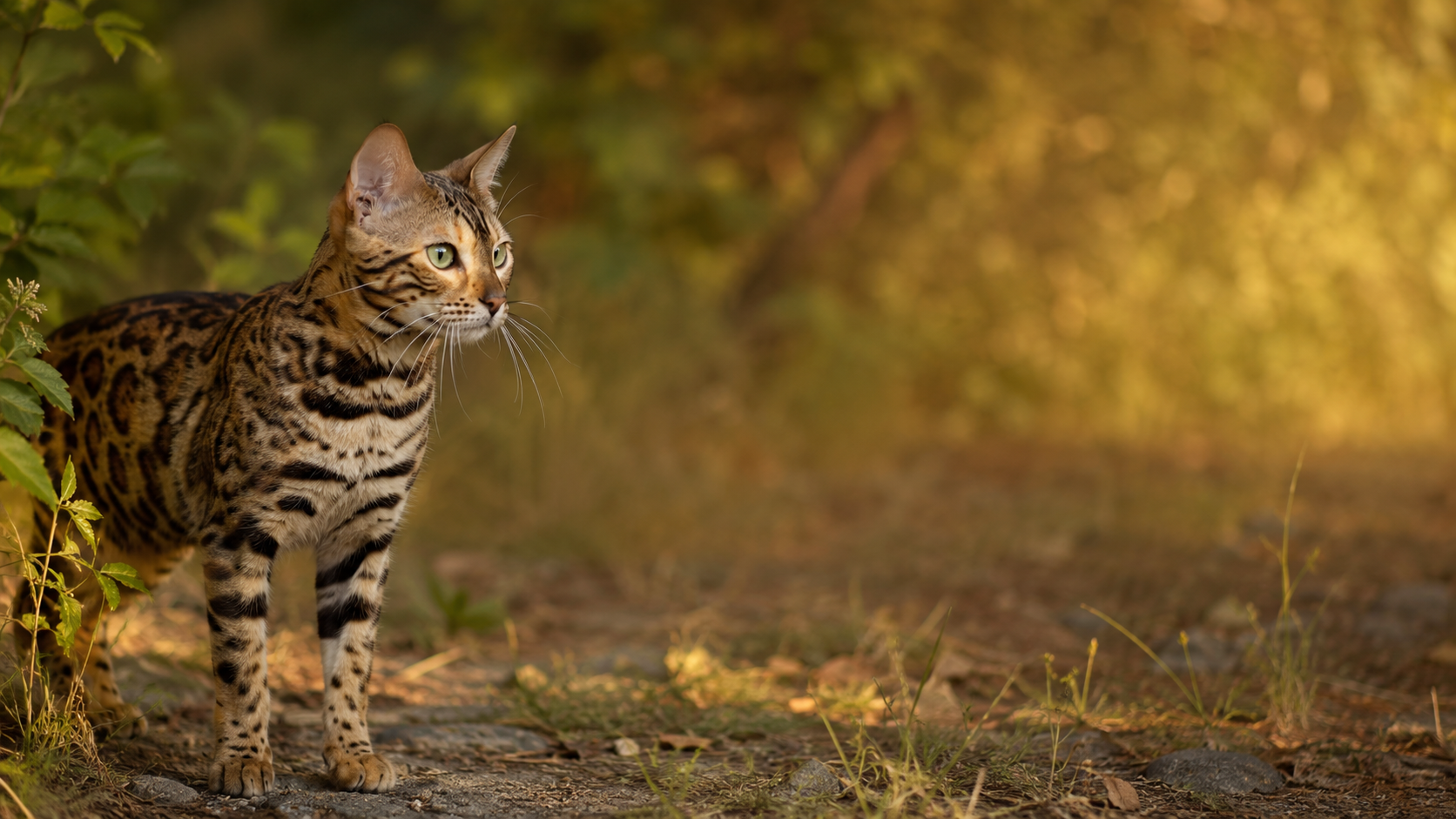
The Bengal Cat is a domesticated hybrid cat breed, created by crossing the domestic cat (Felis catus) with the Asian leopard cat (Prionailurus bengalensis). This breed is known for its distinctive physical appearance and energetic personality.
Origin and History
The Bengal Cat breed was developed in the 1960s by breeders in the United States, who sought to create a cat that combined the physical characteristics of a wild cat with the temperament of a domestic cat. The breed was recognized by The International Cat Association (TICA) in 1986 and has since become a popular breed among cat fanciers.
Physical Characteristics
Bengal Cats are medium to large in size, with males weighing between 10-15 pounds (4.5-6.8 kg) and females weighing between 8-12 pounds (3.6-5.4 kg). They have a muscular build and a short, smooth coat that is often described as “velvety” in texture. The coat can come in a variety of colors and patterns, including brown, gray, silver, and white.
| Characteristic | Description |
|---|---|
| Weight | Male: 10-15 pounds (4.5-6.8 kg), Female: 8-12 pounds (3.6-5.4 kg) |
| Coat length | Short |
| Coat texture | Smooth, velvety |
| Coat colors | Brown, gray, silver, white |
| Pattern | Spotted, marbled, or rosetted |
Personality and Temperament
Bengal Cats are known for their energetic and playful personalities. They are highly intelligent and curious, and require plenty of stimulation and exercise to prevent boredom and destructive behavior. They are also highly social and enjoy interacting with their human family members.
Health and Nutrition
Bengal Cats are generally a healthy breed, but they can be prone to certain health issues such as hypertrophic cardiomyopathy (a heart condition) and patellar luxation (a kneecap disorder). They require a balanced diet that is high in protein and low in carbohydrates, and regular veterinary check-ups to monitor their health.
Grooming and Care
Bengal Cats have a low-maintenance coat that requires minimal grooming. They are generally easy to care for, but they do require regular nail trimming, ear cleaning, and dental care to prevent health problems.
Living with Bengal Cats
Bengal Cats are suitable for families with children, but they do require plenty of attention and interaction. They are not recommended for households with small pets, such as hamsters or gerbils, as they have a strong prey drive and may view these animals as potential prey.
What is the average lifespan of a Bengal Cat?
The average lifespan of a Bengal Cat is 12-16 years.
Are Bengal Cats hypoallergenic?
No, Bengal Cats are not hypoallergenic. They produce the protein Fel d 1 in their saliva and skin, which can trigger allergies in some people.
Can Bengal Cats be left alone for long periods of time?
No, Bengal Cats require plenty of attention and interaction. They can become bored and destructive if left alone for long periods of time.
Are Bengal Cats prone to any health issues?
Yes, Bengal Cats can be prone to certain health issues such as hypertrophic cardiomyopathy and patellar luxation.
- The International Cat Association. (n.d.). Bengal Breed Standard.
- Bengal Cat Club. (n.d.). Bengal Cat Health.
- Veterinary Partner. (n.d.). Bengal Cat.
It is essential to consult with a veterinarian before bringing a Bengal Cat into your home to ensure that you are prepared to provide the necessary care and attention. With proper care and attention, Bengal Cats can make wonderful and loving companions.
Life Cycle and Development
Bengal Cats, like all domesticated cats, have a relatively long lifespan compared to their wild ancestors. On average, a Bengal Cat can live between 12 to 16 years, with some individuals living up to 18 years or more with proper care and nutrition. The life cycle of a Bengal Cat can be divided into several stages, each with its unique characteristics and needs.
Kittens are born after a gestation period of approximately 63-65 days, with an average litter size of 2-5 kittens. The kittens are born blind and helpless, but they develop rapidly, opening their eyes at around 7-10 days old and starting to walk at around 2-3 weeks old. During this period, the kittens rely heavily on their mother’s milk and warmth, and they begin to develop their motor skills and coordination.
As the kittens grow and mature, they start to explore their surroundings, play, and interact with their littermates and human caregivers. This socialization period is crucial for the development of their personality and temperament, and it is essential to provide them with a stimulating and nurturing environment.
At around 4-6 months old, the kittens start to lose their baby teeth and develop their adult teeth, and they begin to transition from their mother’s milk to solid food. This is also the time when they start to develop their adult coat, and their colors and patterns become more pronounced.
Communication and Senses
Bengal Cats, like all cats, are highly attuned to their environment and use a variety of senses to communicate and navigate their surroundings. They have excellent eyesight, with a wide field of vision and the ability to see in low light conditions. Their ears are also highly sensitive, and they can detect even the faintest sounds.
Bengal Cats use a range of vocalizations to communicate, including meows, purrs, hisses, and growls. They also use body language to convey their mood and intentions, such as arching their back, puffing out their fur, or twitching their tail.
In addition to their senses, Bengal Cats also have a highly developed sense of touch, and they use their whiskers and paws to explore their surroundings and detect subtle changes in their environment. They are also highly sensitive to scent and can detect pheromones and other chemical signals.
Seasonal Variation and Ecological Relationships
As a domesticated breed, Bengal Cats are not subject to the same seasonal variations as their wild ancestors. However, they still have an innate instinct to respond to changes in daylight and temperature, and they may exhibit changes in behavior and activity levels during different times of the year.
In the wild, the Asian leopard cat, the ancestor of the Bengal Cat, is a solitary and territorial animal, and it plays a crucial role in maintaining the balance of its ecosystem. As a predator, it helps to control populations of small mammals, birds, and reptiles, and it also serves as a prey species for larger predators such as leopards and tigers.
As a domesticated breed, Bengal Cats do not have the same ecological role, but they still require a stimulating and enriching environment that meets their physical and psychological needs. Providing them with toys, scratching posts, and climbing structures can help to satisfy their natural instincts and promote their overall health and well-being.
Research and Conservation
While Bengal Cats are a domesticated breed, research on their behavior, genetics, and physiology can provide valuable insights into the biology and ecology of their wild ancestors. Studies on Bengal Cats have shed light on the genetic basis of their distinctive coat patterns and colors, as well as their behavior and temperament.
Conservation efforts for the Asian leopard cat, the ancestor of the Bengal Cat, are ongoing, and several organizations are working to protect its habitat and reduce human-wildlife conflict. By supporting these efforts, Bengal Cat breeders and owners can help to contribute to the conservation of this majestic and endangered species.
Responsible Enrichment and Ethical Considerations
As a domesticated breed, Bengal Cats require a stimulating and enriching environment that meets their physical and psychological needs. Providing them with toys, scratching posts, and climbing structures can help to satisfy their natural instincts and promote their overall health and well-being.
However, it is essential to consider the welfare and well-being of the individual cat when providing enrichment activities. For example, Bengal Cats are naturally inclined to hunt and chase, but they should not be encouraged to hunt live prey, as this can lead to stress and injury.
Additionally, Bengal Cat breeders and owners should be aware of the potential risks and challenges associated with breeding and owning a hybrid breed. Bengal Cats can be prone to certain health problems, such as hypertrophic cardiomyopathy and patellar luxation, and they require regular veterinary care and monitoring to prevent and manage these conditions.
Overall, responsible enrichment and ethical considerations are essential for promoting the welfare and well-being of Bengal Cats, and for ensuring that they lead happy and fulfilling lives as beloved pets and companions.
Environmental Enrichment and Stimulation
Bengal Cats are highly intelligent and active animals that require a stimulating environment to prevent boredom and stress. Providing a variety of toys, scratching posts, and climbing structures can help to keep them entertained and exercised. It’s also essential to rotate toys regularly to prevent familiarity and encourage exploration.
In addition to physical stimulation, Bengal Cats also require mental stimulation. Engaging in play activities such as hide-and-seek, puzzle toys, and interactive games can help to challenge their problem-solving skills and keep them engaged. Owners can also try providing sensory stimulation through the use of catnip, scratching pads, and different textures.
Training and Socialization
Bengal Cats are highly trainable, and early socialization is crucial to develop good behavior and prevent unwanted habits. Positive reinforcement techniques such as clicker training and reward-based training can be effective in teaching basic commands and behaviors. Socialization should begin from an early age, and owners should expose their Bengal Cat to various environments, people, and animals to help them develop confidence and calmness in new situations.
Consistency and patience are key when training a Bengal Cat. They can be strong-willed and independent, but with positive reinforcement and repetition, they can learn to respond to commands and behave well in a variety of situations.
Special Considerations for Owners
Bengal Cat owners should be aware of the potential for inherited health issues, such as hypertrophic cardiomyopathy and patellar luxation. Regular veterinary check-ups and genetic testing can help to identify these issues early on.
Additionally, Bengal Cats are prone to destructive behavior if left alone for extended periods without stimulation. Owners should provide plenty of toys, scratching posts, and climbing structures to keep them entertained, and consider hiring a pet sitter or asking a trusted neighbor to check in on them during the day.
Overall, Bengal Cats make wonderful pets for active and dedicated owners who are willing to provide the necessary stimulation, socialization, and care. With the right environment and attention, they can thrive and become loving and loyal companions.