Classification and Natural History
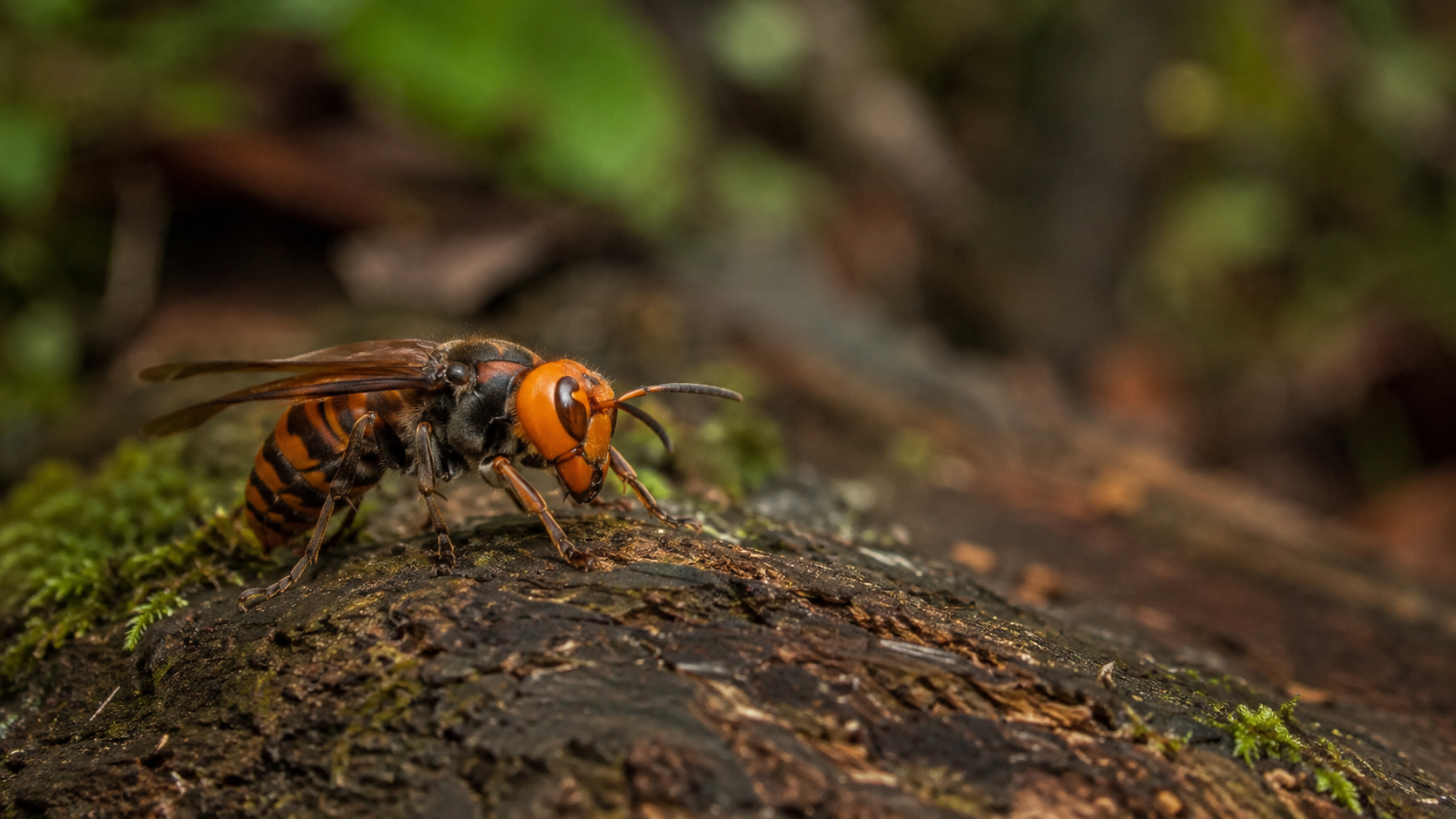
The Asian giant hornet (Vespa mandarinia) is a large hornet species native to Asia, known for its distinctive orange and black coloration and powerful venom.
These hornets are not typically considered companion animals, but rather a wildlife species that can be found in various parts of Asia, including Japan, China, and Korea.
Habitat and Distribution
Asian giant hornets are found in a variety of habitats, including forests, grasslands, and urban areas.
They are known to be highly social creatures, living in large colonies with a complex social hierarchy.
Behavior and Diet
Asian giant hornets are carnivorous, feeding on a variety of insects, spiders, and even small vertebrates.
They are also known to be highly aggressive when threatened or provoked, and their venom is powerful enough to dissolve human tissue.
Conservation Status
The Asian giant hornet is not currently considered to be a threatened species, although their populations are often affected by habitat destruction and pesticide use.
Public Safety and Precautions
Due to their aggressive behavior and powerful venom, it is recommended to exercise extreme caution when approaching or handling Asian giant hornets.
It is not recommended to attempt to keep these hornets as pets or to handle them in any way.
| Scientific Name | Vespa mandarinia |
|---|---|
| Common Name | Asian Giant Hornet |
| Family | Vespidae |
| Order | Hymenoptera |
| Class | Insecta |
| Phylum | Arthropoda |
| Kingdom | Animalia |
Interesting Facts
Asian giant hornets are known for their unique communication methods, which include using pheromones and body language to convey information.
They are also highly efficient hunters, able to capture and kill prey much larger than themselves.
What is the Asian giant hornet’s venom used for?
The Asian giant hornet’s venom is used for defense and to immobilize prey.
Are Asian giant hornets endangered?
No, the Asian giant hornet is not currently considered to be a threatened species.
Can Asian giant hornets be kept as pets?
No, it is not recommended to keep Asian giant hornets as pets due to their aggressive behavior and powerful venom.
What is the Asian giant hornet’s social structure like?
Asian giant hornets live in large colonies with a complex social hierarchy.
- National Geographic: Asian Giant Hornet
- Smithsonian Institution: Vespa mandarinia
- Japanese Ministry of the Environment: Asian Giant Hornet
Please note: The information provided is for educational purposes only and should not be used for medical or veterinary advice. If you have any concerns about Asian giant hornets or any other animal, please consult a qualified professional.
Life Cycle and Development
The life cycle of the Asian giant hornet is complex and highly social, with different castes performing different roles within the colony. The colony is founded by a single fertilized queen, who emerges from hibernation in the spring and begins to build a new nest. The queen is responsible for laying eggs and caring for the young, while the workers, which are female hornets that are sterile and cannot lay eggs, take on the tasks of foraging, defending the nest, and caring for the young.
As the colony grows, the queen’s pheromones regulate the development of the workers, ensuring that they remain sterile and focused on their tasks. The workers are responsible for feeding and caring for the larvae, which are legless and grub-like, and are fed a diet of regurgitated insects and spiders. The larvae spin a cocoon and undergo metamorphosis, emerging as adult hornets.
The colony reaches its peak size in the summer, with thousands of workers and a large number of males, whose sole purpose is to mate with the queen. As the summer comes to a close, the queen’s pheromones change, and the workers begin to produce new queens and males, which leave the nest to mate and start new colonies. The original queen dies, and the colony declines, with the workers dying off as the weather cools.
Communication and Senses
Asian giant hornets are highly communicative, using a variety of chemical signals, known as pheromones, to convey information within the colony. The queen’s pheromones regulate the development of the workers, while the workers use pheromones to communicate with each other about food sources, threats to the colony, and other important information.
Asian giant hornets also have highly developed senses, including vision, hearing, and smell. They are able to detect the sweet, fermented smell of sake and other sugary substances, which they use to locate food sources. They are also able to detect the vibrations of insects and other small animals, which they use to locate prey.
Seasonal Variation
Asian giant hornets are highly adapted to the changing seasons, with their behavior and physiology changing in response to the availability of food and other environmental factors. In the spring, the queen emerges from hibernation and begins to build a new nest, while in the summer, the colony reaches its peak size and the workers are busy foraging and caring for the young.
In the fall, the colony begins to decline, with the workers dying off as the weather cools. The new queens and males leave the nest to mate and start new colonies, while the original queen dies. In the winter, the queens hibernate, surviving on stored energy reserves until the spring, when the cycle begins again.
Ecological Relationships
Asian giant hornets play a complex and important role in their ecosystems, serving as both predators and prey for other animals. They are important pollinators, feeding on nectar and pollen, and are also important seed dispersers, helping to spread the seeds of the plants they visit.
They are also important predators, feeding on a wide variety of insects, spiders, and other small animals. They are known to prey on other social insects, such as bees and wasps, and are also known to scavenge carrion and other dead animals.
Research and Study
Asian giant hornets have been the subject of extensive research and study, particularly in Japan, where they are considered a significant pest species. Researchers have studied their behavior, ecology, and physiology, and have developed a range of control methods, including traps and pesticides.
Scientists have also studied the venom of the Asian giant hornet, which is highly toxic and contains a compound called melittin, which is capable of dissolving human tissue. Researchers have also studied the social structure of the colony, and have developed a range of theories about the evolution of sociality in insects.
Responsible Enrichment and Captivity
Asian giant hornets are not typically kept in captivity, due to their aggressive behavior and powerful venom. However, some researchers and insect enthusiasts have successfully kept them in controlled environments, such as insectaries and laboratories.
In these settings, the hornets are provided with a controlled diet and environment, and are studied and observed in a safe and responsible manner. The keeping of Asian giant hornets in captivity is heavily regulated, and is subject to strict laws and guidelines.
Ethical and Legal Considerations
The keeping of Asian giant hornets in captivity is subject to strict laws and guidelines, particularly in Japan, where they are considered a significant pest species. In some countries, the importation and keeping of Asian giant hornets is prohibited, due to concerns about their potential impact on native ecosystems.
In addition, the use of pesticides and other control methods to manage Asian giant hornet populations is also subject to strict regulations, due to concerns about their potential impact on human health and the environment. Researchers and insect enthusiasts are required to follow strict protocols and guidelines when working with Asian giant hornets, and are subject to regular inspections and monitoring.
Threats to Human Health and Safety
The venom of the Asian giant hornet is a complex mixture of compounds that can cause significant harm to humans. The venom contains a potent neurotoxin that can cause anaphylaxis, a severe and potentially life-threatening allergic reaction. In addition, the venom can also cause necrotic lesions, which can lead to permanent scarring and disfigurement. In rare cases, the venom can also cause kidney failure and even death.
Prevention and Treatment of Stings
Prevention is the best course of action when it comes to Asian giant hornet stings. Wearing protective clothing, including long sleeves and a veil, can help prevent stings. If a sting does occur, it is essential to remove the stinger immediately and wash the area with soap and water. Antihistamines and hydrocortisone cream can help alleviate symptoms, but in severe cases, medical attention may be necessary.
Ecological Role in Pollination and Seed Dispersal
Despite their fearsome reputation, Asian giant hornets play a crucial role in pollination and seed dispersal in their native habitats. They are important pollinators of certain plant species, and their nests can be found in close proximity to fruit trees and other vegetation. In addition, the hornets help to disperse seeds by consuming fruit and then depositing the seeds in new locations.
Impact of Climate Change
Climate change is having a profound impact on the distribution and behavior of Asian giant hornets. Changes in temperature and precipitation patterns are altering the availability of food resources, which can lead to malnutrition and starvation. In addition, the changing climate is also altering the distribution of the hornets, leading to an increase in human-hornet conflicts.
Traditional Medicine and Cultural Significance
In some Asian cultures, the Asian giant hornet is considered a delicacy and is consumed as a source of protein. In addition, the hornet’s venom is used in traditional medicine to treat a variety of ailments, including arthritis and rheumatism. However, the use of the hornet’s venom in traditional medicine is not supported by scientific evidence, and its use is not recommended.
Modern Research and Applications
Modern research has led to the development of new applications for the Asian giant hornet’s venom. The venom contains a compound called melittin, which has been shown to have antibacterial and antifungal properties. Researchers are currently exploring the use of melittin as a potential treatment for a variety of diseases, including cancer and Alzheimer’s disease.