Venus Flytrap
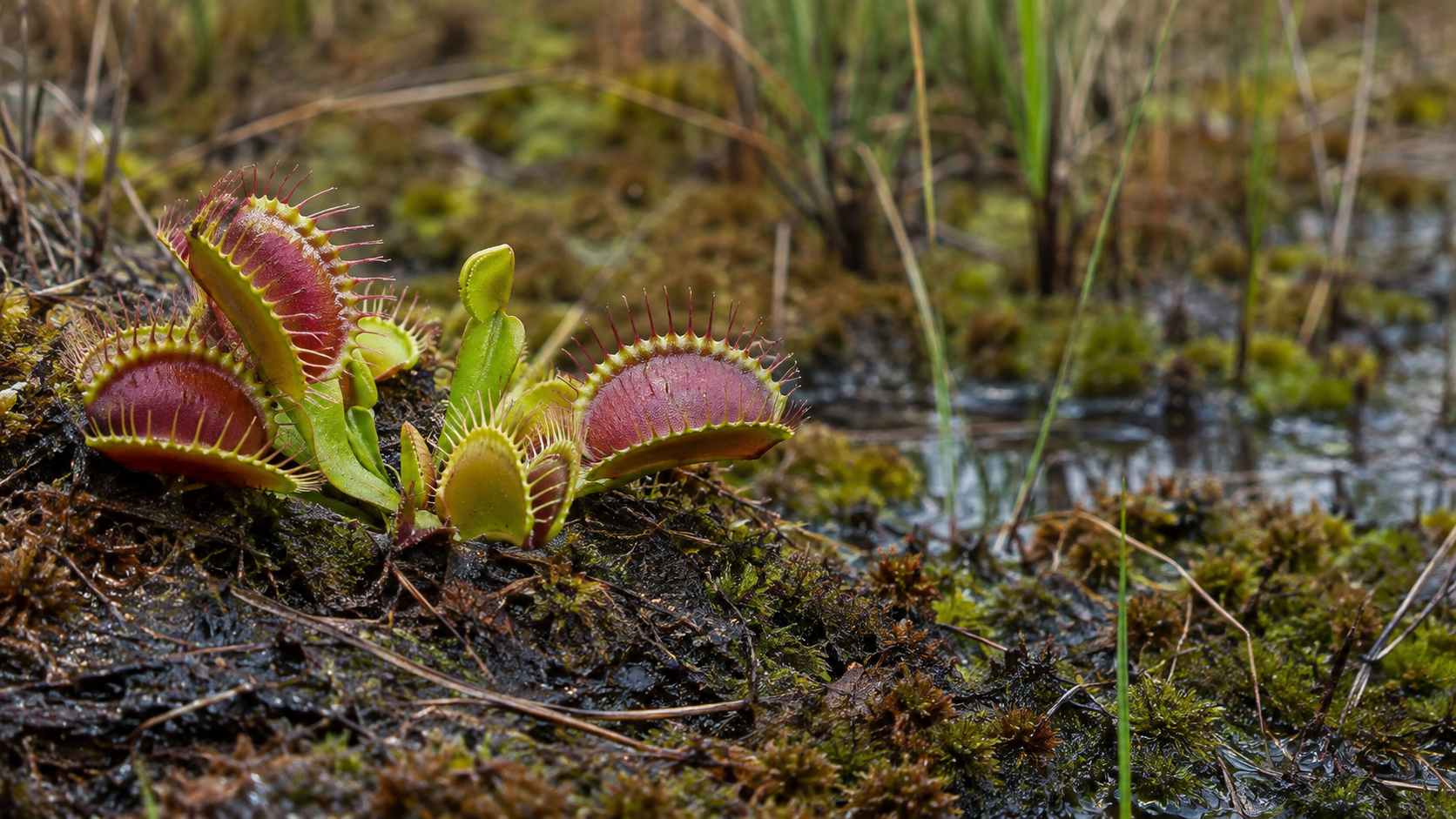
The Venus Flytrap (Dionaea muscipula) is a carnivorous plant native to North America, specifically the bogs and savannas of North and South Carolina. It is a member of the Droseraceae family and is known for its unique ability to capture and digest insects.
Classification and Evolution
The Venus Flytrap is a flowering plant that belongs to the genus Dionaea. It is a relatively small plant, growing up to 5 inches in diameter, with modified leaves that can snap shut quickly to capture prey. The plant’s unique structure and behavior have fascinated scientists and the general public alike, leading to extensive research on its evolution and ecology.
Natural History
In the wild, Venus Flytraps can be found growing in full sun to partial shade, in acidic, nutrient-poor soil. They thrive in areas with high humidity and warm temperatures, typically between 65°F and 85°F (18°C and 30°C). The plants obtain essential nutrients, such as nitrogen, phosphorus, and potassium, by capturing and digesting insects.
Prey Capture and Digestion
The Venus Flytrap’s modified leaves, also known as traps, are triggered by the movement of an insect landing on the leaf’s surface. The trap is lined with trigger hairs that are sensitive to movement, and when an insect touches two or more of these hairs, the trap snaps shut in as little as 0.1 seconds. The plant then secretes digestive enzymes to break down the insect’s soft tissues, which are absorbed by the plant as nutrients.
Conservation Status
The Venus Flytrap is listed as Vulnerable on the IUCN Red List, due to habitat loss, overcollection, and degradation of its natural habitat. Efforts are being made to conserve and protect the plant’s habitat, including the establishment of protected areas and regulations on the collection and trade of the plant.
| Scientific Name | Dionaea muscipula |
|---|---|
| Family | Droseraceae |
| Native Range | North and South Carolina, USA |
| Habitat | Bogs and savannas |
| Conservation Status | Vulnerable |
Observation and Photography
Observing and photographing Venus Flytraps in their natural habitat can be a rewarding experience. However, it is essential to exercise caution and respect the plant’s habitat and conservation status. Visitors should avoid touching or handling the plants, as this can damage the leaves and disrupt the plant’s ability to capture prey.
Public Safety
While Venus Flytraps are fascinating plants, they are not suitable for handling or keeping as pets. The plant’s traps can snap shut quickly, potentially causing injury to humans, especially children. It is essential to keep a safe distance from the plants and avoid touching or handling them.
What is the Venus Flytrap’s natural habitat?
The Venus Flytrap is native to the bogs and savannas of North and South Carolina, USA.
How does the Venus Flytrap capture prey?
The Venus Flytrap captures prey by snapping shut its modified leaves, triggered by the movement of an insect landing on the leaf’s surface.
Is the Venus Flytrap endangered?
The Venus Flytrap is listed as Vulnerable on the IUCN Red List, due to habitat loss, overcollection, and degradation of its natural habitat.
Can I keep a Venus Flytrap as a pet?
No, Venus Flytraps are not suitable for keeping as pets, as they require specific growing conditions and can potentially cause injury to humans.
- International Union for Conservation of Nature (IUCN). (2022). Dionaea muscipula.
- North Carolina State University. (n.d.). Venus Flytrap.
- United States Fish and Wildlife Service. (n.d.). Venus Flytrap.
Remember to respect and prioritize the conservation of the Venus Flytrap and its habitat. If you are interested in learning more about this fascinating plant, consider consulting reputable sources and supporting conservation efforts.
Life Cycle and Growth Habits
The Venus Flytrap’s life cycle is characterized by a unique combination of vegetative and reproductive growth. The plant grows from a small rosette of leaves, which gradually increase in size as the plant matures. During the growing season, which typically lasts from spring to fall, the plant produces new leaves and traps, allowing it to capture and digest insects to supplement its nutrient intake.
As the plant grows, it produces a flowering stalk that can reach up to 12 inches in height, bearing small white flowers. The flowers are self-pollinating, but they can also be cross-pollinated by insects. After the flowers have been pollinated, the plant produces seeds, which are dispersed by the wind.
In the fall, the plant’s growth slows down, and it enters a state of dormancy, during which the leaves and traps die back. The plant’s roots, however, remain active, allowing it to survive the winter months. In the spring, the plant regrows from its roots, producing new leaves and traps.
Communication and Senses
The Venus Flytrap has a unique way of communicating with its environment through its modified leaves. The leaves are covered with trigger hairs that are sensitive to movement, allowing the plant to detect the presence of insects. When an insect lands on the leaf and touches two or more of the trigger hairs, the leaf snaps shut, trapping the insect inside.
The plant also has a sense of touch, which allows it to detect the movement of insects on its leaves. The leaves are also sensitive to light, which helps the plant to regulate its growth and development.
In addition to its sense of touch and light, the Venus Flytrap also has a sense of smell. The plant produces volatile compounds that attract insects, which are then trapped and digested.
Seasonal Variation and Ecological Relationships
The Venus Flytrap’s growth and development are influenced by seasonal changes in its environment. During the spring and summer months, the plant grows rapidly, producing new leaves and traps. In the fall, the plant’s growth slows down, and it enters a state of dormancy.
The plant’s ecological relationships are also influenced by seasonal changes. During the spring and summer months, the plant is an important food source for insects, such as bees and butterflies. In the fall, the plant’s seeds are an important food source for birds and small mammals.
The Venus Flytrap also has a symbiotic relationship with certain species of fungi, which help to break down the plant’s waste products. In return, the fungi receive nutrients from the plant.
Research and Responsible Enrichment
The Venus Flytrap has been the subject of extensive research, particularly in the fields of botany and ecology. Scientists have studied the plant’s unique structure and behavior, as well as its ecological relationships with other organisms.
Responsible enrichment of the Venus Flytrap involves providing the plant with a suitable environment, including high humidity, warm temperatures, and acidic, nutrient-poor soil. The plant should also be provided with a source of insects, such as fruit flies or aphids, to supplement its nutrient intake.
It is also important to avoid over-handling the plant, as this can cause damage to its leaves and traps. The plant should also be protected from extreme temperatures, such as those below 40°F (4°C) or above 90°F (32°C).
Ethical and Legal Considerations
The Venus Flytrap is a protected species in some parts of its range, and its collection from the wild is regulated by law. In North Carolina, for example, the plant is listed as a species of special concern, and its collection is prohibited without a permit.
It is also important to consider the ethical implications of keeping the Venus Flytrap as a pet. The plant requires a specialized environment, and its care can be challenging. It is also important to consider the welfare of the insects that are used to feed the plant.
Overall, the Venus Flytrap is a unique and fascinating plant that requires careful consideration and responsible care.
Adaptations for Survival
The Venus Flytrap’s unique structure and behavior have evolved to ensure its survival in nutrient-poor environments. One of the key adaptations is its ability to obtain essential nutrients by capturing and digesting insects. The plant’s modified leaves, or traps, are covered in trigger hairs that are sensitive to movement. When an insect lands on the leaf and touches two or more of these hairs, the leaf snaps shut quickly, trapping the insect inside.
Trap Mechanism
The trap mechanism of the Venus Flytrap is a complex process that involves the coordinated effort of multiple cells and tissues. The trigger hairs are connected to a system of cells that produce electrical signals when stimulated. These signals trigger a rapid change in the turgor pressure of the cells, causing the leaf to snap shut. The entire process, from stimulation to closure, takes only about 0.1 seconds.
Energy Efficiency
Despite its complex mechanism, the Venus Flytrap’s trap is surprisingly energy-efficient. The plant uses a minimal amount of energy to capture and digest insects, which is essential for its survival in nutrient-poor environments. In fact, studies have shown that the Venus Flytrap uses less energy to capture an insect than it would to absorb the same amount of nutrients through its roots.
Evolutionary Trade-Offs
The Venus Flytrap’s unique adaptations come with some evolutionary trade-offs. For example, the plant’s reliance on insect capture means that it is vulnerable to periods of low insect activity. Additionally, the energy expended on capturing and digesting insects means that the plant has less energy available for other activities, such as growth and reproduction.
Ecological Niche
The Venus Flytrap occupies a unique ecological niche in its native habitats. It is one of the few plants that can thrive in acidic, nutrient-poor soil, and its ability to capture and digest insects allows it to obtain essential nutrients that would otherwise be unavailable. This specialized niche has allowed the Venus Flytrap to coexist with other plants and animals in its ecosystem.
Co-Evolutionary Relationships
The Venus Flytrap has co-evolved with a variety of insects and other organisms in its ecosystem. For example, some species of spiders and ants have evolved to avoid triggering the plant’s traps, while others have developed strategies to exploit the plant’s nutrient-rich soil. These co-evolutionary relationships highlight the complex and interconnected nature of ecosystems.
Implications for Conservation
The Venus Flytrap’s unique adaptations and ecological niche have important implications for conservation. The plant’s reliance on insect capture means that it is vulnerable to changes in insect populations, which can be affected by factors such as habitat destruction, climate change, and pesticide use. As a result, conservation efforts should focus on protecting not only the Venus Flytrap itself, but also the insects and other organisms that it interacts with in its ecosystem.