Introduction
The Black Mamba is one of Africa’s most feared and respected snakes. Found in the savannas and open woodlands of sub-Saharan Africa, this species is known for its agility, aggressive behavior, and deadly venom. Despite its fearsome reputation, the Black Mamba is a fascinating creature that plays a vital role in its ecosystem.
Quick Reference Table
| Scientific Name | Dendroaspis polylepis |
|---|---|
| Family | Elapidae |
| Conservation Status | Least Concern |
| Average Length | 2.5 meters (8.2 feet) |
| Average Weight | 1.6 kilograms (3.5 pounds) |
Taxonomy and Identification
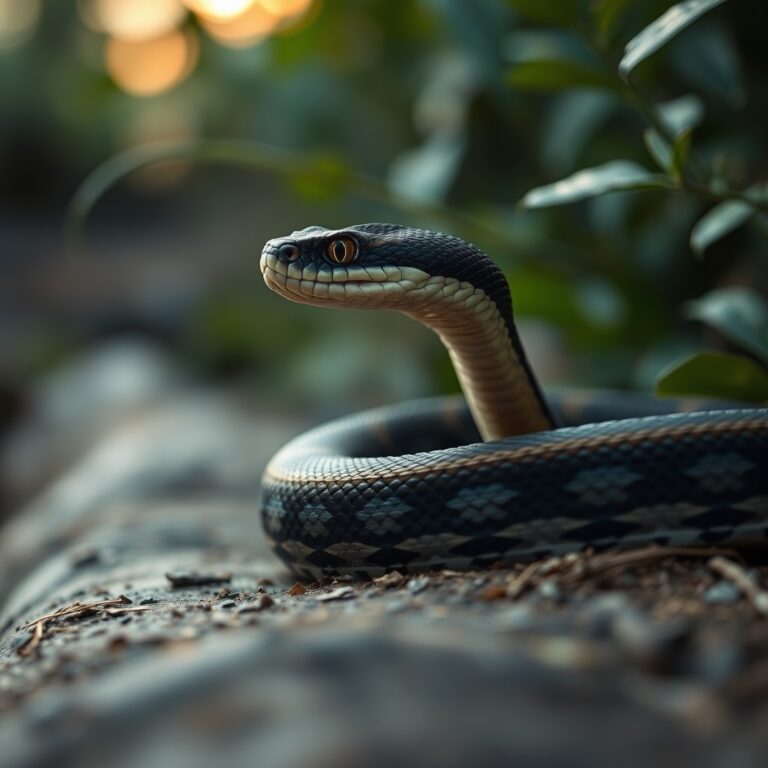
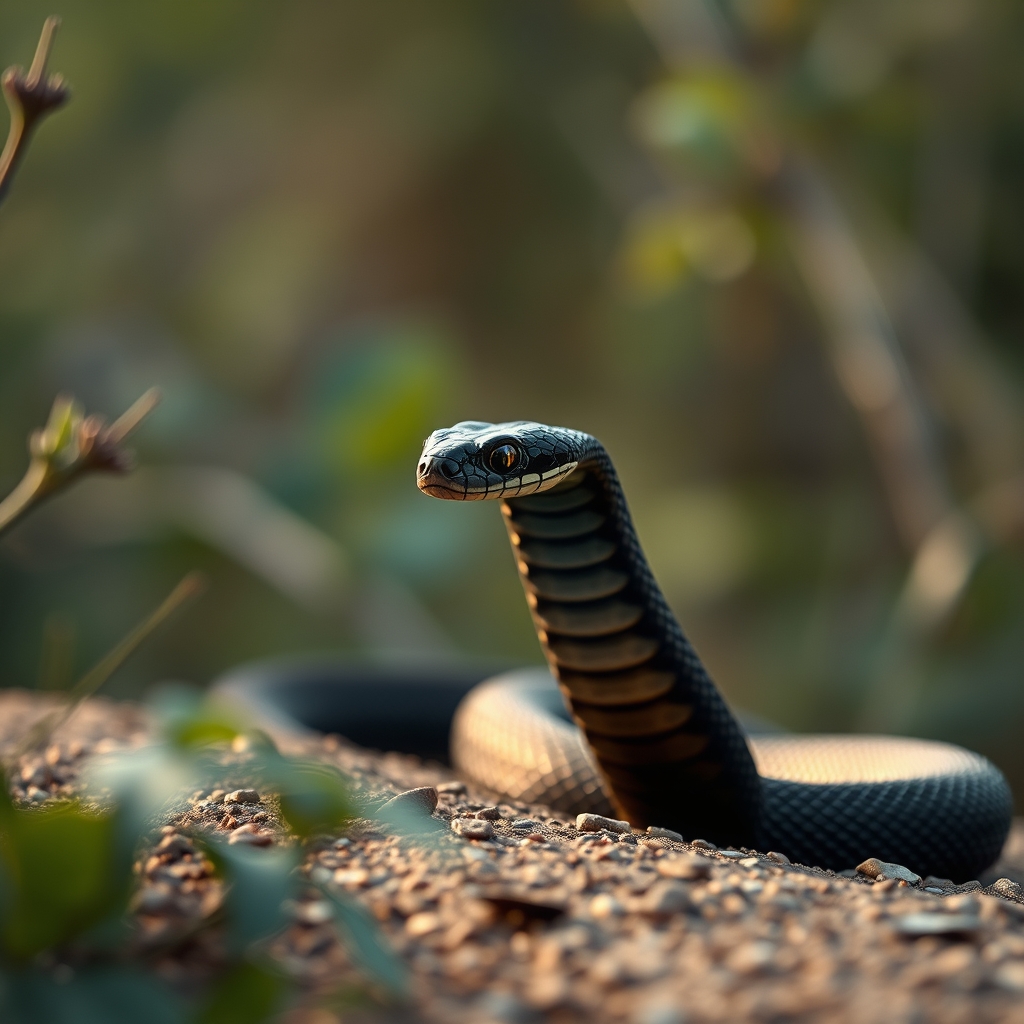
The Black Mamba is a member of the Elapidae family, which includes some of the world’s most venomous snakes. Its scientific name, Dendroaspis polylepis, is derived from the Greek words ‘dendron,’ meaning tree, and ‘aspis,’ meaning asp or venomous snake. The species is characterized by its sleek, elongated body, which is typically black or dark brown in color, with a white or grayish belly.
Natural Habitat and Distribution
Black Mambas are found in the savannas and open woodlands of sub-Saharan Africa, including countries such as South Africa, Mozambique, and Kenya. They are highly adaptable and can thrive in a variety of habitats, from rocky outcrops to grasslands and forests. These snakes are excellent climbers and are often found in trees or rocky crevices.
Behaviour
Black Mambas are diurnal and highly active, spending most of their time hunting and exploring their surroundings. They are known for their agility and speed, and can move quickly and quietly through the grass. Despite their fearsome reputation, Black Mambas are generally shy and will avoid confrontations with humans whenever possible. However, when threatened or cornered, they can become highly aggressive and will not hesitate to strike.
Diet
Black Mambas are carnivores and feed on a variety of small mammals, birds, and reptiles. They are skilled hunters and use their agility and stealth to catch their prey off guard. In captivity, Black Mambas are typically fed a diet of mice or rats, which are supplemented with vitamins and minerals to ensure optimal health.
Habitat and Shelter
In the wild, Black Mambas are often found in rocky outcrops, trees, or abandoned burrows. They are highly adaptable and can thrive in a variety of habitats, from grasslands to forests. In captivity, Black Mambas require a secure, escape-proof enclosure with adequate ventilation and a temperature range of 25-30°C (77-86°F). A shallow water dish and a hiding place or two are also essential for maintaining the snake’s physical and mental health.
Diet
Black Mambas are carnivores and feed on a variety of small mammals, birds, and reptiles. They are skilled hunters and use their agility and stealth to catch their prey off guard. In captivity, Black Mambas are typically fed a diet of mice or rats, which are supplemented with vitamins and minerals to ensure optimal health.
Daily Needs
In captivity, Black Mambas require a secure, escape-proof enclosure with adequate ventilation and a temperature range of 25-30°C (77-86°F). A shallow water dish and a hiding place or two are also essential for maintaining the snake’s physical and mental health. A photoperiod of 10-12 hours of light and 12-14 hours of darkness is recommended, and the enclosure should be maintained at a humidity level of 30-50%.
Warning Signs
Black Mambas are generally shy and will avoid confrontations with humans whenever possible. However, when threatened or cornered, they can become highly aggressive and will not hesitate to strike. Warning signs of an aggressive Black Mamba include a raised body posture, a spread hood, and a loud hissing sound.
Responsible Care or Conservation
Black Mambas are wild animals and should be treated with respect and caution. In captivity, they require specialized care and housing, and should only be kept by experienced snake handlers. In the wild, Black Mambas play a vital role in their ecosystem, and their conservation is essential for maintaining the balance of nature.
Health, Welfare, and Conservation
Black Mambas are listed as Least Concern on the IUCN Red List, but their populations are declining due to habitat loss and fragmentation, as well as human persecution. In captivity, Black Mambas are prone to certain health issues, such as respiratory infections and parasites, and require regular veterinary check-ups to ensure optimal health.
Practical Takeaways
- Black Mambas are carnivores and feed on small mammals, birds, and reptiles.
- In captivity, they require a secure, escape-proof enclosure with adequate ventilation and a temperature range of 25-30°C (77-86°F).
- Black Mambas are generally shy and will avoid confrontations with humans whenever possible.
- Warning signs of an aggressive Black Mamba include a raised body posture, a spread hood, and a loud hissing sound.
What is the average length of a Black Mamba?
2.5 meters (8.2 feet)
What is the average weight of a Black Mamba?
1.6 kilograms (3.5 pounds)
What is the conservation status of the Black Mamba?
Least Concern
What is the typical diet of a Black Mamba in captivity?
Mice or rats, supplemented with vitamins and minerals
What is the recommended temperature range for a Black Mamba enclosure?
25-30°C (77-86°F)
- International Union for Conservation of Nature (IUCN) Red List
- Smithsonian’s National Zoo & Conservation Biology Institute
- Reptile Magazine
Important Notice: If you suspect that your pet snake is ill or injured, please seek veterinary care immediately. A qualified veterinarian can provide a proper diagnosis and treatment plan to ensure the health and well-being of your pet.
### Life Cycle
The Black Mamba’s life cycle is a complex process that involves several stages of development. The species is oviparous, which means that they lay eggs. Female Black Mambas typically lay between 6-17 eggs per clutch, which incubate for approximately 80-100 days. The eggs are white, elongated, and relatively large, measuring around 6-7 cm (2.4-2.8 in) in length and 3-4 cm (1.2-1.6 in) in width.
After hatching, the young snakes are independent and receive no parental care. They are born with a length of around 30-40 cm (12-16 in) and are venomous from birth. The young snakes grow rapidly, shedding their skin several times as they increase in size. They reach maturity at around 2-3 years of age, at which point they are capable of reproducing.
### Communication and Senses
Black Mambas are highly attuned to their environment and use a variety of senses to communicate and navigate their surroundings. They have excellent eyesight and can detect movement and changes in their visual field. They also possess a highly developed sense of smell, which they use to detect prey and potential threats.
In terms of communication, Black Mambas use a variety of body language and postures to convey information. They are able to flatten their bodies and spread their neck skin to appear larger, and will often vibrate their tails to signal aggression. They are also able to produce a hissing sound by forcing air through their glottis, which serves as a warning to potential predators.
### Seasonal Variation
Black Mambas are active throughout the year, but their behavior and activity patterns vary depending on the season. During the wet season, they are more active and can be found in a variety of habitats, including grasslands and forests. During the dry season, they tend to congregate around water sources and are more sedentary.
In terms of reproduction, Black Mambas breed during the spring and summer months, with the female laying eggs in the late summer or early fall. The eggs incubate during the dry season, and the young snakes hatch in the late fall or early winter.
### Ecological Relationships
Black Mambas play a vital role in their ecosystem, serving as both predators and prey. They feed on a variety of small mammals, birds, and reptiles, helping to regulate populations and maintain the balance of their ecosystem. They are also an important food source for larger predators, such as birds of prey and other snakes.
In addition to their role as predators and prey, Black Mambas also play a role in seed dispersal and nutrient cycling. They help to disperse seeds through their feces, and their bodies provide a source of nutrients for other animals when they die.
### Research
Black Mambas have been the subject of several research studies, particularly in terms of their venom and its potential medical applications. Their venom is highly toxic and contains a variety of compounds that have been shown to have analgesic and anti-inflammatory properties.
Researchers have also studied the behavior and ecology of Black Mambas, including their habitat use, activity patterns, and reproductive biology. These studies have helped to inform conservation efforts and improve our understanding of this fascinating species.
### Responsible Enrichment
In captivity, Black Mambas require a stimulating environment that provides them with opportunities for exercise and mental stimulation. This can include providing a large enclosure with a variety of hiding places, climbing structures, and visual barriers.
In terms of enrichment activities, Black Mambas can be provided with a variety of toys and objects to manipulate, such as balls, tubes, and puzzle feeders. They can also be offered a varied diet that includes a range of prey items, such as mice and rats.
### Ethical and Legal Considerations
Black Mambas are protected by law in several countries, including South Africa and Kenya. They are also listed on the Convention on International Trade in Endangered Species of Wild Fauna and Flora (CITES), which regulates the international trade of wild animals and their products.
In terms of captivity, Black Mambas are considered to be a high-risk species due to their venom and aggressive behavior. They require specialized care and housing, and are not recommended for private ownership. In many countries, the keeping of Black Mambas in captivity is regulated by law, and requires special permits and licenses.