
Introduction
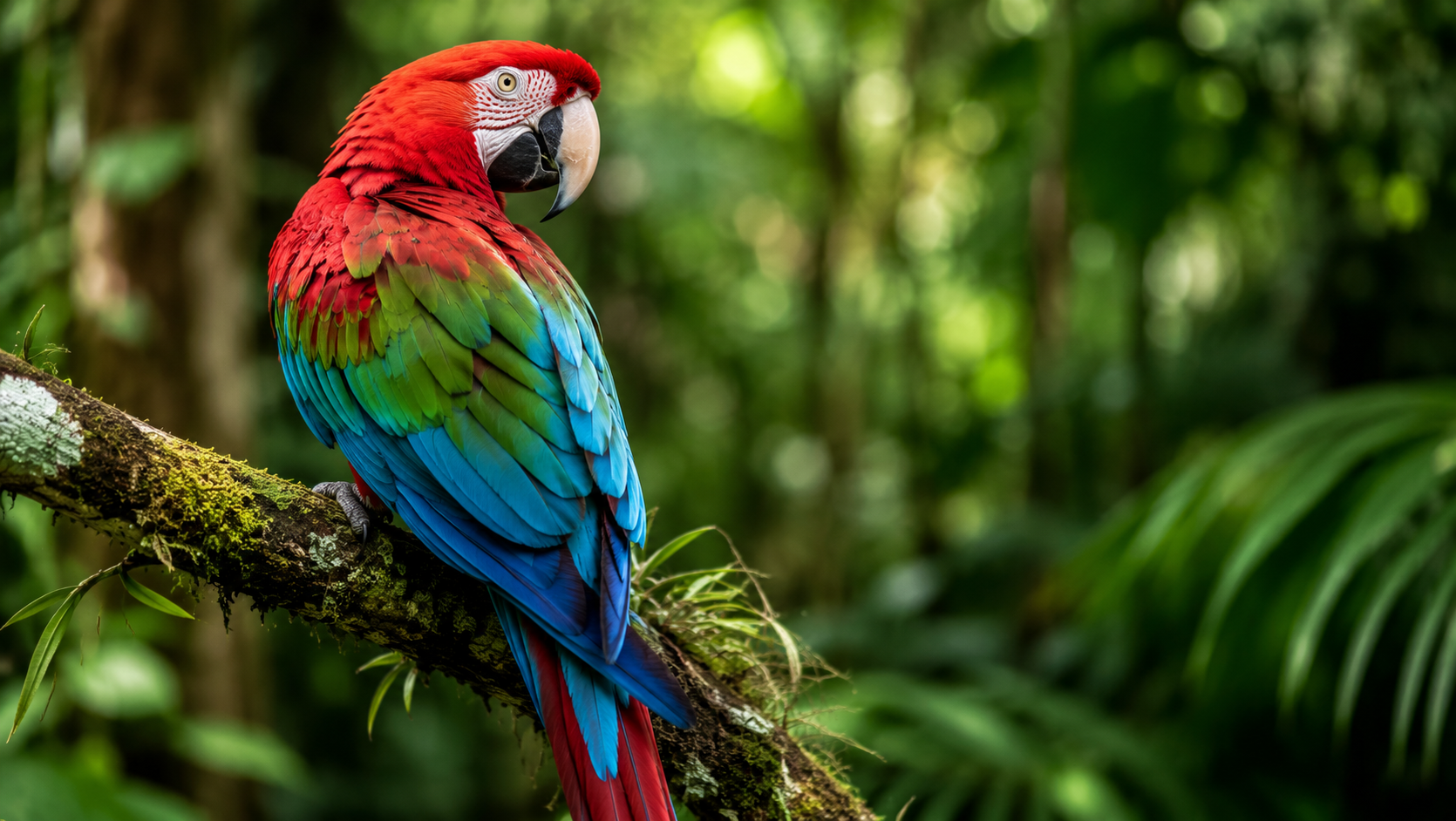
The Red-and-green Macaw (Ara chloropterus) is a large, intelligent parrot native to the tropical regions of South America. Known for their vibrant plumage and playful personalities, these birds have become popular pets and are often found in zoos and wildlife sanctuaries. However, their populations are declining in the wild due to habitat loss and the pet trade.
Quick Reference Table
| Scientific Name | Ara chloropterus |
|---|---|
| Length | 85-90 cm (33-35 in) |
| Weight | 900-1,200 g (31.7-42.3 oz) |
| Wingspan | 120-140 cm (47-55 in) |
| Diet | Seeds, fruits, leaves, and flowers |
| Conservation Status | Endangered |
Taxonomy and Identification
The Red-and-green Macaw is a member of the family Psittacidae and is also known as the Green-winged Macaw. They can be identified by their bright green plumage, blue flight feathers, and red and blue tail feathers. They have a distinctive beak shape and a loud, screeching call.
Physical Characteristics
Red-and-green Macaws are large birds, reaching lengths of 85-90 cm (33-35 in) and weighing 900-1,200 g (31.7-42.3 oz). They have a distinctive beak shape, with a curved upper mandible and a flat, broad lower mandible. Their plumage is bright green, with blue flight feathers and red and blue tail feathers.
Behaviour
Red-and-green Macaws are social birds that live in flocks in the wild. They are known for their playful and curious nature, and are often seen flying and playing in the trees. They are also known for their loud, screeching calls, which can be heard for miles.
Habitat
Red-and-green Macaws are found in the tropical regions of South America, including Argentina, Bolivia, Brazil, and Paraguay. They inhabit the forests and savannas, and are often found near water sources such as rivers and lakes. They are also found in urban areas, where they can be seen flying and perched in trees.
Diet
Red-and-green Macaws are herbivores, which means they primarily eat plants and plant-based foods. Their diet consists of seeds, fruits, leaves, and flowers. In the wild, they can be seen foraging for food in the trees and on the ground. In captivity, they require a balanced diet that includes a variety of fruits, vegetables, and pellets specifically formulated for parrots.
Daily Needs
Red-and-green Macaws require a lot of attention and social interaction. They need a large cage or aviary that provides enough space to fly and exercise. They also require a variety of toys and activities to keep them stimulated and engaged. In addition, they need regular veterinary check-ups to ensure they are healthy and thriving.
Warning Signs
Red-and-green Macaws can be prone to certain health issues, such as respiratory problems and feather plucking. They can also be loud and require a lot of attention, which can be challenging for some owners. It’s essential to research and understand their needs before deciding to bring one home as a pet.
Responsible Care or Conservation
Red-and-green Macaws are endangered in the wild due to habitat loss and the pet trade. It’s essential to support conservation efforts and choose a reputable breeder or rescue organization when considering bringing one home as a pet. In addition, owners must provide a suitable environment and proper care to ensure the bird’s physical and emotional well-being.
What is the average lifespan of a Red-and-green Macaw?
Red-and-green Macaws can live up to 50-60 years in captivity, making them a long-term commitment.
Can Red-and-green Macaws be kept as pets?
Yes, but it’s essential to research and understand their needs and requirements before deciding to bring one home as a pet.
Why are Red-and-green Macaws endangered?
Red-and-green Macaws are endangered due to habitat loss and the pet trade.
How can I support Red-and-green Macaw conservation efforts?
Supporting reputable conservation organizations and choosing a responsible breeder or rescue organization can help support Red-and-green Macaw conservation efforts.
Sources
- International Union for Conservation of Nature (IUCN) Red List
- BirdLife International
- World Wildlife Fund (WWF)
Please consult a veterinarian before making any decisions about the care or conservation of Red-and-green Macaws. This article is for informational purposes only and should not be considered as professional advice.
Life Cycle
Red-and-green Macaws are known to live up to 50 years in the wild, although their average lifespan is around 30-40 years. In captivity, with proper care and nutrition, they can live up to 60 years or more. These birds are monogamous, with pairs forming during breeding season and remaining together for many years. The female lays 2-4 eggs in a nesting site, usually a tree cavity, and incubates them for about 26 days. Both parents take turns incubating eggs and caring for the young, which fledge at around 6-7 weeks old. The chicks become independent at around 12-18 months old, but may stay with their parents for up to 2 years.
Communication and Senses
Red-and-green Macaws are known for their loud, screeching calls, which can be heard for miles. They also use body language and visual displays to communicate, such as spreading their wings and tail feathers to attract a mate or deter a predator. These birds have excellent eyesight and can see in color, which helps them forage for food and navigate their environment. They also have a keen sense of hearing and can detect subtle sounds, such as the calls of other macaws. In captivity, Red-and-green Macaws are known to be sensitive to noise levels and may become stressed if exposed to loud sounds.
Seasonal Variation
In the wild, Red-and-green Macaws are found in tropical regions with high temperatures and humidity levels throughout the year. However, they do experience some seasonal variation in terms of food availability and breeding. During the dry season, they may travel longer distances to find food and water, while during the wet season, they may stay closer to their breeding grounds. In captivity, Red-and-green Macaws do not experience the same level of seasonal variation, but may still require adjustments to their diet and environment to simulate natural conditions.
Ecological Relationships
Red-and-green Macaws play an important role in their ecosystem as seed dispersers and forest regenerators. They feed on seeds, fruits, and leaves, and then deposit the seeds in new locations, often in a pile of nutrient-rich droppings. This helps to spread plant species and promote forest growth. They also have a mutualistic relationship with certain species of trees, such as the kapok tree, which provides them with food and shelter. In captivity, Red-and-green Macaws can be kept with other bird species, but require careful introduction and monitoring to ensure compatibility.
Research
Red-and-green Macaws have been the subject of various research studies, particularly in the areas of behavior, ecology, and conservation. One study found that these birds have a complex social structure and are able to recognize individual members of their flock. Another study found that they have a unique way of communicating with each other through vocalizations and visual displays. Research has also focused on the impact of habitat loss and the pet trade on Red-and-green Macaw populations, and the development of conservation efforts to protect these birds.
Responsible Enrichment
In captivity, Red-and-green Macaws require a variety of enrichment activities to stimulate their physical and mental health. This can include providing a range of toys and objects to manipulate, such as wood, rope, and puzzle toys. They also require regular social interaction and exercise, such as flying and foraging for food. A large aviary or enclosure with plenty of space to fly and climb is essential for these birds. Owners should also provide a varied and nutritious diet, including a mix of seeds, fruits, and vegetables.
Ethical and Legal Considerations
The capture and trade of Red-and-green Macaws is regulated by international law, and many countries have laws prohibiting the capture and sale of these birds. In addition, many organizations and sanctuaries are working to protect and conserve Red-and-green Macaw populations. Owners of these birds should be aware of the laws and regulations in their country and ensure that they are providing proper care and treatment for their birds. They should also consider the ethical implications of keeping these birds in captivity and ensure that they are providing a suitable environment and lifestyle for their pets.
Reproduction and Breeding
Red-and-green Macaws are monogamous birds, with pairs forming during the breeding season. They breed in the wild from November to April, with the female laying 2-4 eggs in a nest made of sticks and leaves. The eggs are incubated for about 26 days, and the young birds fledge after about 70 days. In captivity, breeding programs are often used to help conserve the species and reduce the demand for wild-caught birds.
Health and Veterinary Care
Red-and-green Macaws are prone to certain health issues, such as respiratory problems, feather plucking, and behavioral disorders. Regular veterinary check-ups and a balanced diet can help prevent these issues. In addition, a large aviary or enclosure with plenty of space for exercise and social interaction is essential for the physical and mental health of these birds.
Conservation Efforts
Several organizations, such as the World Wildlife Fund and the International Union for Conservation of Nature, are working to protect the Red-and-green Macaw and its habitat. Conservation efforts include habitat preservation, research, and education programs. In addition, many zoos and wildlife sanctuaries are involved in breeding programs and provide a safe haven for rescued birds.
Cultural Significance
Red-and-green Macaws have been an important part of the culture and mythology of many indigenous communities in South America. They are often depicted in art and literature as symbols of beauty, intelligence, and freedom. In some cultures, they are considered sacred animals and are associated with spiritual and mystical powers.
Interesting Facts
Red-and-green Macaws are known for their intelligence and ability to mimic human speech and other sounds. They are also skilled escape artists and can easily open doors and locks. In the wild, they have been observed using tools, such as sticks, to obtain food and solve problems.


