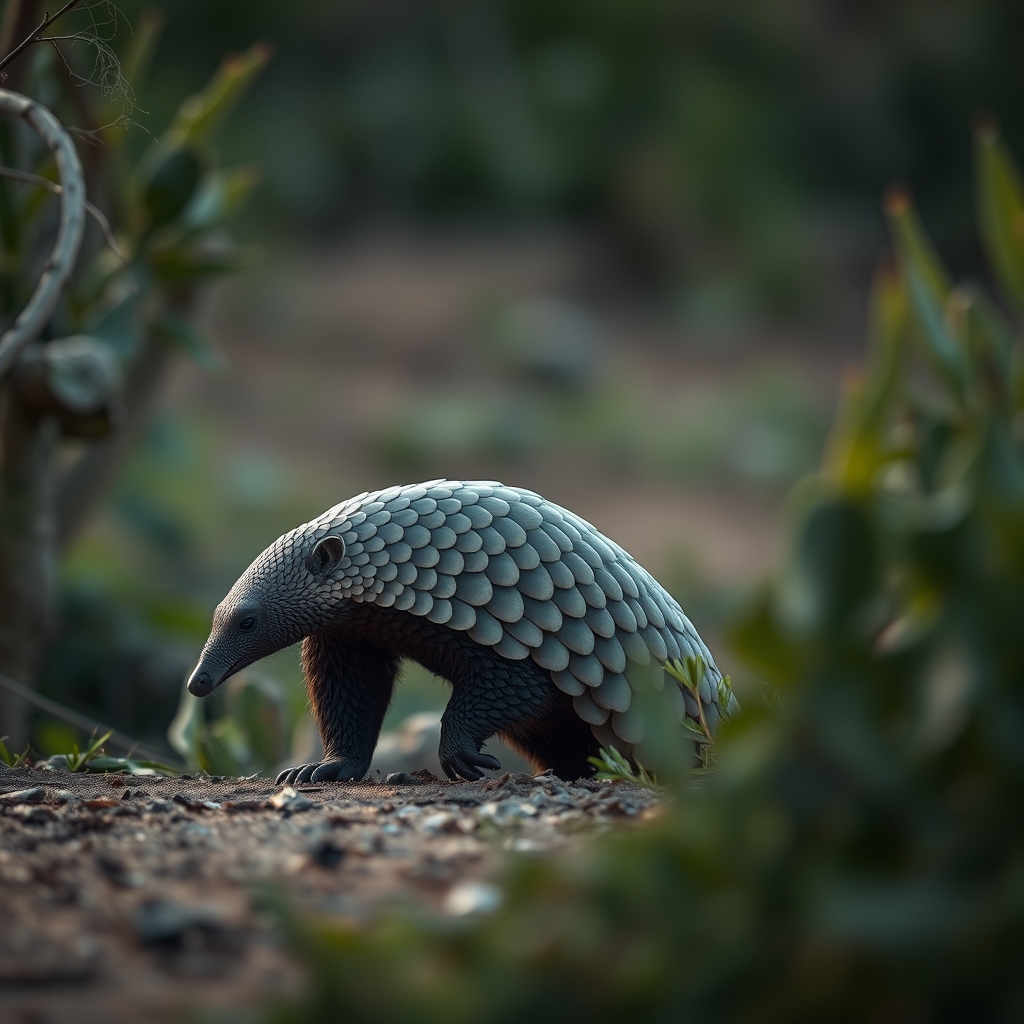
Pangolins are mammals covered in tough, overlapping scales. They are also known as scaly anteaters due to their distinctive appearance and diet. Pangolins are found in various parts of Africa and Asia, and are the only mammals covered in scales.
| Scientific Name | Manis tricuspis |
|---|---|
| Family | Manidae |
| Order | Pholidota |
| Conservation Status | Critically Endangered |
Taxonomy and Identification
Pangolins belong to the family Manidae and are the only living members of the order Pholidota. There are eight species of pangolins, which are further divided into four genera: Manis (four species), Phataginus (two species), Smutsia (one species), and Uromanis (one species).
Physical Characteristics
Pangolins are easily identified by their tough, overlapping scales that cover their bodies. These scales are made of keratin, the same protein that makes up human hair and nails. Pangolins also have powerful claws and strong arms for digging burrows. Adult pangolins can weigh between 3-7 kg (6.6-15.4 lbs) and reach lengths of 30-100 cm (12-39 in).
Behaviour
Pangolins are primarily nocturnal and solitary animals. They spend most of their time digging burrows, which can be complex networks of tunnels and chambers. Pangolins are also skilled climbers and have been known to climb trees in search of food or shelter.
Habitat
Pangolins are found in various parts of Africa and Asia, including savannas, forests, and grasslands. They are well adapted to living in a variety of habitats, from sea level to mountainous regions.
Pangolins are primarily insectivores, which means they feed on insects and other invertebrates. Their diet consists mainly of ants and termites, which they catch using their long, sticky tongues. Pangolins have no teeth, so they cannot chew their food. Instead, they swallow their prey whole and grind it up in their stomachs.
Diet
Pangolins have a specialized diet that consists mainly of ants and termites. They also eat other invertebrates, such as beetles and worms. Pangolins have a long, sticky tongue that they use to catch their prey.
Daily Needs
Pangolins need a diet rich in insects and other invertebrates. They also need access to water for drinking and digging burrows. Pangolins are well adapted to living in a variety of habitats, from savannas to forests.
Warning Signs
Pangolins are critically endangered due to habitat loss and poaching. They are also vulnerable to climate change, which can alter their food supply and habitat. Pangolins are also hunted for their scales, which are believed to have medicinal properties.
Responsible Care or Conservation
Pangolins need protection and conservation efforts to survive. Their habitats need to be protected, and poaching needs to be stopped. Pangolins also need research and monitoring to understand their behavior and habitat needs.
Health, Welfare and Conservation
Pangolins are vulnerable to diseases, such as pneumonia and tuberculosis. They also need protection from poaching and habitat loss. Conservation efforts, such as habitat protection and research, are necessary to protect pangolins.
Practical Takeaways
Pangolins are unique and fascinating animals that need protection and conservation. They are also important indicators of ecosystem health. By protecting pangolins, we can also protect their habitats and other species that share their ecosystems.
What do pangolins eat?
Pangolins are primarily insectivores, which means they feed on insects and other invertebrates. Their diet consists mainly of ants and termites.
Where do pangolins live?
Pangolins are found in various parts of Africa and Asia, including savannas, forests, and grasslands.
Why are pangolins endangered?
Pangolins are critically endangered due to habitat loss and poaching. They are also vulnerable to climate change, which can alter their food supply and habitat.
How can we protect pangolins?
Pangolins need protection and conservation efforts to survive. Their habitats need to be protected, and poaching needs to be stopped. Pangolins also need research and monitoring to understand their behavior and habitat needs.
Important Notice: This article is for informational purposes only and should not be considered as veterinary advice. If you have concerns about pangolin health or welfare, please consult a qualified veterinarian or a reputable animal care organization.
Life Cycle and Development
Pangolins have a unique life cycle that is adapted to their environment. They are born after a gestation period of approximately 130-150 days, and the female pangolin gives birth to a single young. The young pangolin, also called a pup, is born with its eyes closed and its scales soft and pink. The mother pangolin takes care of her pup, nursing it and protecting it from predators. The pup’s scales harden and darken within the first few weeks of life, and it begins to accompany its mother on foraging trips at around six months old.
Communication and Senses
Pangolins have a keen sense of smell, which they use to detect food and predators. They also have poor eyesight, but their sense of touch is highly developed. Pangolins use a variety of clicks, whistles, and grunts to communicate with each other, particularly between mothers and their pups. They also use scent marking to communicate with other pangolins, particularly during the mating season.
Seasonal Variation
Pangolins are adapted to living in a variety of environments, from tropical forests to savannas and grasslands. In areas with a distinct dry season, pangolins may estivate during this time, sealing themselves in their burrows and surviving on stored fat reserves. In areas with a more consistent climate, pangolins may be active year-round.
Ecological Relationships
Pangolins play a crucial role in their ecosystems, serving as both predators and prey. They feed on ants and termites, helping to control their populations and maintain the balance of their ecosystems. Pangolins are also an important food source for many predators, including big cats, hyenas, and birds of prey.
Research and Conservation Efforts
Pangolins are threatened by habitat loss, hunting for their meat and scales, and the pet trade. Conservation efforts are underway to protect pangolin habitats and reduce demand for their body parts. Research is also being conducted to better understand pangolin behavior, ecology, and biology, and to develop effective conservation strategies.
Responsible Enrichment
Pangolins in captivity require specialized care and housing. They need a large, escape-proof enclosure with a deep substrate for digging, as well as a temperature range of 75-85°F (24-29°C) and humidity levels of 50-60%. A diet of live ants and termites is essential, and pangolins also require regular veterinary check-ups and a stimulating environment to reduce stress and promote natural behavior.
Ethical and Legal Considerations
Pangolins are protected by laws in many countries, and the trade in their body parts is regulated by international law. However, enforcement can be challenging, and corruption and lack of awareness can hinder conservation efforts. It is essential to support conservation efforts and respect local laws and regulations when interacting with pangolins or their habitats.
Life Cycle and Development
Pangolins have a unique life cycle that is adapted to their underground lifestyle. They are born blind and helpless, but develop quickly. Baby pangolins, called pups, are born after a gestation period of about 130-150 days. The pups are born in a burrow, where they are cared for by their mother. The mother pangolin nurses her pups and protects them from predators. After about six months, the pups start to venture out of the burrow and begin to eat ants and termites. At this stage, they are still dependent on their mother for protection and food.
As the pups grow, they start to dig their own burrows and become more independent. They reach sexual maturity at about two years of age and can live up to 20 years in the wild. Pangolins are solitary animals and only come together for mating. Female pangolins give birth to one or two pups per year, depending on the species and food availability.
Communication and Senses
Pangolins have poor eyesight, but they have a keen sense of smell and powerful claws that they use to detect prey. They also have a unique way of communicating with each other through a series of clicks, whistles, and grunts. They use these vocalizations to mark their territory, warn other pangolins of potential threats, and attract mates.
Pangolins also use scent markings to communicate with each other. They have scent glands on their chest, near their front legs, and on their underside, near their tail. They use these scent glands to mark their burrows and other objects in their territory.
Seasonal Variation
Pangolins are adapted to living in a variety of habitats, including savannas, grasslands, and forests. They are found in various parts of Africa and Asia, and their distribution varies depending on the species. Some pangolins are migratory, while others are resident and do not migrate.
In areas with a dry season, pangolins may estivate, a state of dormancy, to conserve energy and water. During this time, their metabolism slows down, and they do not eat or drink. They can remain in this state for several months, depending on the availability of food and water.
Ecological Relationships
Pangolins play an important role in their ecosystems as both predators and prey. They feed on ants and termites, which helps to control their populations and maintain the balance of their ecosystems. Pangolins are also preyed upon by other animals, such as lions, leopards, and hyenas.
Pangolins also contribute to seed dispersal and nutrient cycling in their ecosystems. They help to spread seeds through their feces, and their burrows can act as nutrient-rich hotspots that support the growth of plants.
Research and Conservation Efforts
Pangolins are threatened by habitat loss, fragmentation, and poaching. Their habitats are being destroyed and degraded due to agriculture, urbanization, and other human activities. Pangolins are also hunted for their scales, which are believed to have medicinal properties.
Conservation efforts are underway to protect pangolins and their habitats. These efforts include the establishment of protected areas, such as national parks and wildlife reserves, and the development of conservation breeding programs. Research is also being conducted to study the ecology and behavior of pangolins and to develop effective conservation strategies.
Responsible Enrichment
Pangolins can be enriched in captivity by providing them with a stimulating environment that meets their physical and behavioral needs. This can include providing a varied diet, a large enclosure with opportunities for digging and burrowing, and social interaction with other pangolins.
Pangolins can also be trained to perform natural behaviors, such as digging and foraging, and to interact with their environment in a natural way. This can help to promote their physical and mental health and well-being.
Ethical and Legal Considerations
Pangolins are protected by laws and international agreements, such as the Convention on International Trade in Endangered Species of Wild Fauna and Flora (CITES). The trade in pangolin scales and meat is prohibited, and the capture of pangolins for the pet trade is regulated.
Pangolins are also considered to be an important part of their ecosystems, and their loss can have significant impacts on the environment. Therefore, conservation efforts are necessary to protect pangolins and their habitats, and to promote sustainable and responsible human-pangolin conflict mitigation strategies.