African Penguin
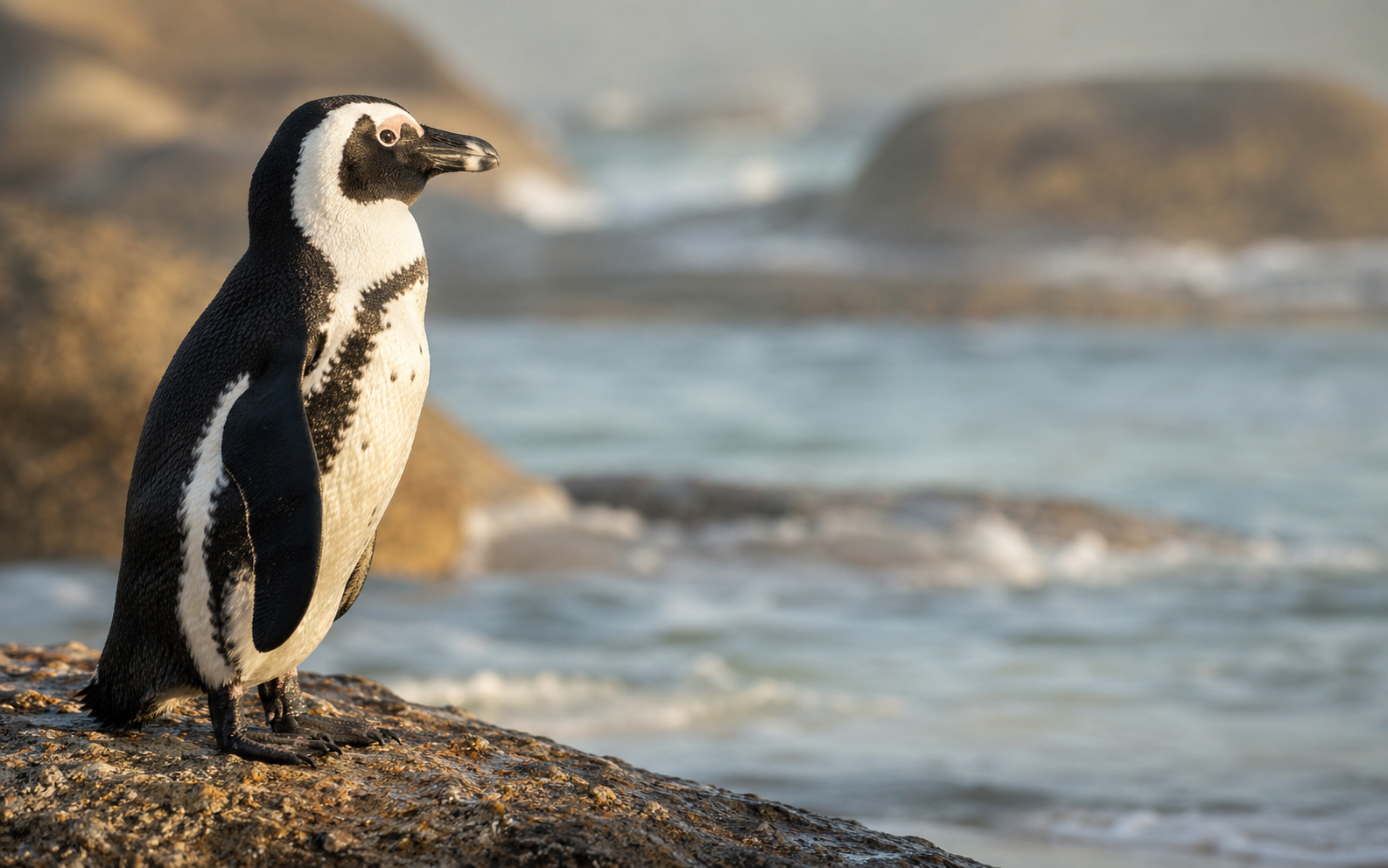
The African Penguin, also known as the Black-footed Penguin, is a charismatic and iconic bird species native to the southern coast of Africa.
Excerpt: African Penguin, flightless bird native to Africa.
African Penguin
The African Penguin, also known as the Black-footed Penguin, is a charismatic and iconic bird species native to the southern coast of Africa.
| Quick Reference | Information |
|---|---|
| Scientific Name | Spheniscus demersus |
| Conservation Status | Endangered |
| Length | 60-70 cm |
| Weight | 2.2-3.5 kg |
| Lifespan | 10-15 years in the wild, up to 20 years in captivity |
Taxonomy and Identification
The African Penguin belongs to the family Spheniscidae and is one of the 18 penguin species found worldwide.
Natural Habitat and Distribution
African Penguins are found along the southern coast of Africa, from Namibia to South Africa.
Behaviour
African Penguins are highly social animals that live in large colonies.
Diet
African Penguins are carnivores and feed on a variety of fish, squid, and crustaceans.
In the wild, they hunt in groups, using their excellent eyesight and agility to catch their prey.
In captivity, African Penguins are typically fed a diet of fish, such as herring or capelin, and may also receive supplements to ensure they receive a balanced diet.
Daily Needs
African Penguins require a lot of exercise and mental stimulation to stay healthy and happy.
In captivity, they need a large enclosure with a pool of water deep enough for them to swim in.
They also require a varied diet and regular veterinary check-ups to prevent health problems.
Warning Signs
African Penguins are prone to certain health problems, such as respiratory infections and parasites.
Warning signs of illness or stress include changes in appetite, lethargy, and difficulty breathing.
Responsible Care or Conservation
African Penguins are endangered due to habitat destruction, overfishing, and climate change.
To help conserve this species, it is essential to support organizations that work to protect their habitats and reduce pollution.
Individuals can also make a difference by reducing their carbon footprint, using eco-friendly products, and supporting sustainable fishing practices.
What is the average lifespan of an African Penguin in the wild?
10-15 years
What do African Penguins primarily feed on?
Fish, squid, and crustaceans
Why are African Penguins endangered?
Habitat destruction, overfishing, and climate change
How can I help conserve African Penguins?
Support organizations that protect their habitats, reduce pollution, and promote sustainable fishing practices
Can I have an African Penguin as a pet?
No, African Penguins are wild animals that require specialized care and housing, and are not suited for domestic life
Sources
- African Penguin: IUCN Red List
- African Penguin: BirdLife International
- African Penguin: Penguin Conservation Center
Remember, if you suspect that your African Penguin is ill or injured, it is essential to seek veterinary care from a qualified avian veterinarian.
Life Cycle and Development
African Penguins have a unique life cycle, with distinct stages of development. They breed throughout the year, with the peak breeding season typically occurring from April to August. During this time, males establish territories and engage in loud, donkey-like calls to attract females. Once paired, the female lays a single egg in a nesting burrow or under a bush, which is then incubated for approximately 38-42 days.
Both parents take turns incubating the egg and caring for the chick, which hatches blind and helpless. The chick relies on its parents for food and warmth, and grows rapidly, developing a thick layer of down feathers within the first few weeks. After about 30-40 days, the chick begins to venture out of the nest, and at around 60-70 days, it starts to molt, replacing its down feathers with juvenile plumage.
Juvenile African Penguins typically fledge at around 70-80 days old, although they may remain dependent on their parents for several months. They reach sexual maturity at around 2-4 years old, although they may not breed until they are 4-6 years old.
Communication and Senses
African Penguins have a range of unique communication methods, including vocalizations, visual displays, and even scent marking. They use a variety of calls to convey different information, such as contact calls to maintain contact with other penguins, alarm calls to alert others to predators, and courtship calls to attract a mate.
In addition to vocalizations, African Penguins also use visual displays to communicate. They use a range of postures, including standing upright, lying down, and even using their flippers to signal aggression or courtship. They also use scent marking to communicate with other penguins, using scent glands located above their tail to deposit pheromones on rocks and other surfaces.
African Penguins have excellent eyesight, both in and out of the water. They have a highly developed sense of vision, which they use to detect prey, navigate, and avoid predators. They can also detect polarized light, which helps them to detect the presence of fish and other prey underwater.
Seasonal Variation and Ecological Relationships
African Penguins are adapted to the temperate coastal waters of southern Africa, where they experience a range of seasonal variations. During the summer months, they feed on a variety of fish, squid, and crustaceans, which are abundant in the warmer waters. In the winter months, they switch to feeding on more energy-rich prey, such as sardines and anchovies, which are more abundant in the cooler waters.
African Penguins have a range of ecological relationships with other species in their ecosystem. They are preyed upon by a range of predators, including leopard seals, killer whales, and sharks. They also compete with other seabirds, such as gulls and albatrosses, for food and breeding resources.
In addition to their ecological relationships, African Penguins also have an important role in maintaining the balance of their ecosystem. They help to regulate the populations of their prey species, which in turn helps to maintain the health of the marine ecosystem.
Research and Conservation Efforts
African Penguins are the subject of ongoing research and conservation efforts. Scientists are studying their behavior, ecology, and population dynamics to better understand the impacts of climate change, habitat degradation, and other human activities on their populations.
Conservation efforts are focused on protecting their breeding habitats, reducing bycatch and other human impacts on their populations, and promoting sustainable fishing practices. The African Penguin is listed as Endangered on the IUCN Red List, and conservation efforts are underway to reduce their population decline and promote their recovery.
Responsible Enrichment and Ethical Considerations
African Penguins in captivity require a range of enrichment activities to promote their physical and mental health. These can include providing a varied diet, creating artificial nesting burrows, and offering a range of toys and activities to stimulate their natural behavior.
However, the keeping of African Penguins in captivity also raises a range of ethical considerations. Many zoos and aquariums are working to promote the conservation of African Penguins and their habitats, while also providing education and outreach programs to promote their conservation.
Ultimately, the responsible enrichment and care of African Penguins requires a deep understanding of their behavior, ecology, and conservation status, as well as a commitment to promoting their welfare and conservation.
Adaptation to Aquatic Life
African Penguins have several adaptations that enable them to thrive in their aquatic environment. Their wings, although modified for swimming rather than flying, are highly efficient for propelling them through the water. The wings are shaped like flippers, with a rigid feather structure that helps to reduce drag and increase maneuverability. This unique wing shape allows African Penguins to reach speeds of up to 25 km/h when chasing prey or escaping predators.
In addition to their wing structure, African Penguins have a number of other adaptations that aid their aquatic lifestyle. Their feathers are densely packed and coated with a waxy substance that helps to repel water, keeping them dry and insulated in cold water. They also have a thick layer of fat (up to 30% of their body weight) that helps to keep them warm in cold water. Their eyes are adapted for underwater vision, with a reflective layer that helps to enhance visibility in low light conditions.
Ecological Role
African Penguins play a crucial role in maintaining the balance of their ecosystems. As predators, they help to regulate the populations of their prey species, such as sardines and anchovies. This, in turn, has a cascading effect on the entire ecosystem, influencing the populations of other predators and prey species. African Penguins also contribute to the nutrient cycle, transporting nutrients from the ocean to the land through their guano (excrement).
In addition to their ecological role, African Penguins also serve as indicators of the health of their ecosystems. Changes in their populations or behavior can signal broader environmental issues, such as overfishing, pollution, or climate change. As a result, African Penguins are often used as a “canary in the coal mine” to monitor the health of their ecosystems.
Captive Breeding Programs
Captive breeding programs play a crucial role in the conservation of African Penguins. These programs aim to breed penguins in controlled environments, such as zoos and aquariums, to help increase populations and reduce the risk of extinction. Captive breeding programs also provide an opportunity for researchers to study African Penguin behavior, physiology, and ecology, which can inform conservation efforts.
Captive breeding programs for African Penguins involve a range of activities, including artificial incubation, hand-rearing of chicks, and the creation of artificial colonies. These programs require careful management to ensure the health and well-being of the penguins, as well as to maintain genetic diversity and reduce the risk of inbreeding.
Threats and Challenges
African Penguins face a range of threats and challenges, including habitat destruction, overfishing, pollution, and climate change. The destruction of their habitats, such as the clearing of coastal vegetation and the degradation of nesting sites, reduces the availability of breeding and feeding grounds. Overfishing and pollution also impact African Penguin populations, reducing the availability of food and increasing the risk of disease and injury.
Climate change poses a significant threat to African Penguins, as it alters the distribution and abundance of their prey species, as well as the quality of their habitats. Rising sea temperatures and changes in ocean currents also impact the penguins’ ability to breed and feed, making it harder for them to survive and thrive.