
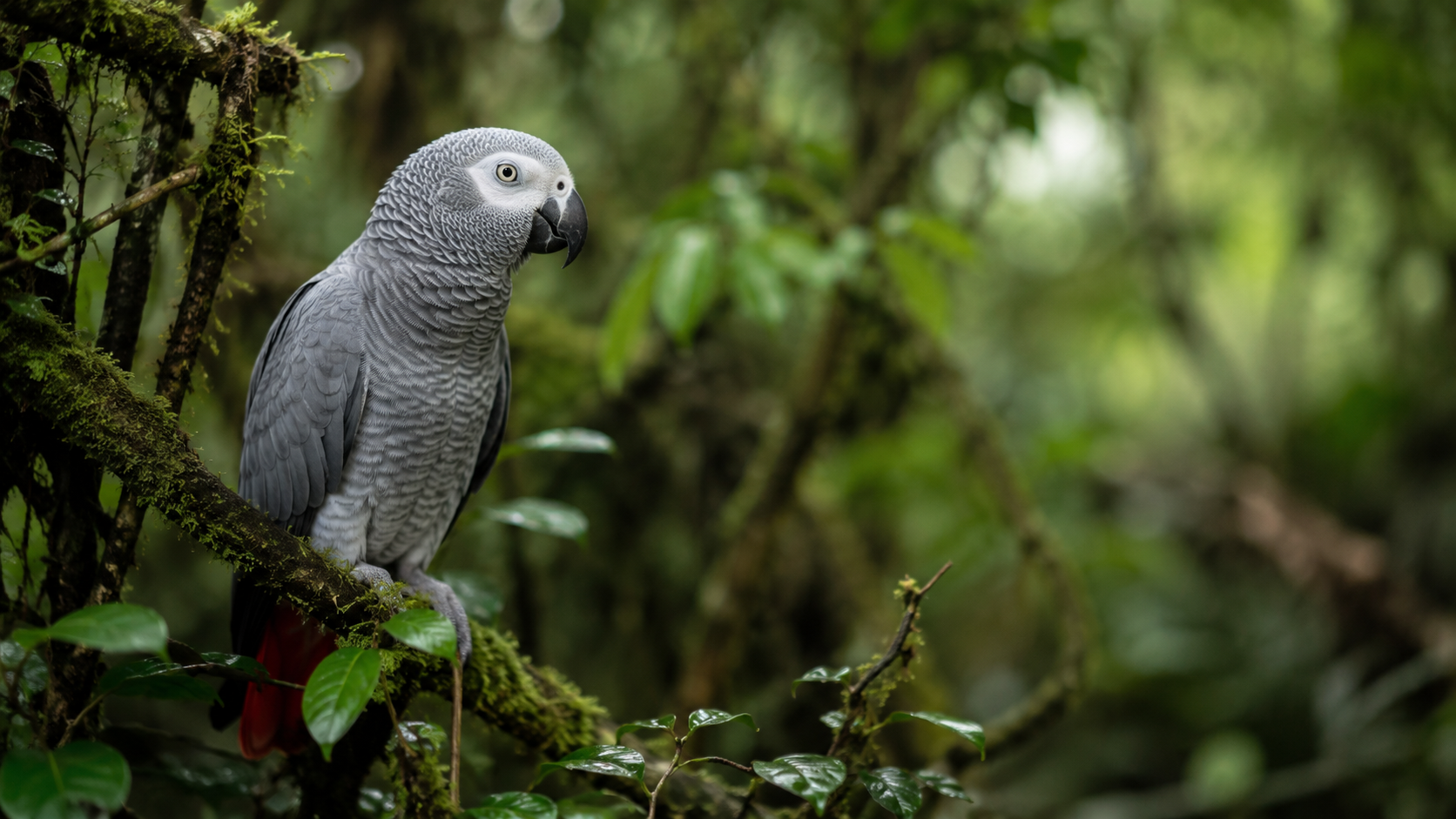
Loro Gris Africano (Yaco)
The Loro Gris Africano, also known as the African Grey Parrot, is a large parrot species native to the equatorial regions of Africa. Renowned for their intelligence, social behavior, and ability to mimic human speech, these birds have become popular pets and are highly sought after by parrot enthusiasts.
Quick Reference Table
| Scientific Name | Psittacus erithacus |
|---|---|
| Family | Psittacidae |
| Genus | Psittacus |
| Species | P. erithacus |
| Conservation Status | Endangered |
Taxonomy and Identification
The Loro Gris Africano belongs to the family Psittacidae and is classified as Psittacus erithacus. They are characterized by their distinctive grey plumage, black beak, and expressive eyes. Adults can grow up to 40 cm in length and weigh between 350-500 grams.
Natural Habitat and Distribution
African Greys inhabit the tropical rainforests of equatorial Africa, ranging from Senegal in the west to Ethiopia in the east, and south to Angola and Mozambique. They are found in dense forests, woodlands, and savannas, typically at elevations below 1,500 meters.
Behaviour
Loro Gris Africanos are highly social birds that thrive in flocks. In the wild, they are known to form large groups, often with other parrot species. They are skilled foragers, using their strong beaks to crack open seeds, nuts, and fruits. African Greys are also renowned for their intelligence and ability to mimic human speech and other sounds.
Diet
In their natural habitat, Loro Gris Africanos feed on a variety of fruits, seeds, nuts, and vegetation. They have also been observed eating insects and small invertebrates. In captivity, a balanced diet that includes a mix of commercial pellets, fruits, and vegetables is recommended.
Care or Responsible Observation
Due to their intelligence and social nature, African Greys require a lot of attention and interaction. In captivity, they need large cages or aviaries that provide ample space for flight and exercise. A varied diet, regular social interaction, and mental stimulation are essential for their well-being.
Loro Gris Africano (Yaco)
The Loro Gris Africano, also known as the African Grey Parrot, is a large parrot species native to the equatorial regions of Africa. Renowned for their intelligence, social behavior, and ability to mimic human speech, these birds have become popular pets and are highly sought after by parrot enthusiasts.
Health, Welfare, and Conservation
African Greys are listed as Endangered on the IUCN Red List due to habitat loss, poaching, and the pet trade. In captivity, they are prone to health issues such as feather plucking, respiratory problems, and behavioral disorders if not provided with proper care and attention. Regular veterinary check-ups and a balanced lifestyle are crucial for their health and well-being.
Practical Takeaways
- Provide a large cage or aviary with ample space for flight and exercise.
- Offer a varied diet that includes commercial pellets, fruits, and vegetables.
- Ensure regular social interaction and mental stimulation.
- Consult a veterinarian regularly to monitor health and detect potential issues early.
Frequently Asked Questions
What is the average lifespan of an African Grey Parrot?
African Greys can live up to 50-60 years in captivity, making them a long-term commitment as pets.
Can African Greys learn to talk?
Yes, African Greys are renowned for their ability to mimic human speech and other sounds. They are considered one of the best talking birds in the world.
Why are African Greys endangered?
African Greys are listed as Endangered due to habitat loss, poaching, and the pet trade. Conservation efforts are necessary to protect their populations and habitats.
Sources
- International Union for Conservation of Nature (IUCN). (2020). Psittacus erithacus.
- African Grey Parrot Conservation Project. (n.d.). About African Greys.
- World Wildlife Fund. (n.d.). African Grey Parrot.
Important Notice: If you suspect that your African Grey Parrot is ill or injured, consult a qualified veterinarian experienced in caring for birds. They can provide professional advice and treatment to ensure the best possible outcome for your pet.
Life Cycle and Development
The African Grey Parrot’s life cycle is characterized by a relatively long lifespan, with some individuals living up to 60 years in captivity. In the wild, their lifespan is estimated to be around 40-50 years. The species’ reproductive cycle is also noteworthy, with breeding typically occurring during the wet season. Female African Greys lay 2-4 eggs per clutch, which are incubated for approximately 30 days. Both parents take turns incubating the eggs and caring for the young, which fledge after about 12-14 weeks.
After fledging, the young birds remain dependent on their parents for several months, learning essential skills such as foraging and social behavior. During this period, they are vulnerable to predators and harsh environmental conditions, which can impact their survival rates. In captivity, breeders and owners must provide a nurturing environment that mimics the birds’ natural social structure and developmental needs.
Communication and Senses
African Greys are renowned for their exceptional communication skills, which include vocal mimicry, body language, and visual displays. They possess a large syrinx, the vocal organ located at the base of the trachea, which enables them to produce a wide range of sounds, from simple calls to complex vocalizations. In the wild, they use their vocalizations to maintain contact with flock members, warn others of potential threats, and even engage in playful interactions.
In addition to their vocal abilities, African Greys possess exceptional visual acuity, with a field of vision of almost 360 degrees. Their eyes are also highly sensitive to color and movement, allowing them to detect subtle changes in their environment. Their sense of touch is also highly developed, with sensitive feathers and a strong, dexterous beak that enables them to manipulate objects with precision.
Seasonal Variation and Ecological Relationships
African Greys have adapted to the seasonal variations in their native habitats, where the availability of food and water can fluctuate significantly. During the dry season, they may travel long distances in search of food, often forming large flocks that forage together. In contrast, during the wet season, they tend to disperse into smaller groups, taking advantage of the abundant food sources.
The species plays a vital ecological role in their native habitats, serving as both seed dispersers and predators. They help to maintain the balance of forest ecosystems by controlling insect and small animal populations, while also dispersing seeds through their droppings. In turn, African Greys are preyed upon by various predators, including birds of prey, snakes, and primates.
Research and Conservation Efforts
African Greys have been the subject of extensive research, particularly in the fields of animal cognition, behavior, and conservation. Studies have shown that these birds possess advanced cognitive abilities, including problem-solving, memory, and even cultural transmission. However, their populations are declining in the wild due to habitat loss, poaching, and the pet trade.
Conservation efforts are underway to protect the African Grey Parrot and its habitats. The species is listed on the IUCN Red List, and international trade is regulated by CITES. National parks and protected areas have been established in several countries to safeguard their habitats, and local communities are being engaged in conservation efforts. Additionally, many organizations are working to rehabilitate and release captive-bred birds into the wild, helping to augment declining populations.
Responsible Enrichment and Ethical Considerations
As popular pets, African Greys require specialized care and attention to their physical and psychological needs. Responsible owners must provide a stimulating environment that includes a varied diet, social interaction, and opportunities for exercise and mental stimulation. This can include providing toys, perches, and foraging activities that mimic their natural behavior.
However, the pet trade has also raised ethical concerns, as many birds are captured from the wild or bred in inhumane conditions. It is essential to support reputable breeders and conservation organizations that prioritize the welfare of these magnificent birds. Furthermore, owners must be aware of the long-term commitment required to care for an African Grey, as they can live for many decades.


