Wolf Spider
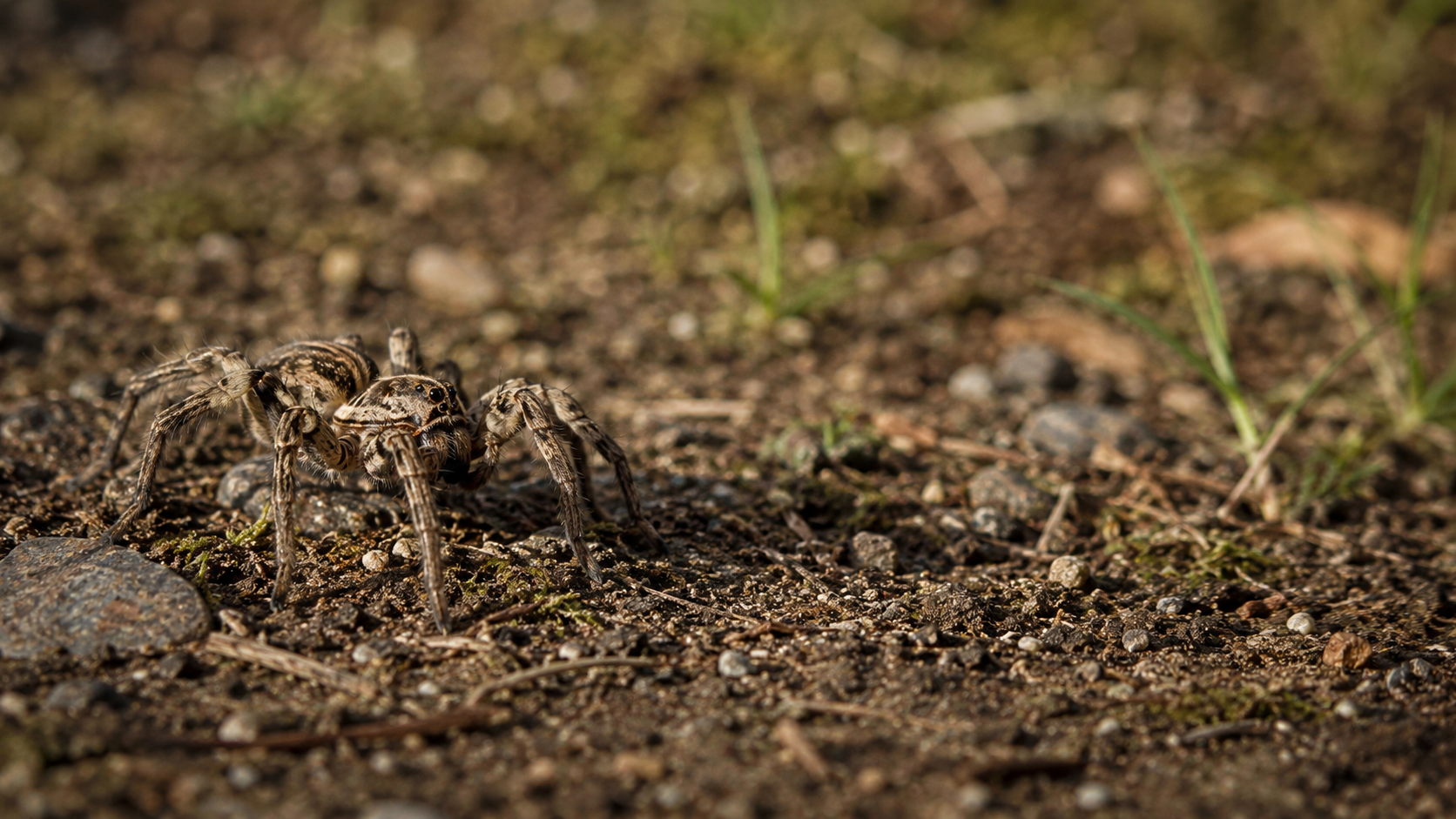
Wolf spiders are large, hairy arachnids that belong to the family Lycosidae. They are found in a wide range of habitats all over the world, including forests, grasslands, and deserts.
Natural History
Wolf spiders are predators that feed on other insects, including flies, beetles, and even other spiders. They are active hunters, using their speed and agility to chase down their prey. Some species of wolf spiders are also known to scavenge for food, eating dead insects and other small animals.
Wolf spiders are generally solitary animals, only coming together to mate. Female wolf spiders are known for their unique behavior of carrying their egg sacs with them, and later carrying their spiderlings on their backs.
Safety and Precautions
Wolf spiders are venomous, but their venom is not typically life-threatening to humans. However, their bites can be painful and may cause swelling, redness, and itching. If you are bitten by a wolf spider, it is recommended that you wash the area with soap and water, apply a cold compress, and take an antihistamine to reduce itching and swelling.
It is also important to note that wolf spiders are generally not aggressive and will only bite humans in self-defense. If you encounter a wolf spider, it is best to leave it alone and let it go on its way.
Conservation Status
Wolf spiders are not considered to be a threatened group, and many species are found in a wide range of habitats. However, some species of wolf spiders may be affected by habitat destruction, pesticide use, and climate change.
Interesting Facts
| Fact | Description |
|---|---|
| Scientific Name | Lycosidae |
| Size | Up to 1 inch (2.5 cm) in body length |
| Leg Span | Up to 4 inches (10 cm) |
| Habitat | Forests, grasslands, deserts |
| Diet | Other insects, including flies, beetles, and other spiders |
| Behavior | Active hunters, solitary animals |
FAQ
Are wolf spiders poisonous?
Wolf spiders are venomous, but their venom is not typically life-threatening to humans.
What do wolf spiders eat?
Wolf spiders feed on other insects, including flies, beetles, and even other spiders.
Are wolf spiders aggressive?
Wolf spiders are generally not aggressive and will only bite humans in self-defense.
How do wolf spiders reproduce?
Female wolf spiders carry their egg sacs with them, and later carry their spiderlings on their backs.
- National Geographic, “Wolf Spiders”
- Smithsonian Institution, “Lycosidae”
- American Museum of Natural History, “Wolf Spiders”
Please note that wolf spiders are wild animals and should not be handled or kept as pets. If you have any concerns about a wolf spider bite or any other animal-related issue, please consult a veterinarian or a medical professional.
Life Cycle and Development
Wolf spiders undergo a complex life cycle that involves several stages of development. The female wolf spider’s reproductive cycle begins with the production of an egg sac, which can contain up to 100 eggs. The female spider carries the egg sac with her, often attaching it to her spinnerets, until the eggs hatch. This behavior is unique among spiders and is thought to provide protection to the eggs from predators.
After the eggs hatch, the spiderlings emerge and climb onto the mother’s back, where they will remain for several weeks. During this time, the mother spider will continue to hunt and feed, providing for her young. As the spiderlings grow, they will eventually leave their mother’s back and disperse, starting their own lives.
Wolf spiders go through a process called “incomplete metamorphosis,” which means that the young spiders, or spiderlings, look like small versions of the adults. They will molt several times as they grow, eventually reaching adulthood. The entire life cycle of a wolf spider can take several months to a year or more, depending on the species and environmental factors.
Communication and Senses
Wolf spiders use a variety of methods to communicate with each other, including visual cues, vibrations, and even sound. They have excellent eyesight and can detect movement and changes in light levels. They also have sensitive pedipalps, which are appendages that resemble small claws, that they use to detect vibrations in the air and on surfaces.
Wolf spiders are also able to detect chemical cues, such as pheromones, which are used for mating and territorial marking. They have a highly developed sense of smell, which they use to locate prey and detect potential threats.
In addition to their senses, wolf spiders are also able to use their bodies to communicate. They will often use posturing and displays of aggression to deter predators or rivals. For example, a threatened wolf spider may raise its abdomen and display its fangs to warn off a potential threat.
Seasonal Variation and Ecological Relationships
Wolf spiders are found in a wide range of habitats and are adapted to survive in a variety of environments. In temperate regions, wolf spiders are often more active during the warmer months, when insects are more abundant. During the winter, they may burrow underground or hide in protected areas to escape the cold.
Wolf spiders play an important role in many ecosystems, serving as both predators and prey. They feed on a wide range of insects, including pests that can damage crops, and are in turn preyed upon by other animals, such as birds and lizards.
In some ecosystems, wolf spiders have been found to have a mutualistic relationship with certain species of ants. The ants will often live near the spider’s burrow and provide the spider with food, in exchange for protection from other predators.
Research and Responsible Enrichment
Wolf spiders are popular subjects for scientific research, particularly in the fields of ecology and behavior. Scientists study wolf spiders to gain a better understanding of their behavior, ecology, and evolution.
In captivity, wolf spiders can be kept as pets, but it is essential to provide them with a suitable environment that meets their needs. This includes a large enclosure with adequate ventilation, a heat source, and a varied diet. Wolf spiders are also skilled escape artists, so the enclosure must be secure.
It is also essential to handle wolf spiders gently and humanely, as they can be injured easily. Many species of wolf spiders are also protected by laws and regulations, so it is crucial to check local laws before capturing or keeping them in captivity.
Ethical and Legal Considerations
Wolf spiders are an essential part of many ecosystems, and their populations are often threatened by habitat destruction, pesticide use, and climate change. As a result, many species of wolf spiders are protected by laws and regulations.
In some countries, wolf spiders are considered an invasive species and are subject to control measures. However, these measures can often have unintended consequences, such as harming native species or disrupting ecosystems.
It is essential to consider the ethical implications of keeping wolf spiders in captivity or controlling their populations in the wild. This includes ensuring that any actions taken are humane, sustainable, and do not harm the environment or other species.
Behavioral Adaptations
Wolf spiders have evolved various behavioral adaptations to survive and thrive in their environments. One of the most notable adaptations is their ability to burrow. Many species of wolf spiders are skilled diggers, using their powerful legs and sharp claws to excavate complex burrows. These burrows provide protection from predators, a stable temperature and humidity, and a safe place to lay eggs and care for young.
Reproduction and Parental Care
Female wolf spiders are known for their remarkable parental care. After mating, females will spin an egg sac and carry it with them, often attaching it to their spinnerets. The egg sac contains several hundred eggs, which will hatch into spiderlings after several weeks. The female will then carry the spiderlings on her back, providing them with protection and food until they are old enough to fend for themselves. This unique behavior is a testament to the complex social behavior of wolf spiders.
Ecological Role
Wolf spiders play a crucial role in their ecosystems, serving as both predators and prey. They feed on a wide range of insects, including flies, beetles, and other spiders, helping to regulate populations and maintain the balance of their ecosystems. In turn, wolf spiders are preyed upon by larger animals, such as birds, lizards, and other spiders, making them an important link in the food chain.
Captive Care and Breeding
Wolf spiders are popular among arachnophiles and are often kept in captivity. However, they require specialized care and housing, including a large enclosure with a deep substrate for burrowing and a heat source to maintain a stable temperature. Breeding wolf spiders in captivity can be challenging, but with proper care and attention, it is possible to successfully raise these fascinating animals.
Threats and Conservation Efforts
Wolf spiders are generally not considered to be a threatened group, but habitat destruction and fragmentation can impact local populations. Additionally, the introduction of non-native species can lead to competition for resources and habitat. Conservation efforts, such as habitat preservation and restoration, can help to protect wolf spider populations and maintain the balance of their ecosystems.