Natural History
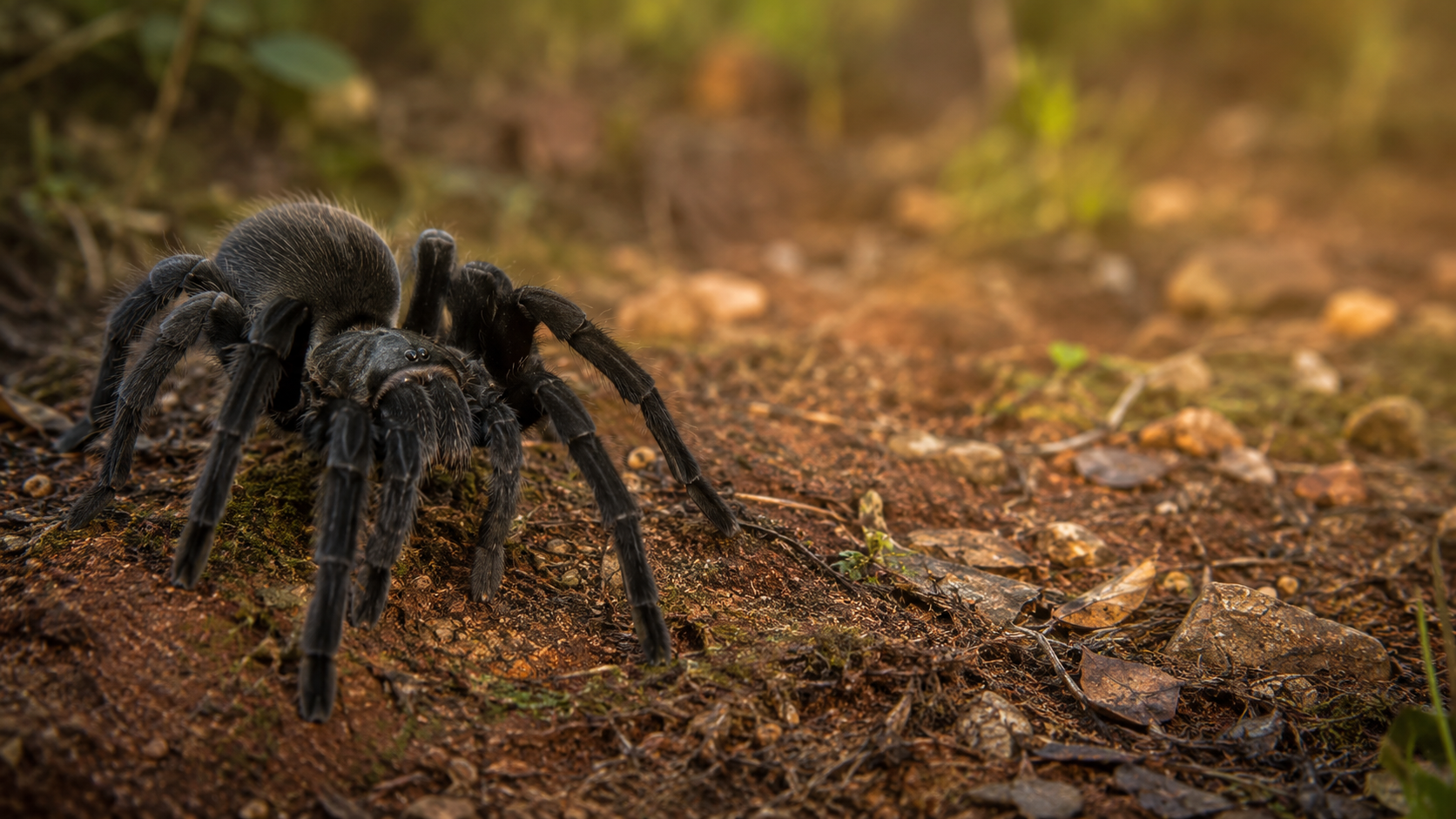
The Brazilian Black Beauty Tarantula (Grammostola pulchra) is a large, dark tarantula native to Brazil. It is a member of the family Theraphosidae and is also known as the Satin Black Tarantula or the Brazilian Black Tarantula.
These tarantulas are found in the wild in the tropical regions of Brazil, where they inhabit the forest floor and underground burrows. They are nocturnal animals and spend most of their time hiding in dark, secluded areas.
Physical Characteristics
The Brazilian Black Beauty Tarantula is a large species of tarantula, with a body length of up to 4 inches (10 cm) and a leg span of up to 6 inches (15 cm). They have a dark brown to black carapace and abdomen, with a distinctive sheen to their fur.
They have eight legs, each covered in sensory hairs that help them detect vibrations and movement. They also have pedipalps, which are appendages that resemble small claws and are used for sensory purposes.
| Scientific Name | Grammostola pulchra |
|---|---|
| Common Name | Brazilian Black Beauty Tarantula |
| Family | Theraphosidae |
| Native Habitat | Brazil |
| Body Length | Up to 4 inches (10 cm) |
| Leg Span | Up to 6 inches (15 cm) |
Behavior and Diet
In the wild, Brazilian Black Beauty Tarantulas are carnivores and feed on small insects, such as crickets and mealworms. They are also known to eat other small arachnids and even small frogs.
They are skilled hunters and use their speed and agility to catch their prey. They are also known to use their venom to immobilize their prey before eating it.
Conservation Status
The Brazilian Black Beauty Tarantula is not considered to be a threatened species, although its habitat is under threat from deforestation and urbanization.
They are also popular pets and are often captured from the wild for the pet trade. This can have a negative impact on wild populations and can also lead to the spread of diseases.
Public Safety
Brazilian Black Beauty Tarantulas are venomous and can deliver a painful bite. However, their venom is not deadly to humans and is generally only used in self-defense.
They are not typically aggressive and will only bite if they feel threatened or cornered.
Q: Are Brazilian Black Beauty Tarantulas good pets?
A: Brazilian Black Beauty Tarantulas can make interesting pets for experienced arachnid enthusiasts, but they are not recommended for beginners. They require specialized care and housing, and can be venomous.
Q: How long do Brazilian Black Beauty Tarantulas live?
A: Brazilian Black Beauty Tarantulas can live for up to 20-30 years in captivity, although the average lifespan is around 10-15 years.
Q: What do Brazilian Black Beauty Tarantulas eat?
A: Brazilian Black Beauty Tarantulas are carnivores and feed on small insects, such as crickets and mealworms.
Q: Are Brazilian Black Beauty Tarantulas endangered?
A: Brazilian Black Beauty Tarantulas are not considered to be a threatened species, although their habitat is under threat from deforestation and urbanization.
- National Geographic: Brazilian Black Beauty Tarantula
- Smithsonian Institution: Grammostola pulchra
- International Union for Conservation of Nature (IUCN): Grammostola pulchra
Important: If you suspect that your pet tarantula is ill or injured, please consult a qualified veterinarian for advice. Tarantulas have specific care requirements and can be prone to certain health problems if not properly cared for.
Life Cycle and Development
The Brazilian Black Beauty Tarantula, like other tarantulas, undergoes a complex life cycle that involves several stages of development. The female tarantula can live for up to 20-30 years in captivity, while the male’s lifespan is significantly shorter, typically ranging from 5-10 years. The life cycle of a Brazilian Black Beauty Tarantula can be divided into three main stages: egg sac, spiderling, and adult.
After mating, the female tarantula will produce an egg sac, which can contain up to 100 eggs. The egg sac is a protective, silken pouch that the female will guard and care for until the eggs hatch. The eggs will hatch after about 6-8 weeks, and the spiderlings will emerge. The spiderlings will stay with their mother for several weeks, feeding on the egg sac and the mother’s body fluids.
As the spiderlings grow, they will begin to venture out on their own, eventually leaving their mother’s burrow. At this stage, they are vulnerable to predators and will need to find food and shelter on their own. The spiderlings will go through several molts, shedding their skin as they grow and develop. After about 5-7 years, the spiderlings will reach adulthood, at which point they will be ready to mate and start the cycle over again.
Communication and Senses
Brazilian Black Beauty Tarantulas, like other tarantulas, rely heavily on their senses to communicate and navigate their environment. They have poor eyesight, but they are highly sensitive to vibrations and movement. They use their sensory hairs on their legs to detect the slightest vibrations in the air and on the ground, allowing them to detect potential prey or predators.
Tarantulas also use chemical signals, known as pheromones, to communicate with each other. They release these chemical signals into the air or deposit them on surfaces, allowing other tarantulas to detect them. Pheromones play a crucial role in mating, territorial behavior, and warning other tarantulas of potential threats.
In addition to their sensory hairs and pheromones, tarantulas also use their pedipalps to detect and explore their environment. The pedipalps are highly sensitive and are used to taste and feel objects, allowing the tarantula to gather information about its surroundings.
Seasonal Variation and Ecological Relationships
Brazilian Black Beauty Tarantulas are adapted to the tropical regions of Brazil, where the climate is warm and humid year-round. They are nocturnal animals and spend most of their time hiding in dark, secluded areas, emerging at night to hunt and forage for food.
In the wild, Brazilian Black Beauty Tarantulas play an important role in the ecosystem, serving as both predators and prey. They feed on insects, other arachnids, and small vertebrates, helping to regulate the populations of these animals. In turn, they are preyed upon by larger animals, such as birds, reptiles, and other predators.
Tarantulas also have a complex relationship with their environment, relying on the forest floor and underground burrows for shelter and protection. They help to break down organic matter and recycle nutrients, contributing to the health and fertility of the soil.
Research and Responsible Enrichment
Brazilian Black Beauty Tarantulas are popular among tarantula enthusiasts and researchers, who study their behavior, ecology, and biology. Researchers have made significant contributions to our understanding of tarantula behavior, ecology, and conservation, and have developed methods for breeding and caring for these animals in captivity.
For those who keep Brazilian Black Beauty Tarantulas as pets, responsible enrichment is essential to providing a stimulating and healthy environment. This can include providing a varied diet, a suitable enclosure, and opportunities for exercise and exploration. Tarantula enthusiasts can also contribute to conservation efforts by supporting sustainable and responsible tarantula breeding programs.
Ethical and Legal Considerations
The collection and trade of Brazilian Black Beauty Tarantulas are regulated by laws and international agreements, aimed at protecting these animals and their habitats. The Convention on International Trade in Endangered Species of Wild Fauna and Flora (CITES) regulates the international trade of tarantulas, including the Brazilian Black Beauty Tarantula.
In addition to legal considerations, there are also ethical concerns surrounding the collection and trade of tarantulas. Many tarantulas are collected from the wild, which can harm local populations and ecosystems. Responsible and sustainable tarantula breeding programs can help reduce the demand for wild-caught animals and promote conservation efforts.
Reproduction and Mating
In captivity, Brazilian Black Beauty Tarantulas have been known to breed successfully, with females producing egg sacs containing up to 100 eggs. The males will perform a complex courtship dance to attract females, involving vibrations and visual displays. After mating, the female will seal the male in a burrow and eventually kill him, a common practice among tarantulas. The female will then guard the egg sac until the spiderlings emerge, after which she will abandon them to fend for themselves.
Longevity and Health
Brazilian Black Beauty Tarantulas are known to live up to 20-30 years in captivity, making them a long-term commitment for keepers. They are generally hardy animals, but can be susceptible to certain health issues such as respiratory problems and mites. Regular cleaning of their enclosure and a balanced diet can help prevent these issues.
Environmental Enrichment
Providing a stimulating environment is crucial for the well-being of Brazilian Black Beauty Tarantulas. Keepers can offer a variety of substrates, such as peat moss and coconut fiber, to allow the tarantulas to burrow and dig. Adding rocks, plants, and other decorations can also provide visual stimulation and create hiding places. A temperature range of 75-85°F (24-29°C) and humidity levels of 60-70% can help replicate their natural environment.
Captive Breeding Programs
Several institutions and breeders are involved in captive breeding programs for Brazilian Black Beauty Tarantulas, helping to reduce the demand for wild-caught individuals and promote conservation. These programs also provide valuable insights into the biology and behavior of the species, informing conservation efforts and husbandry practices.
Threats and Conservation Efforts
The Brazilian Black Beauty Tarantula is listed as Least Concern on the IUCN Red List, but habitat destruction and collection for the pet trade are potential threats to wild populations. Conservation efforts, such as habitat protection and education campaigns, can help mitigate these threats and ensure the long-term survival of the species.