Australian Lungfish
The Australian Lungfish (Neoceratodus forsteri) is a fascinating and ancient species of fish that has been on our planet for over 380 million years.
Classification and Evolution
The Australian Lungfish is a member of the family Ceratodontidae and is one of the six species of lungfish found in Africa, South America, and Australia.
It is believed that lungfish evolved from a common ancestor with tetrapods (four-legged vertebrates) during the Devonian period, and since then, they have developed unique characteristics that enable them to thrive in aquatic environments.
Natural History
Australian Lungfish are found in the freshwater rivers, lakes, and wetlands of eastern Australia, from Queensland to New South Wales.
They are air-breathing fish that use their mouth to gulp air from the surface, which is then absorbed into their bloodstream through a labyrinthine respiratory system.
This unique adaptation allows them to survive in low-oxygen environments and makes them one of the most interesting fish species in the world.
Physical Characteristics
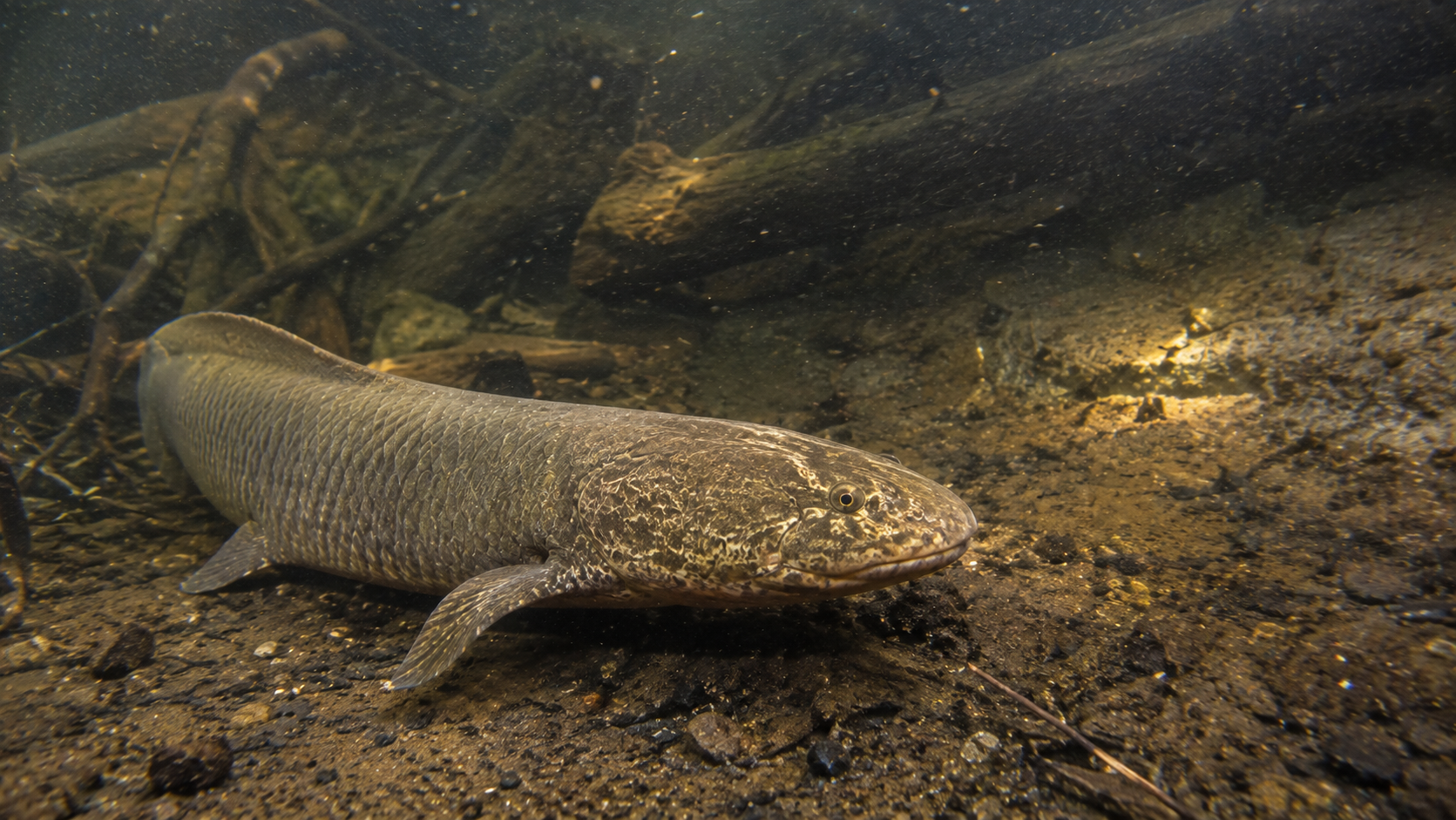
Australian Lungfish can grow up to 1.5 meters in length and weigh up to 40 kilograms.
They have a elongated body, with a brownish-gray color and a distinctive pattern of darker spots and stripes.
Their mouth is wide and flat, with many small teeth that are used for catching and eating small fish, crustaceans, and insects.
| Characteristic | Value |
|---|---|
| Scientific Name | Neoceratodus forsteri |
| Family | Ceratodontidae |
| Length | Up to 1.5 meters |
| Weight | Up to 40 kilograms |
| Habitat | Freshwater rivers, lakes, and wetlands |
Conservation Status
The Australian Lungfish is listed as Endangered on the IUCN Red List due to habitat destruction, pollution, and overfishing.
Conservation efforts are underway to protect their habitats and reduce the impact of human activities on their populations.
Interesting Facts
Australian Lungfish can live up to 20 years in the wild and are considered a keystone species in their ecosystem.
They are also able to estivate during periods of drought, surviving out of water for several months.
Observation and Safety
If you are interested in observing Australian Lungfish in their natural habitat, it is essential to do so responsibly and with a licensed guide.
Remember to respect their habitat and not touch or handle them, as this can cause stress and harm to the fish.
What is the average lifespan of an Australian Lungfish?
Up to 20 years in the wild.
What is unique about the Australian Lungfish’s respiratory system?
It is able to breathe air from the surface using a labyrinthine respiratory system.
Why is the Australian Lungfish considered a keystone species?
It plays a crucial role in maintaining the balance of its ecosystem.
What is the main threat to the Australian Lungfish population?
Habitat destruction, pollution, and overfishing.
- Australian Museum. (n.d.). Australian Lungfish. Retrieved from https://australian.museum/learn/animals/fishes/australian-lungfish
- IUCN Red List. (2020). Neoceratodus forsteri. Retrieved from https://www.iucnredlist.org/species/1438/115491151
- Queensland Government. (n.d.). Australian Lungfish. Retrieved from https://www.qld.gov.au/environment/wildlife/threatened-species/australian-lungfish
Remember to always consult with a veterinarian or a qualified animal care professional before attempting to care for any animal. The information provided in this article is for educational purposes only and should not be used as a substitute for professional advice.
Life Cycle and Development
The Australian Lungfish has a complex life cycle that involves a series of developmental stages. Spawning typically occurs during the wet season, when water levels are high and the water temperature is warm. Males engage in a complex courtship ritual, involving the release of pheromones and a series of displays to attract females. Once a pair has formed, they will swim together to a suitable spawning site, where the female will lay her eggs.
The eggs are large and adhesive, and are typically laid on submerged vegetation or rocks. The male will then fertilize the eggs, and the female will guard them until they hatch. The larvae that emerge are small and fish-like, but lack the characteristic lungfish features. They will drift in the water column, feeding on small invertebrates and plankton, before eventually settling on the bottom and beginning to develop their air-breathing abilities.
As the young lungfish grow, they will begin to develop their labyrinthine respiratory system, and will start to use their mouth to gulp air from the surface. This process can take several months, during which time the young fish are vulnerable to predators and environmental stressors. Once they have developed their air-breathing abilities, they will begin to venture out of the shallow, vegetated areas and into the main river channels.
Communication and Senses
Australian Lungfish have a range of communication methods, including visual displays, sound production, and chemical signals. They are able to produce a range of sounds, including clicks, whistles, and grunts, which are thought to be used for communication and mating. They also have a highly developed sense of smell, which they use to detect food and predators.
In terms of visual displays, Australian Lungfish are able to change the color and texture of their skin to communicate with other lungfish. They are also able to use body language to convey information, such as arching their back or spreading their fins to signal aggression. Their eyes are relatively small, but are highly sensitive to movement and changes in light levels.
Seasonal Variation and Ecological Relationships
Australian Lungfish are adapted to the variable aquatic environments of eastern Australia, and have developed a range of strategies to cope with changes in water levels, temperature, and quality. During the dry season, when water levels are low, lungfish will often congregate in deeper pools and channels, where the water is cooler and more oxygen-rich.
In these areas, they will often form aggregations with other fish species, such as catfish and eels, and will feed on a range of invertebrates and small fish. During the wet season, when water levels are high, lungfish will disperse into the flooded wetlands and shallow areas, where they will feed on a range of aquatic plants and animals.
Australian Lungfish play an important ecological role in their native habitats, serving as both predators and prey for a range of other species. They are also an important food source for humans, and are targeted by commercial and recreational fisheries.
Research and Conservation Efforts
Australian Lungfish are an important species for scientific research, particularly in the fields of evolutionary biology and ecology. They have been the subject of a range of studies, including research on their respiratory physiology, behavior, and population dynamics.
Conservation efforts for Australian Lungfish are focused on protecting their habitats and reducing the impacts of human activities such as fishing, damming, and pollution. The species is listed as Endangered on the IUCN Red List, and is protected by law in Australia. Conservation efforts include the establishment of protected areas, such as national parks and wildlife sanctuaries, as well as the implementation of sustainable fishing practices and habitat restoration programs.
Responsible Enrichment and Ethical Considerations
Australian Lungfish are popular aquarium fish, and are often kept in public and private aquariums. However, their care requires specialized equipment and expertise, and they are not recommended for amateur aquarists. In addition, the capture of wild lungfish for the aquarium trade is a major conservation concern, and is regulated by law in Australia.
In terms of ethical considerations, Australian Lungfish are protected by animal welfare laws, and their treatment and care are subject to strict guidelines. They are also an important cultural and spiritual species for indigenous Australians, and their conservation and management must take into account the values and interests of these communities.
Habitat and Environmental Tolerance
Australian Lungfish are found in a variety of freshwater habitats, including rivers, lakes, and wetlands, in eastern Australia. They are tolerant of a range of environmental conditions, including water temperature, pH, and dissolved oxygen levels. However, they are most commonly found in slow-moving or still waters with abundant vegetation and a soft, muddy substrate.
In their natural habitat, Australian Lungfish are often found in areas with submerged logs, rocks, or other structures that provide shelter and protection from predators. They are also known to inhabit areas with dense aquatic vegetation, such as water lilies or cattails, which provide food and shelter.
Australian Lungfish are able to tolerate a range of water temperatures, from around 10°C to 30°C, although they are most active in temperatures between 15°C and 25°C. They are also able to survive in low-oxygen environments, thanks to their ability to breathe air from the surface.
Diet and Foraging Behavior
Australian Lungfish are carnivorous fish that feed on a variety of prey, including insects, crustaceans, and small fish. They are opportunistic feeders, using their sense of smell and taste to locate food in their environment.
In the wild, Australian Lungfish have been observed using a variety of foraging strategies, including ambushing prey from sheltered locations and actively searching for food in the water column. They are also known to feed on carrion and other dead animals.
In captivity, Australian Lungfish are typically fed a diet of commercial pellets or frozen meaty foods, such as brine shrimp or bloodworms. They may also be fed live foods, such as earthworms or crickets, as a treat or to provide enrichment.
Reproduction and Spawning
Australian Lungfish are oviparous fish that spawn in the spring and summer months, when water temperatures are warm and food is abundant. During this time, males will establish territories and engage in complex courtship behaviors to attract females.
Female Australian Lungfish will lay their eggs in a sheltered location, such as a submerged log or rock, and the male will fertilize them. The eggs will hatch after several days, and the larvae will drift in the water column before settling on the substrate.
In captivity, Australian Lungfish are not typically bred, as they are protected by laws and regulations. However, some aquariums and research institutions may have breeding programs in place to help conserve this species.
Captive Care and Management
Australian Lungfish are not commonly kept in home aquariums, due to their large size and specialized care requirements. However, some public aquariums and research institutions may keep them in captivity for educational and conservation purposes.
In captivity, Australian Lungfish require a large tank with plenty of space to swim and a deep substrate to burrow in. They also require a varied diet and regular water changes to maintain optimal water quality.
Australian Lungfish are also sensitive to stress and require careful handling and management to prevent injury or disease. They are protected by laws and regulations, and any captive care or management program must be carefully planned and executed to ensure the health and well-being of these amazing animals.