Introduction
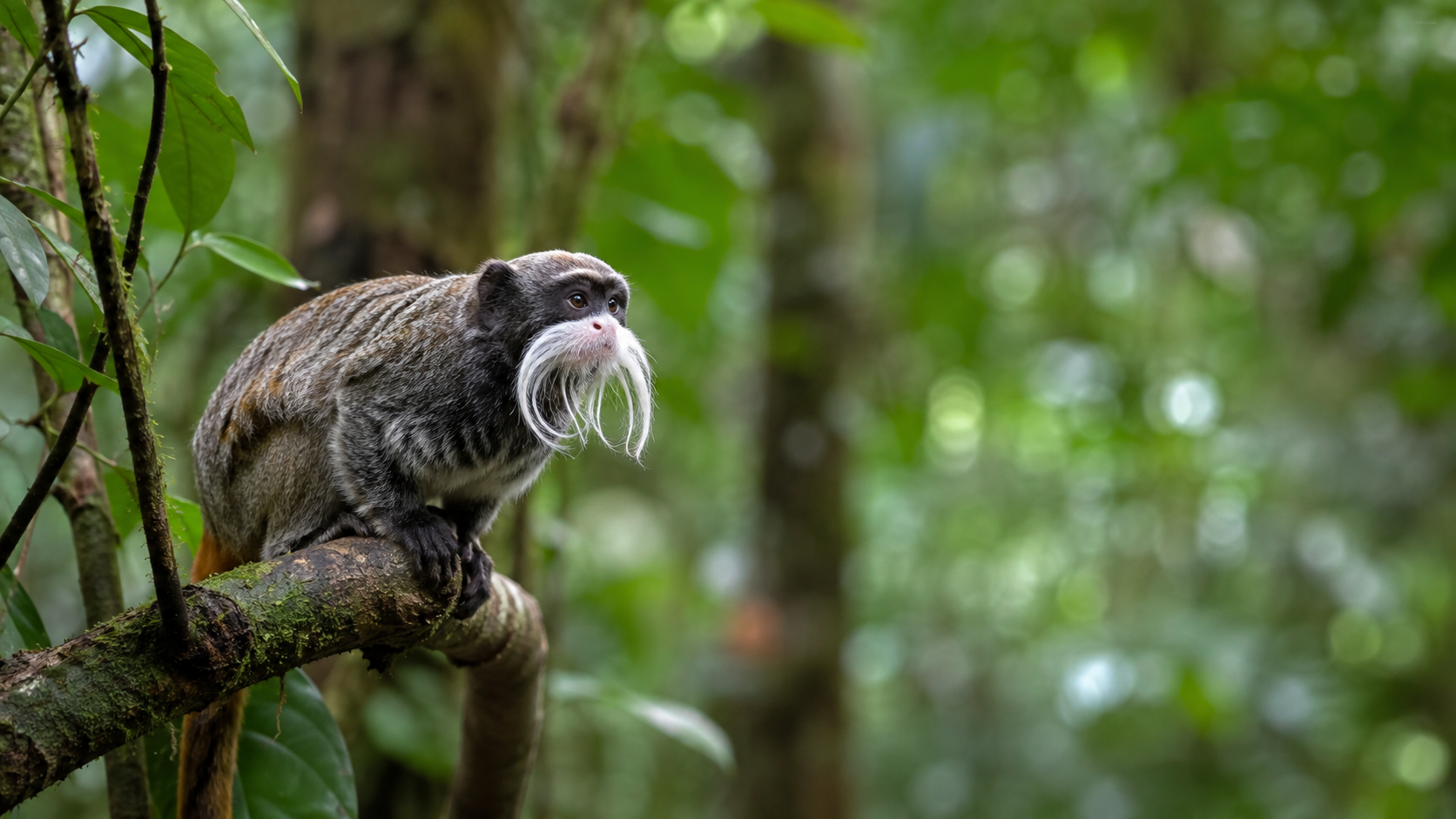
The Emperor Tamarin (Saguinus imperator) is a small, social primate native to the tropical rainforests of South America. They are known for their distinctive appearance, with a long, white mustache-like facial hair and a reddish-brown coat.
Classification and Evolution
The Emperor Tamarin belongs to the family Callitrichidae, which includes other small primates such as tamarins, marmosets, and lion tamarins. They are part of the order Primates, which also includes lemurs, lorises, and apes.
Natural History
Emperor Tamarins are found in the tropical rainforests of South America, specifically in the countries of Brazil, Colombia, and Peru. They inhabit the upper canopy of the forest, where they forage for fruits, leaves, and insects.
These primates are social animals and live in groups of up to 15 individuals. They are known for their complex communication system, which includes vocalizations, scent marking, and visual displays.
Physical Characteristics
Emperor Tamarins are small primates, reaching a length of approximately 23-26 cm (9-10 in) and weighing between 300-400 grams (10-14 oz). They have a reddish-brown coat with a white mustache-like facial hair, which gives them their distinctive appearance.
| Physical Characteristic | Description |
|---|---|
| Length | 23-26 cm (9-10 in) |
| Weight | 300-400 grams (10-14 oz) |
| Coat Color | Reddish-brown |
| Facial Hair | White mustache-like |
Behavior and Social Structure
Emperor Tamarins are social animals and live in groups of up to 15 individuals. They are known for their complex communication system, which includes vocalizations, scent marking, and visual displays.
Within their groups, Emperor Tamarins have a strict social hierarchy, with dominant individuals leading subordinate ones. They are also known for their cooperative breeding behavior, where all group members help care for the young.
Conservation Status
The Emperor Tamarin is listed as Least Concern on the IUCN Red List, but their populations are declining due to habitat loss and fragmentation.
Conservation efforts are underway to protect their habitats and reduce the impact of human activities on their populations.
Responsible Observation and Safety
Emperor Tamarins are wild animals and should be treated with respect and caution. Observing them in their natural habitat can be a rewarding experience, but it is essential to do so responsibly and safely.
Visitors to their habitats should follow guidelines and regulations set by local authorities and conservation organizations to minimize their impact on the environment and the animals.
What is the average lifespan of an Emperor Tamarin?
The average lifespan of an Emperor Tamarin is approximately 10-15 years in the wild.
What is the main threat to Emperor Tamarin populations?
The main threat to Emperor Tamarin populations is habitat loss and fragmentation due to human activities such as deforestation and agriculture.
Can Emperor Tamarins be kept as pets?
No, Emperor Tamarins are wild animals and should not be kept as pets. They have complex social and spatial needs that cannot be met in a domestic setting.
How can I help conserve Emperor Tamarins?
You can help conserve Emperor Tamarins by supporting conservation organizations and initiatives that protect their habitats and reduce human impact on their populations.
- National Geographic. (n.d.). Emperor Tamarin. Retrieved from https://www.nationalgeographic.org/animals/mammals/e/emperor-tamarin/
- International Union for Conservation of Nature. (n.d.). Saguinus imperator. Retrieved from https://www.iucnredlist.org/species/40647/17962423
- World Wildlife Fund. (n.d.). Emperor Tamarin. Retrieved from https://www.worldwildlife.org/species/emperor-tamarin
Important Notice: If you are concerned about the health or well-being of an Emperor Tamarin, please consult a qualified veterinarian or a reputable conservation organization for advice. Never attempt to handle or care for a wild animal without proper training and equipment.
Life Cycle and Development
Emperor Tamarins have a relatively long lifespan for their size, with an average lifespan of 10-15 years in the wild. In captivity, they can live up to 18 years. Their life cycle is marked by several distinct stages, including infancy, juvenility, and adulthood. Female Emperor Tamarins typically give birth to twins after a gestation period of approximately 140-150 days. The newborns are born with their eyes open and are able to cling to their mother’s fur from birth. The mother will often carry the twins on her back, while the father and other group members will help care for the young by providing food and protection.
As the young Emperor Tamarins grow, they begin to venture away from their mother’s side and start to explore their surroundings. They will often play and interact with other group members, learning important social skills and behaviors. At around 6-8 months, the young Emperor Tamarins will start to wean from their mother’s milk and begin to eat solid foods. They will reach full maturity at around 2-3 years of age, at which point they will start to participate in breeding and other adult behaviors.
Communication and Senses
Emperor Tamarins have a complex communication system that includes vocalizations, scent marking, and visual displays. They use a variety of vocalizations to convey different messages, such as alarm calls to alert other group members to potential predators, contact calls to maintain group cohesion, and courtship calls to attract mates. They also use scent marking to communicate with other Emperor Tamarins, rubbing their faces and bodies on surfaces to leave behind pheromones that convey information about their identity, sex, and reproductive status.
In addition to their sense of smell, Emperor Tamarins also have excellent eyesight and hearing. Their large eyes are adapted to the dim light of the forest canopy, and they are able to see in multiple directions at once thanks to their wide field of vision. They also have a keen sense of hearing, and are able to detect the slightest sounds, such as the rustling of leaves or the calls of other animals.
Seasonal Variation and Ecological Relationships
Emperor Tamarins are adapted to the tropical rainforest environment, where the climate is warm and humid year-round. However, there are some seasonal variations in their behavior and ecology. During the wet season, the forest is more abundant with fruit and other food sources, and the Emperor Tamarins will take advantage of this by increasing their foraging activities. During the dry season, food is scarcer, and the Emperor Tamarins will have to work harder to find enough to eat.
Emperor Tamarins have a number of ecological relationships with other animals in the forest. They are preyed upon by a number of predators, including birds of prey, snakes, and other primates. They also have a mutualistic relationship with certain species of birds, which will follow them through the forest and eat the insects and fruits that they disturb. In return, the Emperor Tamarins will provide the birds with protection from predators and other dangers.
Research and Conservation Efforts
Emperor Tamarins are an important subject of research in the fields of primatology and conservation biology. Scientists are studying their behavior, ecology, and population dynamics in order to better understand how to conserve and manage their populations. One area of research focus is on the impact of habitat fragmentation on Emperor Tamarin populations, as the destruction of their habitat is a major threat to their survival.
Conservation efforts are also underway to protect the Emperor Tamarin and its habitat. National parks and protected areas have been established in the countries where the Emperor Tamarin is found, and conservation organizations are working to educate local communities about the importance of preserving the forest ecosystem. In addition, captive breeding programs have been established in zoos and primate sanctuaries, in order to help increase the population and reduce the demand for wild-caught individuals.
Responsible Enrichment and Welfare
Emperor Tamarins in captivity require a lot of attention and care in order to thrive. They need a large and stimulating enclosure that provides them with plenty of opportunities for exercise and play. They also require a varied and nutritious diet that includes a mix of fruits, leaves, and insects. In addition, they need regular social interaction and mental stimulation, such as puzzle toys and problem-solving activities.
It is also important to consider the welfare of Emperor Tamarins in the context of the pet trade. While it may be tempting to keep an Emperor Tamarin as a pet, it is not recommended. Emperor Tamarins have complex social and spatial needs that cannot be met in a home environment, and they are protected by laws and regulations that prohibit their capture and trade.
Diet and Foraging Strategies
Emperor Tamarins are primarily frugivorous, with fruits making up a significant portion of their diet. They forage for a variety of fruits, including berries, figs, and palm fruits, as well as leaves, flowers, and insects. In the wild, they have been observed using tools to extract food, such as using sticks to dig up termites and their larvae. They have also been known to raid bird nests and eat eggs and chicks.
In addition to their diet, Emperor Tamarins have also been observed engaging in a behavior known as “gum-feeding,” where they use their sharp teeth to pierce the bark of certain tree species and lap up the sap that flows out. This behavior is thought to provide them with a source of carbohydrates and other nutrients.
Ecological Role and Impact
As a seed disperser and predator of insects, Emperor Tamarins play an important ecological role in their native rainforests. By consuming fruits and then depositing the seeds in new locations, often in nutrient-rich feces, they help to spread plant species and promote forest regeneration. Additionally, their predation of insects helps to regulate insect populations, which can prevent damage to crops and forests.
However, Emperor Tamarins also have a significant impact on their environment through their foraging activities. They have been known to damage crops, such as fruit trees and gardens, in search of food. This can lead to conflicts with local farmers and communities, who may view them as pests.
Reproduction and Parenting
Emperor Tamarins are known to form long-term monogamous relationships, with pairs staying together for many years. Female Emperor Tamarins typically give birth to twins, although single births and triplets have also been recorded. The gestation period is approximately 140-150 days, and the young are born with their eyes open and a thick coat of fur.
Both parents take turns caring for the young, with the father often carrying the infants on his back and bringing them to the mother to nurse. The young Emperor Tamarins develop quickly, and are able to start eating solid foods at around 6-8 weeks old. They reach full maturity at around 12-18 months old.
Captive Care and Breeding Programs
Emperor Tamarins are popular animals in zoos and primate sanctuaries, due to their small size and social nature. In captivity, they require a large enclosure with plenty of space to climb and forage, as well as a varied diet that includes a mix of fruits, leaves, and insects.
Breeding programs for Emperor Tamarins are in place in many zoos and sanctuaries, with the goal of releasing offspring back into the wild to augment declining populations. However, breeding these animals in captivity can be challenging, due to their complex social requirements and specific dietary needs.
Threats and Conflicts
Emperor Tamarins are threatened by habitat loss and fragmentation, as well as hunting and persecution by local communities. They are also vulnerable to disease, such as malaria and yellow fever, which can decimate populations.
In addition to these threats, Emperor Tamarins are also subject to the pet trade, with many individuals being captured and sold as exotic pets. This can lead to stress, injury, and death for the animals, as well as the potential for disease transmission to humans.